

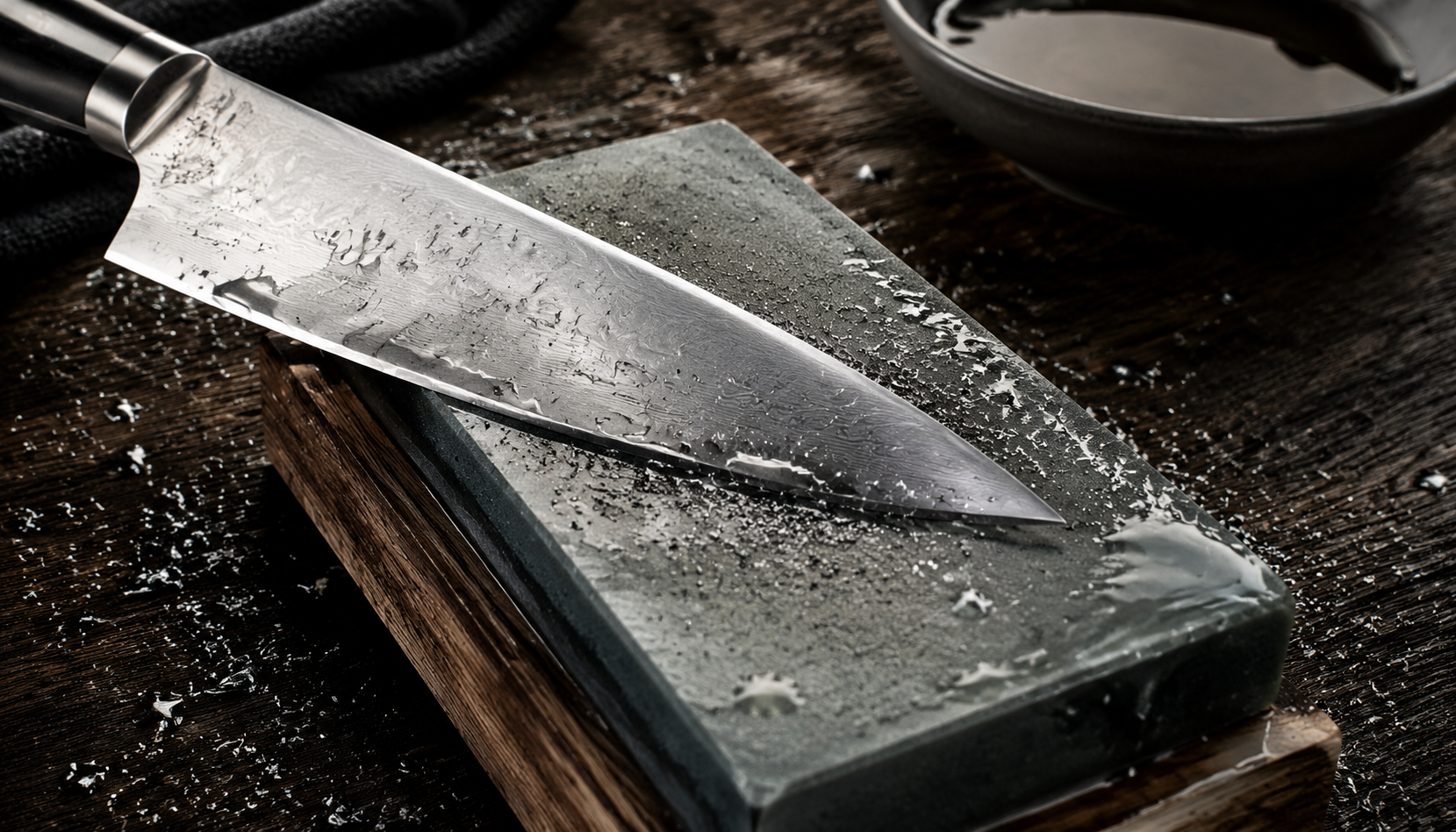
TL;DR — Use a whetstone for the keenest, longest-lasting edge; reach for a pull-through only as a last resort; and hone your knife on a ceramic or steel rod almost every time you cook. That single habit, more than any fancy gadget, separates kitchens with reliably sharp blades from kitchens where everyone curses the tomato.
The Best Deals This Week*
-
imarku 7-Inch Santoku Knife for Precision Slicing
$39.99
($69.99)Save $30.00 -
imarku 8 Inch Japanese Chef Knife
$39.99
($61.99)Save $22.00 -
Everyday Chopping and Slicing
$23.79
($43.99)Save $20.20
*Deals are selected by our commerce team
Deeper Dive: Our Top Picks
Our Top Picks
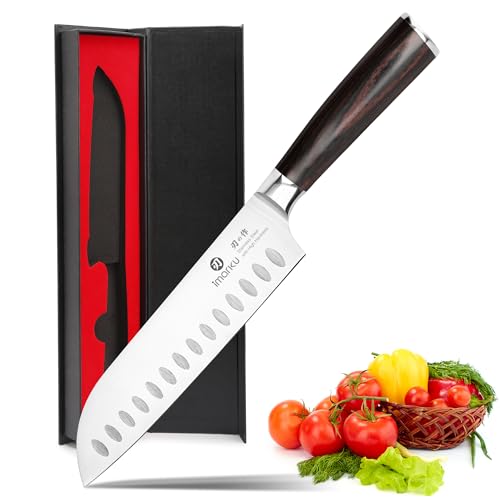
imarku
7-Inch Santoku Knife for Precision Slicing
The imarku 7-inch Santoku knife combines a hollow scalloped edge and 15-18 degree hand-polished bevel to reduce drag and prevent food from sticking during high-volume prep work. Home cooks and apartment dwellers who want a restaurant-capable knife without the steep price will find it covers meat, vegetables, and bread with a single blade.
Pros and Cons
Pros
- The 2.5mm blade thickness paired with the hollow edge design handles both delicate julienne cuts and heavier chopping without flexing or wedging.
- Pakkawood handle construction offers a more sanitary and dimensionally stable grip than standard composite or natural wood handles.
- The 15-18 degree edge angle matches professional Japanese knife geometry, giving it a noticeably sharper out-of-box performance than German-style knives at this price.
- Versatile enough for meat, vegetables, fruit, and bread, making it a practical single-knife solution for small kitchens with limited storage.
Cons
- With zero verified reviews available, long-term edge retention and handle durability under daily use remain unconfirmed by real buyers.
- The 3-month refund window is shorter than the lifetime guarantees offered by competing brands at the same price point.

WÜSTHOF Classic 8-Inch Chef's Knife - Precision Forged German Steel for Professional Home Cooking
This precision-forged German chef's knife delivers 20% sharper cuts and twice the edge retention of previous models, making it ideal for daily chopping, mincing, and slicing tasks. Home cooks and professional chefs who want a reliable, balanced workhorse knife that holds its edge through heavy use should invest in this Classic series blade.
Pros and Cons
Pros
- German precision forging creates superior edge retention that stays sharp through months of regular kitchen use.
- The 8.5-ounce weight and ergonomic handle design reduce hand fatigue during extended meal prep.
- Backed by over 200 years of Solingen craftsmanship and strict German quality standards.
Cons
- The full bolster prevents sharpening the entire blade length on a standard whetstone without professional thinning.
- At 8.5 ounces, some cooks with smaller hands may find it heavier than Japanese-style chef's knives.
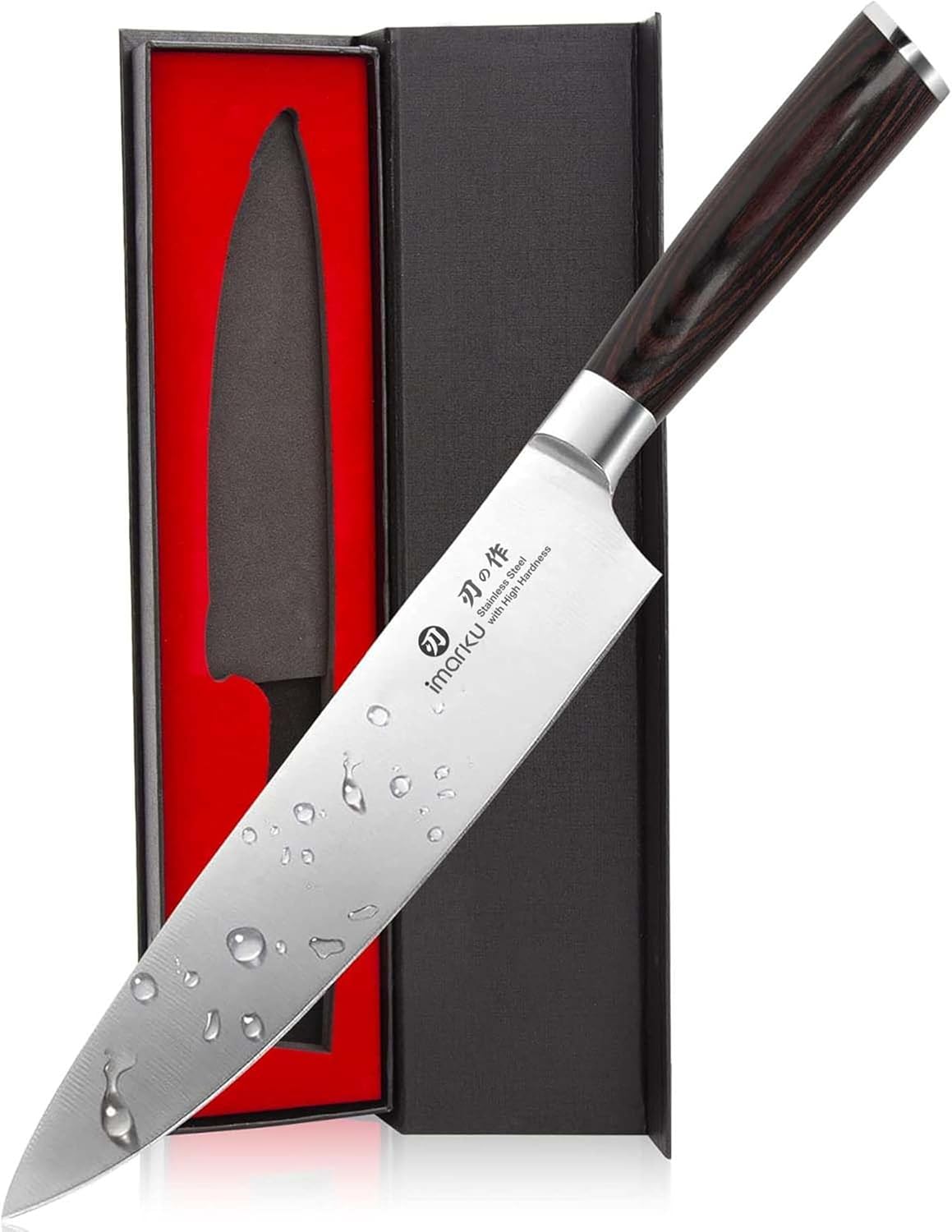
imarku
8 Inch Japanese Chef Knife | High-Carbon Stainless Steel Gyutou
This 8-inch gyutou knife delivers professional-grade sharpness for slicing, dicing, and chopping with a high-carbon stainless steel blade that stays sharp through tough kitchen tasks. Buy it if you prep vegetables and proteins regularly and want a durable, ergonomic knife that won't require constant sharpening.
Pros and Cons
Pros
- 32,768-layer blade construction from 108 traditional forging steps delivers exceptional durability and edge retention compared to mass-produced knives.
- At 8 inches, the blade length balances control for detail work with enough surface area for efficient slicing of larger cuts.
- FSC-certified African Pakka wood handle provides comfortable grip without slipping, even when wet or during repetitive cutting motions.
Cons
- Requires hand-washing and immediate drying to prevent water spots and maintain the stainless steel finish; dishwasher use will damage the blade.
- The high-carbon content means the blade can chip if used on hard surfaces like bone or frozen foods without proper technique.

PAUDIN
Everyday Chopping and Slicing: PAUDIN 8-Inch High-Carbon Stainless Steel Chef Knife
The PAUDIN 8-inch chef knife chops, slices, minces, and dices everyday ingredients, with a hand-polished 2mm blade providing its biggest advantage: versatile sharp cutting. It suits home cooks and restaurant users who want one ergonomic knife for preparing vegetables, bread, fish, chicken, and beef.
Pros and Cons
Pros
- Its multipurpose 8-inch blade can prepare bread, produce, fillets, and several types of meat.
- The hand-polished edge is designed to deliver sharp performance and retain its cutting ability over time.
- An ergonomic wood handle and balanced blade design support comfortable, controlled cutting.
- The waved blade pattern adds visual interest without affecting the knife's broad kitchen utility.
Cons
- The waved pattern is decorative, and the blade is not genuine Damascus steel.
- The product data does not provide an exact knife weight, which may matter to buyers with a strong balance preference.

Best 8-Inch Chef's Knife for Home Cooks | Victorinox Fibrox Pro
The Victorinox Fibrox Pro 8-inch chef's knife delivers Swiss precision with a non-slip grip that handles chopping, dicing, and slicing without fatigue. Buy it if you want a professional-grade blade that stays sharp longer and won't slip in wet hands.
Pros and Cons
Pros
- Exceptional edge retention means you spend less time sharpening and more time cooking.
- Non-slip Fibrox handle maintains grip security when hands are wet or oily.
- Balanced weight distribution and wide blade reduce hand and wrist fatigue during extended meal prep.
Cons
- Requires immediate hand-washing and drying after use to prevent salt and acid damage, despite dishwasher-safe rating.
- 8-inch blade may feel large for cooks with smaller hands or those accustomed to 6-inch chef's knives.
Editors' Picks
imarku 7-Inch Santoku Knife for Precision Slicing
imarku
7-Inch Santoku Knife for Precision Slicing
The imarku 7-inch Santoku knife combines a hollow scalloped edge and 15-18 degree hand-polished bevel to reduce drag and prevent food from sticking during high-volume prep work. Home cooks and apartment dwellers who want a restaurant-capable knife without the steep price will find it covers meat, vegetables, and bread with a single blade.
$39.99 at AmazonEditors' Favorite
Color: Brown and Silver Size: 7" Dimensions: 12 x 3 x 1 inches Weight: 0.43 pounds Product Group: Kitchen Binding: Kitchen
Shop NowWÜSTHOF Classic 8-Inch Chef's Knife - Precision Forged German Steel for Professional Home Cooking
WÜSTHOF Classic 8-Inch Chef's Knife - Precision Forged German Steel for Professional Home Cooking
This precision-forged German chef's knife delivers 20% sharper cuts and twice the edge retention of previous models, making it ideal for daily chopping, mincing, and slicing tasks. Home cooks and professional chefs who want a reliable, balanced workhorse knife that holds its edge through heavy use should invest in this Classic series blade.
$170.00 at AmazonGreat Value
Brand Name: Wüsthof Set Name: Classic Manufacturer: Wüsthof UPC: 769194038526 670023145356 022934582438 Global Trade Identification Number: 00022934582438, 04002293158242, 40022931582422 Model Number: 4582-7/20 Manufacturer Part Number: 4582/20 Manufacturer Warranty Description: Lifetime warranty Item Type Name: Chef's Knives Unit Count: 16.0 Ounce Included Components: Cook's Knife Best Sellers Rank: #35,094 in Kitchen & Dining (See Top 100 in Kitchen & Dining) #103 in Chef's Knives ASIN: B00009ZK08 Blade Material Type: Stainless Steel Handle Material: Composite Is the item dishwasher safe?: No Material Type: Stainless Steel BladeLength: 8 Inches Item Weight: 0.24 Kilograms Item Length: 14 Inches Size: 8" Color: Black Blade Color: Silver Blade Edge: Chef's Knife Construction Type: Forged Blade Material: Stainless Steel Brand: Wüsthof
Shop Nowimarku 8 Inch Japanese Chef Knife | High-Carbon Stainless Steel Gyutou
imarku
8 Inch Japanese Chef Knife | High-Carbon Stainless Steel Gyutou
This 8-inch gyutou knife delivers professional-grade sharpness for slicing, dicing, and chopping with a high-carbon stainless steel blade that stays sharp through tough kitchen tasks. Buy it if you prep vegetables and proteins regularly and want a durable, ergonomic knife that won't require constant sharpening.
$39.99 at AmazonBrand Name: imarku Manufacturer: imarku UPC: 667673934065 604753870875 652129610679 Global Trade Identification Number: 00667673934065 Model Number: 8-inch chef knife Manufacturer Part Number: SC10-01 9inch Item Type Name: Ergonomic Equipment Unit Count: 1.0 Count Included Components: 1 pc chef knife Best Sellers Rank: #963 in Kitchen & Dining (See Top 100 in Kitchen & Dining) #1 in Gyutou Knives ASIN: B01DDBJF12 Customer Reviews: 4.6 4.6 out of 5 stars (10,340) 4.6 out of 5 stars Blade Material Type: High Carbon Stainless Steel Handle Material: Pakkawood Is the item dishwasher safe?: No Material Type: stainless steel BladeLength: 8 Inches Item Weight: 0.41 Pounds Item Length: 13 Inches Size: 8" Color: brown and silver Blade Color: Silver Blade Edge: Plain Construction Type: Forged Blade Material: High Carbon Stainless Steel Brand: imarku
Shop NowPAUDIN Everyday Chopping and Slicing: PAUDIN 8-Inch High-Carbon Stainless Steel Chef Knife
PAUDIN
Everyday Chopping and Slicing: PAUDIN 8-Inch High-Carbon Stainless Steel Chef Knife
The PAUDIN 8-inch chef knife chops, slices, minces, and dices everyday ingredients, with a hand-polished 2mm blade providing its biggest advantage: versatile sharp cutting. It suits home cooks and restaurant users who want one ergonomic knife for preparing vegetables, bread, fish, chicken, and beef.
$23.79 at AmazonColor: Silver Size: 8" Dimensions: 203 x 45 x 2 Inches Weight: 0.43 pounds Product Group: Kitchen Binding: Kitchen
Shop NowBest 8-Inch Chef's Knife for Home Cooks | Victorinox Fibrox Pro
Best 8-Inch Chef's Knife for Home Cooks | Victorinox Fibrox Pro
The Victorinox Fibrox Pro 8-inch chef's knife delivers Swiss precision with a non-slip grip that handles chopping, dicing, and slicing without fatigue. Buy it if you want a professional-grade blade that stays sharp longer and won't slip in wet hands.
$47.98 at AmazonBrand Name: Victorinox Manufacturer: Victorinox UPC: 046928455201 Global Trade Identification Number: 00046928455201, 07611160122100 Model Number: 45520 Manufacturer Part Number: 5.2063.20BK Manufacturer Warranty Description: Lifetime warranty against original manufacturer's defects Item Type Name: Chef's Knife Unit Count: 1.0 Count Included Components: Chef's Knife Best Sellers Rank: #1,210 in Kitchen & Dining (See Top 100 in Kitchen & Dining) #1 in Chef's Knives ASIN: B008M5U1C2 Customer Reviews: 4.8 4.8 out of 5 stars (14,715) 4.8 out of 5 stars Blade Material Type: Stainless Steel Handle Material: Fibrox or Pro Is the item dishwasher safe?: Yes Material Type: Stainless Steel BladeLength: 8 Inches Item Weight: 22.68 g Item Length: 13.4 Inches Size: 8" Color: Black Blade Color: Silver Blade Edge: Plain Construction Type: Stamped Blade Material: Stainless Steel Brand: Victorinox
Shop NowAbout These Recommendations
The technique above is the point of this guide; the products are here because they help. We have not tested them ourselves — we did not buy or use this gear. The recommendations come from comparing specifications and materials against the patterns in verified owner reviews, so treat them as a shortlist worth researching rather than a verdict from our own kitchen.
Availability and prices change often, so check the current listing before buying. We earn a commission on purchases made through links on this page, which never affects what we recommend.
The Short Answer
To sharpen a chef knife properly, most home cooks need to understand they’re juggling two different jobs. Honing realigns a microscopically bent edge and takes ten seconds before each cooking session. Sharpening removes metal to rebuild a worn edge, and it should happen one to three times a year. If you own a quality blade — see our roundup of the best chef knife for context on what you’re protecting — a 1000/6000-grit whetstone is the gold standard for anyone learning to sharpen a chef knife at home. A honing rod handles maintenance. Pull-through gadgets work in a pinch, but they grind away metal aggressively and shorten the life of a good knife. Cheap blades tolerate them; pricey ones don’t.
Sharpening vs Honing — Why They’re Different
Walk into any cookware aisle and you’ll hear “sharpener” slapped on devices that do completely different things. The distinction matters because using the wrong tool wastes metal — and on a $150 chef knife, that’s painful.
A knife edge isn’t a perfectly straight line. It’s a thin ribbon of steel that bends sideways under everyday pressure. After thirty minutes of dicing onions, the edge is still there; it’s just folded over a hair to one side, which is why your knife feels dull even though no metal has been lost. That’s a honing problem. Drag the blade along a ceramic or steel rod a few times and the ribbon snaps back into alignment. The knife feels new in under a minute.
Sharpening is different. After enough honing cycles, the very tip of that ribbon thins out, microchips, and eventually wears away. Now there’s nothing left to realign — the edge is genuinely blunt. To restore it, you have to grind away a thin layer of metal on both sides until a fresh, crisp apex forms. That’s what whetstones, pull-throughs, and electric sharpeners do.
Here’s the practical takeaway most cooks miss: a knife you hone weekly might only need sharpening once or twice a year. A knife you never hone needs sharpening every couple of months — and each sharpening shaves off metal you can never get back. Honing isn’t optional maintenance. It’s the single biggest factor in how long your blade lasts.
Choosing a Sharpening Method
There’s no single right answer for how to sharpen a chef knife well; the best method depends on your budget, your patience, and what you’re sharpening.
A whetstone delivers the finest edge a home cook can achieve. A combination stone with 1000 grit on one side (for rebuilding the edge) and 6000 grit on the other (for polishing) costs $30–60 and lasts decades. The downside is the learning curve — maintaining a consistent angle takes a few sessions of practice, and your first attempt will look amateurish. Stick with it; the payoff is enormous.
Pull-through sharpeners are the convenience option. You drag the blade through a slot of fixed carbide or ceramic wheels, and they grind a new edge in seconds. They’re foolproof in the sense that you can’t really hold them wrong. The catch: they set the angle for you (usually around 20°), remove far more metal than necessary, and leave a coarse, scratchy edge that dulls quickly. Fine on a $25 starter blade, brutal on a $200 Japanese gyuto.
Electric sharpeners sit in the middle. The better ones use guided slots with progressively finer grits, mimicking a whetstone workflow. Quality models from established brands can produce a respectable edge with almost no skill required. The cheaper ones overheat the steel — friction at high RPM can soften the temper near the edge — and chew through metal even faster than pull-throughs. Read reviews carefully.
Professional sharpening services are worth considering for premium knives, especially Japanese blades with asymmetric bevels or single-edge geometry that home tools weren’t designed for. Expect $5–15 per knife. Bring your favorite once a year and you’ll see what a properly restored edge feels like — that benchmark is useful even if you DIY the rest of the time.
How to Sharpen With a Whetstone (Recommended)
This is the gold-standard way to sharpen a chef knife, and it rewards practice. Twenty minutes per knife, twice a year, and your blade will outlast your kitchen.
Step 1: Soak the Stone
If you’re using a water stone (the most common type for home use), submerge it in cool water for 10–15 minutes before you start. You’ll know it’s ready when bubbles stop rising from the surface. Diamond and oil stones don’t need soaking — check your stone’s label. A dry water stone won’t sharpen properly and may crack. Set the soaked stone on a damp towel or a rubber stone holder so it doesn’t slide while you work.
Step 2: Find the Bevel Angle (15-20°)
Most Western chef knives — Wüsthof, Henckels, Victorinox — are ground at roughly 20° per side. Japanese knives skew steeper, around 15°. To find 20° visually, lay the spine of the blade flat on the stone, then lift it until the gap underneath equals about the thickness of two stacked quarters. That’s close enough. Consistency matters more than precision; a knife sharpened at a consistent 22° will outperform one ground at a wandering 18°–24°.
Step 3: The Push-Pull Stroke
Place the heel of the blade on the far edge of the stone, edge facing away from you, fingers of your guiding hand pressed lightly on the flat of the blade near the edge. Push the knife forward and across the stone in a single smooth motion, sliding from heel to tip so the entire edge contacts the stone. Apply moderate pressure on the push, lighter pressure on the return. Keep the angle locked. Five to ten strokes on the 1000-grit side is usually enough to raise a burr — a tiny, almost invisible curl of metal along the opposite edge that tells you you’ve ground deep enough.
Step 4: Switch Sides Evenly
Flip the blade and repeat on the other side, matching your stroke count. The burr should now flip to the original side. Alternate one stroke per side for the last six or eight passes — this evens out the bevel and removes the burr cleanly. Then flip the stone (or grab your 6000-grit side) and repeat with very light pressure, maybe ten strokes per side, to polish the apex. Skipping the polish step leaves a toothy edge that cuts paper but tears tomato skin.
Step 5: Hone and Test
Rinse the knife, dry it, and finish with five gentle passes per side on a ceramic honing rod to align the freshly sharpened edge. The classic shave test — slicing a sheet of printer paper held in mid-air — should produce a clean, effortless cut. If the blade catches or tears, you missed a section. Take another pass at the 6000-grit stone and try again.
How to Hone Between Sharpenings
Once you’ve learned to sharpen a chef knife on a stone, honing is what keeps the edge alive between sessions.
Honing is the daily habit that keeps the need to fully sharpen a chef knife rare. Three minutes a week, max.
Hold the rod vertically with the tip planted on a cutting board or towel. Place the heel of the knife near the top of the rod at roughly 20° — same angle you’d use for sharpening. Draw the blade down and across the rod in one smooth motion, sliding from heel to tip so the entire edge gets contact. Use very light pressure. The goal isn’t to grind; it’s to nudge the bent edge straight. Six to ten strokes per side is plenty. A ceramic rod cuts a hair more aggressively than steel and is the better choice for harder Japanese blades. Steel rods work fine on softer Western knives.
If your honing rod isn’t doing the trick after a few weeks, the edge has worn past realignment and it’s time to sharpen — see our best knife sharpener picks for tool-by-tool comparisons. Don’t keep honing a blade that’s genuinely blunt; you’ll just polish the rounded edge and waste effort.
Common Mistakes
These five trip up nearly every home cook learning to maintain their own blades.
Wrong angle. Too steep (over 25°) creates an edge that feels sturdy but dulls fast because the apex is too thick to bite cleanly. Too shallow (under 12°) gives a razor edge that chips and rolls the first time you hit a chicken bone or a hard squash rind. Find your knife’s intended angle and stick with it. Most Western blades want 18°–22°; most Japanese blades want 13°–17°. When in doubt, the manufacturer’s website lists the factory grind.
Skipping honing entirely. This is the single biggest mistake we see. People reach for a sharpener every time the blade feels dull, when nine times out of ten a fifteen-second pass on a honing rod would have restored the edge. Every unnecessary sharpening removes metal you can never put back. A knife that gets honed weekly and sharpened twice a year will outlast one that gets sharpened monthly by a factor of five or more.
Using pull-through gadgets too often. Carbide pull-throughs grind aggressively — they’re designed to restore a totally dead edge in a few seconds. Running a perfectly fine blade through one because it “feels a little dull” wastes a startling amount of steel. If you must use one, reserve it for emergencies and follow up with a honing rod to clean up the burr it leaves behind.
Cutting on hard surfaces. Granite, glass, marble, and ceramic boards destroy edges. Every chop is a microscopic collision between thin steel and rock. After a week on a glass board, the edge of a high-end knife looks like a saw blade under magnification. Stick to end-grain wood, edge-grain wood, or a softer plastic board. Your edge will hold five to ten times longer.
Storing knives loose in a drawer. Blades clatter into spoons, peelers, and each other every time you pull the drawer open. Each impact rolls or chips the edge. A magnetic strip, an in-drawer knife dock, or a slotted block keeps each blade isolated. The edge you carefully sharpened on Sunday morning will still be sharp on Friday night.
Common Questions
How often should I sharpen a chef knife?
For a home cook who cooks four or five nights a week and hones regularly, one to three sharpenings per year is enough. A professional kitchen knife might need it every month or two. The right cue is the cutting feel itself — when honing no longer restores keenness and a tomato skin resists, it’s time.
Can I use a pull-through sharpener on Japanese knives?
Generally, no. Japanese blades are ground at steeper angles than the fixed slots on most pull-throughs, and many are asymmetric or single-bevel. A pull-through will regrind the geometry to whatever angle the slot enforces, ruining what made the knife special in the first place. Use a whetstone or send it to a specialist.
What grit whetstone do I need?
For most home cooks, a single combination stone with 1000 grit on one side and 4000 or 6000 on the other covers every situation. The 1000 rebuilds the edge; the higher grit polishes. Add a 220 or 400 coarse stone only if you need to repair a chip or completely reshape a damaged bevel — situations most home knives never face.
How do I know when my knife is sharp?
Three quick checks. First, slice a sheet of printer paper held in mid-air — a sharp edge glides through cleanly without tearing. Second, run a tomato across the blade with zero downward pressure; the skin should part on contact. Third, lightly touch the edge with the pad of your thumb (drawn across, never along) — sharp edges grip the skin instead of sliding.
Are electric sharpeners bad for knives?
Cheap ones can be — high-RPM motors overheat the edge and remove far more metal than necessary. Quality electric sharpeners with guided slots and progressive grits produce a perfectly serviceable edge with minimal skill. The trade-off is speed versus longevity. For a $30 starter knife, an electric sharpener is fine; for a $200 blade, learn the whetstone.
Related buying guides: best knife sets, best bread knife and best chef knife under 100.
Recommended Tools
The right gear makes every step above easier, and the difference between owning the right kit and improvising shows up the first time you sit down to actually sharpen a chef knife. The shortlist below covers a quality whetstone for full sharpening, a ceramic rod for weekly honing, and reliable backup options vetted for home use. Each one earns its place by pairing real durability with sensible pricing — none of them require professional training to use well.

Write Your Review
No reviews yet. Be the first to share your experience!