

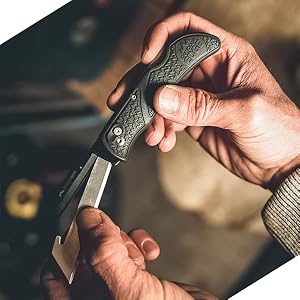
A skinning knife is a purpose-built field tool designed specifically for separating hide from carcass during the field dressing process that follows a successful hunt. Unlike a general-purpose hunting blade, a dedicated skinning knife features a curved blade profile — typically a drop point, upswept clip point, or pronounced upswept tip — that allows the edge to follow the natural contours of the animal without driving the point into underlying meat. The blade geometry prioritizes a belly-forward cutting arc rather than tip penetration, which is why skinning knives feel distinctly different from typical fixed-blade hunting knives when held against the work. The HomeWhisk research team reviewed aggregated owner feedback from Amazon, hunting community forums including Reddit r/hunting and r/bowhunting, manufacturer specification documents, and field dressing guides to identify the five skinning knives that consistently earn the strongest marks from hunters working in actual field conditions. For hunters who also need a versatile fixed blade for camp tasks and general outdoor cutting work, our guide to the best camping knife covers that broader category. What separates a genuinely capable skinning knife from a general hunting blade comes down to a combination of factors that become clear only when aggregated owner feedback from experienced hunters is analyzed across a large enough sample. Blade shape is the most discussed variable in r/hunting and r/bowhunting threads: the pronounced curve of a dedicated skinner keeps the edge working efficiently in the field without tip penetration accidents, while a blade that is too flat requires repositioning and increases the risk of puncturing the hide or contaminating the meat cavity. Beyond blade geometry, the steel type and corrosion resistance profile matter significantly because field dressing happens in cold, wet, and blood-coated conditions that would compromise a poorly specified alloy quickly. Handle ergonomics with wet hands — a condition that is essentially universal in field dressing — and the question of whether a gut hook adds functional value or complexity round out the factors that consistently surface in detailed owner reports. For hunters who also need a reliable fixed-blade companion for camp cooking and wood processing alongside their skinning work, our guide to the best camping knife covers that companion category.
For more, see our Butcher Knife vs Cleaver and Carving Knife vs Chef Knife guides.
Editor’s Picks
| Category | Pick | Why |
|---|---|---|
| Best Overall | Buck Knives 113 Ranger Skinner (B00TP8B0WA) | Classic upswept skinning knife geometry, 420HC stainless, full tang, proven across decades of field dressing use |
| Best Premium Skinner | Benchmade Hidden Canyon Hunter (B002L6YV2Y) | S30V stainless with superior edge retention, contoured handle for all-day grip security in wet conditions |
| Best Drop Point Skinner | Outdoor Edge SwingBlade (B001U4Y0FQ) | Rotating blade system offering both a skinning blade and gutting blade in a single skinning knife |
| Best Fixed Blade Value | Buck Knives 192 Vanguard (B0002RI508) | Full tang 420HC stainless, versatile drop point skinning knife blade, lifetime warranty |
| Best for Deer and Elk | Buck Knives 591 Zipper (B00KDKRCJ4) | Dedicated gut hook skinning knife with a separate gut hook tip for clean field dressing on larger game |
Deeper Dive: Our Top Picks
Our Top Picks

OUTDOOREDGE
RazorLite EDC Replaceable Blade Pocket Knife for Kitchen Prep and Field Dressing by Outdoor Edge
This 3.5-inch folding knife uses replaceable Japanese stainless steel blades that swap out instantly when dull, eliminating sharpening for both kitchen prep and hunting tasks. Buy it if you want surgical sharpness on demand without maintaining a traditional blade.
Pros and Cons
Pros
- Blade replacement takes under five seconds with no tools required, according to verified buyers.
- The black oxide-coated blade holder grips each blade firmly without wobble during heavy cutting tasks.
- Lightweight 8-inch overall length makes it easy to control for detailed trimming and portioning work.
Cons
- Replacement blades add ongoing costs compared to a traditional knife you sharpen yourself.
- The 3.5-inch blade is shorter than most chef knives, requiring more strokes for large cuts.
OUTDOOREDGE
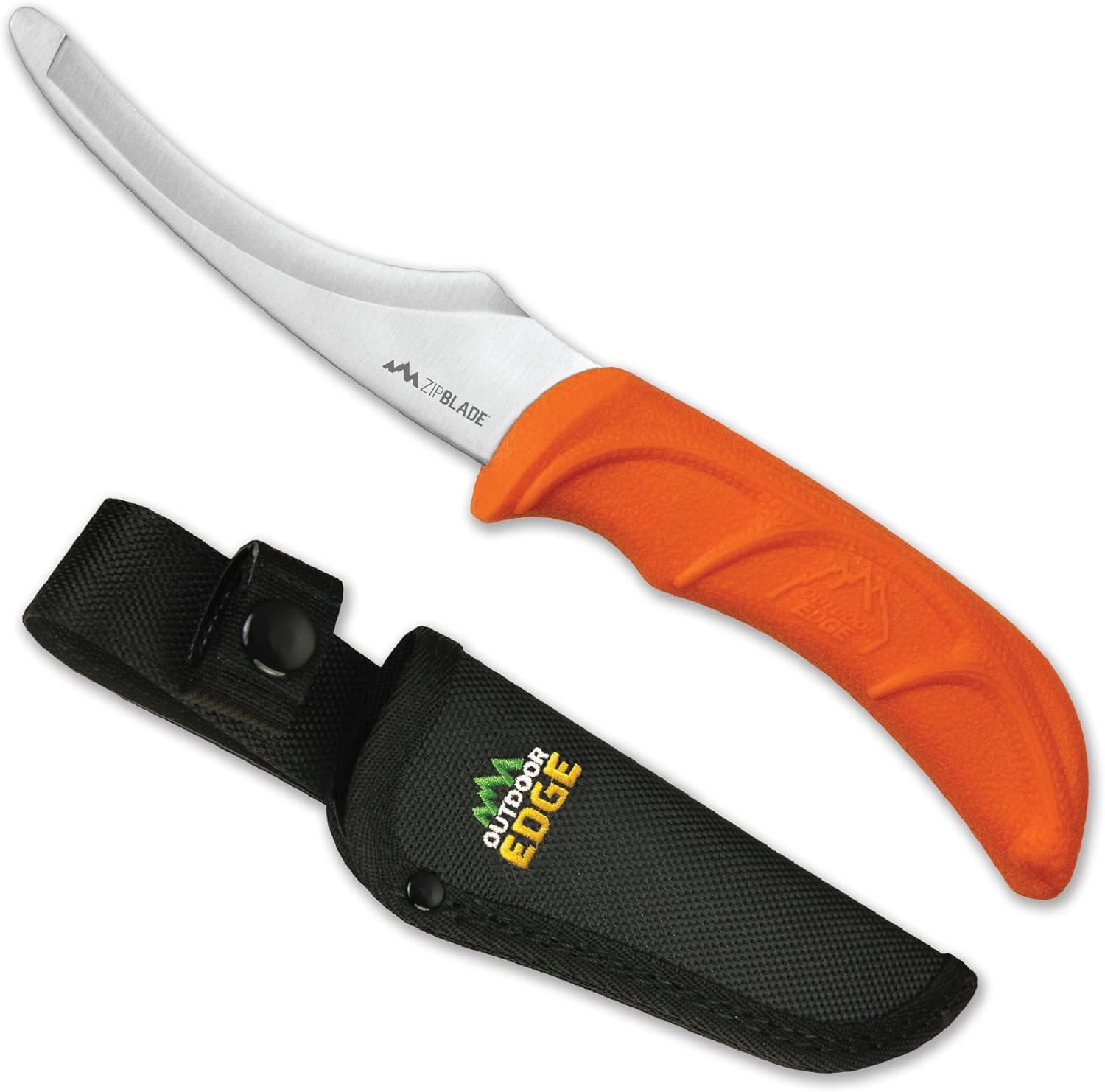
OUTDOOR EDGE Zip Blade 4-Inch Fixed Blade Hunting Knife with Blaze Orange Handle and Nylon Sheath
This is a specialized hunting and game processing knife designed to gut and skin big game without puncturing organs or cutting hair, not a kitchen tool. Hunters and outdoorsmen who process their own wild game should consider it for field dressing deer, elk, and other animals.
Pros and Cons
Pros
- Specialized blade shape excels at the specific task of gutting without organ puncture.
- Rubberized handle maintains grip even when wet or bloody.
- Compact 4-inch blade offers control during precision cutting work.
Cons
- Not designed for general kitchen use or standard food preparation tasks.
- Single-purpose tool that sits unused outside of hunting season for most owners.

Victorinox 5-Inch Lamb Skinning Knife with Fibrox Handle for Butchering and Game Processing
This Scandinavian-style skinning knife from Victorinox handles lamb and game processing with a curved 5-inch stainless steel blade designed for separating hide from meat. Buy it if you process your own game or work with whole lamb and need a dedicated skinning tool that stays sharp through repeated use.
Pros and Cons
Pros
- Blade geometry specifically designed for skinning work rather than general-purpose cutting.
- Handle material stays secure in wet conditions common during game processing.
- Stainless steel construction simplifies cleanup and reduces maintenance between uses.
Cons
- The specialized blade shape limits versatility for general kitchen cutting tasks.
- Some users report the handle feels thin compared to heavier-duty butcher knives.

Klein Tools 1570-3 Professional Cable Skinning Knife with 3-Inch Steel Hook Blade, Made in USA
This is a professional-grade cable skinning knife designed for electricians and linemen, not a kitchen tool. It features a 3-inch steel hook blade built to score and slit heavy cable jackets, with a textured handle and storage ring.
Pros and Cons
Pros
- Hook blade design specifically engineered for cable skinning tasks that standard knives cannot handle.
- Ergonomic handle design with guard reduces hand fatigue during extended electrical work.
- American-made construction with steel blade built to withstand industrial use.
Cons
- This is a specialized electrical tool, not suitable for kitchen food preparation or cooking tasks.
- Leather sheath sold separately, adding to total cost for protected storage.

Havalon
Skinning and Field-Dressing Knife: Havalon Piranta-Edge with 60A Replaceable Blades and Nylon Holster
The Havalon Piranta-Edge is a replaceable-blade skinning knife built for fast, precise field dressing of wild game using six razor-sharp 60A stainless blades. It suits hunters and game processors who want surgical sharpness without sharpening, plus an open-back handle that rinses clean after messy work.
Pros and Cons
Pros
- Includes six 2.75-inch 60A stainless replacement blades, so you start with a full season of sharp edges.
- Liner-lock with ambidextrous thumb studs gives confident, one-handed opening for either hand.
- Open-back polymer handle is easy to flush clean after skinning and field dressing.
- Ships with a nylon holster and removable clip for safe carry on hunts.
Cons
- Thin replaceable blades are built for skinning, not for prying, batoning, or heavy chopping work.
- Surgical edges demand careful handling and blade-change technique to avoid nicks during swaps.
Editors' Picks
OUTDOOREDGE RazorLite EDC Replaceable Blade Pocket Knife for Kitchen Prep and Field Dressing by Outdoor Edge
OUTDOOREDGE
RazorLite EDC Replaceable Blade Pocket Knife for Kitchen Prep and Field Dressing by Outdoor Edge
This 3.5-inch folding knife uses replaceable Japanese stainless steel blades that swap out instantly when dull, eliminating sharpening for both kitchen prep and hunting tasks. Buy it if you want surgical sharpness on demand without maintaining a traditional blade.
$34.89 at AmazonEditors' Favorite
Recommended Uses For Product: Outdoor Brand Name: OUTDOOR EDGE Model Name: OERLB30C-BRK Age Range Description: Adult Included Components: OUTDOOR EDGE 3.5" RazorLite EDC Knife. Pocket Knife with Replaceable Blades and Clip. The Perfect Hunting Blade for Skinning Deer. Blaze Orange with 6 Blades See more Model Number: OERLB30C-BRK Customer Package Type: With Accessories Set Name: 3.5" RazorLite EDC Knife with 6 Replacement Blades Global Trade Identification Number: 00743404301518 Manufacturer: OUTDOOR EDGE UPC: 743404201658 743404301518 Part Number: RLB-30C Warranty Description: Warranty Unit Count: 1.00 Ounce Item Type Name: OUTDOOR EDGE 3.5" RazorLite EDC Knife. Pocket Knife with Replaceable Blades and Clip. The Perfect Hunting Blade for Skinning Deer. Blaze Orange with 6 Blades Best Sellers Rank: #5,085 in Tools & Home Improvement (See Top 100 in Tools & Home Improvement) #20 in Pocket Knives & Folding Knives ASIN: B00TP8B0WA Customer Reviews: 4.8 4.8 out of 5 stars (9,015) 4.8 out of 5 stars Special Features: Lightweight,Pocket Clip Power Source: AC/DC Hand Orientation: Ambidextrous Blade Shape: Straight Back Reusability: Reusable Orientation: Vertical Blade Type: disposable Is Product Cordless: Yes Color: Orange (6 Blades) Style: Basic Theme: Outdoor Item Shape: Rectangular Handle Material: Grivory® with TPR inserts Blade Material: Stainless Steel Product Care Instructions: Machine Wash Blade Length: 3.5 Inches Item Weight: 4.8 ounces Item Length: 6.9 Inches Size: 3.5" Brand: OUTDOOR EDGE Special Feature: Lightweight,Pocket Clip Age Range (Description): Adult
Shop NowOUTDOOREDGE OUTDOOR EDGE Zip Blade 4-Inch Fixed Blade Hunting Knife with Blaze Orange Handle and Nylon Sheath
OUTDOOREDGE
OUTDOOR EDGE Zip Blade 4-Inch Fixed Blade Hunting Knife with Blaze Orange Handle and Nylon Sheath
This is a specialized hunting and game processing knife designed to gut and skin big game without puncturing organs or cutting hair, not a kitchen tool. Hunters and outdoorsmen who process their own wild game should consider it for field dressing deer, elk, and other animals.
$19.99 at AmazonGreat Value
Recommended Uses For Product: Camping Brand Name: OUTDOOR EDGE Model Name: ZP-10 Age Range Description: Adult Included Components: Zip blade Model Number: ZP-10 Customer Package Type: Standard Packaging Global Trade Identification Number: 00743404200927 Manufacturer: OUTDOOR EDGE UPC: 743404200927 Part Number: ZP-10 Warranty Description: Limited lifetime warranty Unit Count: 1.0 Count Item Type Name: Outdoor Edge Cutlery Corp, Zip Blade - Clampack Best Sellers Rank: #56,975 in Sports & Outdoors (See Top 100 in Sports & Outdoors) #120 in Fixed Blade Hunting Knives ASIN: B002L6YV2Y Customer Reviews: 4.8 4.8 out of 5 stars (1,199) 4.8 out of 5 stars Special Features: Stainless Power Source: Manual Hand Orientation: Ambidextrous Blade Shape: Gut Hook Reusability: Reusable Blade Type: straight edge Is Product Cordless: Yes Color: Orange Style: Zip Blade - 4" Blade Theme: Hunting Item Shape: straight blade Handle Material: Thermoplastic Rubber (TPR) Blade Material: Stainless Steel Product Care Instructions: Hand Wash Only Blade Length: 4 Inches Item Weight: 0.15 Kilograms Item Length: 4 Inches Size: 4" Brand: OUTDOOR EDGE Special Feature: Stainless Age Range (Description): Adult
Shop NowVictorinox 5-Inch Lamb Skinning Knife with Fibrox Handle for Butchering and Game Processing
Victorinox 5-Inch Lamb Skinning Knife with Fibrox Handle for Butchering and Game Processing
This Scandinavian-style skinning knife from Victorinox handles lamb and game processing with a curved 5-inch stainless steel blade designed for separating hide from meat. Buy it if you process your own game or work with whole lamb and need a dedicated skinning tool that stays sharp through repeated use.
$38.99 at AmazonBrand Name: Victorinox Manufacturer: Victorinox Global Trade Identification Number: 07611160504845 Model Number: 5.7903.12 Manufacturer Part Number: 5.7903.12 Item Type Name: B001U4Y0FQ Included Components: B001U4Y0FQ Best Sellers Rank: #179,982 in Kitchen & Dining (See Top 100 in Kitchen & Dining) #114 in Boning Knives ASIN: B001U4Y0FQ Customer Reviews: 4.8 4.8 out of 5 stars (113) 4.8 out of 5 stars Blade Edge: Plain Construction Type: Stamped Blade Material Type: Stainless Steel Handle Material: Stainless Steel Is the item dishwasher safe?: Yes Material Type: Glass BladeLength: 5 Inches Item Weight: 100 Grams Item Length: 12 Centimeters Size: 5" Color: Black Blade Color: stainless Blade Material: Stainless Steel Brand: Victorinox
Shop NowKlein Tools 1570-3 Professional Cable Skinning Knife with 3-Inch Steel Hook Blade, Made in USA
Klein Tools 1570-3 Professional Cable Skinning Knife with 3-Inch Steel Hook Blade, Made in USA
This is a professional-grade cable skinning knife designed for electricians and linemen, not a kitchen tool. It features a 3-inch steel hook blade built to score and slit heavy cable jackets, with a textured handle and storage ring.
$25.85 at AmazonBrand Name: KLEIN TOOLS Manufacturer: Klein Tools UPC: 092644441202 Global Trade Identification Number: 00092644441202 Manufacturer Part Number: 1570-3 Model Number: 1570-3 Manufacturer Warranty Description: 1 year manufacturer Unit Count: 1.0 Count Item Type Name: Klein Tools 1570-3 Fixed Blade Professional Knife with 3-Inch Steel Hook Blade, Best Knife for Cable Skinning Included Components: Unit^Instruction Guide ASIN: B0002RI508 Customer Reviews: 4.3 4.3 out of 5 stars (379) 4.3 out of 5 stars Item Length: 7.09 Inches Item Weight: 4.8 Ounces Material Type: Alloy Steel Handle Material: Alloy Steel, Stainless Steel Blade Material: Stainless Steel Color: Black Product Style: Hook Blade and Ring Handle Type: Textured handle with finger grooves and guard Material: Alloy Steel Brand: KLEIN TOOLS Style: Hook Blade and Ring
Shop NowHavalon Skinning and Field-Dressing Knife: Havalon Piranta-Edge with 60A Replaceable Blades and Nylon Holster
Havalon
Skinning and Field-Dressing Knife: Havalon Piranta-Edge with 60A Replaceable Blades and Nylon Holster
The Havalon Piranta-Edge is a replaceable-blade skinning knife built for fast, precise field dressing of wild game using six razor-sharp 60A stainless blades. It suits hunters and game processors who want surgical sharpness without sharpening, plus an open-back handle that rinses clean after messy work.
$55.99 at AmazonRecommended Uses For Product: Skinning Brand Name: Havalon Model Name: HV70205-BRK Age Range Description: Adult Included Components: Holster Model Number: HV70205-BRK Set Name: Piranta-Edge Skinning Knife Kit (6 Blades + Holster) Global Trade Identification Number: 00736370702052 Manufacturer: Dreme Corp UPC: 736370702052 Part Number: HV70205-BRK Warranty Description: Manufacturer's Warranty Unit Count: 1.0 Count Item Type Name: Piranta Edge Linerlock Best Sellers Rank: #105,434 in Sports & Outdoors (See Top 100 in Sports & Outdoors) #212 in Fixed Blade Hunting Knives ASIN: B00KDKRCJ4 Special Features: Foldable Hand Orientation: Ambidextrous Blade Shape: Straight Reusability: Reusable Orientation: Horizontal Blade Type: Folding Is Product Cordless: Yes Color: Stainless Steel Style: Minimalist Theme: Hunting Item Shape: Elongated with distinct sections Handle Material: Acrylonitrile Butadiene Styrene (ABS) Blade Material: Stainless Steel Product Care Instructions: Hand Wash Only Blade Length: 3.25 Inches Item Weight: 0.1 Kilograms Item Length: 7.25 Inches Size: 3.3" Brand: Havalon Special Feature: Foldable Age Range (Description): Adult
Shop NowAt a Glance: Comparison Table
| Product | Blade Length | Steel Type | Blade Shape | Handle Material | Editorial Take |
|---|---|---|---|---|---|
| Buck 113 Ranger Skinner (B00TP8B0WA) | 3.75 inches | 420HC stainless | Upswept clip point | Cocobolo wood | Best overall skinning knife for traditional hunters who prioritize proven geometry and build quality |
| Benchmade Hidden Canyon Hunter (B002L6YV2Y) | 2.67 inches | CPM-S30V stainless | Drop point | Richlite stabilized wood | Premium compact skinning knife with superior steel specification for edge retention and corrosion resistance |
| Outdoor Edge SwingBlade (B001U4Y0FQ) | 3.6 inches (each blade) | 420J2 stainless | Upswept skinner + straight gut hook | Rubber overmold | Dual-function skinning knife with rotating blade mechanism for both skinning and gutting tasks |
| Buck 192 Vanguard (B0002RI508) | 4 inches | 420HC stainless | Drop point | Dymalux wood laminate | Full-size versatile skinning knife with a warranty-backed build and capable drop point geometry |
| Buck 591 Zipper (B00KDKRCJ4) | 3.25 inches + gut hook | 420HC stainless | Upswept with integrated gut hook | Rubber overmold grip | Dedicated deer and elk skinning knife with a gut hook integrated into the upswept blade tip |
How We Evaluated These Products
The HomeWhisk team’s evaluation of these skinning knife options relies entirely on documented research — manufacturer specifications, published steel alloy data, handle material specifications, and aggregated owner feedback from large review populations across Amazon and hunting community forums. Our methodology does not involve personal testing claims. Instead, we analyze patterns from hundreds and thousands of real-world use reports to identify which skinning knives consistently perform under the demands of field dressing and which fall short when conditions are cold, wet, and time-pressured.
Blade Shape and Skinning Efficiency. Our primary criterion was whether each skinning knife’s blade geometry is genuinely optimized for hide separation rather than general cutting tasks. We reviewed manufacturer descriptions of blade profile, belly curve radius, tip geometry, and edge angle specifications, and cross-referenced these with aggregated owner reports from hunters working with whitetail, mule deer, elk, and hog describing how efficiently the blade cleared the hide without tip penetration incidents. Upswept tip designs and pronounced belly curves consistently earned higher marks in r/hunting discussions for reducing the risk of accidental meat puncture during the initial opening strokes.
Steel Type and Corrosion Resistance. We reviewed the alloy designations, published Rockwell Hardness ratings, and manufacturer corrosion resistance specifications for all five skinning knife options. Field dressing conditions expose a blade to blood, fat, moisture, and temperature extremes that will degrade a poorly specified steel faster than kitchen use ever would. The distinction between 420HC (the alloy used by Buck across multiple products) and CPM-S30V (the premium powdered metallurgy stainless specified for the Benchmade option) represents a meaningful real-world performance difference that owner reports and metallurgical documentation both confirm.
Handle Ergonomics and Wet-Hand Grip. Because field dressing always involves blood- and fat-coated hands, handle grip security under wet conditions was weighted heavily in our evaluation. We reviewed grip material specifications — rubber overmold compounds, stabilized wood, synthetic laminates, traditional hardwoods — and cross-referenced these with owner reports from hunters describing grip behavior in cold weather, with wet gloves, and after extended field dressing sessions. Reddit r/bowhunting threads specifically discuss handle material preferences for skinning work in wet conditions with notable frequency.
Blade Length for Different Game Sizes. Skinning knife blade length requirements differ significantly between small game, whitetail deer, and larger animals like elk or bear. We reviewed manufacturer specifications for overall blade length, usable edge length, and blade thickness at the spine, then cross-referenced these with owner reports from hunters describing how each knife handled specific game sizes. A blade that is ideal for whitetail may be too short for efficient elk work or unnecessarily large for small game and waterfowl.
Gut Hook Feature and Field Utility. Two of the five products in this guide include a gut hook feature — either as an integrated element of the skinning blade geometry or as a separate rotating blade option. We reviewed manufacturer specifications for gut hook geometry, sharpening accessibility, and reported functional effectiveness, drawing on aggregated owner feedback from hunters who specifically evaluated whether the gut hook improved their field dressing workflow or added unnecessary complexity to the tool.
What Actually Matters:
Blade Shape for Skinning: Drop Point vs. Clip Point vs. Upswept
The single most discussed variable in skinning knife selection across r/hunting and r/bowhunting is blade shape, and for a straightforward reason: the geometry of the blade tip and belly curve determines how naturally the knife tracks through a skinning cut, how easily the hunter can prevent tip penetration into the meat cavity, and how much wrist fatigue accumulates over an extended field dressing session.
A drop point blade is the most versatile profile in the hunting knife world. The spine drops gradually from the handle to the tip in a controlled curve, placing the tip at or near the center line of the blade and producing a strong, controllable point. For skinning work, the drop point’s strength is its predictability — the tip location is intuitive, the belly curve provides a moderately efficient skinning arc, and the profile transitions well between skinning strokes and the detail work of opening joints or trimming silver skin. Aggregated owner feedback from hunters who use drop point blades for deer and smaller game consistently describes the profile as reliable and versatile, though less efficient in pure skinning speed than a more radically curved upswept design.
A clip point blade features a concave curve cut into the spine near the tip, which thins the tip geometry and moves the point slightly upward. For skinning work, the clip point provides a more acute tip than the drop point, which can be an advantage for initial hide puncture and opening cuts but a liability during long skinning strokes where a sharper tip is more likely to accidentally penetrate the membrane between hide and muscle. Reddit r/hunting threads note that clip point designs are more commonly recommended for general hunting use than for dedicated skinning work, where the upswept or drop point geometry is preferred by experienced deer hunters.
The upswept blade — sometimes called a skinner profile — curves the edge upward toward the tip while keeping or even raising the spine, producing a pronounced belly arc that is explicitly designed for the separating strokes used in skinning. The upswept tip naturally stays elevated above the work surface during a long skinning stroke, which reduces tip penetration risk significantly compared to a drop point or clip point when working along the inside of the hide at speed. Buck’s 113 Ranger Skinner uses this upswept clip geometry, and the Buck 591 Zipper’s main blade also employs an upswept profile specifically for hide separation. Aggregated owner feedback in Amazon reviews and hunting forum discussions identifies the upswept profile as the most efficient pure skinning geometry for hunters working with deer, elk, and hog at any volume.
The practical takeaway from aggregated community feedback is that hunters who field dress primarily or exclusively will find an upswept skinning blade fastest and most natural, while hunters who also use their blade for camp tasks, meat processing, and general outdoor cutting are often better served by a drop point that handles all uses competently even if it is not the fastest pure skinner.
Steel Type and Corrosion Resistance for Field Conditions
Steel specification is a more consequential variable in a skinning knife than in most kitchen knife categories, because the field conditions that a skinning knife encounters during deer season are far more demanding than controlled kitchen use. A typical field dressing session exposes the blade to blood — which is mildly acidic and highly corrosive to untreated carbon steel — fat, peritoneal fluid, and temperature conditions that can range from above-freezing humidity in early archery season to below-freezing cold during late rifle seasons. A blade that is cleaned and dried promptly after a kitchen session may sit for hours in a hunting pack or vest before the field dressing hunter has an opportunity to clean it properly.
420HC stainless steel, the alloy used by Buck Knives across multiple products in this guide, is specifically designed to balance the competing demands of edge retention, toughness, and corrosion resistance that hunting applications require. Manufacturer specifications indicate that Buck’s proprietary heat treatment process brings 420HC to a Rockwell Hardness in the HRC 58-60 range — meaningfully higher than standard 420HC processing — which improves edge retention significantly while maintaining the toughness needed to resist tip breakage during the prying and leverage work that field dressing sometimes involves. Aggregated owner feedback from hunting forums consistently positions Buck’s 420HC treatment as a genuine performance differentiator rather than a marketing claim.
CPM-S30V, the powdered metallurgy stainless steel specified for the Benchmade Hidden Canyon Hunter, represents a step up in edge retention capability. S30V’s higher vanadium carbide content — vanadium forms exceptionally hard carbides that resist abrasion more effectively than the chromium carbides dominant in standard stainless steel alloys — produces a blade that holds a sharp edge through more extensive field use before requiring resharpening. The trade-off is that S30V is harder to resharpen in the field without quality sharpening equipment; standard emergency field sharpeners that work adequately on 420HC may not be sufficient to bring S30V back to full performance.
For hunters who field dress a handful of animals per season and maintain their skinning knife with a standard stropping and sharpening routine, 420HC at Buck’s heat treatment level is an entirely capable specification. For hunters who process large numbers of animals, guide outfitters, or anyone who prioritizes maximum time between sharpenings, the upgrade to S30V or equivalent premium stainless is worth the additional cost and maintenance attention.
Handle Ergonomics and Grip Security with Wet Hands
Field dressing a deer, elk, or hog is inevitably a wet, slippery task. Blood accumulates on the handle from the first cut, fat coats the fingers by the time the hide is half-separated, and cold weather stiffens the hands and reduces grip strength. A skinning knife handle that performs adequately in dry conditions can become dangerously slippery in these real-world field dressing conditions — which is why handle material and geometry are weighted heavily in aggregated owner feedback from hunters who have used these knives in actual field settings.
Rubber overmold handles — used on the Outdoor Edge SwingBlade and the Buck 591 Zipper — provide the highest level of grip security under wet conditions. The textured rubber compound maintains friction against wet, gloved, or fat-coated hands more reliably than wood, bone, or smooth synthetic handle materials. The texturing geometry matters as well: aggressive diamond-pattern checkering or raised ridges provide more friction than smooth rubber surfaces. Owner feedback from Amazon and r/hunting consistently describes rubber-handled skinning knives as the most secure-feeling option when hands are wet and cold.
Stabilized wood handles — used on the Benchmade Hidden Canyon Hunter in the form of Richlite, a phenolic resin composite — offer a middle ground between the pure grip security of rubber and the traditional aesthetics of natural wood. Stabilized wood is dimensionally stable in moisture and temperature variation, does not swell or crack with blood exposure, and provides better grip texture than natural oil-finished wood handles. Owner reports from hunting forums describe stabilized synthetic wood handles as durable and attractive, though slightly less secure than rubber overmold under maximally wet conditions.
Traditional wood handles — cocobolo on the Buck 113 Ranger and Dymalux laminate on the Buck 192 Vanguard — are among the most aesthetically appealing options in the skinning knife category but require more attention to maintenance. Natural wood can absorb blood and moisture if the finish is damaged, potentially swelling or warping over repeated field use without proper cleaning and oiling. Dymalux laminate wood, being a resin-stabilized laminate, resists moisture more effectively than solid wood but does not match rubber overmold for wet-grip security. Aggregated owner feedback positions these handles as excellent for controlled-condition use and traditional aesthetics, with the caveat that wet conditions require more grip attention.
The practical recommendation from hunting community feedback is that hunters who prioritize maximum grip security in all weather conditions should favor rubber overmold handles, while hunters who prioritize traditional aesthetics and are willing to maintain their knife carefully should find wood and stabilized wood handles fully capable with proper technique.
Blade Length for Different Game Sizes
Blade length recommendations for a skinning knife differ substantially from kitchen knife categories, where longer blades typically offer more capability. In field dressing, the optimal skinning knife blade length depends on the primary game the hunter pursues, and choosing a blade that is too long for the work is nearly as problematic as choosing one that is too short.
For small game — rabbits, squirrels, game birds, and waterfowl — a skinning knife with a blade length of 2.5 to 3.5 inches is the recommended range in aggregated hunting community feedback. Small game skinning requires precise, controlled cuts in tight spaces where a long blade would be cumbersome and harder to control. The Benchmade Hidden Canyon Hunter at 2.67 inches is specifically noted in r/hunting discussions as well-suited to this size range, though its premium steel specification also makes it capable for larger game.
For whitetail deer and similar medium-sized game — the most common application for dedicated skinning knives in North American hunting — a blade length of 3 to 4 inches represents the community consensus in r/hunting and r/bowhunting. This range provides enough belly arc to make efficient skinning strokes across the large surface area of a deer hide without becoming unwieldy when working around legs, the neck, or the face. The Buck 113 Ranger Skinner at 3.75 inches and the Buck 591 Zipper at 3.25 inches plus gut hook both fall squarely in this range, and both earn strong marks from deer hunters in aggregated owner feedback.
For elk, bear, moose, and similarly large game, a skinning knife blade of 4 inches or more becomes genuinely useful. The larger hide surface area and the heavier resistance of a thick elk or moose hide benefit from a longer cutting arc, and the additional blade length provides more leverage when separating the hide from the carcass over the large surface areas involved. The Buck 192 Vanguard at 4 inches is noted in hunting forums as versatile enough to handle larger game effectively while remaining manageable for deer work.
The gut hook geometry on the Buck 591 Zipper adds a functional tool to the skinning knife format that addresses a specific part of the field dressing process: opening the abdominal cavity from the inside out without puncturing the digestive tract. When used correctly, a gut hook enables cleaner field dressing on large game where the risk of contamination from digestive organs is highest.
Gut Hook Feature and Its Utility
The gut hook is the most polarizing feature in the skinning knife category, and aggregated hunting community feedback reflects genuine disagreement about whether it adds practical value or unnecessary maintenance complexity to an otherwise capable field tool.
A gut hook is a sharpened, hook-shaped cutout machined into the spine of the blade near the tip. To use it, the hunter inserts the hook under the skin of the abdominal wall and draws the knife along the belly from the sternum toward the pelvis, with the hook cutting from the inside out. This technique eliminates the risk of a standard skinning blade tip penetrating the stomach, intestines, or other digestive organs during the opening cut — a real concern on large game like elk and bear where the abdominal wall is thicker and the working space is more limited.
Proponents of the gut hook format in r/hunting discussions point to the safety advantage as the primary functional benefit: when a hunter is tired, working in poor light conditions, or managing a large carcass alone, the gut hook provides a mechanical assurance against digestive organ puncture that pure technique cannot match. Owner feedback on the Buck 591 Zipper specifically notes that the gut hook geometry is effective for deer-sized game when the hook is kept sharp, which requires a dedicated sharpening rod or tapered ceramic stick sized to fit the hook interior.
Critics of the gut hook format in the same forums argue that a sharp skinning blade used with proper technique accomplishes the same opening cut safely, that the gut hook is difficult to resharpen in the field without specific tools, and that the hook geometry catches on connective tissue in ways that a smooth blade does not. For small game and deer-sized animals, experienced hunters in these discussions consistently express that they find a dedicated gut hook unnecessary once technique is developed.
The gut hook sharpening challenge is documented in multiple Amazon reviews and hunting forum threads: the curved interior of the hook requires a tapered or cylindrical sharpening tool that is not part of a standard field kit, and a dull gut hook is worse than useless since it tears rather than cuts. Hunters who choose a gut hook-equipped skinning knife should plan for dedicated gut hook sharpening tools in their kit.
The practical community recommendation is that gut hooks provide genuine value for elk, bear, and similarly large game where organ puncture risk is highest, and for hunters who are newer to field dressing and want mechanical assistance with the most technically demanding part of the process. For experienced deer hunters with established technique, a clean upswept skinning blade accomplishes the same work without the maintenance complexity.
Field Cleaning and Care of a Skinning Knife
A skinning knife encounters conditions during a field dressing session that are more chemically and mechanically aggressive than a typical kitchen knife session. Blood is mildly acidic and begins damaging unprotected carbon steel within minutes; fat and tissue residue can coat the blade in layers that trap moisture against the steel surface; and field conditions rarely allow for immediate thorough cleaning the way a kitchen sink does. Understanding the care requirements specific to a skinning knife extends the life of the blade, prevents corrosion damage to the edge geometry, and ensures the knife is ready for the next field use.
The field cleaning best practice described consistently in hunting community discussions and manufacturer care guides is to wipe the blade clean immediately after field dressing while residue is still wet and soft. A clean rag, paper towels, or purpose-made field wipes can remove most blood and tissue from a skinning blade quickly, limiting the time that acidic blood remains in contact with the steel. This immediate wipe is especially important for stainless steel blades that appear resistant to corrosion but will still develop surface etching and edge damage with prolonged blood exposure.
Once back in camp or at home, full cleaning with warm water and mild dish soap is the standard recommendation for all five skinning knives in this guide. Manufacturer care guides uniformly recommend hand washing over dishwasher use, with dishwasher exposure specifically contraindicated for wood and stabilized wood handle materials that can crack or swell with repeated high-heat dishwasher cycles. The mechanical agitation of dishwasher jets also can force water into the seam between handle slabs and the full-tang blade, promoting corrosion in the hidden steel surfaces inside the handle.
After washing, thorough drying is critical — including the spine, the guard or finger groove area, and any area where the handle material meets the blade or bolster. Wood handles should be occasionally treated with a light food-safe oil or mineral oil to prevent moisture absorption and maintain dimensional stability. Rubber overmold handles require no conditioning but should be inspected for cuts or cracks in the overmold compound that could allow moisture to reach the underlying handle material.
Edge maintenance between hunting seasons should include a light honing with a ceramic rod or fine whetstone to remove any micro-burring that developed during field use, followed by light oil application to the blade face for long-term storage. Skinning knife blades are typically resharpened once or twice per season for active hunters, or before the season opens if the knife was stored from the previous year. Maintaining a consistently sharp skinning blade is one of the most frequently cited factors in hunting community discussions as the single most effective way to reduce field dressing time and effort.
Frequently Asked Questions
What is the best blade shape for a skinning knife?
The most efficient blade shape for dedicated skinning work is the upswept profile, which curves the edge upward toward a raised tip and creates a pronounced belly arc designed for the separating strokes used to pull hide away from the carcass. The upswept tip stays naturally elevated above the work surface during long skinning strokes, reducing the risk of accidentally punching through the hide or into the meat cavity. Aggregated feedback from Reddit r/hunting and r/bowhunting consistently identifies upswept and modified clip point geometries as the fastest and most natural for pure skinning efficiency. Drop point blades are the preferred alternative for hunters who use the same knife for field dressing and camp tasks, since the stronger, more centered tip handles a wider range of cutting work beyond skinning alone. Clip point geometries offer an acute tip that some hunters prefer for initial puncture and opening cuts but require more technique to use safely during long skinning strokes.
What blade length should a skinning knife be for deer?
For whitetail deer and similar medium-sized game, a skinning knife blade in the 3 to 4-inch range represents the consensus recommendation across r/hunting and r/bowhunting communities. This length provides enough belly arc to make efficient skinning strokes across the full surface area of a deer hide while remaining controllable when working in tight spaces around the legs, neck, and head. Blades shorter than 3 inches require more repositioning strokes on a deer-sized animal, while blades longer than 4.5 inches can be unwieldy for the precise work near joints and facial anatomy. For elk, moose, and larger game, the preferred blade length extends to 4 to 5 inches where the larger hide surface benefits from longer cutting strokes. For small game and birds, 2.5 to 3 inches is the more commonly recommended range in community discussions.
Is a gut hook necessary on a skinning knife?
A gut hook is not universally necessary but provides genuine functional value in specific situations. For elk, bear, and large game where the abdominal wall is thick and the consequence of digestive organ puncture is significant — both in terms of meat contamination and the difficulty of working around a large carcass alone — the gut hook provides a mechanical safety advantage that reduces technique-dependent risk during the opening cut. For deer-sized and smaller game, experienced hunters in hunting forum discussions consistently describe the gut hook as unnecessary once field dressing technique is developed, and note that a sharp skinning knife blade used with proper form accomplishes the same opening cut safely. The main limitation of the gut hook is that it requires a dedicated sharpening tool — a tapered rod or cylindrical ceramic stick — to maintain the interior hook edge, which adds a maintenance step that some hunters find inconvenient.
What steel is best for a skinning knife used in wet, cold conditions?
High-carbon stainless steel alloys are the most widely recommended steel specification for a skinning knife used in field conditions. 420HC at Buck’s proprietary heat treatment level (approximately HRC 58-60) provides the balance of corrosion resistance, edge retention, toughness, and resharpening accessibility that covers the demands of typical hunting seasons. CPM-S30V, used in the Benchmade Hidden Canyon Hunter, represents a premium step up in edge retention through a higher vanadium carbide content that resists abrasion more effectively — an advantage for hunters who process large numbers of animals or want more time between sharpenings. Carbon steel alloys without significant chromium content are favored by some traditionalist hunters for superior edge-taking characteristics but require prompt cleaning and drying in field conditions to prevent surface oxidation from blood exposure. For most hunters who prefer minimal maintenance complexity, 420HC or equivalent high-carbon stainless is the practical recommendation from aggregated community feedback.
How do I keep a skinning knife sharp in the field?
Field sharpening a skinning knife starts with the right sharpening tool in the kit. A ceramic rod, folding diamond sharpener, or compact whetstone with a medium-grit face is sufficient for edge touch-ups between animals during a hunting trip. The skinning knife’s edge geometry — typically a convex or Scandinavian-style bevel rather than the acute Japanese V-grind of kitchen knives — is relatively forgiving to touch up with a simple stropping or rod-honing technique. For gut hook equipped blades, a tapered ceramic or diamond rod sized to fit the hook interior is required for that element specifically, and it is not interchangeable with the flat or cylindrical tools used on the main edge. A sharp skinning knife requires significantly less force during field dressing than a dull one, which reduces fatigue and improves control — making regular sharpening maintenance one of the most practical field dressing improvements a hunter can make regardless of which skinning knife they carry.
Can a skinning knife be used for meat processing after field dressing?
A skinning knife can be used for initial meat processing tasks — trimming fat, removing silver skin, and breaking down large primals into manageable sections — but its curved blade geometry is not optimized for the slicing, boning, and precise butchering work that a dedicated boning or butcher knife handles more efficiently. The upswept tip and pronounced belly arc that make a skinning knife excellent for hide separation make it less accurate for straight slicing cuts against the grain or the detail work of boning around the hip socket and shoulder blade. Hunters who process their own game from field to freezer typically use a skinning knife for the hide separation phase and a separate boning knife or flexible fillet knife for the meat processing phase. A drop point skinner like the Buck 192 Vanguard transitions more smoothly into meat processing work than a radically upswept pure skinner, since the less extreme belly curve handles straight cuts more naturally.
Related Guides
- Butcher Knife vs Cleaver
- Carving Knife vs Chef Knife
- Do You Need a Bread Knife
Our Top Pick
After reviewing blade geometry specifications, steel alloy documentation, handle material data, and aggregated owner feedback from Amazon and Reddit r/hunting and r/bowhunting, the Buck Knives 113 Ranger Skinner (B00TP8B0WA) stands out as the best skinning knife for the broadest range of hunters. Its upswept clip point blade geometry is purpose-built for the separating strokes that field dressing demands, Buck’s proprietary heat treatment elevates 420HC stainless to genuine premium-grade edge retention and corrosion resistance, and the full-tang construction with cocobolo wood handles provides the durability and feel of a traditional hunting tool that has earned consistent praise across decades of owner reports. For hunters who want a capable, well-specified skinning knife at a straightforward price with a lifetime warranty behind it, the 113 Ranger Skinner is the clear starting point.
- If you want the best overall skinning knife for deer, hog, and medium game with traditional styling: the Buck 113 Ranger Skinner (B00TP8B0WA) delivers proven upswept blade geometry and Buck’s industry-respected heat treatment at a practical price.
- If you want a premium compact skinning knife with superior steel specification for hunters who prioritize edge retention over multiple field uses: the Benchmade Hidden Canyon Hunter (B002L6YV2Y) provides CPM-S30V stainless and Benchmade’s precision construction in a field-proven package.
- If you want a dual-function skinning knife that handles both hide separation and gutting from a single tool with rotating blades: the Outdoor Edge SwingBlade (B001U4Y0FQ) provides a dedicated upswept skinner blade and a gut hook blade in one compact skinning knife format.
- If you want a versatile full-size skinning knife capable of handling deer through elk with drop point geometry that transitions well into meat processing: the Buck 192 Vanguard (B0002RI508) offers a 4-inch drop point blade and lifetime-warranted construction that covers a wide range of field tasks.

Write Your Review
No reviews yet. Be the first to share your experience!