

HomeWhisk earns commission from qualifying purchases made through links on this page. We research picks from specifications and owner reviews; we do not test products ourselves.
TL;DR — A butcher knife is a long, curved, stiff blade for trimming, breaking down, and slicing large cuts of meat; a cleaver is a heavy, rectangular blade for chopping through bone and joints (Western cleaver) or for versatile vegetable and meat prep (Chinese cleaver). The butcher knife slices and separates; the cleaver chops and cleaves. They’re different tools for different meat tasks. The HomeWhisk team compared their designs and uses. For picks, see our best butcher knife guide.
The HomeWhisk editorial team researches kitchen equipment by analyzing manufacturer specifications, blade geometry, and aggregated user reviews from major retailers and cooking communities. Our recommendations are based on what the products actually deliver, not what brands promise.

Butcher knives and cleavers both handle meat, so they get confused — but they do fundamentally different jobs. Here’s how to tell them apart and which you actually need.
Deeper Dive: Our Top Picks
Our Top Picks
HOSHANHO
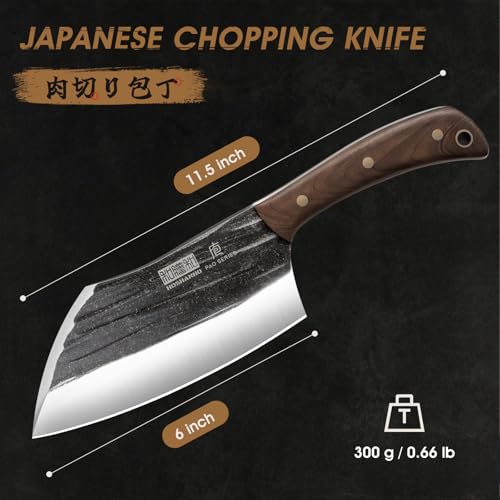
Versatile Meat and Vegetable Chopping: HOSHANHO 6-Inch Hand-Forged Cleaver Knife
The HOSHANHO 6-inch cleaver handles delicate vegetables, meat, and bones with its dual-blade design, reducing the need for multiple knives. It suits home cooks who want one hand-forged chopper for varied kitchen prep and are willing to hand-wash it.
Pros and Cons
Pros
- The two edge angles give this cleaver more versatility than a single-purpose chopping knife.
- High-carbon stainless steel and hand-forged construction are designed for durability and impact resistance.
- The walnut handle has an ergonomic shape and three-rivet reinforcement for controlled cutting.
- The compact 6-inch format can handle everyday meat, vegetable, and bone preparation.
Cons
- It should be hand-washed and dried after use because dishwasher cleaning may damage the blade.
- The product data does not list the knife's weight, which may matter to buyers who prefer a specific heft.

Editors' Picks
HOSHANHO Versatile Meat and Vegetable Chopping: HOSHANHO 6-Inch Hand-Forged Cleaver Knife
HOSHANHO
Versatile Meat and Vegetable Chopping: HOSHANHO 6-Inch Hand-Forged Cleaver Knife
The HOSHANHO 6-inch cleaver handles delicate vegetables, meat, and bones with its dual-blade design, reducing the need for multiple knives. It suits home cooks who want one hand-forged chopper for varied kitchen prep and are willing to hand-wash it.
$35.97 at AmazonEditors' Favorite
Color: Silver Size: 5.9" Weight: 0.65 Pounds Product Group: BISS Binding: Home
Shop Nowimarku 7" Meat Cleaver, Japanese SUS440A Steel, Ultra Sharp Butcher Knife
Great Value
Color: Bronze Size: 7" Dimensions: 13 x 4 x 1 inches Weight: 0.55 pounds Product Group: Kitchen Binding: Kitchen
Shop NowThe Core Difference
Everything comes down to how each blade works meat: one slices and separates, the other chops through. Understanding that split clarifies everything.
A butcher knife has a long, curved, stiff blade (typically 6-10+ inches) with a curved tip (traditionally sloped or “scimitar”-shaped). It’s designed for slicing, trimming, and breaking down large cuts of meat — the curve helps with long slicing strokes and separating meat, and the stiffness gives control for trimming fat and portioning. It works with the meat, slicing and separating, not smashing through bone.
A cleaver has a heavy, thick, rectangular blade. There are two very different types:
- Western (meat) cleaver: heavy and thick, designed to chop through bone and joints with its weight and force — the tool for hacking through poultry bones, splitting small bones, and heavy butchery. It cleaves through hard material.
- Chinese cleaver (cai dao): looks similar (rectangular) but is thinner and lighter, and is actually a versatile all-purpose knife for slicing, dicing, and mincing vegetables and boneless meat — not for chopping bone. It’s more like a wide chef’s knife than a bone-chopper.
The fundamental contrast: the butcher knife slices and breaks down meat (working around and through soft tissue); the Western cleaver chops through bone with brute force; the Chinese cleaver is a versatile prep knife. Same “big blade” impression, very different jobs. Our best butcher knife guide covers the slicing/breakdown blade.
What a Butcher Knife Does
The butcher knife is a meat-breakdown and slicing specialist. Here’s its territory.
Breaking down large cuts: separating primal cuts, sectioning large pieces of meat, and general butchery of boneless (or around-the-bone) meat. The long curved blade makes efficient work of big cuts.
Trimming: removing fat, silver skin, and connective tissue from roasts and large cuts — the stiff blade gives control.
Slicing raw meat: portioning steaks, slicing large cuts into pieces, and prepping meat for cooking. The curve aids long slicing strokes.
Some slicing of cooked meat, though a dedicated carving/slicing knife is better for neat cooked slices.
Where it stops: the butcher knife slices and separates but is not for chopping through bone — that’s a cleaver’s job. It works around bones and through soft tissue, not through hard bone. Use it for breaking down and trimming, not hacking.
The butcher knife is for the person who breaks down large quantities of meat — home butchers, hunters processing game, people who buy large cuts. See our best butcher knife guide.
What a Cleaver Does
The cleaver’s job depends entirely on which type you mean, so here’s each.
Western (meat) cleaver:
- Chopping through bone: splitting poultry (chicken, duck), cutting through small bones, sectioning bone-in cuts. Its weight does the work — you let the heavy blade fall.
- Heavy butchery: hacking through joints and tough material where force is needed.
- Cracking and smashing: the flat side can crack bones or smash garlic.
- It’s a brute-force tool, not a precision one — for tasks needing power through hard material.
Chinese cleaver (cai dao):
- All-purpose prep: slicing, dicing, and mincing vegetables and boneless meat — it’s the everyday workhorse knife in many Asian kitchens, used like a Western chef’s knife.
- Scooping: the wide flat blade scoops chopped food off the board to the pan.
- Smashing: garlic and ginger with the flat side.
- Despite looking like a bone-chopper, the thin Chinese cleaver is not for bone — it’s a versatile thin-bladed prep knife.
The key confusion to avoid: don’t use a thin Chinese cleaver to chop bone (it’ll chip), and don’t expect a heavy Western cleaver to finely dice vegetables (it’s too heavy and blunt-angled). They look alike but are opposite tools. If you want bone-chopping power, get a Western cleaver; if you want a versatile prep knife, a Chinese cleaver (or just a chef’s knife).
Which Do You Need?
For most home cooks, the honest answer is “probably neither, unless you do specific tasks” — here’s how to decide.
You need a butcher knife if you break down large cuts of meat, process game or hunt, buy whole/primal cuts to portion yourself, or do significant home butchery. For these tasks it’s efficient and purpose-built. Most everyday home cooks who buy pre-cut meat don’t need one — a chef’s knife handles occasional trimming.
You need a Western cleaver if you regularly chop through bone — sectioning bone-in poultry, splitting bones, heavy butchery. If you frequently break down whole chickens through the bone or do bone-in butchery, it’s the right tool. Occasional cooks rarely need one; kitchen shears or a chef’s knife handle light bone-in poultry work.
You might want a Chinese cleaver if you want a versatile all-purpose prep knife (many cooks love them as a chef’s-knife alternative for vegetables and boneless meat), especially for Asian cooking. It’s a genuine everyday knife, not a specialist — a matter of preference versus a chef’s knife.
The bottom line for most kitchens: a chef’s knife covers the vast majority of cutting. Add a butcher knife only if you break down large cuts of meat, a Western cleaver only if you chop bone, and consider a Chinese cleaver if you want an all-purpose prep alternative. See our best butcher knife and best chef knife guides.
Frequently Asked Questions
What’s the difference between a butcher knife and a cleaver?
A butcher knife is a long, curved, stiff blade for slicing, trimming, and breaking down large cuts of meat — it works around and through soft tissue, not bone. A cleaver is either a heavy rectangular Western cleaver for chopping through bone with brute force, or a thinner Chinese cleaver that’s a versatile all-purpose prep knife. In short: the butcher knife slices and separates meat; the Western cleaver chops through bone; the Chinese cleaver preps like a chef’s knife. Different tools for different tasks.
Can a butcher knife cut through bone?
No, not really. A butcher knife is designed to slice, trim, and break down meat — working around bones and through soft tissue — not to chop through bone. Trying to hack bone with it can damage or chip the edge. For cutting through bone, you need a heavy Western cleaver (which uses weight and force) or a bone saw. The butcher knife’s job is separating and slicing meat, leaving bone-chopping to the cleaver.
Is a Chinese cleaver for chopping bones?
No — this is a common and costly mistake. A Chinese cleaver (cai dao) looks like a heavy bone-chopper but is actually a thinner, lighter, versatile prep knife for slicing, dicing, and mincing vegetables and boneless meat, used like a Western chef’s knife. Chopping bone with it will chip or damage the thin blade. Only a heavy Western meat cleaver is built to chop through bone. If you have a Chinese cleaver, treat it as an all-purpose prep knife, not a bone tool.
Do I need a cleaver at home?
Only for specific tasks. A Western cleaver is worth it if you regularly chop through bone — sectioning bone-in poultry, splitting bones, heavy butchery. A Chinese cleaver is worth it if you want a versatile all-purpose prep knife (a chef’s-knife alternative), especially for Asian cooking. Most everyday home cooks who buy pre-cut meat need neither — a chef’s knife and kitchen shears handle occasional bone-in poultry and all prep. Buy a cleaver for its specific job, not by default.
What is a butcher knife best for?
A butcher knife is best for breaking down and slicing large cuts of raw meat: sectioning primal cuts, trimming fat and silver skin, portioning steaks, and general home butchery. Its long, curved, stiff blade makes efficient slicing strokes and gives control for trimming. It’s ideal for home butchers, hunters processing game, and anyone buying whole or primal cuts to portion themselves. It’s not for chopping bone (use a cleaver) or neat carving of cooked roasts (use a carving knife).
Should I get a butcher knife or a chef’s knife?
For most home cooks, a chef’s knife — it’s the versatile everyday workhorse for chopping, slicing, dicing, and general prep, and handles occasional meat trimming fine. A butcher knife is a specialist for breaking down large quantities of raw meat, worth adding only if you do significant home butchery, process game, or buy whole cuts to portion. Start with a quality chef’s knife; add a butcher knife if your meat-breakdown needs justify a dedicated blade. See our best chef knife and best butcher knife guides.
Related buying guides: best knife sets, best bread knife and best chef knife under 100.
The Bottom Line
Butcher knives and cleavers look like similar “big meat blades” but do opposite jobs. A butcher knife is a long, curved, stiff blade for slicing, trimming, and breaking down large cuts of meat — working around soft tissue, not through bone. A Western cleaver is a heavy rectangular blade for chopping through bone with brute force. A Chinese cleaver looks similar but is a thinner, versatile all-purpose prep knife (not for bone). Most home cooks need neither beyond a chef’s knife — add a butcher knife for meat breakdown, a Western cleaver for bone-chopping. See our best butcher knife and best chef knife guides.


Write Your Review
No reviews yet. Be the first to share your experience!