

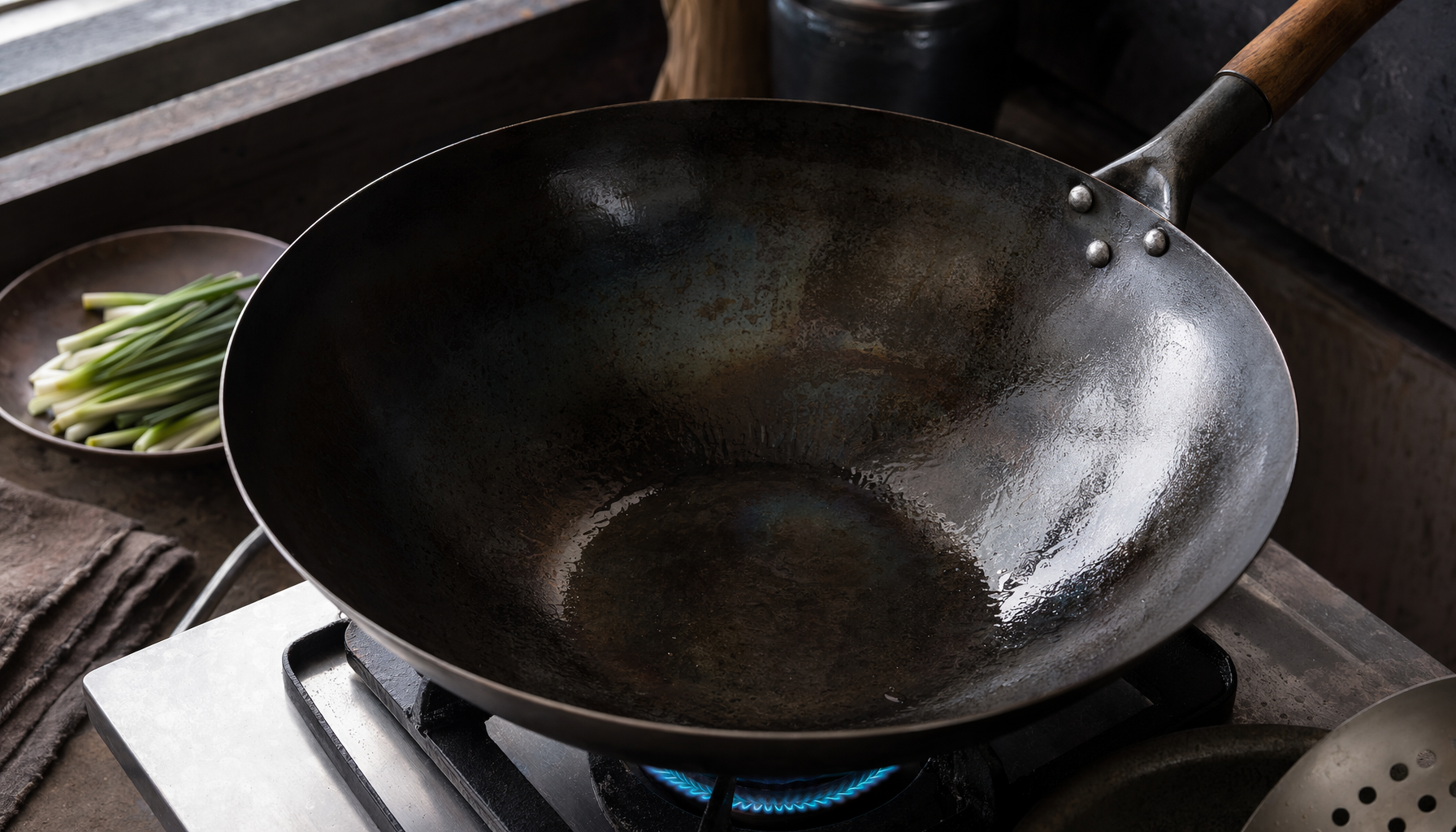
To season a wok properly in 2026, you strip the protective factory lacquer, heat the bare carbon steel until it changes color to bluish-bronze, then bake on three to five thin oil layers using the high-heat smoke method. The whole job takes about ninety minutes on a strong burner, costs roughly two dollars in oil, and turns a raw silver pan into a slick, mahogany-black cooking surface that gets better with every stir-fry. Skip any step and you’ll end up with a sticky, splotchy finish that food clings to like glue.
The Best Deals This Week*
-
13-Inch Stainless Steel Wok Pan Nonstick Induction
$37.99
($42.99)Save $5.00 -
Babish 14 Inch Carbon Steel Wok Flat Bottom Stir
$39.99
($49.99)Save $10.00
*Deals are selected by our commerce team
Deeper Dive: Our Top Picks
Our Top Picks

YOSUKATA
13.5" Carbon Steel Wok – Flat Bottom, Pre-Seasoned, All Stovetops
This pre-seasoned carbon steel wok delivers restaurant-quality stir-fry on gas, electric, induction, and open flame with a naturally non-stick surface that improves with use. Buy it if you want authentic Asian cooking without chemical coatings, PTFE-free safety, and a wok that lasts decades.
Pros and Cons
Pros
- Flat bottom design sits flush on all cooktop types, eliminating wobbling and heat loss.
- Pre-seasoned finish means you skip the tedious seasoning process and cook the same day.
- Chemical-free carbon steel develops its own non-stick patina, improving with every meal you prepare.
- Ergonomic wooden handle stays cool and provides secure grip during extended cooking sessions.
Cons
- Requires hand-washing only and careful drying to prevent rust—no dishwasher convenience.
- At 4.1 lbs, it's heavy for extended overhead cooking and demands proper storage space.

YOSUKATA
13.5" Carbon Steel Wok – Pre-Seasoned Flat Bottom for Stir Fry & Camping
This pre-seasoned carbon steel wok delivers restaurant-quality heat distribution and builds a natural non-stick surface with every use, eliminating toxic PTFE coatings. Buy it if you want authentic Asian cooking results at home or need versatile outdoor cookware that works on gas, induction, electric, and open fire.
Pros and Cons
Pros
- Pre-seasoned construction means you can start cooking immediately instead of spending hours seasoning before first use.
- Flat bottom provides stable contact on all stovetop types, including induction and electric ranges that round-bottom woks can't use.
- Carbon steel builds authentic flavor through proper oil layering and handles high heat better than non-stick alternatives.
Cons
- Requires hand-washing only and careful drying to prevent rust—dishwasher use and storage in moisture will damage the seasoning.
- Food sticks if the wok isn't preheated until smoking or if you don't use enough oil, requiring a cooking technique adjustment.

XOHUYD
13-Inch Stainless Steel Wok Pan Nonstick Induction Cooktop
This XOHUYD wok heats 30% faster than traditional pans thanks to its embossed 3-ply base, while the laser-etched nonstick surface requires minimal oil and cleans in seconds without scrubbing. Buy it if you cook stir-fries regularly and want restaurant-quality results without PFOA chemicals or lengthy cleanup.
Pros and Cons
Pros
- Embossed base eliminates cold spots and distributes heat evenly across the cooking surface for consistent results.
- PFOA-free construction with certified 304 stainless steel interior makes this safe for families concerned about chemical coatings.
- Ergonomic stay-cool handle and 13-inch diameter provide comfortable control and ample space for tossing without spillage.
Cons
- Stainless steel surface requires proper technique to prevent sticking initially, though the laser-etching minimizes this issue significantly.
- Heavier than non-stick aluminum woks, which some cooks may find fatiguing during extended high-heat cooking sessions.

Babish
14 Inch Carbon Steel Wok Flat Bottom Stir Fry Pan
This heavy-gauge carbon steel wok distributes heat evenly and builds a natural nonstick surface with seasoning, using less oil than traditional skillets. Buy it if you stir-fry regularly or want a durable, multi-cooktop wok that handles gas, electric, ceramic, and induction.
Pros and Cons
Pros
- Flat bottom design provides stable contact with electric and induction cooktops, unlike traditional round-bottom woks that require ring adapters.
- Heavy construction absorbs and retains heat efficiently, maintaining consistent cooking temperature even when adding cold ingredients mid-stir-fry.
- Removable wooden handle allows oven seasoning up to 500°F, giving you two seasoning methods to build a stronger nonstick layer.
Cons
- Requires initial seasoning before first use and ongoing maintenance to prevent rust, adding prep time compared to nonstick or stainless steel pans.
- Carbon steel is reactive to acidic foods like tomato sauce or lemon juice, which can strip seasoning and affect flavor if not rinsed quickly.

Lodge
14 Inch Cast Iron Wok – Pre-Seasoned, PFAS-Free, Made in USA
This Lodge wok delivers superior heat retention and even cooking across its generous 14-inch bowl-shaped surface, ready to use straight from the box with natural vegetable oil seasoning. Buy it if you cook stir-fries, fried rice, or high-heat dishes regularly and want a durable, chemical-free pan that improves with every use.
Pros and Cons
Pros
- Made in USA by a family-owned company since 1896, ensuring quality control and ethical manufacturing standards.
- PFOA and PTFE-free construction means no synthetic chemicals leach into food during cooking.
- Flat base sits stable on all stovetop types and conducts heat evenly across bottom and sidewalls for consistent results.
Cons
- Cast iron requires hand-washing and immediate drying to prevent rust; dishwasher use will damage the seasoning layer.
- Heavy weight (approximately 10 lbs) makes it challenging to handle for users with limited grip strength or mobility.
Editors' Picks
YOSUKATA 13.5" Carbon Steel Wok – Flat Bottom, Pre-Seasoned, All Stovetops
YOSUKATA
13.5" Carbon Steel Wok – Flat Bottom, Pre-Seasoned, All Stovetops
This pre-seasoned carbon steel wok delivers restaurant-quality stir-fry on gas, electric, induction, and open flame with a naturally non-stick surface that improves with use. Buy it if you want authentic Asian cooking without chemical coatings, PTFE-free safety, and a wok that lasts decades.
$94.99 at AmazonEditors' Favorite
Brand Name: YOSUKATA Model Name: Blue Carbon Steel Wok Recommended Uses For Product: sautéing, frying, braising, deep-frying, stir-frying Specific Uses For Product: pan-frying, braising, deep-frying, indoor cooking, outdoor cooking, electric stove, induction cooktop, gas cooker, open fire, BBQ, grill, outdoor camping UPC: 742033738696 Model Number: 123 Manufacturer Part Number: 123 Manufacturer: YOSUKATA Unit Count: 1.0 Count Best Sellers Rank: #6,090 in Kitchen & Dining (See Top 100 in Kitchen & Dining) #9 in Woks & Stir-Fry Pans ASIN: B08HMXMG2H Customer Reviews: 4.2 4.2 out of 5 stars (2,704) 4.2 out of 5 stars Capacity: 5.2 Quarts Item Weight: 6 Pounds Material Type: Carbon Steel Product Care Instructions: Hand Wash Only Handle Material: Carbon Steel Has Nonstick Coating: No Is the item dishwasher safe?: No Metal Type: Carbon Steel Coating Description: Uncoated Additional Features: Electric Stovetop Compatible, Gas Stovetop Compatible, Induction Stovetop Compatible, Open Fire, BBQ, Grill, Outdoor Camping Wok Compatible Devices: Electric Coil, Gas, Smooth Surface Induction, Smooth Surface Non Induction Maximum Temperature: 600 Degrees Fahrenheit Is Oven Safe: No Shape: Rounded Color: Blue Brand: YOSUKATA Material: Carbon Steel Special Feature: Electric Stovetop Compatible, Gas Stovetop Compatible, Induction Stovetop Compatible, Open Fire, BBQ, Grill, Outdoor Camping WokElectric Stovetop Compatible, Gas Stovetop Compatible, Induction Stovetop Compatible, Open Fire, BBQ, Grill, Outdoor Camping Wok See more
Shop NowYOSUKATA 13.5" Carbon Steel Wok – Pre-Seasoned Flat Bottom for Stir Fry & Camping
YOSUKATA
13.5" Carbon Steel Wok – Pre-Seasoned Flat Bottom for Stir Fry & Camping
This pre-seasoned carbon steel wok delivers restaurant-quality heat distribution and builds a natural non-stick surface with every use, eliminating toxic PTFE coatings. Buy it if you want authentic Asian cooking results at home or need versatile outdoor cookware that works on gas, induction, electric, and open fire.
$62.99 at AmazonGreat Value
Brand Name: YOSUKATA Model Name: Black Carbon Steel Recommended Uses For Product: stir-frying, deep-frying, pan-frying, braising, grilling Specific Uses For Product: stir-frying, deep-frying, pan-frying, braising, grilling UPC: 791109001363 Manufacturer Warranty Description: 30 days Model Number: 123 Manufacturer Part Number: 123 Manufacturer: YOSUKATA Unit Count: 1.0 Count Item Type Name: Wok Included Components: wok Best Sellers Rank: #2,494 in Kitchen & Dining (See Top 100 in Kitchen & Dining) #6 in Woks & Stir-Fry Pans ASIN: B084DQYNNM Customer Reviews: 4.2 4.2 out of 5 stars (5,492) 4.2 out of 5 stars Color: Black Material Type: Carbon Steel Product Care Instructions: Hand Wash Only Handle Material: New Zealand Beech Wood Has Nonstick Coating: No Is the item dishwasher safe?: No Metal Type: Carbon Steel Coating Description: Pre-Seasoned Additional Features: BBQ, Gas Stovetop Compatible, Grill, Induction Stovetop Compatible, Open Fire Compatible Devices: Electric Coil, Gas, Smooth Surface Induction Maximum Temperature: 600 Degrees Fahrenheit Is Oven Safe: No Shape: rounded bottom with sloped sides Capacity: 0.44 Gallons Item Weight: 3.6 Pounds Brand: YOSUKATA Material: Carbon Steel Special Feature: BBQ, Gas Stovetop Compatible, Grill, Induction Stovetop Compatible, Open Fire
Shop NowXOHUYD 13-Inch Stainless Steel Wok Pan Nonstick Induction Cooktop
XOHUYD
13-Inch Stainless Steel Wok Pan Nonstick Induction Cooktop
This XOHUYD wok heats 30% faster than traditional pans thanks to its embossed 3-ply base, while the laser-etched nonstick surface requires minimal oil and cleans in seconds without scrubbing. Buy it if you cook stir-fries regularly and want restaurant-quality results without PFOA chemicals or lengthy cleanup.
$37.99 at AmazonBrand Name: XOHUYD Model Name: Woks Pans Recommended Uses For Product: Braising, Frying, Sautéing, Searing, Stir Frying Specific Uses For Product: Frying & Simmering, Sautéing, Searing, baking, cooking Model Number: XOHUYDCG001 Manufacturer: XOHUYD Unit Count: 1.0 Count Included Components: Lid Best Sellers Rank: #12,453 in Kitchen & Dining (See Top 100 in Kitchen & Dining) #26 in Woks & Stir-Fry Pans ASIN: B0FHK5TQLN Customer Reviews: 4.6 4.6 out of 5 stars (253) 4.6 out of 5 stars Capacity: 4 Quarts Material Type: 304 Stainless Steel Product Care Instructions: Dishwasher Safe Handle Material: Stainless Steel Has Nonstick Coating: Yes Is the item dishwasher safe?: Yes Metal Type: Stainless Steel Coating Description: Physical, non-chemical nonstick coating Additional Features: Ergonomic Handle, Heavy Duty, Includes Lid, Non Stick, Oven Safe Compatible Devices: Electric Coil, Gas Is Oven Safe: Yes Shape: rounded bottom with sloped sides Color: Silver Brand: XOHUYD Material: 304 Stainless Steel Special Feature: Ergonomic Handle, Heavy Duty, Includes Lid, Non Stick, Oven Safe
Shop NowBabish 14 Inch Carbon Steel Wok Flat Bottom Stir Fry Pan
Babish
14 Inch Carbon Steel Wok Flat Bottom Stir Fry Pan
This heavy-gauge carbon steel wok distributes heat evenly and builds a natural nonstick surface with seasoning, using less oil than traditional skillets. Buy it if you stir-fry regularly or want a durable, multi-cooktop wok that handles gas, electric, ceramic, and induction.
$39.99 at AmazonBrand Name: Babish Model Name: Carbon Steel Recommended Uses For Product: Sautéing, Stir Frying Specific Uses For Product: stir-frying, sautéing, deep-frying UPC: 085081544674 Global Trade Identification Number: 00085081544674 Model Number: 131286.01R Manufacturer Part Number: 131286.01R Manufacturer: Gibson Overseas, Inc Item Type Name: Carbon Steel Wok Included Components: Babish Carbon Steel Wok, 14-Inch Best Sellers Rank: #10,157 in Kitchen & Dining (See Top 100 in Kitchen & Dining) #16 in Woks & Stir-Fry Pans ASIN: B09GRXQGRN Customer Reviews: 4.5 4.5 out of 5 stars (1,326) 4.5 out of 5 stars Color: Carbon Steel Material Type: Carbon Steel Product Care Instructions: Hand Wash Only Handle Material: Wood Has Nonstick Coating: No Is the item dishwasher safe?: No Metal Type: Carbon Steel Coating Description: Natural Seasoning for Non-Stick Capability Additional Features: Induction Stovetop Compatible Compatible Devices: Electric Coil, Gas, Smooth Surface Induction Maximum Temperature: 500 Degrees Fahrenheit Is Oven Safe: No Shape: Cylinder with flat bottom Item Weight: 5 Pounds Brand: Babish Material: Carbon Steel Special Feature: Induction Stovetop Compatible
Shop NowLodge 14 Inch Cast Iron Wok – Pre-Seasoned, PFAS-Free, Made in USA
Lodge
14 Inch Cast Iron Wok – Pre-Seasoned, PFAS-Free, Made in USA
This Lodge wok delivers superior heat retention and even cooking across its generous 14-inch bowl-shaped surface, ready to use straight from the box with natural vegetable oil seasoning. Buy it if you cook stir-fries, fried rice, or high-heat dishes regularly and want a durable, chemical-free pan that improves with every use.
$49.90 at AmazonBrand Name: Lodge Model Name: L14W Recommended Uses For Product: cooking stir-fries, ramen, fajitas, scrambled eggs; suitable for induction cooktops, stoves, grills Specific Uses For Product: stir-frying, steaming, frying, handling eggs and fajitas, suitable for stoves, grills, and induction cooktops UPC: 075536396057 Global Trade Identification Number: 10075536396054 Model Number: L14W Manufacturer Part Number: L14W Manufacturer: Lodge Unit Count: 1.0 Count Item Type Name: Cast Iron Best Sellers Rank: #8,481 in Kitchen & Dining (See Top 100 in Kitchen & Dining) #13 in Woks & Stir-Fry Pans ASIN: B09VJ779W4 Customer Reviews: 4.6 4.6 out of 5 stars (6,043) 4.6 out of 5 stars Material Type: Cast Iron Product Care Instructions: Hand Wash Only Handle Material: Cast Iron Has Nonstick Coating: No Is the item dishwasher safe?: No Metal Type: Cast Iron Coating Description: Natural Vegetable Oil Seasoning Additional Features: Made without PFOA or PTFE Compatible Devices: Smooth Surface Induction Is Oven Safe: Yes Shape: bowl-shaped Capacity: 12 ounces Color: Black Brand: Lodge Material: Cast Iron Special Feature: Made without PFOA or PTFE
Shop NowAbout These Recommendations
The technique above is the point of this guide; the products are here because they help. We have not tested them ourselves — we did not buy or use this gear. The recommendations come from comparing specifications and materials against the patterns in verified owner reviews, so treat them as a shortlist worth researching rather than a verdict from our own kitchen.
Availability and prices change often, so check the current listing before buying. We earn a commission on purchases made through links on this page, which never affects what we recommend.
The Short Answer
To season a wok, you have to start with raw metal. Carbon steel woks arrive with a thin coat of factory oil to prevent shipping rust, and that coating must come off before any patina can bond. Scrub the wok with hot soapy water and steel wool until the metal looks raw silver. Dry it over high flame, rotating to drive moisture out of every dimple. Then heat the empty pan until it shifts from silver to straw-yellow to deep blue — the steel is now ready to accept oil. Wipe on the thinnest possible film of grapeseed or peanut oil, heat until smoke stops, cool slightly, and repeat. By the fourth coat you’ll have a brown-bronze surface; by the fifth, near-black. The best wok for gas stove guide covers which pans season fastest if you’re still shopping.
What Wok Seasoning Actually Is
Wok seasoning is two chemical layers stacked on top of each other, not a single coating. The first is iron oxide — a thin, controlled rust layer formed when bare carbon steel hits high heat in open air. That oxide is what gives a properly seasoned wok its distinctive bluish-bronze tint and acts as the anchor for everything that follows. The second layer is polymerized oil. When you heat a thin film of cooking oil past its smoke point, the fatty acid chains fragment and recombine into long, cross-linked polymer chains that bond to the oxide beneath. The result behaves like a hard varnish: slick, food-safe, and stable up to around 600°F.
When you season a wok correctly, you can watch the chemistry happen. A factory-fresh wok looks mirror-silver. Heat it dry over a roaring burner and within two or three minutes the metal blooms straw-yellow, then bronze, then a deep iridescent blue that sweeps across the bowl like a heat map. That color shift is the oxide layer forming. Once oil hits the blued surface and smokes off, the pan darkens to brown. Each subsequent coat deepens the color until the bowl reaches the matte black you see on a hard-working restaurant wok.
The natural nonstick comes from the polymer’s microscopic texture. Carbon steel is pebbled at the molecular scale, and the polymerized oil fills those valleys while leaving slick peaks. Eggs slide. Noodles release. Fond builds without scorching. None of this is a coating — strip it back and the iron underneath is unchanged. That’s why a properly seasoned wok can last fifty years while a Teflon pan rarely sees five.
Choosing the Right Oil
When you season a wok, smoke point dictates everything. The oil has to vaporize cleanly past its smoke point so the fatty acids can polymerize instead of carbonizing into soot. Grapeseed (around 420°F) is the modern default — cheap, neutral, high in polyunsaturated fats that react aggressively with oxygen at heat. Avocado oil clocks the highest usable smoke point at roughly 520°F and tolerates the brutal temperatures a wok hits without filling your kitchen with haze. Peanut oil sits around 450°F and carries cultural pedigree — it’s what most Cantonese kitchens have used for generations and pairs naturally with the dishes the wok will eventually cook.
Flaxseed oil deserves a mention because it polymerizes faster than anything else, but it’s a divisive pick for woks specifically. The resulting patina is hard and very slick, yet brittle — under the thermal shock of a 700°F flame followed by a cold rinse, flax layers can chip off in sheets. Better to save flax for cast iron skillets that see gentler temperature swings.
What fails: extra-virgin olive oil smokes at 350-410°F, well below polymerization temperature, and burns into bitter black streaks. Butter contains milk solids that scorch instantly. Coconut oil is mostly saturated fat — stable but chemically unreactive, so it forms weak bonds that wipe off within a week.
Quick rank when you season a wok for the first time: peanut > grapeseed > avocado > sunflower. After the patina has hardened through a month of normal cooking, almost any high-heat fat will maintain it.
The Step-by-Step Process
Step 1: Strip the Factory Coating
Brand-new carbon steel woks ship slathered in a clear protective lacquer — sometimes machine oil, sometimes a vegetable wax — to prevent rust between the foundry and your stove. That coating must come off completely or the seasoning won’t bond.
Fill the sink with the hottest tap water you can stand, add a generous squeeze of dish soap, and scrub every interior surface with a stainless steel scouring pad. Get the rim, the curved walls, and especially the bottom. Don’t be gentle. The goal is bare, dull-silver metal. Rinse, then check by running a clean fingertip across the bowl — it should squeak, not feel slick. If there’s any waxy drag, scrub again. Some woks need two rounds. Once the metal squeaks, rinse thoroughly with hot water.
Step 2: Heat the Bare Wok to Bluing
Place the dripping wok on your strongest burner, turn the flame to maximum, and walk away for thirty seconds while the water flashes off. Now the show starts. Within a minute the silver color will shift to pale yellow at the hottest spot. Tilt and rotate the wok continuously so the heat sweeps the whole bowl evenly — wear an oven mitt and keep moving. Yellow turns to bronze, bronze deepens to a copper-red, and finally a deep iridescent blue blooms across the metal. That blue is the controlled oxide layer. The whole bluing takes five to ten minutes depending on burner strength.
Step 3: Cool, Wipe, Apply Thin Oil Coat
Kill the flame and let the wok cool for about three minutes — still hot, but not glowing. Pour a half-teaspoon of grapeseed or peanut oil into the center and use a wad of paper towel held in tongs to spread it across every interior surface, including the sides and rim. Now wipe it back off with a fresh dry towel as if you’re trying to remove the oil entirely. The wok should look almost dry, with only the faintest sheen catching the light. This is the single most counter-intuitive step and the one beginners get wrong.
Step 4: Heat Until Smoke Stops
Return the wok to high heat. Within twenty seconds it will start smoking — that’s the oil polymerizing. Keep the heat on and tilt the wok slowly so the smoke wave travels around the bowl. The surface will darken from blue-bronze to a warm brown. After about ninety seconds the smoke will taper off, signaling the polymer has fully set. Pull the wok off the flame.
Step 5: Repeat for 3-5 Layers
Let the wok cool until you can hold the handle bare-handed, then run Steps 3 and 4 again. Each cycle takes about five minutes. By the third coat the bowl is chocolate-brown. By the fourth, dark mahogany. The fifth coat pushes the color toward matte black and is where most home cooks stop. Restaurant woks reach pure black through months of daily use, not extra seasoning coats. Three coats is the working minimum; five is the comfortable maximum for a first session.
Maintaining the Patina Over Time
Once you season a wok, the patina deepens through cooking, not through repeated formal seasoning sessions. Every time you stir-fry with oil, render bacon fat, or scorch ginger and garlic over high flame, you’re adding microscopic layers of polymer on top of the foundation you just built. A well-loved wok at the five-year mark is darker, slicker, and more forgiving than the same pan at month one.
Two habits keep the patina alive. First, cook fat-forward dishes during the first month — stir-fries with peanut oil, fried rice, scallion pancakes. Avoid acidic ingredients (tomato sauce, vinegar-heavy dishes, citrus reductions) until the polymer has had thirty days to harden, because acids strip young seasoning quickly. Second, after each wash, dry the wok over high heat for one minute and wipe a few drops of oil across the cooking surface with a paper towel. Store it bone-dry. Wet storage is what causes rust to bloom underneath the patina.
Soap is not the enemy — modern detergent doesn’t strip polymerized oil — but soap is also rarely needed. Hot water and a soft sponge handle most cleanup. Save the steel wool for actual emergencies like a rust spot or burned-on protein. For matching pan care across your kitchen, the how to season cast iron skillet guide walks through the same polymerization chemistry applied to oven-baked iron. The patina you’re building now will outlast most other cookware in your kitchen.
Common Mistakes
- Skipping the strip-down. The factory lacquer is invisible after a quick rinse, so it’s tempting to start oiling immediately. Don’t. The coating melts under heat, blocks polymer bonding, and leaves a tacky residue that flakes within days. Scrub until the bare metal squeaks before you turn on the burner.
- Too much oil per layer. A puddle of oil bakes into a sticky, lacquer-like film that gums up and chips off in flakes. After applying oil, wipe it back as if you’re trying to remove every drop. The wok should look almost dry. If you can see oil pooling anywhere — at the bottom, on the rim, around the handle base — you have too much.
- Using low heat. Polymerization is a temperature reaction, not a time reaction. Medium heat will warm the oil and make it shiny, but it won’t break the fatty acid chains. The oil needs to actively smoke for at least a minute per coat. If you’re not seeing visible smoke pouring off the bowl, the burner isn’t hot enough.
- Cooking acidic foods too early. Tomato sauces, wine reductions, citrus marinades, and vinegar-based sauces will dissolve a young patina before it has hardened. Save those dishes for week five or later. Stick to oil-forward stir-fries, fried rice, and seared proteins for the first month while the polymer cures through normal use.
- Soap-washing in the first month. While established seasoning shrugs off modern detergent, fresh patina is more vulnerable. For the first thirty days, clean the wok with hot water, a bamboo brush or soft sponge, and a quick reheat to dry. Save soap for true emergencies — a fish dinner that left odors, or a burned-on mess that water won’t budge.
Related Questions
How long does wok seasoning last?
A properly built and maintained patina lasts indefinitely — restaurant woks regularly hit twenty or thirty years of daily service without a re-season. Home woks fail seasoning through neglect (wet storage, soaking in the sink, dishwasher use) rather than wear. Cook with the pan, dry it immediately after washing, and the patina will outlast most appliances in your kitchen.
Can I season a carbon steel wok in the oven?
Technically yes, but it’s a poor choice. Home ovens cap around 550°F, which is below the temperature most wok recipes hit on a strong burner, and the curved shape doesn’t conduct heat evenly when surrounded by still oven air. You’ll end up with a thin, uneven patina concentrated where the metal touches the rack. Stovetop seasoning matches the temperature profile of actual wok cooking and produces a more durable surface.
Why does my wok lose its non-stick?
Three usual suspects. First, acidic cooking before the patina hardened — tomato or vinegar dishes in week one strip the polymer down to bare metal. Second, soap-soaking during cleanup, which slowly degrades young seasoning. Third, dishwasher exposure, which is fatal to any carbon steel patina. The fix is a quick re-season: scrub the bare patches with steel wool, heat to bluing, and apply two or three fresh oil coats.
Should I season a stainless steel wok?
No. Stainless steel doesn’t form a controlled oxide layer the way carbon steel does, and polymerized oil won’t bond to its chromium-rich surface long enough to matter. A stainless wok cleans up like any other stainless pan — hot water, soap, optional barkeeper’s friend for stuck-on bits. The trade-off is permanent stickiness with delicate proteins, which is why most serious wok cooks default to carbon steel.
What if rust spots appear?
Small rust spots are cosmetic and easy to fix. Scrub the affected area with steel wool until the rust is gone and bare silver metal shows. Wash, dry over high heat, then spot-season just that patch: heat to bluing, apply a thin oil layer, smoke it off. One or two coats will blend the repair into the surrounding patina. Persistent rust means moisture is reaching the bare metal somewhere — usually the rim or handle base where seasoning is thinnest. Re-oil after every wash for a week to seal it.
Related buying guides: best carbon steel pan for cooking, best stainless steel cookware, best cast iron skillet for beginners and best chef knives on a budget.
Recommended Tools
A flat-bottomed carbon steel wok in the 12 to 14-inch range handles most home stovetops without rocking, and the steel gauge matters more than the brand name. Look for 1.6mm to 2mm thickness — heavy enough to hold heat but light enough to toss food. A wooden or bamboo turner protects the patina better than metal spatulas during the first month of cooking. Round these out with a bamboo wok brush for cleanup and a wok ring if your burner grate is too wide to cradle the curved bottom.



Write Your Review
No reviews yet. Be the first to share your experience!