

TL;DR — For a glass-top (smooth-top) electric stove, choose cookware with flat, smooth, lightweight-to-medium bottoms that make full contact and won’t scratch the glass: stainless steel, quality hard-anodized, and lightweight cast iron work well. Avoid rough, warped, or very heavy pans (like traditional bare cast iron dragged across the surface) that can scratch or crack the glass. Flat bottoms and gentle handling are the keys. The HomeWhisk team compiled this from cookware guidance and aggregated feedback. For picks, see our best cookware for glass top stove guide.
The HomeWhisk editorial team researches kitchen equipment by analyzing manufacturer specifications, material and design factors, and aggregated user reviews from major retailers and cooking communities. This guide reflects established cookware principles, not personal testing.
Glass-top (smooth-top) electric stoves look sleek but are sensitive to the wrong cookware — the smooth glass surface can scratch, and heat transfer depends on good contact. Here’s what to look for. For picks, see our best cookware for glass top stove guide.
What Matters for Glass-Top Stoves
Glass-top stoves have two specific concerns that dictate cookware choice: heat contact and surface protection.
Glass-top stoves heat by conduction through the glass. A heating element under the glass warms the surface, which transfers heat to the pan by direct contact. This means flat, smooth pan bottoms that sit flush against the glass are essential — good contact transfers heat efficiently and evenly, while warped, ridged, or uneven bottoms make poor contact, heating slowly and unevenly.
The glass surface can scratch and crack. The smooth glass is vulnerable to:
- Scratches from rough-bottomed cookware (like unfinished cast iron) or from dragging pans across the surface.
- Cracks from very heavy pans dropped on it, or from thermal shock (though quality glass tops are fairly robust).
- Damage from cookware with debris or rough burrs on the bottom.
So the two priorities for glass-top cookware are: 1. Flat, smooth bottoms for efficient heat contact. 2. Smooth (non-scratching), reasonably-weighted bottoms and gentle handling to protect the glass.
Everything about choosing glass-top cookware follows from these two needs — good contact for performance, smooth handling for protection. Unlike induction (which needs magnetic cookware), glass-top electric works with most materials, but the flatness and surface-protection factors matter more here. Our best cookware for glass top stove guide covers suitable options.
What to Look For
Here are the specific cookware features that suit a glass-top stove.
Flat, smooth bottoms: the single most important feature. The pan base should be perfectly flat (not warped or convex) and smooth, to sit flush on the glass for efficient, even heat transfer. Check that pans aren’t warped, and avoid cookware with ridged or textured bottoms.
Smooth (non-scratching) base material: the bottom shouldn’t be rough or abrasive. Polished stainless steel, smooth hard-anodized, and enameled bottoms are gentle on glass. Rough, unfinished cast iron is the classic scratch risk (see below).
Moderate weight: medium-weight cookware is ideal. Very heavy pans (like large bare cast iron) risk cracking the glass if dropped or dragged, and are harder to lift on and off cleanly. Lightweight-to-medium pans are easier to handle without scratching.
Good, appropriate base size: the pan bottom should roughly match the burner size for efficient heating and even contact.
Recommended materials for glass tops:
- Stainless steel: flat-bottomed, smooth, durable, and glass-safe — an excellent glass-top choice. See our best stainless steel cookware guide.
- Hard-anodized: smooth, flat, moderate weight — works well. See our hard-anodized guide.
- Nonstick (aluminum-based): lightweight and smooth-bottomed — fine for glass, and easy to handle.
- Enameled cast iron: the enamel bottom is smoother than bare cast iron; usable but still heavy, so handle carefully (lift, don’t drag).
- Lightweight cast iron / carbon steel: usable if the bottom is smooth and you handle it gently.
Titanium-base or flat-bottomed pans designed for smooth tops are also good.
Match these features — flat, smooth, moderate weight — to protect the glass and heat well. Our best cookware for glass top stove and best stainless steel cookware guides cover options.
What to Avoid (and Care Tips)
Knowing what damages glass tops and how to handle cookware protects your stove.
Cookware to avoid or use with caution on glass tops:
- Rough, unfinished bare cast iron: the rough bottom can scratch the glass, and its weight risks cracking if dropped. Enameled or smooth-bottomed cast iron is safer; if using bare cast iron, ensure the bottom is smooth and always lift (never drag).
- Warped or uneven-bottomed pans: poor contact means slow, uneven heating and wasted energy.
- Very heavy cookware: risk of cracking the glass if dropped; handle carefully.
- Cookware with rough, ridged, or dirty bottoms: any grit or roughness can scratch — keep pan bottoms clean and smooth.
- Stoneware/ceramic with rough bases or small-diameter pots that don’t sit flat.
Care and handling tips for glass-top stoves:
- Lift pans, don’t drag them across the glass — dragging is the top cause of scratches.
- Keep pan bottoms clean and dry before placing on the glass — debris or spills baked between the pan and glass can scratch or mark it.
- Avoid sliding heavy pans; place and lift them gently.
- Don’t use the glass top as a cutting or resting surface for rough items.
- Clean the glass with appropriate cooktop cleaner (not abrasive scrubbers), and wipe spills once cool (sugary spills can pit the glass if left).
- Match pan size to the element for efficiency and to avoid overheating the glass around a too-small pan.
The takeaway: choose flat, smooth, moderate-weight cookware (stainless steel, hard-anodized, enameled or smooth cast iron), and handle it gently — lift, don’t drag, and keep bottoms clean. This protects the glass and gives efficient, even heating. Our best cookware for glass top stove guide covers glass-safe cookware, and our best stainless steel cookware guide covers a top glass-top material.
Frequently Asked Questions
What cookware is best for a glass-top stove?
Cookware with flat, smooth bottoms that make full contact with the glass and won’t scratch it: stainless steel (flat, smooth, durable — an excellent choice), hard-anodized (smooth and moderate weight), lightweight nonstick, and enameled or smooth-bottomed cast iron. The keys are a flat, smooth base for efficient heat transfer and a non-scratching, moderate-weight design to protect the glass. Avoid warped, rough-bottomed, or very heavy pans. Stainless steel is often the top recommendation for glass tops. See our best cookware for glass top stove guide.
Can I use cast iron on a glass-top stove?
Yes, but carefully. Cast iron works on glass tops (it heats well), but bare cast iron’s rough bottom can scratch the glass, and its heaviness risks cracking the glass if dropped or dragged. Use enameled cast iron (smoother bottom) or ensure bare cast iron has a smooth base, and always lift it — never drag it across the glass. Handle it gently and place it down carefully. So cast iron is usable on glass tops with caution, but smoother, lighter cookware is lower-risk for the glass surface.
What cookware should I avoid on a glass-top stove?
Avoid rough, unfinished bare cast iron (can scratch), warped or uneven-bottomed pans (poor contact, uneven heating), very heavy cookware (crack risk if dropped), and pans with rough, ridged, or dirty bottoms (scratch risk). Also avoid dragging any pan across the glass, which is the top cause of scratches. Stick to flat, smooth, moderate-weight cookware and handle it gently. Keeping pan bottoms clean and lifting rather than sliding protects the glass from the most common damage.
Why does my glass-top stove heat unevenly?
Usually poor pan contact. Glass tops heat by conduction through the glass, so the pan bottom must be perfectly flat and smooth to sit flush and transfer heat evenly. Warped, convex, or ridged bottoms make partial contact, causing slow and uneven heating and hot spots. Check that your pans have flat bottoms (a warped pan will rock or spin on a flat surface). Also match the pan size to the burner element. Using flat-bottomed cookware that sits flush is the fix for uneven heating on a glass top.
Is stainless steel good for glass-top stoves?
Yes, stainless steel is one of the best choices for glass-top stoves. It has flat, smooth bottoms that make good contact for even heating, it’s durable, and its smooth base won’t scratch the glass like rough cast iron might. It’s also moderate in weight (easier to handle without cracking risk than very heavy pans). Just ensure the specific pans have flat (not warped) bottoms and keep them clean. Stainless steel’s combination of smooth flat bases and durability makes it a top recommendation for glass tops. See our best stainless steel cookware guide.
How do I protect my glass-top stove from scratches?
Lift pans instead of dragging them across the glass (dragging is the top scratch cause), keep pan bottoms clean and smooth (grit or debris between the pan and glass scratches it), use smooth-bottomed cookware (avoid rough bare cast iron), and handle heavy pans gently to avoid dropping. Don’t slide cookware, don’t use the surface as a cutting or resting spot for rough items, and clean spills once cool with a proper cooktop cleaner (not abrasive pads). These habits keep the glass scratch-free and looking good.
The Bottom Line
The best cookware for a glass-top stove has flat, smooth bottoms that make full contact for efficient, even heating, and smooth, moderate-weight designs that won’t scratch or crack the glass. Stainless steel is a top choice (flat, smooth, durable), along with hard-anodized, lightweight nonstick, and enameled or smooth-bottomed cast iron. Avoid rough bare cast iron, warped or uneven-bottomed pans, and very heavy cookware, and always lift pans rather than dragging them to prevent scratches. Keep bottoms clean and match pan size to the burner. Flat bottoms and gentle handling are the keys. See our best cookware for glass top stove and best stainless steel cookware guides.

Pros
- Thermo-Spot indicator removes the guesswork from preheating, delivering consistent sear quality across batches.
- Hard-anodized construction withstands daily use without warping or losing nonstick performance after months of cooking.
- Riveted silicone handles stay cool and comfortable during long cooking sessions without loosening over time.
- 17-piece assortment covers most kitchen tasks, from frying eggs to slow-cooking stews, without gaps.
Cons
- Not compatible with induction cooktops, limiting use in kitchens with induction-only ranges.
- Oven safety maxes out at 400°F (350°F with lids), which may be too low for some high-heat baking techniques.
A 17-piece hard-anodized cookware set designed to handle everyday cooking without the frustration of burnt food or uneven heating. The Thermo-Spot heat indicator solves the core problem: knowing exactly when a pan is preheated prevents overcooking proteins and ensures proper searing.
The titanium-reinforced nonstick coating and even-heat base are the two features that matter most. Titanium reinforcement means food releases cleanly without oil buildup, and the flat, thick base distributes heat uniformly across the cooking surface so hot spots don't scorch sauces or stick vegetables.
Hard-anodized aluminum is significantly more durable than standard nonstick cookware. This material resists warping from thermal shock and scratching from metal utensils, extending the set's lifespan to years of reliable daily use.
The set is not compatible with induction cooktops, which eliminates it as an option for induction-only kitchens. Additionally, the 400°F oven limit (350°F with lids) may restrict use for high-temperature baking or broiling.
Best for home cooks who prepare multiple meals weekly and want cookware that performs consistently without replacing pieces every few years.
Use the Thermo-Spot indicator to preheat before adding food. Wait for the red dot to appear solid, then add oil or butter. This ensures proteins develop a proper crust and vegetables caramelize instead of steaming in their own moisture.
The griddle and saute pan excel for batch cooking proteins or vegetables. Their wide, flat surfaces maximize contact with the heat base, so you can cook multiple portions in one pass without crowding or rotating items.
Hand-wash the nonstick coating occasionally despite dishwasher safety. This extends the titanium layer's life by preventing the abrasive action of dishwasher jets, especially if you cook acidic foods like tomatoes regularly.

Pros
- Heat Surround technology ensures sidewall heating, which matters when reducing sauces or simmering stocks that need consistent all-around warmth.
- Compatible with induction cooktops as well as gas and electric, so the set moves with you if you change kitchen setups.
- Tapered rims allow clean, drip-free pouring directly from saucepans, which reduces countertop mess during everyday cooking.
- The 12-piece configuration covers a wide range of tasks — the 3.5-quart sauté pan with helper handle alone handles most weeknight proteins and vegetables.
Cons
- Stainless steel requires proper preheating and oil management to prevent sticking; cooks accustomed to nonstick surfaces will need to adjust technique.
- At 12 pieces, storage space becomes a practical consideration — this set works best in kitchens with dedicated pot drawer or rack space.
The Cuisinart MultiClad Pro is a 12-piece stainless steel set built to replace mismatched pans with one cohesive system that handles searing, simmering, steaming, and boiling.
Triple-ply construction bonds two stainless steel layers around a pure aluminum core, delivering Heat Surround technology that heats sidewalls as effectively as the base — critical for even reductions and custards.
The set includes seven vessels and five matching lids, covering 1.5-quart to 8-quart capacities, plus a 20cm steamer insert. All pieces are oven-safe to 500°F and induction-compatible.
Stainless steel requires technique — food will stick if the pan isn't properly preheated. This is not a drop-in replacement for nonstick without a short learning curve.
Best for home cooks upgrading from entry-level cookware who want a durable, oven-to-table set that performs consistently across multiple heat sources.
Preheat stainless steel over medium heat for 1 to 2 minutes before adding oil. A water droplet should bead and roll — this signals the surface is ready and prevents proteins from sticking.
Use the 3.5-quart sauté pan for high-heat browning of chicken or pork. Its wide base and straight sides give room to sear without steaming, which develops a proper crust.
When using the steamer insert, keep the water level just below the basket and cover with the lid to trap steam. This method preserves texture and color better than boiling for vegetables and fish.
Pros
- Hexagonal pattern actually sears instead of just sliding food around like traditional nonstick, giving you real browning and flavor development.
- Dishwasher-safe with no special cleaning required, unlike stainless steel or cast iron that demand hand-washing and seasoning.
- Works on induction, gas, electric, and ceramic cooktops without adapters, so it moves between kitchens or handles any stove upgrade.
Cons
- Tempered glass lids only reach 400°F oven-safe, limiting braising techniques that require higher heat with the lid on.
- Initial cost is higher than basic nonstick sets, though the lifetime warranty and durability offset replacement purchases over time.
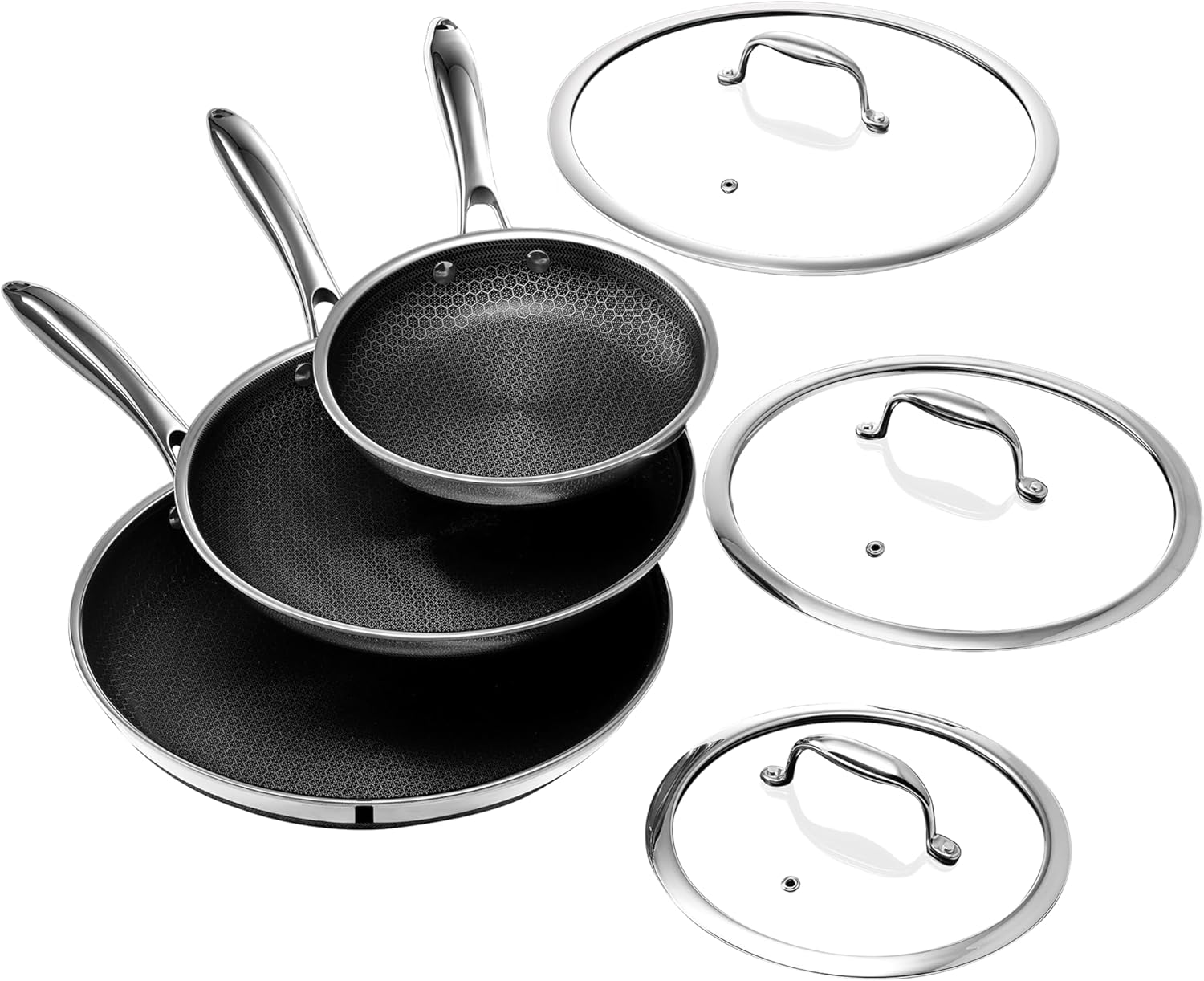
HexClad solves the nonstick versus searing dilemma by combining stainless-steel searing power with ceramic-coated easy cleanup in one pan. Traditional nonstick can't handle high heat; stainless requires oil and skill. This hybrid surface etches hexagons that grip food for searing while keeping nonstick zones for low-heat cooking.
The tri-ply aluminum core heats 40% faster than single-layer pans, meaning your water boils quicker and your pan reaches searing temperature without preheating for 10 minutes. Metal utensils won't scratch the surface, so you use your existing kitchen tools instead of buying specialty spatulas.
Three sizes (8, 10, 12-inch) cover single portions to family meals without needing a full cookware collection. Tempered glass lids let you monitor food without lifting, trapping steam for braised dishes.
The only real limitation: glass lids max out at 400°F, so high-heat braising requires removing the lid or using stainless-steel lids sold separately.
Best for home cooks who want one versatile pan set that handles searing, sautéing, and everyday cooking without replacing nonstick every two years.
Preheat the pan for 2-3 minutes on medium-high heat before searing. The hexagonal surface needs direct contact with heat to develop the sear; cold pans won't brown meat properly. Use medium to medium-high heat for searing, not maximum flame, since the aluminum core conducts heat aggressively.
For nonstick cooking (eggs, delicate fish), use the flat nonstick zones and reduce heat to medium or medium-low. The hybrid design gives you both options in one pan, so adjust your technique based on what you're cooking. Oil is optional but adds flavor; the nonstick coating prevents sticking even with minimal fat.
Oven finishing works up to 900°F without lids (stainless-steel lids sold separately reach 900°F). Transfer seared proteins to the oven to finish cooking evenly. Glass lids cap at 400°F, so remove them before high-heat finishing or use the stainless option for braising at higher temperatures.

Pros
- Hybrid nonstick surface allows browning and deglazing like stainless steel while food releases cleanly.
- Oven-safe to 900°F for pot bodies, enabling stovetop-to-oven cooking techniques like braising.
- Stay-cool handles remain safe to grip during stovetop cooking without potholders.
Cons
- Price point of $379 significantly exceeds basic nonstick or stainless steel pot sets.
- Glass lids limited to 400°F may require switching to stainless lids for high-heat oven finishing.
This pot set solves the compromise between stainless steel's searing capability and nonstick's easy cleanup through a patented hexagonal surface that embeds stainless peaks into ceramic coating.
The tri-ply construction with aluminum core distributes heat uniformly, preventing scorched spots when reducing sauces or simmering beans. Each pot works on gas, electric, and induction cooktops.
The 2-quart pot handles rice or oatmeal for small households, the 3-quart manages vegetables or sauces for four to six people, and the 8-quart accommodates pasta water or soup batches. Tempered glass lids let you monitor cooking without lifting.
The glass lids cannot exceed 400°F in the oven, requiring a lid swap for high-heat braises, though the pots themselves tolerate 900°F.
Best for home cooks who want professional durability and dishwasher convenience without compromising on browning performance.
Preheat pots over medium heat for two minutes before adding oil or butter. The hybrid surface needs less fat than traditional stainless steel but benefits from proper preheating to prevent sticking.
Use the 8-quart pot for blanching vegetables in large water volumes or making bone broth that requires extended simmering. The 3-quart size works for braising chicken thighs or cooking grains like farro and quinoa. The 2-quart handles sauce reductions and small batch oatmeal.
Deglaze the hexagonal surface with wine or stock after browning meat. The stainless peaks create fond while the nonstick valleys release it easily when liquid hits the hot surface.

Pros
- Titanium nonstick surface resists peeling and maintains performance through hundreds of cooking cycles.
- Even heat distribution prevents undercooked centers and burnt edges on proteins and vegetables.
- Silicone-edged lids seal tightly, keeping flavors locked in during simmering and braising.
Cons
- Hand-washing required to prevent black residue buildup on the base; dishwasher use voids durability.
- Lid glass can chip if dropped or subjected to thermal shock from extreme temperature changes.
A 16-piece induction-ready cookware set designed to eliminate food sticking and uneven heating, two problems that waste time on cleanup and ruin meal consistency.
The titanium nonstick coating provides superior food release without chemicals, while the reinforced die-cast aluminum base distributes heat uniformly across all burner types. Silicone-sealed glass lids lock in moisture during cooking and allow you to check doneness without lifting.
The set includes multiple pots, pans, and a frying pan in durable aluminum construction. Total weight and exact dimensions vary by piece, but the collection handles stovetop cooking from boiling to simmering to pan-frying.
The main limitation: hand-washing is mandatory to preserve the nonstick coating and prevent residue buildup on the base.
Best for home cooks who cook 4+ times weekly and want reliable, low-maintenance cookware that works on any stovetop.
Use medium to medium-high heat for best nonstick performance; high heat can degrade the titanium coating over time. Preheat pans for 1-2 minutes before adding oil or food to ensure even cooking and better browning on proteins.
The sealed glass lids trap steam effectively during braising and stewing, reducing cooking time by 15-20% compared to uncovered pots. Avoid thermal shock by letting hot pans cool slightly before adding cold liquids.
Hand-wash immediately after cooking with neutral dish soap and a soft sponge. Dry thoroughly before storing to prevent water spots and maintain the nonstick surface's longevity.

Pros
- PFAS-free Thermolon ceramic nonstick coating supports easier food release.
- Oven and broiler safe up to 600°F for stovetop-to-oven recipes.
- Scratch-resistant hard anodized construction is built for regular use.
- The stainless steel handle is riveted and contoured for comfortable handling.
Cons
- It is not compatible with induction stovetops.
- Hand washing is required, so cleanup takes more effort than with dishwasher-safe cookware.
This 11-inch square griddle pan gives eggs and omelets a dedicated nonstick cooking surface, helping reduce sticking during breakfast preparation.
Its PFAS-free Thermolon ceramic coating supports clean food release, while oven and broiler safety up to 600°F expands cooking options beyond the stovetop.
The scratch-resistant hard anodized body is designed for daily use, and the riveted stainless steel handle offers a comfortable grip. The provided specifications do not list its weight.
It works on all stovetops except induction and requires hand washing, which may matter to buyers prioritizing convenience.
Best for cooks who want a durable ceramic griddle pan for eggs, omelets, and oven-finished dishes.
Use the square surface for eggs, omelets, and other foods that benefit from a broad, flat cooking area.
Transfer the pan to the oven or broiler for recipes requiring high-heat finishing, staying within the 600°F limit.
After cooking, hand wash the pan to maintain its ceramic nonstick surface and daily usability.

Pros
- Clear glass makes it easier to monitor cooking progress from across the kitchen.
- The food-grade, lead-free glass avoids contact with nonstick coatings and reactive metal surfaces.
- Its compact 1.5L size suits small servings, sauces, noodles, and heated milk.
- The included lid and dishwasher-safe design support convenient everyday use.
Cons
- It requires low to medium heat and careful handling because sudden temperature changes can damage the glass.
- The compact capacity is not suited to large family-size meals.
WETPYAKS B0F1NB53WC is a 1.5L glass saucepan for small portions of soup, sauce, noodles, milk, and tea, helping reduce the need for oversized cookware.
Its transparent borosilicate glass lets you monitor simmering food without lifting the lid, while the non-reactive surface preserves natural flavors.
Food-grade, lead-free glass handles temperatures from 0°F to 400°F and works on gas stoves, in ovens and microwaves, and for refrigerator storage. Weight is not provided.
Use low to medium heat and avoid sudden temperature changes, such as moving the pot directly from a refrigerator to a hot stove.
Best for one or two people who prepare small portions and want visible, non-reactive cookware.
Start with low to medium heat, especially on the stovetop, and let the pot warm gradually for safer cooking.
Do not transfer the pot directly between the refrigerator and a hot burner. Use warm water to help it adjust before heating.
Use the clear body to monitor sauces, soups, milk, and tea without repeatedly lifting the lid.

About These Recommendations
The technique above is the point of this guide; the products are here because they help. We have not tested them ourselves — we did not buy or use this gear. The recommendations come from comparing specifications and materials against the patterns in verified owner reviews, so treat them as a shortlist worth researching rather than a verdict from our own kitchen.
Availability and prices change often, so check the current listing before buying. We earn a commission on purchases made through links on this page, which never affects what we recommend.





Write Your Review
No reviews yet. Be the first to share your experience!