

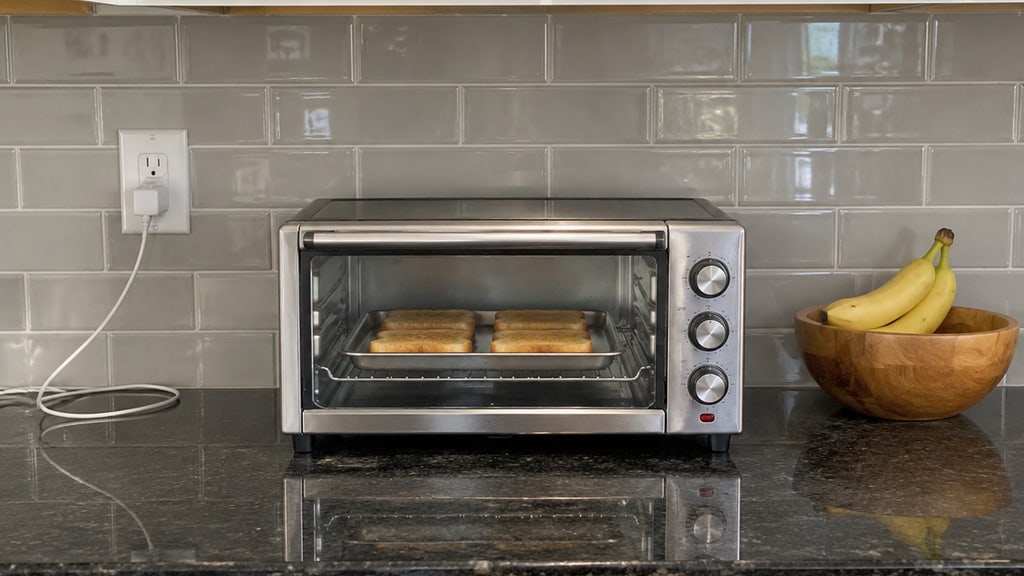
TL;DR — A toaster oven typically lasts 5 to 10 years, with most owners reporting 6 to 8 years of daily use before something fails. Lifespan hinges on how hard you run it: the heating elements, thermostat, and electronic controls wear out fastest, and convection models with fans have more parts to fail than simple ones. Cleaning out crumbs, avoiding constant high-heat broiling, and buying a well-built unit can push a good one past a decade. For picks, see our best toaster oven guide.
The HomeWhisk editorial team researches kitchen equipment by analyzing manufacturer specifications, component design, and aggregated owner reviews from major retailers and communities like Reddit r/Cooking and appliance forums. This guide explains what actually wears out in a toaster oven, how long each type tends to survive, and what shortens or extends that timeline.

“How long do toaster ovens last?” usually comes up at one of two moments: right before buying, when you want to know if the investment pays off, or right after a unit starts acting up, when you’re deciding whether to repair or replace. The honest answer is that toaster ovens are semi-disposable appliances — most are built to a price, not to be serviced — but the gap between a poorly treated cheap unit and a well-maintained quality one can be five years or more. For options across every budget, see our best toaster oven guide.
Buself
9x11 Toaster Oven Liner for Easier Cleanup, Reusable Nonstick PTFE Mat
The Buself toaster oven liner catches spills and helps prevent odors, while its reusable nonstick surface makes cleanup easier. It suits toaster oven and air fryer owners who want a trimmable, dishwasher-safe alternative to disposable foil.
Pros and Cons
Pros
- Double-sided nonstick PTFE-coated fiberglass provides a durable, heat-resistant cooking surface.
- Dishwasher-safe construction simplifies cleanup after messy toaster oven or air fryer meals.
- The two-pack provides a spare liner while one is being washed.
- It fits or can be trimmed for models from Breville, Cuisinart, Black & Decker, Hamilton Beach, Cosori, and Dash.
Cons
- The liner must be measured and trimmed for appliances with smaller or unusually shaped interiors.
- Its 500°F maximum temperature requires buyers to check cooking settings before use.

Hamilton Beach
Space-Saving Toasting and Baking: Hamilton Beach 2-in-1 Countertop Toaster Oven
This Hamilton Beach 2-in-1 combines a long-slot toaster with a countertop oven, saving space while baking, broiling, toasting, and keeping food warm. It suits small kitchens and households that need faster toast plus compact cooking capacity for 9-inch pizzas, fries, and one-pan meals.
Pros and Cons
Pros
- Combines a two-slice long-slot toaster and countertop oven in one space-saving design.
- Offers five toast shades and accommodates two regular slices or one long slice.
- Provides four cooking modes for breakfast, reheating, baking, and broiling.
- Includes a Stay On setting for baking multiple batches.
Cons
- The oven capacity is limited to a 9-inch pizza and 3/4 pound of fries, so it is not suited to large meals.
- The toaster section handles only two regular slices or one long slice at a time.

Cuisinart
TOB-40N Toaster Oven Broiler: 6-Slice Capacity, 1800W Power, Even Shade Control for Consistent Results
This 1800-watt toaster oven handles toast, baking, and broiling in a 0.5 cubic foot interior that fits 6 slices or an 11-inch pizza, with Always Even Shade Control that adjusts timing automatically for uniform browning. Buy it if you need reliable countertop cooking without convection features and want consistent toast quality backed by actual temperature monitoring.
Pros and Cons
Pros
- Always Even Shade Control adjusts cooking time in real time based on cavity temperature, delivering consistent toast darkness across multiple batches.
- 0.5 cubic foot capacity accommodates 6 slices or an 11-inch pizza, enough for small families without monopolizing counter space.
- Auto-slide rack extends when the door opens, eliminating the need to reach into a hot oven to pull out food.
- Non-stick interior and removable crumb tray simplify cleanup after baking or broiling greasy foods.
Cons
- No convection fan, so baking times run longer and heat distribution is less uniform than convection models in the same price range.
- Manual dial controls lack a digital timer with automatic shutoff, requiring you to monitor cooking progress or use a separate timer.
The Best Deals This Week*
-
Space-Saving Toasting and Baking
$79.95
($99.95)Save $20.00 -
Cuisinart TOB-40N Toaster Oven Broiler
$108.17
($129.95)Save $21.78
*Deals are selected by our commerce team
Buself 9x11 Toaster Oven Liner for Easier Cleanup, Reusable Nonstick PTFE Mat
Buself
9x11 Toaster Oven Liner for Easier Cleanup, Reusable Nonstick PTFE Mat
The Buself toaster oven liner catches spills and helps prevent odors, while its reusable nonstick surface makes cleanup easier. It suits toaster oven and air fryer owners who want a trimmable, dishwasher-safe alternative to disposable foil.
$7.99 at AmazonEditors' Favorite
Color: Black 2 Pack Size: 9x11 inches Dimensions: 11 x 9 x 0.01 inches Product Group: Kitchen Binding: Kitchen
Shop NowHamilton Beach Space-Saving Toasting and Baking: Hamilton Beach 2-in-1 Countertop Toaster Oven
Hamilton Beach
Space-Saving Toasting and Baking: Hamilton Beach 2-in-1 Countertop Toaster Oven
This Hamilton Beach 2-in-1 combines a long-slot toaster with a countertop oven, saving space while baking, broiling, toasting, and keeping food warm. It suits small kitchens and households that need faster toast plus compact cooking capacity for 9-inch pizzas, fries, and one-pan meals.
$79.95 at AmazonGreat Value
Color: Stainless Steel Size: 16.5 Liters Dimensions: 12.05 x 17.8 x 10.24 inches Weight: 13.999353 pounds Product Group: Kitchen Binding: Kitchen
Shop NowElite Gourmet ETO449X Toaster Oven, 9.5Qt/4-Slice, 800W Quartz, Black

Color: Black Size: 9L / 4-Slice Dimensions: 14.37 x 10.82 x 7.87 inches Weight: 5.31 pounds Product Group: Kitchen Binding: Kitchen
Shop NowCuisinart TOB-40N Toaster Oven Broiler: 6-Slice Capacity, 1800W Power, Even Shade Control for Consistent Results
Cuisinart
TOB-40N Toaster Oven Broiler: 6-Slice Capacity, 1800W Power, Even Shade Control for Consistent Results
This 1800-watt toaster oven handles toast, baking, and broiling in a 0.5 cubic foot interior that fits 6 slices or an 11-inch pizza, with Always Even Shade Control that adjusts timing automatically for uniform browning. Buy it if you need reliable countertop cooking without convection features and want consistent toast quality backed by actual temperature monitoring.
$108.17 at AmazonBrand Name: Cuisinart Included Components: Toaster Oven Model Name: Cuisinart TOB-40N Custom Classic Toaster Oven Broiler Model Number: TOB-40NNAS Warranty Description: 2 Year limited warranty Global Trade Identification Number: 00086279098955, 10086279246735 UPC: 086279246738 086279098955 Manufacturer: Cuisinart Part Number: TOB-40N Item Type Name: Toaster Oven Broiler Best Sellers Rank: #3,947 in Kitchen & Dining (See Top 100 in Kitchen & Dining) #8 in Toaster Ovens ASIN: B004JMZGM2 Customer Reviews: 4.2 4.2 out of 5 stars (7,494) 4.2 out of 5 stars Color: Black Door Style: Dropdown Door Other Special Features of the Product: Manual Wattage: 1800 watts Control Type: touch Power Source: Corded Electric Temperature Range: 200 - 450 Degrees Fahrenheit Number of Shelves: 2 Item Dimensions D x W x H: 11.74"D x 17"W x 8.35"H Capacity: 0.5 Cubic Feet Item Weight: 12.9 Pounds Size: 17 Inch Material: Stainless Steel Finish Type: Brushed Door Material Type: Stainless Steel Brand: Cuisinart Product Dimensions: 11.74"D x 17"W x 8.35"H Special Feature: Manual
Shop NowThe Typical Lifespan: 5 to 10 Years
For a mainstream countertop toaster oven used daily, plan on 6 to 8 years as a realistic average, with a wider range of 5 to 10 depending on build quality and use. Light users who toast a few times a week can stretch a good unit past 10 years; heavy users who bake, broil, and air-fry daily often see 4 to 6.
This is shorter than a full-size range (15 to 20 years) for a simple reason: a toaster oven crams heating elements, a thermostat, and often a convection fan into a small, cheaply built box with minimal insulation. Everything runs hot, cycles frequently, and sits close together. Premium convection ovens from brands like Breville tend to land at the upper end because they use better elements, sturdier hinges, and more robust electronics — but they cost several times what a basic model does. Simpler mechanical ovens have fewer parts to break and can quietly outlast fancier ones.
What Actually Wears Out First
Understanding the failure points tells you both what to expect and what to watch for.
- Heating elements. The nichrome or quartz elements glow at high temperature every cycle. Over years of thermal expansion and contraction they thin, sag, develop hot spots, or burn through — often visible as a section that no longer glows or an element that has bowed until it touches the rack. This is the single most common terminal failure.
- Thermostat. The temperature control drifts as its bimetallic strip or sensor ages, so the oven runs hot or cold, or cycles erratically. An oven that suddenly burns everything or never browns is often a thermostat problem.
- Electronic controls and relays. Digital models add circuit boards, touch panels, and relays that switch the elements on and off. Relays wear from constant switching, and boards fail from the heat they sit next to. Mechanical dial ovens sidestep this entirely, which is why they often last longer.
- Door hinges, springs, and glass. The door is opened and shut hundreds of times a year. Hinges loosen, springs weaken so the door won’t stay put, and thermal shock can crack the glass.
- Interior corrosion. Spills, steam, and aggressive cleaning strip the finish and let the interior rust, especially around the bottom tray.
Signs Yours Is Near the End
A toaster oven rarely dies all at once. Watch for these:
- Uneven or failed heating — one element stays dark, or food browns on one side only. A dead element usually spells the end for a cheap unit.
- Rust on the interior — surface discoloration is cosmetic, but flaking rust near the elements or tray means the box is degrading and can contaminate food.
- A frayed or damaged cord — this is a fire hazard, not a repair-it-later issue; stop using the oven immediately.
- A cracked door or a door that won’t close fully — heat escapes, cook times balloon, and the exposed glass can shatter.
- Erratic temperatures or a smell of burning plastic or electronics — the controls or wiring are failing.
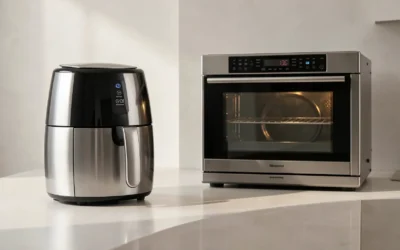
Because most toaster ovens cost less than a service call and use riveted, non-serviceable assemblies, repair rarely makes financial sense once an element or control board goes. The exception is a high-end unit still under warranty, where the manufacturer may replace it outright. If yours is genuinely done, our best toaster oven guide covers current replacements. Many buyers at this point step up to a combo unit — our best air fryer guide covers models that toast, bake, and air-fry in one footprint.
How Toaster Ovens Compare to Other Small Appliances
Lifespan expectations help you plan replacements across the whole counter:
- Toasters (pop-up): about 6 to 8 years — similar to toaster ovens but with fewer failure points.
- Toaster ovens: roughly 5 to 10 years, as above.
- Coffee makers: around 5 years for drip machines; mineral scale and the heating element are the usual killers, which regular descaling delays.
- Microwaves: about 9 to 10 years, though the magnetron often fails earlier under heavy use.
- Blenders: motor-dependent — cheap ones 3 to 5 years, quality units far longer. See our best blender guide.
- Multi-cookers and pressure cookers: the sealing gaskets and electronics set the limit; see our best instant pot guide.
- Stand mixers: the outlier, often 10 to 20 years thanks to metal gearing — see our best stand mixer guide.
The pattern is consistent: appliances with high-heat elements or intense motors wear faster, while sturdily geared mechanical devices last longest.
How to Make Yours Last Longer
You can meaningfully extend a toaster oven’s life with a few habits:
- Clean out crumbs and grease regularly. Empty the crumb tray weekly and wipe the interior. Accumulated crumbs char, smoke, and can ignite; baked-on grease insulates and stresses the elements.
- Avoid constant maximum-heat broiling. Running elements at their limit for long stretches accelerates their aging. Use bake or convection settings when you can.
- Let it cool before moving or cleaning, and never pour water on a hot interior — thermal shock cracks glass and warps metal.
- Use oven-safe pans that fit so nothing touches the elements or blocks the fan.
- Give it clearance. Leave space around the vents so heat escapes rather than cooking the electronics.
- Skip harsh abrasives and oven cleaner on the interior; they strip the protective finish and invite rust.
None of this makes a $40 oven last 20 years, but it’s the difference between a unit dying at year four and one going strong at year nine. If you bake bread or roast heavily and want gear that lasts decades instead, our best dutch oven for bread baking guide covers cast iron and enameled options built for a lifetime.
Frequently Asked Questions
How long does a toaster oven last on average?
Most toaster ovens last 5 to 10 years, with 6 to 8 typical for a unit used daily. Light users often exceed 10 years, while heavy daily bakers and broilers may replace one every 4 to 6 years. The biggest variables are build quality and use intensity: a well-made convection oven treated gently outlasts a cheap model run at maximum heat every day. The heating elements and thermostat are usually what give out first. See our best toaster oven guide for durable options.
Is it worth repairing a toaster oven or should I replace it?
Usually replace. Most toaster ovens are assembled with rivets and sealed panels, so elements and control boards aren’t designed to be swapped, and a service call typically costs more than a new unit. The clear exception is a premium oven still under warranty, where the manufacturer may repair or replace it free. If the cord is damaged, stop using it immediately regardless of age. When it’s time to buy new, our best toaster oven and best air fryer guides cover current models.
Do convection or air-fryer toaster ovens fail sooner?
They can, because a fan, more elements, and digital controls add more parts that can fail than a simple mechanical oven has. That said, higher-end convection models often use better components that offset the added complexity, so a quality convection oven can outlast a bargain basic one. The real lifespan driver is build quality and how hard you run it, not the feature count alone. Our best air fryer guide covers well-built combo units.
What is the most common reason a toaster oven stops working?
A failed heating element is the most common terminal failure — years of glowing hot and cooling down thin the metal until it burns through or sags. The second most common is a drifting or dead thermostat, which shows up as food that suddenly burns or never browns. Electronic control and relay failures come next on digital models. Rust, cracked door glass, and worn hinges are frequent secondary problems that push owners to replace a unit.
Does cleaning really extend a toaster oven’s life?
Yes, meaningfully. Crumbs and grease that build up on the floor and elements char, smoke, and stress the heating components, and they’re a genuine fire risk. Emptying the crumb tray weekly, wiping the interior, and keeping the elements clear lets the oven run cooler and more efficiently. Avoiding harsh abrasives and oven cleaner also protects the interior finish so it doesn’t corrode. Regular cleaning won’t make a cheap oven immortal, but it commonly adds years.
How long should a Breville or other premium toaster oven last?
Premium convection ovens from brands like Breville, Cuisinart, and Panasonic tend to reach the upper end of the range — often 8 to 12 years — because they use sturdier elements, better hinges, and more robust electronics, and they’re frequently backed by longer warranties. They still fail eventually, usually at the elements or control board, and they cost several times more upfront. Whether the premium is worth it depends on how heavily you use it; our best toaster oven guide weighs the trade-offs.
The Bottom Line
A toaster oven is a semi-disposable appliance that typically lasts 5 to 10 years, with 6 to 8 the realistic average for daily use. The heating elements and thermostat wear out first, followed by electronic controls, door hardware, and interior corrosion. You can push a good unit toward and past a decade by cleaning out crumbs, avoiding constant max-heat broiling, and buying quality — but once an element or control board fails on a budget model, replacement almost always beats repair. If a frayed cord or cracked glass appears, stop using it right away. When you’re ready to replace, our best toaster oven and best air fryer guides cover the current standouts.




Write Your Review
No reviews yet. Be the first to share your experience!