

TL;DR — A muffin pan and a cutting board solve different problems, so the real question is whether you need both, not which wins. For product picks, the closest next steps are best cutting board, best baking sheets, and best kitchen scale.
Our view is based on product specs, material trade-offs, and repeated owner feedback — not one-off kitchen anecdotes or brand claims. For baking tools, sizing, material, accuracy, cleaning, and storage usually decide whether a tool stays useful or gets replaced.


Pros & Cons
Pros
- BPA-free food-grade silicone is safe for sweet and savory bakes alike.
- Metal frame solves the warping and flopping problem common to frameless silicone pans.
- Standard 1.8-inch cups fit ordinary cupcake liners and standard recipe yields.
- Handles muffins, cupcakes, mini quiches, and egg bites from the same set.
Cons
- Cup depth is roughly 0.7 inches, shallower than many standard steel muffin tins, so tall domed muffins may need less batter per cup.
- Silicone browns the sides and bottoms less than metal, so crusty muffin edges take longer to develop.
Details
A set of two 12-cup silicone muffin pans for bakers who need 24 cupcakes at once and are tired of scrubbing stuck-on batter from steel tins.
The metal reinforced frame is the key feature: it lets you lift a full pan of wet batter one-handed without the sagging that makes frameless silicone pans spill.
Each pan measures about 15.3 by 9.2 inches with 1.8-inch cups, rated to 450°F, freezer safe, and dishwasher safe.
Cups are about 0.7 inches deep, shallower than many metal tins, so tall-domed muffin recipes will yield more, smaller muffins.
Best for home bakers doing party batches or weekly breakfast meal prep who want liner-free release and easy cleanup.
Cooking Tips
Set the pan on a flat baking sheet before filling. The frame holds shape, but a sheet makes transfer steadier and promotes more even bottom heat.
Fill cups about two-thirds full given the 0.7-inch depth, and expect slightly paler sides than metal. Add two to three minutes if you want more color.
Cool five minutes before releasing, then push up from underneath each cup. For batch prep, freeze baked muffins in the pan, pop them out, and bag them.

Pros & Cons
Pros
- Carbon steel body distributes heat evenly, so outer cups brown at the same rate as center ones.
- Non-stick surface plus dishwasher compatibility cuts cleanup to a rinse in most cases.
- Rolled rim construction adds rigidity and gives you a stable grip point with oven mitts.
- Small overall size fits toaster ovens and countertop ovens where full-size pans will not.
Cons
- The 1.7-inch cups are strictly mini scale, so standard muffin recipes need to be portioned down or you will need a second pan.
- Non-stick coatings on carbon steel wear faster under metal utensils and abrasive scrubbing, so dishwasher cycles will shorten the coating's life over time.
Details
A 12-cup carbon steel mini muffin pan for bakers who want bite-sized portions without buying a full-size tin they cannot fit in a small oven.
The non-stick coating releases mini muffins and egg bites intact, and even heat distribution keeps edge cups from over-browning before the center sets.
Heavy gauge carbon steel with rolled edges resists warping, rated to 460 degrees Fahrenheit, with 1.7-inch cups sized for party portions.
Non-stick coating is the wear point: metal utensils and repeated dishwasher cycles will degrade it faster than hand washing.
Best for small-batch bakers, party hosts, and anyone making meal-prep egg bites in limited counter space.
Cooking Tips
Fill each 1.7-inch cup about two-thirds full. Mini muffins bake faster than standard ones, so start checking around the 10 to 12 minute mark.
Grease lightly even with the non-stick coating when baking sticky batters like cheesecake or caramel-topped bites, and let the pan cool a few minutes before releasing.
Hand wash with a soft sponge to extend coating life, and use silicone or plastic tools instead of metal when lifting bakes out.
Muffin pan and Cutting board: Do You Need Both?
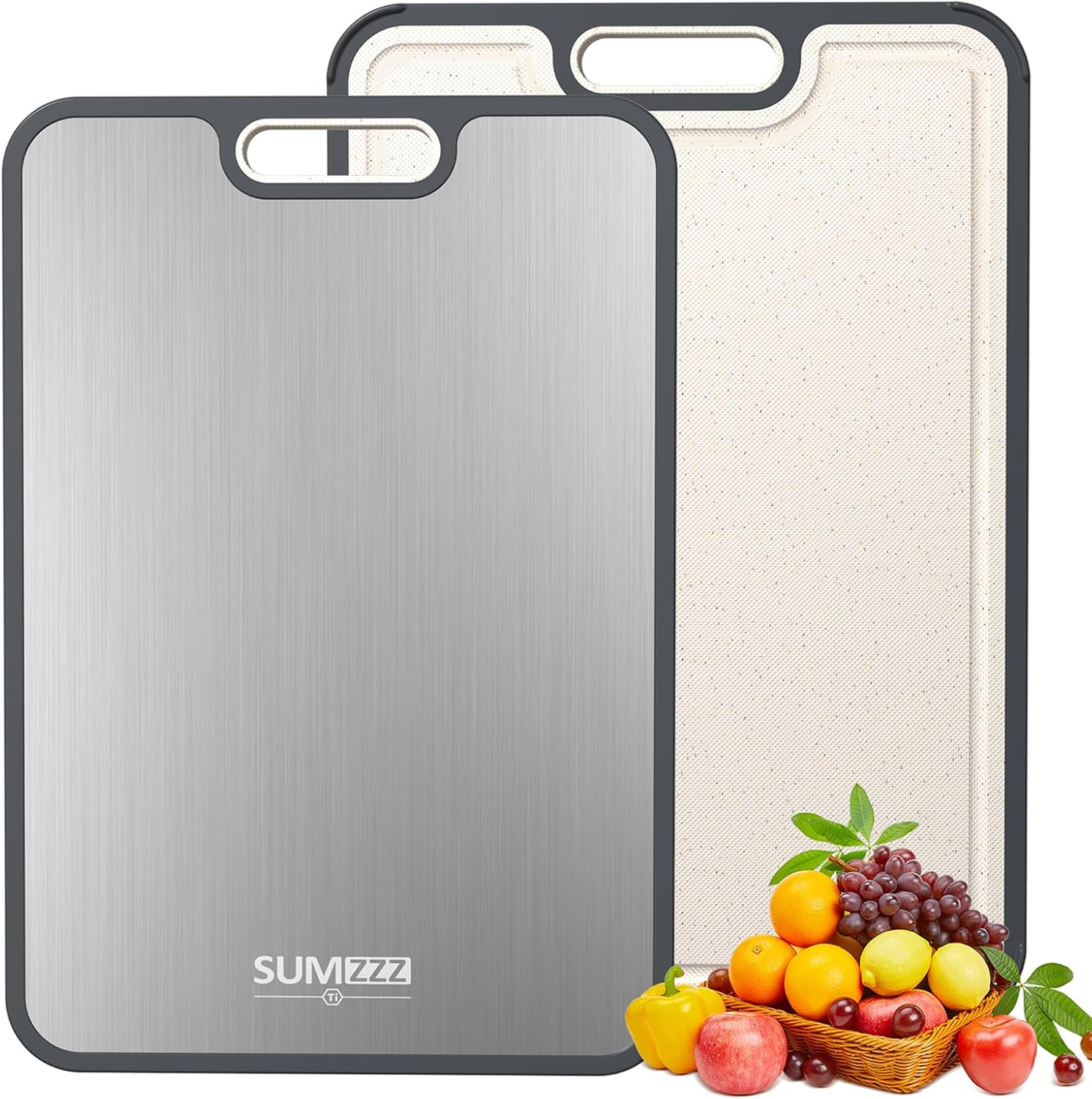
This is not really a versus question. A muffin pan and a cutting board do different jobs — the muffin pan does the actual work, while the cutting board supports it. Most cooks who care about results end up using both rather than choosing one. For product picks, compare best cutting board, best baking sheets, and best kitchen scale.
How They Work Together
Think of the cutting board as part of keeping the muffin pan performing the way it should. Used together, they make the whole task easier and more consistent; skipping the cutting board usually means the muffin pan underperforms or wears faster. The two are complements, not competitors.
When You Actually Need the Cutting board
You do not always need the cutting board on day one, but the more often you use the muffin pan, the more it pays off. If you use the muffin pan regularly, adding the cutting board is a small cost for a real improvement in nonstick or bare finish. If you are shopping, our best cutting board and best baking sheets guides are the fastest way in.
Bottom Line
If your budget forces a choice, start with the muffin pan — it is the tool that does the job. Add the cutting board soon after; together they beat either one alone.
Related Product Guides
If this topic is part of a buying decision, these are the HomeWhisk guides most closely tied to it:
- best cutting board
- best baking sheets
- best kitchen scale
- best dutch oven for bread baking
- best carbon steel pan for cooking
- best mixing bowls
- best food storage containers
Frequently Asked Questions
Do I need both a muffin pan and a cutting board?
They serve different purposes, so most cooks use both. The muffin pan does the work; the cutting board supports it. If budget forces a choice, start with the muffin pan. See best cutting board and best baking sheets for options.
Can a cutting board replace a muffin pan?
No — they are complements, not substitutes. A cutting board does not do the muffin pan’s job; it makes the muffin pan work better or last longer.
What is the bottom line?
Match the baking tool to your real habits: buy for durability if it is daily, for value and storage if it is occasional.
Is a premium baking tool worth it?
Only if you use it enough to notice better control, durability, or cleanup regularly. Occasional users are well served by a mid-range pick like those in best kitchen scale.
What matters most for cutting board?
Focus on material and gauge, release performance, and warp resistance first. Those decide real performance; the rest is secondary. Compare best cutting board and best baking sheets for options that get the basics right.
The Bottom Line
The simplest takeaway: buy for your real routine, not the most impressive feature list. Match the cutting board to your cooking frequency, cleanup habits, and storage, then use best cutting board, best baking sheets, and best kitchen scale to compare actual products.





Write Your Review
No reviews yet. Be the first to share your experience!