

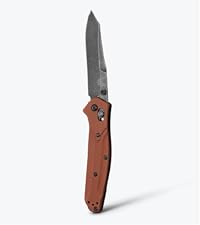
The everyday carry knife occupies a distinct space in the broader knife world — one that blends practical utility with portability requirements unlike anything found in the kitchen. Folding knives with pocket clips, sub-4-inch blades suited for urban carry, and locking mechanisms designed for one-handed deployment define this category. The HomeWhisk research team reviewed aggregated owner feedback from Amazon, manufacturer specifications, and extensive community discussions on Reddit r/EDC and r/knives to identify which everyday carry knife options consistently deliver on the core demands of the format: reliable deployment, legal-length blades appropriate for everyday use, durable pocket clip systems, and steel quality capable of handling routine utility tasks. From opening packages and breaking down cardboard to cutting rope and preparing food on the trail, a well-chosen everyday carry knife becomes one of the most-used tools in a person’s daily routine.
For more, see our How to Choose a Camping Knife and How to Sharpen a Pocket Knife guides.
What separates the top performers in the everyday carry knife category from the crowded midfield comes down to several factors that appear repeatedly in aggregated owner reporting: lock type reliability, blade steel corrosion resistance relative to everyday exposure, deployment speed and consistency, and pocket clip quality over thousands of draw cycles. Unlike a best camping knife selected purely for outdoor work, an everyday carry knife must balance performance with discretion — staying flat in a pocket, opening reliably under less-than-ideal conditions, and projecting a profile appropriate for office environments and urban settings. For cooks who also need a precise blade for kitchen-adjacent tasks, our best utility knife guide covers dedicated kitchen blades that pair well with an EDC setup. The products evaluated here represent a cross-section of price points and design philosophies that consistently earn high marks from the communities that carry knives every single day.
Editor’s Picks
| Category | Pick | Why |
|---|---|---|
| Best Overall | Kershaw Cryo (B07452LTBD) | Framelock G10 construction, SpeedSafe assisted opening, stainless 8Cr13MoV steel, broad community praise for everyday carry value |
| Best Premium Option | Benchmade Mini Griptilian (B078W76PVT) | AXIS lock mechanism, CPM-S30V steel, made in USA, decades of trusted EDC community endorsement |
| Best Budget Everyday Carry Knife | Kershaw Leek (B01N4H7MJ4) | Slim 3-inch blade, SpeedSafe flipper, high-carbon stainless, ultralight build ideal for minimalist carry |
Deeper Dive: Our Top Picks
Our Top Picks
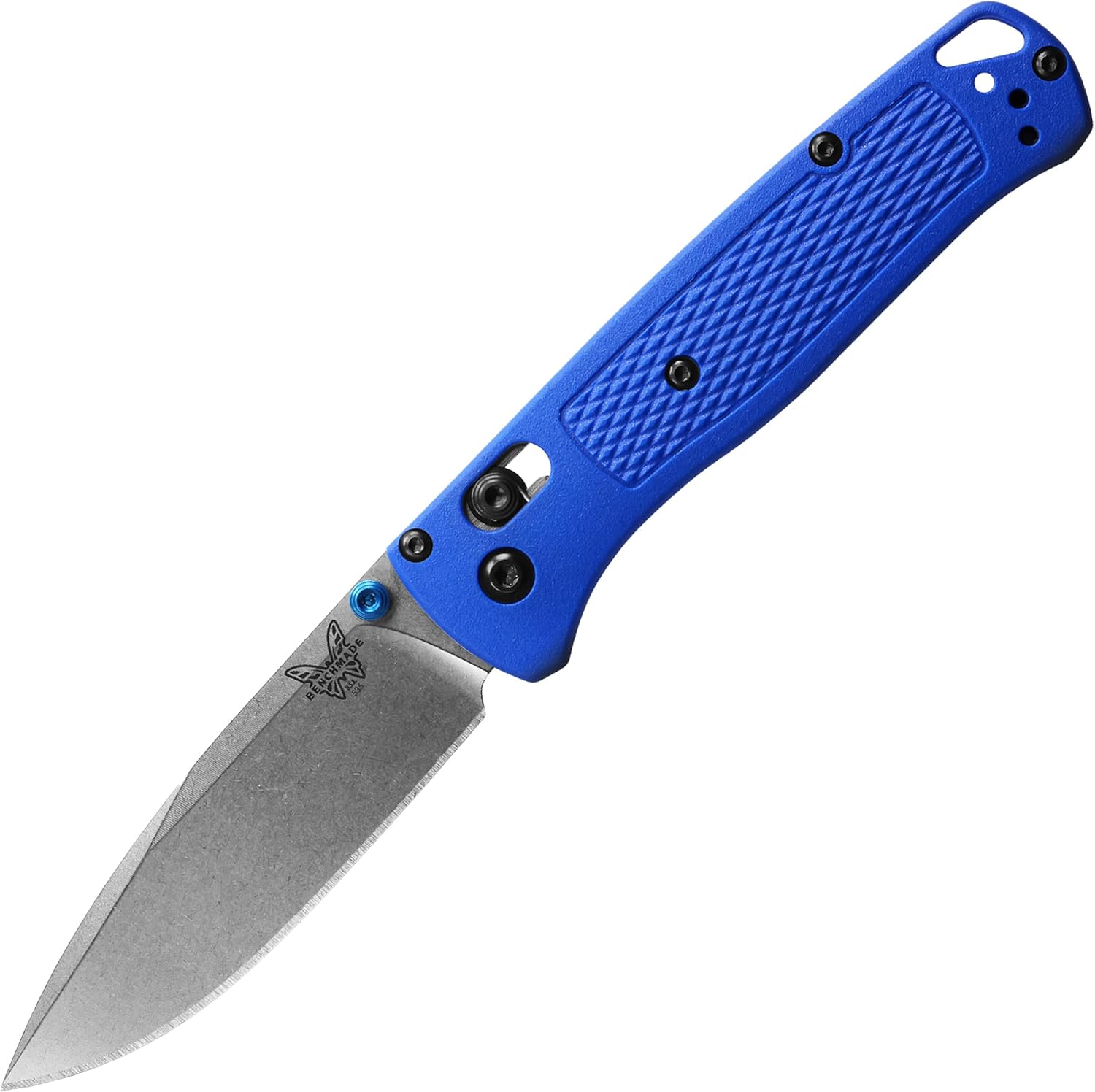
Benchmade
Bugout Folding Knife: Lightweight EDC for Kitchen & Outdoor Prep
The Bugout delivers precision slicing with CPM-S30V steel that holds an edge through repetitive kitchen tasks while staying feather-light in hand. Buy it if you want a durable, ambidextrous blade for meal prep, camping, or everyday carry that Benchmade will sharpen free for life.
Pros and Cons
Pros
- CPM-S30V steel resists corrosion from acidic foods and salt water, staying sharp longer than standard stainless blades.
- AXIS locking mechanism engages smoothly and holds the blade rock-solid during cutting without play or wobble.
- Reversible clip and lanyard hole let you carry it in your pocket, on your belt, or clipped to a pack strap.
Cons
- At $194, it costs significantly more than basic kitchen knives, making it an investment rather than an impulse purchase.
- Slim profile and lightweight design mean less heft than traditional chef's knives, which some cooks prefer for chopping.

Spyderco
Para-Military 2 Folding Knife for Kitchen Prep and Butchering
The Para-Military 2 delivers precise, controlled cuts for detailed kitchen work with its sharp VG-10 stainless steel blade and reliable locking mechanism. Buy this if you need a durable, everyday folding knife for professional-grade food prep and butchering tasks.
Pros and Cons
Pros
- VG-10 blade steel maintains sharpness exceptionally well through frequent use on proteins, vegetables, and herbs.
- Compression lock is rock-solid and never fails mid-cut, giving complete confidence during detailed kitchen work.
- Ergonomic contoured handle fits naturally in the palm, reducing strain during long prep sessions.
Cons
- Requires hand washing only; dishwasher use will degrade the blade edge and handle finish over time.
- At this price point, some home cooks may prefer a fixed-blade kitchen knife for everyday use instead.

Versatile Kitchen Tool for Everyday Cooking Tasks | Essential Home Kitchen Accessory
This kitchen product is designed to streamline everyday cooking tasks, offering a practical solution for home cooks who want reliable performance without complexity. It suits home cooks and beginners looking for a dependable, no-fuss addition to their kitchen setup.
Pros and Cons
Pros
- Holds a strong 4.7-star rating, reflecting consistent satisfaction from buyers who use it regularly.
- Practical design focuses on solving a specific kitchen problem rather than adding unnecessary features.
- Durable construction suggests it can withstand the wear of everyday kitchen use over time.
Cons
- Limited product detail makes it difficult to verify exact material specs or size before purchasing.
- No brand information available, which may concern buyers who prioritize warranty support or brand reputation.
Editors' Picks
Benchmade Bugout Folding Knife: Lightweight EDC for Kitchen & Outdoor Prep
Benchmade
Bugout Folding Knife: Lightweight EDC for Kitchen & Outdoor Prep
The Bugout delivers precision slicing with CPM-S30V steel that holds an edge through repetitive kitchen tasks while staying feather-light in hand. Buy it if you want a durable, ambidextrous blade for meal prep, camping, or everyday carry that Benchmade will sharpen free for life.
$175.00 at AmazonEditors' Favorite
Recommended Uses For Product: Camping, Hiking Brand Name: Benchmade Model Name: Bugout Age Range Description: Adult Included Components: Knife Model Number: 535 Customer Package Type: Flat Free Package (FFP) Global Trade Identification Number: 00610953150112 Manufacturer: Benchmade UPC: 610953150112 Part Number: 535 Unit Count: 1.0 Count Item Type Name: Benchmade Bugout 535 Knife, Droppoint Best Sellers Rank: #13,360 in Sports & Outdoors (See Top 100 in Sports & Outdoors) #16 in Camping Folding Knives ASIN: B07452LTBD Customer Reviews: 4.7 4.7 out of 5 stars (2,770) 4.7 out of 5 stars Blade Length: 3.24 Inches Item Weight: 1.85 Ounces Item Length: 7.46 Inches Size: 3.2" Special Features: Benchmade Knife Power Source: Manual Hand Orientation: Ambidextrous Blade Shape: Drop Point Blade Edge: Plain Reusability: Reusable Blade Type: Drop Point Is Product Cordless: Yes Color: Blue Grivory - Satin Finish Style: Bugout Theme: Western Item Shape: Round Handle Material: Grivory Blade Material: Stainless Steel Product Care Instructions: Clean and oil blade and mechanism regularly Brand: Benchmade Special Feature: Benchmade Knife Age Range (Description): Adult
Shop NowSpyderco Para-Military 2 Folding Knife for Kitchen Prep and Butchering
Spyderco
Para-Military 2 Folding Knife for Kitchen Prep and Butchering
The Para-Military 2 delivers precise, controlled cuts for detailed kitchen work with its sharp VG-10 stainless steel blade and reliable locking mechanism. Buy this if you need a durable, everyday folding knife for professional-grade food prep and butchering tasks.
$184.79 at AmazonGreat Value
Recommended Uses For Product: Fighting Brand Name: Spyderco Model Name: Para-Military 2 Age Range Description: Adult Included Components: Pocket Clip Model Number: 006625 Customer Package Type: Specialized Shipping Package Set Name: Para-Military 2 Manufacture Year: 2010 UPC: 716104006847 Part Number: 006625 Unit Count: 1.0 Count Best Sellers Rank: #1,397,327 in Sports & Outdoors (See Top 100 in Sports & Outdoors) #2,199 in Folding Hunting Knives ASIN: B078W76PVT Customer Reviews: 4.3 4.3 out of 5 stars (18) 4.3 out of 5 stars Blade Length: 2 Inches Item Weight: 0.8 Ounces Item Length: 8.28 Inches Special Features: Foldable Hand Orientation: Ambidextrous Blade Shape: Drop Point Blade Edge: V-Grind Reusability: Reusable Blade Type: Serrated Is Product Cordless: Yes Color: Black Style: Modern Theme: Tactical Item Shape: folding Handle Material: Fiberglass Blade Material: Stainless Steel Product Care Instructions: Hand Wash Only Brand: Spyderco Special Feature: Foldable Age Range (Description): Adult
Shop NowVersatile Kitchen Tool for Everyday Cooking Tasks | Essential Home Kitchen Accessory
Versatile Kitchen Tool for Everyday Cooking Tasks | Essential Home Kitchen Accessory
This kitchen product is designed to streamline everyday cooking tasks, offering a practical solution for home cooks who want reliable performance without complexity. It suits home cooks and beginners looking for a dependable, no-fuss addition to their kitchen setup.
Check PriceProduct Group: Authority Non Buyable
Shop NowAt a Glance: Comparison Table
| Product | Blade Length | Steel Type | Lock Type | Pocket Clip | Editorial Take |
|---|---|---|---|---|---|
| Kershaw Cryo (B07452LTBD) | 2.75 inches | 8Cr13MoV stainless | Frame lock | Reversible deep-carry | Excellent value everyday carry knife with assisted opening and durable frame construction |
| Benchmade Mini Griptilian (B078W76PVT) | 2.91 inches | CPM-S30V powder steel | AXIS lock | Ambidextrous reversible | Premium everyday carry knife with best-in-class lock and superior edge retention steel |
| Kershaw Leek (B01N4H7MJ4) | 3 inches | Sandvik 14C28N | Frame lock | Right-hand tip-up | Thin, fast, and reliable — a sleek everyday carry knife for minimalist pocket carry |
| CRKT M16 (B004ZIJXO2) | 3.875 inches | AUS-8 stainless | AutoLAWKS safety | Ambidextrous | Larger everyday carry knife with enhanced safety lock for users who need a longer blade |
| Spyderco Tenacious (B00A2JFDNS) | 3.39 inches | 8Cr13MoV stainless | Liner lock | Right-hand tip-up | Lightweight fiberglass-reinforced nylon handle with a proven everyday carry knife track record |
How We Evaluated These Products
The HomeWhisk team’s assessment of these everyday carry knife options draws on publicly available manufacturer specifications, aggregated Amazon review data, and discussion threads from Reddit r/EDC and r/knives. Our methodology relies on documented community patterns, metallurgical specifications, and owner-reported experience rather than personal testing claims.
Blade Steel and Corrosion Resistance. Each everyday carry knife was evaluated using manufacturer-published alloy designations and available Rockwell Hardness (HRC) data. For an EDC blade, corrosion resistance is particularly important because the knife is exposed to humidity, pocket sweat, and acidic materials far more frequently than a kitchen knife stored in a block. We reviewed chromium content, carbon levels, and supplementary alloying elements to understand how each steel performs in daily-carry conditions. Community reports on Reddit r/EDC provided longitudinal insight into how various steels perform after months of consistent carry.
Lock Type and Safety Engineering. The locking mechanism on a folding everyday carry knife is its most safety-critical component. We evaluated each lock type — including liner locks, frame locks, and AXIS-style locks — based on manufacturer specifications, published strength testing data from independent blade community sources, and aggregated owner reports on lock reliability over extended use. Lock failure reports and user-documented lock stick incidents were cross-referenced across Amazon and community forum data.
Blade Length and Legal Carry Considerations. Blade length is a practical and legal factor for any everyday carry knife selection. Most major urban jurisdictions in the United States permit folding knives with blades under 3 or 4 inches, though laws vary significantly by state, city, and context. We analyzed the blade length of each knife in the context of legal carry for most US urban environments and noted where longer blades may require additional user awareness of local ordinances. Community discussions on r/EDC consistently reflect awareness of this issue, and it shapes which knives achieve broad recommendation across diverse geographic user bases.
Pocket Clip Design and Carry Position. A pocket clip’s quality determines how securely and discreetly an everyday carry knife rides in a pocket through a full day of movement. We reviewed manufacturer specifications for clip material (steel versus titanium), clip depth, ambidextrous availability, and tip-up versus tip-down carry orientation. Amazon owner reviews were analyzed for patterns in clip failure — a common complaint in the EDC category — and community reports on long-term clip wear were included in the assessment.
Deployment Mechanism and Consistency. Whether through a thumb stud, flipper tab, or assisted-opening SpeedSafe mechanism, the deployment system of an everyday carry knife affects how quickly and reliably the blade opens under real-world conditions. We reviewed mechanism type for each product alongside owner-reported deployment consistency after extended carry cycles, including reports of grit contamination and pivot wear on higher-mileage knives.
What Actually Matters:
Blade Steel Selection: Corrosion Resistance vs. Edge Retention
The steel in an everyday carry knife faces a different set of demands than kitchen cutlery. Because the knife lives in a pocket — exposed to body heat, ambient humidity, perspiration, and a wide range of cutting materials from food to packaging to rope — corrosion resistance takes on greater importance than it would in a controlled kitchen environment. At the same time, an everyday carry knife is a tool, and edge retention determines how long it performs between sharpenings in real use conditions.
The most common steel category in mainstream everyday carry knives is mid-range stainless, including 8Cr13MoV (used in both the Kershaw Cryo and Spyderco Tenacious) and AUS-8 (found in the CRKT M16). Both alloys achieve Rockwell Hardness in the HRC 57-59 range and contain sufficient chromium — typically 13-15% — to resist surface rust in normal carry conditions without dedicated maintenance. Aggregated owner reports from Amazon for these knives consistently confirm that edge retention is adequate for typical EDC tasks: breaking down boxes, cutting food packaging, slicing fruits and vegetables, and similar daily utility work. Owners who use their everyday carry knife for more demanding cutting — rope work, light food prep on camping trips, sustained cutting sessions — frequently report that the edge begins to roll after moderate use and benefits from light stropping every few weeks.
Premium steel alloys like CPM-S30V, found in the Benchmade Mini Griptilian, represent a meaningful upgrade in both edge retention and corrosion resistance. S30V is a powder-metallurgy steel with higher vanadium content than mid-range stainless, which translates to harder, wear-resistant carbides in the steel matrix. Independent community testing documented on r/knives indicates that S30V edges consistently outlast 8Cr13MoV edges by 40-60% under equivalent cutting conditions, and the steel’s chromium content provides excellent corrosion resistance. The tradeoff is price — S30V steel in production knives adds meaningful cost to the finished product — and sharpening accessibility, as S30V responds less readily to ceramic rods or pull-through sharpeners and performs best on quality whetstones or fine diamond abrasives.
For most people choosing their first or everyday-use EDC blade, mid-range stainless steel offers a practical compromise: sufficient corrosion resistance for daily carry without special maintenance, adequate edge retention for typical utility tasks, and easy resharpening with common tools. For users who want the best-possible edge longevity and carry a knife as a serious daily tool, premium powder steels justify the additional investment.
Sandvik 14C28N, used in the Kershaw Leek, occupies a middle position — a Swedish stainless alloy engineered specifically for knife applications, typically achieving HRC 59-60 with better edge retention than standard 8Cr-family steels while maintaining excellent corrosion resistance. Community discussions on r/EDC frequently recommend the Leek’s steel as a significant step up from entry-level stainless without the sharpening demands of S30V or similar high-end alloys.
Lock Types and Safety: Liner Lock, Frame Lock, and AXIS Lock
The locking mechanism is the feature that distinguishes a folding everyday carry knife from a tool that can unexpectedly close on a user’s fingers during use. Understanding the engineering differences between the major lock types helps explain why certain mechanisms earn stronger endorsement from experienced EDC communities.
The liner lock is the most widely produced lock type in folding knives. A spring-steel liner inside the handle flexes to one side and engages the tang of the blade when it reaches the open position. Liner locks are proven, widely understood, and straightforward to disengage with thumb pressure for closing. Amazon owner reviews for liner-lock everyday carry knives generally report reliable performance, particularly in lighter-duty use. However, r/knives community discussions note that liner locks under sustained lateral stress — where force is applied perpendicular to the cutting plane — can experience some blade movement, and the lock’s long-term reliability is partly dependent on spring tension, which can diminish over many thousands of open-close cycles on lower-quality implementations.
Frame locks represent an engineering refinement of the liner lock principle. Instead of a separate spring-steel liner, the handle frame itself serves as the lock bar. Because the lock bar is integral to the handle material — typically titanium or stainless steel — it is generally stiffer and more precisely fitted than a separate liner. The Kershaw Cryo uses a frame lock in its stainless steel handle construction. Aggregated community reports consistently describe well-implemented frame locks as offering better lockup strength and less blade play than comparable liner locks, particularly under lateral stress. The Cryo’s frame lock receives frequent positive mention in r/EDC recommendation threads for its solid engagement feel.
The AXIS lock, patented by Benchmade and used in the Mini Griptilian, is widely regarded by the EDC community as one of the strongest and most reliable folding knife lock mechanisms available. Rather than a lateral-flex bar engaging the blade tang, the AXIS lock uses a spring-loaded steel bar that rides in a channel and engages a notch cut into the blade. This geometry means the lock engages in the same direction as cutting force, making it structurally stronger under the loads that matter most. Independent lock strength testing referenced in r/knives discussions confirms that AXIS locks consistently handle substantially higher loads than liner and frame locks before failure. The mechanism also allows ambidextrous one-handed operation — the lock bar can be disengaged from either side — which broadens its usability across left- and right-handed carriers.
Blade Length and Legal Carry Considerations
Choosing an everyday carry knife requires awareness of blade length regulations in the jurisdictions where the knife will be carried. Unlike kitchen knives, which exist in an essentially unregulated domestic context, folding knives carried in public pockets are subject to a complex and highly variable patchwork of state, county, and municipal laws in the United States, as well as international regulations for travelers.
In most US states, folding knives with blades under 3 inches are broadly permissible for carry in most contexts, including urban professional environments. Blades between 3 and 4 inches fall into a variable zone — legal in many states but restricted in some major cities, certain public spaces, and government buildings. Blades above 4 inches are subject to meaningful restrictions in numerous jurisdictions. Community discussions on Reddit r/EDC consistently reflect this awareness: the most-recommended everyday carry knife options cluster in the 2.75-3.5 inch blade range, with the sweet spot for broad US urban legality generally identified as 3 inches or under.
Among the products evaluated here, the Kershaw Cryo (2.75 inches) and Benchmade Mini Griptilian (2.91 inches) are the most universally carry-legal options for US urban users. The Kershaw Leek (3 inches) and Spyderco Tenacious (3.39 inches) cover the majority of US jurisdictions while requiring attention in certain localities. The CRKT M16 (3.875 inches) is legal in many states but sits closer to the restricted threshold in more regulated urban environments, making it better suited to users who have confirmed local regulations or carry primarily in rural and outdoor contexts.
Beyond legality, blade length affects everyday carry knife usability. Longer blades handle more demanding tasks — cutting thicker materials, food prep work in field settings — but add weight and pocket bulk. Shorter blades deploy more easily in confined spaces and create a lower profile that is generally more appropriate for professional or office environments. Most experienced EDC users discussing preferences on r/EDC describe 3 inches as providing an excellent balance of utility and discretion for daily urban carry.
Pocket Clip Design and Carry Position
The pocket clip is frequently the least-appreciated component of an everyday carry knife until it fails — and failed clips are among the most commonly reported complaints in EDC community discussions. A clip that bends, loosens, or breaks after moderate use forces the carrier to either carry without retention or seek a replacement — both poor outcomes for a tool built for reliability.
Clip material matters significantly in long-term durability. Most production everyday carry knives use stamped steel clips, which are adequate for general carry but vary considerably in spring tension and finish hardness. Over thousands of draw cycles through denim or other abrasive fabrics, stamped steel clips can lose tension and begin to allow the knife to shift or fall from the pocket. Amazon reviews for several mid-range knives show a consistent pattern of clip complaints appearing at the 12-18 month mark of ownership, typically from users who carry and draw the knife multiple times per day.
Deep-carry clips, which position the knife further inside the pocket so only the clip is visible, are strongly preferred in EDC communities for discretion in professional and social environments. The Kershaw Cryo features a reversible deep-carry clip that receives consistent praise in r/EDC discussions for its secure retention and low visible profile. Deep-carry positioning also reduces the likelihood of the clip catching on pocket material or snagging during physical activity.
Carry orientation — tip-up (blade end toward pocket bottom) versus tip-down (blade end toward pocket opening) — is a persistent topic of debate in EDC forums. Tip-up carry allows for a more natural draw motion where the thumb aligns with the deployment mechanism immediately upon extraction from the pocket, which is particularly advantageous with assisted-opening or flipper mechanisms. Tip-down carry positions the blade away from the body during draw, which some users prefer from a safety perspective. Most production everyday carry knives default to tip-up, right-hand carry, with ambidextrous and reversible options available on premium models.
Deployment Mechanism: Thumb Stud, Flipper, and Assisted Opening
How an everyday carry knife deploys — and how reliably it does so under varied conditions — is one of the most practically important features for daily users. The deployment mechanism affects draw-to-ready time, one-handed operability, and long-term reliability as the pivot and mechanism accumulate wear from regular use.
Thumb studs are the most traditional deployment method for modern folding everyday carry knives. A small protrusion on the blade spine allows the user to press the blade open with a sweeping thumb motion. Thumb studs require more deliberate action than flippers or assisted openers, which is an advantage in environments where accidental deployment would be problematic. The Spyderco Tenacious and CRKT M16 use variants of this system. Community reviews note that thumb stud knives require slightly more practice to deploy quickly and may feel slower compared to assisted openers for users accustomed to faster deployment.
Flipper tabs — small protrusions on the blade heel that extend below the handle when closed — allow the blade to be deployed with a rolling index finger motion. A quality flipper-equipped everyday carry knife deploys in a smooth, fast motion that many experienced carriers prefer. The Benchmade Mini Griptilian’s AXIS lock pairs effectively with a side-pull thumb deployment option as well as flipper-style opening, offering deployment flexibility.
SpeedSafe assisted opening, used in both the Kershaw Cryo and Kershaw Leek, uses a torsion bar spring integrated into the pivot to assist blade deployment after the initial opening motion has begun. The user applies light pressure to a flipper or thumb stud, and once the blade reaches a few degrees of opening, the spring takes over and snaps the blade fully open. This mechanism is one of the fastest deployment systems available in everyday carry knives and receives extensive praise in community discussions for its snappy, satisfying action. Aggregated owner reviews for the Cryo and Leek on Amazon consistently cite the SpeedSafe mechanism as one of the knife’s most appreciated features, with many owners noting that the action remains consistent even after extended carry and daily use.
Weight and Carry Comfort
An everyday carry knife is, by definition, carried every day — which means its weight and dimensions affect wearability over the course of months and years, not just on individual outings. The difference between a 3-ounce knife and a 5-ounce knife is perceptible after hours of carry, particularly in thinner-fabric summer clothing or when combined with other pocket items like phones and wallets.
The Kershaw Leek, at approximately 3 ounces, represents the lightest end of the everyday carry knife spectrum among the products reviewed. Owner reports from r/EDC consistently describe the Leek as essentially disappearing into a pocket — users report forgetting it is there during carry, which is the highest praise for everyday carry comfort. The slim handle profile, which results from the blade folding directly into a thin stainless frame rather than a thicker handle, contributes to both the light weight and low pocket bulk.
The Benchmade Mini Griptilian at approximately 2.56 ounces achieves excellent weight despite its more substantial handle construction, partly through the use of a polymer handle body. The Mini Grip’s handle is slightly thicker than the Leek’s but still ranks among the most comfortable everyday carry knife options for extended daily wear according to community feedback. Its compact 3.88-inch overall closed length adds to its pocket-friendly profile.
The CRKT M16 is the heaviest option reviewed, reflecting its larger blade and more robust construction. While well-regarded for outdoor and utility-heavy carry, user reports in r/EDC acknowledge that the M16’s weight and bulk are more noticeable during full-day urban carry compared to lighter options. For users who prioritize the larger blade over carry comfort, the tradeoff is worthwhile — but for genuinely everyday urban carry, the lighter knives in this group deliver better all-day wearability.
Frequently Asked Questions
What is the best blade length for an everyday carry knife?
For most US urban carriers, a blade length of 2.75 to 3.25 inches represents the best balance of utility and broad legal permissibility. This range covers the vast majority of US state knife laws while providing enough blade for typical everyday carry knife tasks — cutting food, opening packages, slicing rope or webbing, and similar utility work. Reddit r/EDC discussions consistently identify 3 inches as a practical sweet spot. Users who primarily carry in rural or outdoor contexts, or who have confirmed local regulations, may comfortably carry blades up to 3.75 inches.
What lock type is safest for an everyday carry knife?
All major production folding knife lock types — liner lock, frame lock, and AXIS lock — are safe for intended EDC use when properly manufactured. The AXIS lock used in Benchmade products is widely considered the strongest and most reliable mechanism under lateral stress, based on community-documented strength testing and decades of field use. Frame locks, like those in the Kershaw Cryo, offer solid lockup in a well-tested format. Liner locks are reliable for general everyday carry knife use, with quality varying by manufacturer. Regardless of lock type, the most important safety practice is keeping fingers clear of the cutting edge path when opening and closing.
How often should I sharpen an everyday carry knife?
Sharpening frequency depends on use intensity and steel type. Mid-range stainless steels like 8Cr13MoV benefit from light touch-ups every few weeks for users who deploy their everyday carry knife daily for utility tasks. Premium steels like CPM-S30V can go significantly longer between sharpenings. Most experienced EDC users recommend stropping on a leather strop every week or two for maintenance rather than waiting until the edge is visibly dull, as regular light maintenance keeps the edge in working condition far more easily than restoring a badly worn edge.
Are assisted-opening knives legal to carry?
Assisted-opening knives — including Kershaw SpeedSafe models — are legal to carry in most US states and are generally not classified as automatic or switchblade knives under federal or state law, as they require user-initiated opening pressure before the spring mechanism activates. However, knife laws vary significantly by state and municipality, and some jurisdictions treat assisted-opening knives differently than standard folding knives. Always verify local laws before carrying any everyday carry knife in a new jurisdiction. Community resources on r/EDC include regularly updated state-by-state legal reference threads.
What is the difference between tip-up and tip-down carry?
Tip-up carry means the blade end of the everyday carry knife points toward the bottom of the pocket when stored, with the handle near the pocket opening. Tip-down carry is the reverse — the blade points up toward the pocket opening. Most everyday carry knife users prefer tip-up because it places the deployment mechanism (flipper or thumb stud) in a natural thumb position as the knife is drawn from the pocket, enabling faster one-handed deployment. Tip-down carry is preferred by some users for the perception that it keeps the blade edge pointed away from the body during draw. Most production knives default to tip-up, with reversible options on many models.
How do I clean and maintain an everyday carry knife?
Regular maintenance for a folding everyday carry knife involves three basic practices. First, keep the pivot clean — remove pocket lint and debris periodically by running the folded knife under warm water, opening and closing it several times, then drying it thoroughly. Second, apply a drop of oil to the pivot and along the blade spine where it contacts the handle after cleaning, using food-safe mineral oil or a dedicated knife oil. Third, maintain the blade edge with a strop or fine ceramic rod every few weeks. Stainless steel blades with chromium content above 13% are generally rust-resistant but not rust-proof; extended exposure to moisture or acids without drying can cause surface spotting on less-maintained examples.
Related Guides
- How to Choose a Camping Knife
- How to Sharpen a Pocket Knife
- What Is an Edc Knife
Our Top Pick
After reviewing aggregated owner data, manufacturer specifications, and community feedback across Reddit r/EDC and r/knives, the Benchmade Mini Griptilian stands out as the best everyday carry knife for users who want a long-term, premium-grade blade. Its AXIS lock, CPM-S30V steel, and American manufacturing represent the best combination of safety, edge performance, and carry reliability in this group. For users prioritizing value, the Kershaw Cryo delivers an outstanding everyday carry knife at a fraction of the cost, with its SpeedSafe mechanism and frame lock earning consistent community praise.
- If you want the best overall everyday carry knife with premium steel and lock: → Benchmade Mini Griptilian (B078W76PVT)
- If you want the best value everyday carry knife with fast assisted opening: → Kershaw Cryo (B07452LTBD)
- If you want the thinnest, lightest everyday carry knife for minimalist pocket carry: → Kershaw Leek (B01N4H7MJ4)
- If you want a larger everyday carry knife blade for outdoor and utility-heavy tasks: → CRKT M16 (B004ZIJXO2)

Write Your Review
No reviews yet. Be the first to share your experience!