

TL;DR — For a camping knife, prioritize a fixed blade (stronger than folding) of 4-6 inches, a full tang for durability, a corrosion-resistant steel, a comfortable secure grip, and a sheath for safe carry. Match blade style to your tasks: general bushcraft, food prep, or heavier chopping. A fixed-blade full-tang knife handles outdoor abuse a pocket knife can’t. The HomeWhisk team compared camping-knife features against aggregated feedback. Check local carry laws too. For picks, see our best camping knife guide.
The HomeWhisk editorial team researches equipment by analyzing manufacturer specifications, blade construction, steel types, and aggregated user reviews from major retailers and outdoor communities. Our recommendations are based on what the products actually deliver, not what brands promise.
A camping knife is one of the most-used pieces of outdoor gear, handling everything from food prep to firewood. Choosing the right one comes down to a few key features. Here’s how. For picks, see our best camping knife guide.
Fixed Blade vs Folding
The first and biggest decision is fixed versus folding, and for camping the answer usually leans one way.
Fixed-blade knives have a solid blade that doesn’t fold, extending into a full tang through the handle. They’re stronger and more durable — no moving parts or pivot to fail — so they handle the heavier, rougher tasks of camping (batoning wood, prying, heavy cutting) that would stress or break a folder. They’re also easier to clean. This makes a fixed blade the standard recommendation for a primary camping/bushcraft knife.
Folding knives are more portable and pocketable, and fine for lighter camp tasks (food prep, small cutting), doubling as an EDC knife (see our EDC guide). But the folding mechanism is a weak point under hard use, and they’re harder to clean. They’re a good secondary or ultralight option, not ideal as the main hard-use knife.
The recommendation: for a primary camping knife that handles real outdoor work, choose a fixed blade. If you want ultralight or a backup for light tasks, a sturdy folder works. Many campers carry both — a fixed blade for hard tasks, a folder for convenience. Our best camping knife guide covers fixed-blade options; our best everyday carry knife guide covers folders.
Key Features to Look For
Once you’ve chosen fixed-blade, these features determine how well the knife performs outdoors.
Full tang: the blade steel should extend the full length of the handle (full tang), which is essential for a camping knife’s strength and durability — it won’t snap under the stress of batoning or prying. Partial-tang knives are weaker and can fail under hard use. Full tang is a must for a hard-use outdoor knife.
Blade length: 4-6 inches is the versatile sweet spot for camping — long enough for chopping, batoning, and food prep, short enough for control and detail work. Shorter (3-4″) suits precision and ultralight; longer (6″+) suits heavy chopping but sacrifices finesse. A ~5-inch blade balances both.
Blade steel: balance edge retention and corrosion resistance for the outdoors:
- Stainless steel resists rust (important in wet, humid conditions) and is low-maintenance — often preferred for camping.
- Carbon steel holds a keener edge and is tough, but rusts if not cared for (needs drying and oiling).
- A good corrosion-resistant stainless is the practical default for most campers. See our knife-steel guide.
Blade shape/grind: a drop point is versatile for general camping (food, carving, utility). A flat or scandi grind suits bushcraft and wood carving. Choose based on whether you prioritize food prep, bushcraft, or all-around use.
Handle: comfortable, secure, and grippy even when wet (textured rubber, G-10, Micarta). You’ll use it with cold or wet hands, so grip security is a safety feature.
Sheath: a durable sheath (with a belt loop or clip) for safe carry and quick access is essential for a fixed blade. Check it retains the knife securely.
Full-tang, 4-6 inch, corrosion-resistant, grippy, sheathed is the reliable camping-knife formula. Our best camping knife guide covers models fitting it.
Matching the Knife to Your Camping Style
The “best” camping knife depends on what you actually do outdoors — match the knife to your tasks.
General camping / all-around use: a versatile 4-6 inch fixed blade with a drop-point, corrosion-resistant stainless steel, and a comfortable grip. Handles food prep, cutting cord, opening packages, light wood work — the do-everything camp knife most people want.
Bushcraft / wood work: a sturdy fixed blade with a scandi or flat grind for carving, batoning firewood, making feather sticks, and building. Full tang is critical here for the stress of batoning. Often a slightly thicker, tougher blade.
Backpacking / ultralight: a lighter, smaller knife (or a sturdy folder) to save weight, accepting less heavy-duty capability. When every ounce counts, a compact blade that handles food and light tasks suffices.
Food-prep focus: if camp cooking is your priority, a thinner blade that slices well, possibly a folder for packability, handles food better than a thick bushcraft blade.
Survival / hard use: a robust, thicker full-tang fixed blade that can take abuse — batoning, prying, heavy chopping — prioritizing strength over finesse.
A practical note on legality: as with any knife, check local laws on carrying fixed blades and blade length, especially in transit to and from your campsite (see our EDC guide’s legal section). Carry responsibly.
For most campers, a versatile 4-6 inch full-tang fixed blade in corrosion-resistant steel covers the widest range of tasks. Specialize only if your camping style (bushcraft, ultralight, survival) calls for it. Our best camping knife and best everyday carry knife guides cover the options.
Frequently Asked Questions
Should a camping knife be fixed blade or folding?
For a primary camping knife, fixed blade — it’s stronger and more durable with no pivot to fail, handling heavy tasks like batoning wood, prying, and hard cutting that would stress a folder, and it’s easier to clean. Folding knives are more portable and fine for lighter camp tasks or as a backup, but the mechanism is a weak point under hard use. Many campers carry both: a fixed blade for hard work and a folder for convenience. Choose fixed for the main knife.
What size blade is best for a camping knife?
A 4-6 inch blade is the versatile sweet spot — long enough for chopping, batoning firewood, and food prep, but short enough for control and detail work. Around 5 inches balances both well. Shorter blades (3-4″) suit precision and ultralight carry; longer blades (6″+) handle heavy chopping but sacrifice finesse and add weight. For a do-everything camping knife, 4-6 inches covers the widest range of outdoor tasks. Match the exact length to whether you prioritize chopping or detail work.
Why does a camping knife need a full tang?
Because a full tang — the blade steel extending the full length of the handle — gives the strength and durability that hard outdoor use demands. Camping tasks like batoning wood, prying, and heavy cutting put stress on the blade-handle junction, and a partial-tang knife can bend or snap there under that load. A full tang won’t fail. For any fixed-blade camping knife meant for real work, full-tang construction is essential, not optional — it’s a key marker of a durable outdoor knife.
What steel is best for a camping knife?
For most campers, a corrosion-resistant stainless steel is the practical choice — it resists rust in wet, humid outdoor conditions and needs little maintenance. Carbon steel holds a keener edge and is very tough, but rusts if not dried and oiled, requiring more care outdoors. If you’ll maintain it, carbon steel offers great performance; if you want low-maintenance reliability in the elements, stainless is better. Balance edge retention against corrosion resistance based on your climate and willingness to maintain the blade.
What should I look for in a camping knife?
A fixed blade with full-tang construction (strength for hard use), a 4-6 inch blade (versatile length), corrosion-resistant steel (rust resistance outdoors), a comfortable handle that grips well even when wet, a versatile drop-point or scandi grind, and a durable sheath for safe carry. Match the blade style to your tasks — general use, bushcraft, or food prep. Above all, prioritize durability and grip security for outdoor conditions. Also check local carry laws. See our best camping knife guide.
Can I use a camping knife for food prep?
Yes, and most general camping knives handle food prep along with utility tasks. For a knife used mainly for camp cooking, a thinner blade slices food better than a thick bushcraft blade, so choose a versatile drop-point around 4-5 inches. Keep it clean between tasks (a knife used on wood and then food should be washed), and keep it sharp for safe, clean cutting. If camp cooking is a major focus, you might carry a dedicated thinner knife alongside a rugged fixed blade for wood work.
Related buying guides: best knife sharpener, best chef knife for camping and best steel for a kitchen knife.
The Bottom Line
Choosing a camping knife comes down to a durable, versatile formula: a fixed blade (stronger than folding for hard outdoor use) of 4-6 inches, with a full tang for strength, a corrosion-resistant steel for wet conditions, a handle that grips securely even when wet, and a good sheath for safe carry. Match the blade style to your camping — general use, bushcraft, ultralight, or food prep. A 5-inch full-tang stainless drop-point covers the widest range for most campers. Check local carry laws before heading out. See our best camping knife and best everyday carry knife guides.

Pros & Cons
Pros
- Fifteen distinct functions eliminate carrying multiple single-purpose tools for camping or hiking trips.
- Stainless steel with black oxidation finish resists corrosion and maintains sharpness through repeated use.
- Lightweight aluminum handle and compact size make it portable enough for everyday kitchen storage.
Cons
- Small handle size may feel cramped during extended cutting or heavy-duty prep work for larger hands.
- Folding design requires manual assembly of each tool, which slows workflow compared to fixed-blade options.
Details
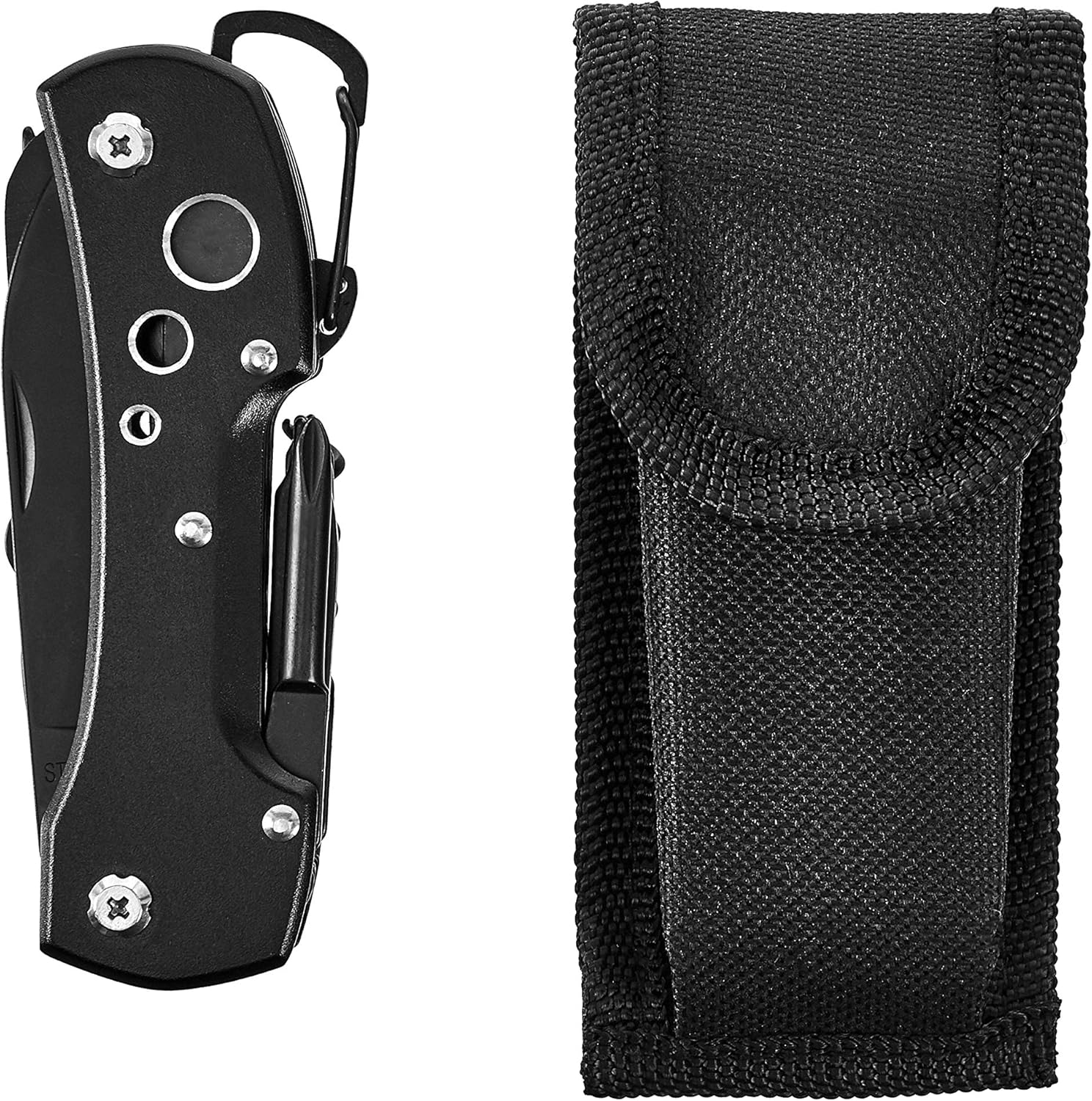
A 15-in-1 stainless steel multitool that solves the problem of carrying multiple kitchen and outdoor tools. Combines knife, scissors, bottle opener, corkscrew, and fish scaler in one compact unit.
The stainless steel construction resists rust and corrosion, while the built-in scissors and knife handle food prep efficiently. Black oxidation finish protects against daily wear and moisture exposure.
Measures 3.5 x 1.2 x 0.6 inches with an aluminum handle. Lightweight enough for pocket carry or kitchen drawer storage. Includes a nylon sheath with belt loop for hands-free carrying.
The small handle may feel cramped during extended cutting sessions, and each tool requires manual deployment rather than one-handed access.
Best for campers, fishers, and outdoor enthusiasts who need reliable multi-function prep tools without extra weight or bulk.
Best Uses
Deploy the knife and scissors for campsite food prep, cutting rope, or opening packages. The built-in bottle opener and corkscrew handle beverage service during outdoor gatherings without extra gear.
Use the fish scaler and hook remover immediately after catching fish to clean and process your catch efficiently. The metal file handles minor repairs or blade maintenance in the field.
Keep it in your kitchen drawer as an emergency repair tool for household tasks, or carry it while hiking for unexpected cutting, opening, or fastening needs.
Pros & Cons
Pros
- Razor-sharp stainless steel blade with saw back handles both precision cuts and rough camp tasks without dulling quickly.
- Included sharpener and fire starter eliminate the need to pack multiple tools, reducing pack weight for extended backcountry trips.
- Soft rubber handle provides genuine grip security in wet, cold, or bloody conditions where traditional handles fail.
Cons
- 15-inch length makes it less practical for everyday kitchen use and requires a dedicated sheath for safe storage at home.
- Stainless steel blade requires occasional maintenance to prevent rust if exposed to saltwater or stored in humid conditions.
Details
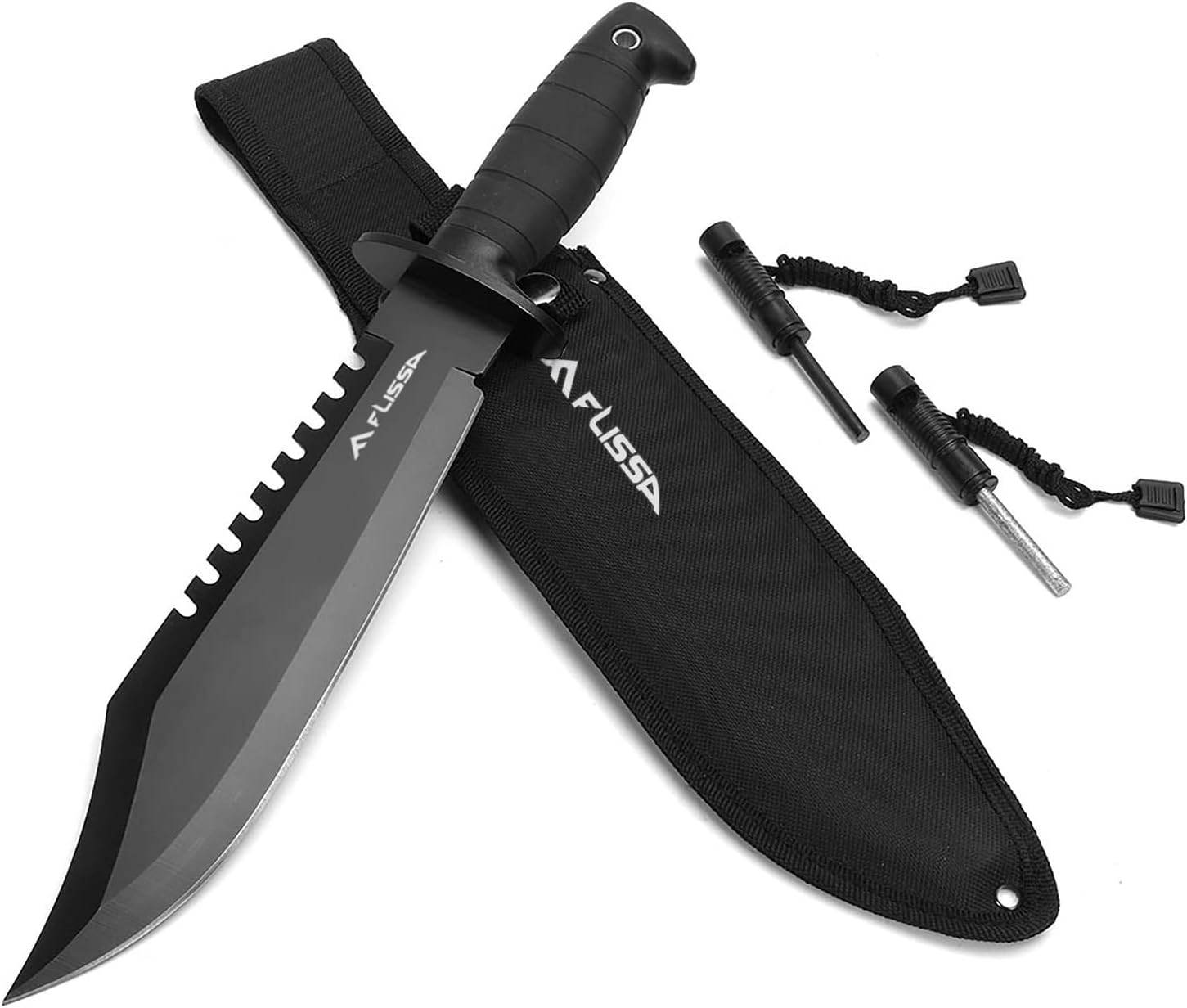
This is a full tang fixed blade hunting knife designed for serious outdoor survival, camp cooking, and field tasks. The 10-inch stainless steel blade with clip point and saw back cuts through food, rope, and wood with equal efficiency.
The razor-sharp edge stays sharp longer than traditional blades, and the included 10-second sharpener keeps it field-ready. Full tang construction means the blade extends through the entire handle, creating unbreakable durability under heavy use.
At 16.8 oz with a soft rubber handle, it balances cutting power with control. The heavy-duty sheath features an easy-open system and belt loop for secure carry during camp setup and cooking.
The integrated fire starter solves a real problem: igniting fires for outdoor cooking without carrying extra equipment. This is a specialized tool, not a kitchen knife replacement.
Best for hunters, survivalists, and backcountry campers who need one reliable blade that handles food prep, emergency tasks, and camp maintenance.
Care Guide
Rinse the blade immediately after use to remove blood, food residue, or dirt. Dry completely with a cloth to prevent rust spots. Store in the sheath in a cool, dry place away from humidity.
Use the included sharpener every 5-10 uses or when you notice the blade catching during cuts. Sharpen at a consistent 20-degree angle for best results. The sharpener works in approximately 10 seconds per blade.
Inspect the handle and sheath regularly for cracks or damage. The soft rubber handle may crack in extreme cold, but this does not affect cutting performance. Replace the sheath if the retention system loosens over time.

Pros & Cons
Pros
- Button Lock II deploys reliably and locks solid, giving you confidence during repetitive kitchen or camp cutting.
- Nitro-V steel edge lasts significantly longer than standard stainless, cutting down maintenance time.
- Hollow grind creates a thin, precise edge perfect for slicing vegetables and meat cleanly.
Cons
- Right-carry clip only; left-handed users cannot reposition the pocket clip.
- Blade length at 2.96 inches limits it to smaller prep tasks; larger cutting boards require a longer knife.
Details
The Elementum II is a compact folding knife designed for kitchen prep, camping, and outdoor utility work. Its Nitro-V steel blade resists rust and maintains edge retention far longer than standard stainless, cutting down maintenance.
The Button Lock II mechanism deploys the blade instantly and locks it solid, preventing accidental closure during cutting. The hollow grind creates a thin edge that bites cleanly through vegetables, meat, and packaging without crushing.
Built with a G10 handle and caged ceramic ball bearing pivot, the knife weighs just enough to feel substantial without causing hand fatigue during extended use. The deep carry pocket clip keeps it accessible without adding bulk to your pocket or pack.
The 2.96-inch blade is best suited for small to medium prep tasks; larger cutting boards and thick cuts require a longer blade.
Best for home cooks, campers, and outdoor enthusiasts who want a reliable everyday knife that won’t rust or dull after weeks of regular use.
Care Guide
Rinse the blade under running water immediately after use, especially after cutting acidic foods or raw meat. Dry both blade and handle thoroughly with a soft cloth to prevent water spots and corrosion buildup.
Wipe the pivot area monthly with a dry cloth to remove food debris. Apply a single drop of light machine oil to the pivot if the blade action becomes stiff; avoid excess oil that attracts dust.
Store the knife in a dry location with the blade fully closed. The Nitro-V steel resists rust naturally, but keeping it dry extends its lifespan. Sharpen every 6 months with a ceramic rod or whetstone, depending on cutting frequency.

Pros & Cons
Pros
- Spring-assisted mechanism opens instantly with minimal hand effort, reducing fatigue during repetitive cutting.
- Partially serrated blade tackles both delicate and tough materials without blade degradation.
- Personalization options (12 fonts, 30 icons) make this knife identifiable and less likely to disappear from a shared kitchen.
Cons
- Partially serrated blade requires more effort to sharpen than a fully smooth edge.
- 4.5-inch overall length may feel small for users accustomed to full-size kitchen knives.
Details
A spring-assisted pocket knife designed for everyday carry, camping, and hunting—but equally useful for kitchen prep, opening packages, or light cutting tasks where a full-size knife feels excessive.
The 3.25-inch stainless steel blade with partial serration handles both clean cuts and rough tasks. Spring-assisted opening means the blade deploys instantly with thumb pressure, saving time during meal prep. The liner lock mechanism secures the blade safely during use and closes smoothly when finished.
Built from stainless steel and wood, this knife weighs little and measures just 4.5 inches closed. The included clip attaches to an apron pocket or kitchen drawer for instant access. Laser engraving personalizes it with up to two lines of text and 30 icon options.
The partially serrated edge requires more careful sharpening than smooth blades and may not suit users who prefer professional-grade kitchen knives.
Best for home cooks who want a durable, personalized backup knife for camping trips, emergency kits, or everyday tasks that don’t demand a full-size chef’s knife.
Care Guide
Rinse the blade under warm water immediately after use and dry with a soft cloth to prevent water spots and corrosion. Avoid prolonged soaking or dishwasher cleaning, which can damage the wood handle and stainless steel finish.
For the serrated edge, use a ceramic rod or specialized serrated sharpener rather than a standard whetstone. Smooth the liner lock occasionally with a dry cloth to maintain smooth opening and closing action.
Store the knife in a dry location, ideally with the blade closed and locked. Wood handles benefit from occasional conditioning with food-safe mineral oil to prevent drying and cracking over years of use.
Pros & Cons
Pros
- Ambidextrous thumb knobs and flipper work equally well for left and right-handed cooks.
- Jimping on the blade spine and handle provides grip control during precise cutting tasks.
- Pocket clip allows secure storage and quick access during meal preparation.
Cons
- Serrated edge is harder to sharpen at home than a straight blade, requiring professional honing eventually.
- 3.1-inch blade length limits use for large cutting boards or processing whole vegetables efficiently.
Details
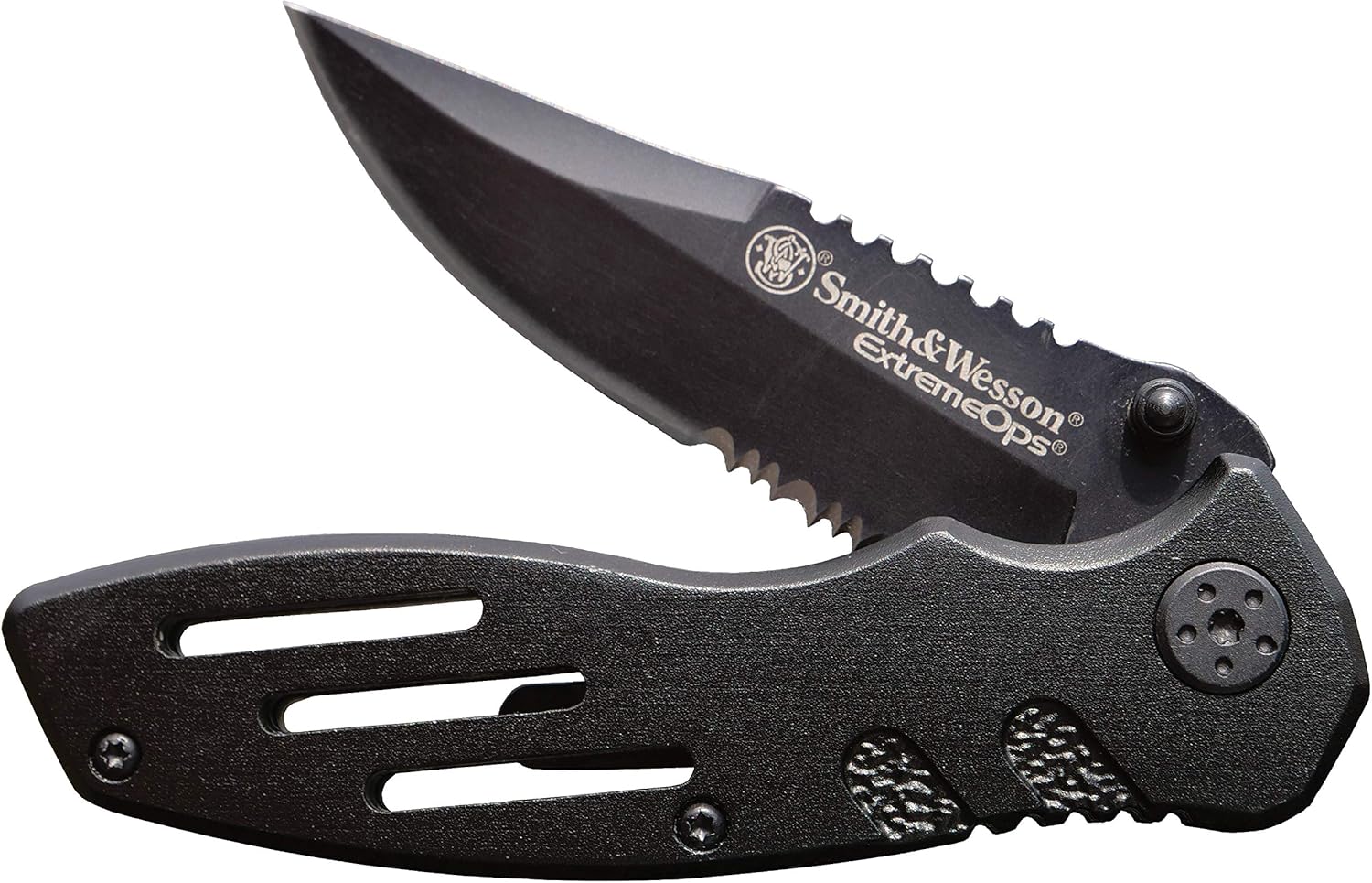
A compact tactical folding knife designed for everyday carry that excels at kitchen prep work requiring one-handed operation and quick blade deployment.
The 3.1-inch serrated blade cuts through tough exteriors (bread crusts, vegetable skins) while the liner lock keeps it stable during repetitive slicing. Ambidextrous thumb knobs let you open it instantly without setting down your ingredients.
Built from 7Cr17Mov high carbon stainless steel with black oxide coating that resists corrosion from acidic foods. Weighs 3.5 ounces with a textured aluminum handle featuring finger indentions for wet-hand grip security.
The serrated edge requires professional sharpening rather than home honing, which adds long-term maintenance costs.
Best for home cooks who prep ingredients one-handed and need a durable blade that handles both delicate herbs and crusty bread.
Care Guide
Rinse the blade under running water immediately after use to prevent food acid buildup on the stainless steel. Dry thoroughly with a soft cloth, especially around the hinge and lock mechanism where moisture can accumulate.
Store with the blade fully closed in a dry location. Wipe the handle monthly with a slightly damp cloth to remove flour dust and food residue that can degrade grip texture over time.
Do not soak in water or place in the dishwasher. For serrated edge maintenance, contact a professional sharpening service every 12-18 months depending on usage frequency.
About These Recommendations
The technique above is the point of this guide; the products are here because they help. We have not tested them ourselves — we did not buy or use this gear. The recommendations come from comparing specifications and materials against the patterns in verified owner reviews, so treat them as a shortlist worth researching rather than a verdict from our own kitchen.
Availability and prices change often, so check the current listing before buying. We earn a commission on purchases made through links on this page, which never affects what we recommend.


Write Your Review
No reviews yet. Be the first to share your experience!