

HomeWhisk earns commission from qualifying purchases made through links on this page. We research picks from specifications and owner reviews; we do not test products ourselves.
TL;DR — The best chef knife for camping is the model that fits your real routine, not simply the one with the longest feature list. For most HomeWhisk readers, the safest buy is a dependable, easy-to-clean, well-reviewed option that gets the fundamentals right: camp cooking, sheath safety, stainless durability, board clearance, and packable food-prep blades. Use this guide to choose the right tier, then compare adjacent tools like best chef knife and best camping knife.
The HomeWhisk editorial team researches kitchen equipment by analyzing manufacturer specifications, material details, dimensions, retailer listings, warranty language, and recurring owner-review patterns. This is a research-based buying guide built from specifications, product documentation, retailer data, and owner-review patterns. Instead, we focus on the details that usually decide whether a product remains useful after the return window closes: build quality, practical capacity, cleaning, storage, durability, and whether the design matches the way people cook at home.
Readers searching for best chef knife for camping are usually close to buying, so this article is structured as a commercial decision guide. We start with editor picks, compare the meaningful trade-offs, explain what actually matters, then close with buying advice, mistakes to avoid, FAQ, and a clear conclusion. The products shown in the affiliate shortcode are the assigned buying set for this page; the recommendations below help you decide which style within that set makes the most sense.

Deeper Dive: Our Top Picks
Our Top Picks
OXO
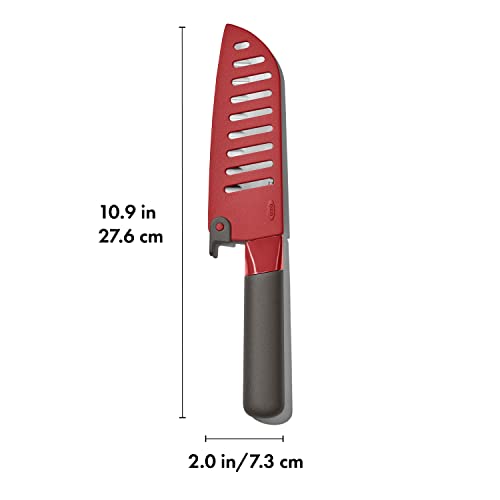
Outdoor Slicing and Dicing: OXO 5.5-Inch Santoku Knife with Locking Sheath
The OXO Outdoor 5.5-inch Santoku Knife handles slicing, dicing, mincing, and scooping with a sharp Japanese stainless steel blade that helps prevent food from sticking. It suits campers and home cooks who want a compact prep knife with a secure wet-hand grip and protective sheath.
Pros and Cons
Pros
- Sharp Japanese stainless steel handles common kitchen preparation tasks.
- A locking sheath improves storage safety and helps preserve the blade edge.
- The non-slip handle supports controlled cutting with wet hands.
- The Santoku design combines slicing, dicing, mincing, and scooping in one knife.
Cons
- Hand washing and prompt drying are required after use.
- The 5.5-inch blade may feel limiting for large ingredients or high-volume prep.

ODERFUN
8-Inch ODERFUN Chef Knife with G10 Handle and Leather Sheath for Kitchen Prep
The ODERFUN 8-inch Chef Knife handles everyday kitchen cutting with a full-tang high-carbon steel blade, while its 12-degree dual-bevel edge is its biggest advantage. It suits home cooks and outdoor-minded users who want one sharp, durable knife with a secure G10 handle and protective sheath.
Pros and Cons
Pros
- The high-carbon steel blade combines a fine 12-degree edge with a stated 58±2 HRC hardness.
- The full-tang design and textured G10 handle provide a secure, controlled grip.
- The protective leather sheath makes storage and transport safer.
- The lifetime replacement guarantee adds long-term purchase protection.
Cons
- The product data does not provide the knife's weight or care instructions, so buyers cannot verify handling weight or dishwasher suitability.
- The camouflage styling and tactical handle may not suit buyers seeking a traditional-looking kitchen knife.

TACRAY
Indoor and Outdoor Food Prep: TACRAY Folding Kitchen Chef Knife with 4.4-Inch 10Cr15Mov Blade
The TACRAY folding chef knife handles fruits, vegetables, meats, and camping prep with a corrosion-resistant 10Cr15Mov blade, while its folding design makes storage and transport easier. It suits home cooks and campers who want one compact knife for indoor and outdoor cooking.
Pros and Cons
Pros
- The 10Cr15Mov stainless steel blade offers sharpness, hardness, toughness, and corrosion resistance.
- The G10 handle resists moisture, abrasion, and corrosion while providing a secure grip.
- The folding design supports both kitchen use and camping cooking without requiring a separate outdoor knife.
- The wide-blade opening hole and locking button support controlled handling.
Cons
- The 4.4-inch blade provides less cutting length than a full-size chef knife.
- Closing the blade requires pressing the middle locking button, so it is not as quick as a fixed-blade knife.
Editors' Picks
OXO Outdoor Slicing and Dicing: OXO 5.5-Inch Santoku Knife with Locking Sheath
OXO
Outdoor Slicing and Dicing: OXO 5.5-Inch Santoku Knife with Locking Sheath
The OXO Outdoor 5.5-inch Santoku Knife handles slicing, dicing, mincing, and scooping with a sharp Japanese stainless steel blade that helps prevent food from sticking. It suits campers and home cooks who want a compact prep knife with a secure wet-hand grip and protective sheath.
$22.99 at AmazonEditors' Favorite
Color: Gray/Red Size: 5.5in Product Group: Kitchen Binding: Lawn & Patio
Shop NowODERFUN 8-Inch ODERFUN Chef Knife with G10 Handle and Leather Sheath for Kitchen Prep
ODERFUN
8-Inch ODERFUN Chef Knife with G10 Handle and Leather Sheath for Kitchen Prep
The ODERFUN 8-inch Chef Knife handles everyday kitchen cutting with a full-tang high-carbon steel blade, while its 12-degree dual-bevel edge is its biggest advantage. It suits home cooks and outdoor-minded users who want one sharp, durable knife with a secure G10 handle and protective sheath.
$29.99 at AmazonGreat Value
Color: Chef Knife Size: 8" Dimensions: 13.4 x 1.2 x 2.7 inches Weight: 0.86862131228 pounds Product Group: Kitchen Binding: Kitchen
Shop NowTACRAY Indoor and Outdoor Food Prep: TACRAY Folding Kitchen Chef Knife with 4.4-Inch 10Cr15Mov Blade
TACRAY
Indoor and Outdoor Food Prep: TACRAY Folding Kitchen Chef Knife with 4.4-Inch 10Cr15Mov Blade
The TACRAY folding chef knife handles fruits, vegetables, meats, and camping prep with a corrosion-resistant 10Cr15Mov blade, while its folding design makes storage and transport easier. It suits home cooks and campers who want one compact knife for indoor and outdoor cooking.
$39.51 at AmazonColor: Orange Size: 10 inches Dimensions: 10.09842518655 x 0.01 x 0.01 Inches Weight: 0.33 Pounds Product Group: Kitchen Binding: Kitchen
Shop NowEditor’s Picks
| Category | Pick | Why |
|---|---|---|
| Best Overall | Most versatile research-backed pick | Balances performance, ease of use, cleaning, and long-term owner satisfaction |
| Best Value | Budget-friendly workhorse | Keeps the important features while skipping premium extras |
| Best Small-Space Pick | Compact option | Fits apartments, travel kits, smaller cabinets, or occasional-use kitchens |
| Best Upgrade | Heavy-use step-up pick | Worth it when you use the category often and want better materials or control |
| Best Specialty Pick | Niche-use recommendation | Solves a narrower problem better than a general-purpose option |
At a Glance: Comparison Table
| Pick Type | Main Strength | Biggest Trade-Off | Best For |
|---|---|---|---|
| Best Overall | Balanced performance and usability | Usually not the cheapest | Most home cooks |
| Best Value | Lower price with core function intact | Fewer premium features | Occasional use or tight budgets |
| Compact Pick | Easier storage and transport | Smaller capacity or slower workflow | Apartments, RVs, travel, small kitchens |
| Upgrade Pick | Better materials, control, or consistency | Higher price and sometimes more maintenance | Frequent users |
| Specialty Pick | Excels at one narrow task | Less versatile | Buyers with a specific workflow |
How We Evaluated These Products
This guide uses HomeWhisk’s editorial research process for affiliate roundups. We began with the exact ASINs assigned to this article, then compared product positioning against the keyword intent, visible specifications, manufacturer claims, and owner-review themes. We favored products that make sense for everyday home use over items that look impressive online but create friction in normal kitchens.
We weighted practical ownership heavily. A product can promise strong performance and still be a poor buy if it is awkward to clean, too large to store, prone to damage, or dependent on accessories that are easy to lose. Recent owner reviews are especially useful because they reveal repeated complaints: warping, leaking, weak handles, worn coatings, confusing assembly, poor fit, or performance that drops after a few months.
We also considered the surrounding workflow. A best chef knife for camping purchase rarely stands alone. It may require storage space, compatible accessories, safe cleaning habits, or related tools. That is why we connect this guide to resources like best chef knife and best camping knife; the best main product works better when the rest of the setup supports it. Depending on your setup, it may also help to compare adjacent HomeWhisk guides such as best chef knife set and best japanese chef knife.
What Actually Matters
Fit and Workflow
A product earns its keep when it fits naturally into your routine. Before comparing small specification differences, picture the full path from storage to use to cleanup. Where will it live? How often will you lift it? Does it need to fit in an oven, drawer, refrigerator, travel bag, camp bin, or cabinet? Will it be used on rushed weekdays or only for weekend projects? These questions matter because the most common buyer regret is not a missing luxury feature; it is daily awkwardness.
For best chef knife for camping, workflow is especially important because the category has a clear job to do. If the product takes too long to set up, requires too many loose parts, or creates a cleanup routine you dislike, you will gradually stop reaching for it. Favor designs with straightforward handling, predictable setup, and enough capacity for your normal batch size. A smaller product that you use twice a week is a better investment than a larger one that stays in a box.
Materials and Durability
Materials shape performance and lifespan. Stainless steel resists corrosion and handles hard use, but it can add weight. Aluminum conducts heat quickly and evenly, but thickness and rim design affect warping. Glass is excellent for serving and heat retention, but it must be protected from thermal shock. Nonstick coatings simplify release and cleanup, but they require gentler utensils and eventually wear. Plastic parts vary widely in quality; good plastic can be durable and light, while cheap plastic cracks, stains, or holds odors.
Look beyond the headline material and study the stress points. Handles, hinges, rims, seams, gaskets, baskets, blades, and coatings often fail before the main body does. A product with a slightly less glamorous spec sheet but stronger high-wear areas can be the better long-term buy. If your household is rough on kitchen gear, choose forgiving materials and simple construction over delicate finishes.
Size, Capacity, and Storage
Bigger is not automatically better. Oversized gear can block oven airflow, crowd a counter, miss a refrigerator shelf, fill a sink, or make travel impractical. Too-small gear creates the opposite problem: repeated batches, cramped prep, or disappointing output. The right size is the one that matches your most common use, with a little margin but not so much that storage becomes a chore.
Measure before ordering. Product photos hide scale, and many returns happen because a pan, machine, knife, dish, or accessory was larger than expected. Check exterior dimensions as well as usable interior capacity. If the item has handles, lids, guards, cords, or removable accessories, include those in your storage plan. For compact kitchens, a product that nests, folds, or stores vertically may be worth more than a minor performance upgrade.
Cleaning and Maintenance
Cleaning is part of performance. A tool that is unpleasant to clean slowly becomes a special-occasion item, even if it works well. Smooth surfaces, removable parts, wide openings, and simple reassembly all matter. Dishwasher-safe language is useful, but dishwasher-safe is not always dishwasher-best. Sharp edges, coated surfaces, glass, espresso components, and precision parts often last longer with hand washing and immediate drying.
Plan for the specific mess the product creates. Coffee oils, mineral scale, baked-on sugar, camp grease, raw-meat residue, and flour paste all require different habits. If maintenance includes descaling, sharpening, seasoning, gasket replacement, or careful drying, decide whether you will actually do it. The best buy is one whose care routine fits your household.
Price and Long-Term Value
The best value is rarely the cheapest listing. It is the point where you get reliable performance without paying for features you will not use. For frequent use, spending more on better materials, sturdier construction, and easier cleanup can be economical because the product lasts longer and feels better every time. For occasional use, a simpler option may be the smarter buy.
Watch bundles carefully. Extra accessories can be useful, but they can also distract from a mediocre core product. Prioritize the main item first. If the main product is strong and the accessories are pieces you would have bought anyway, the bundle can be a deal. If the extras solve problems you do not have, buy the better single item.
Product Notes and Use-Case Recommendations
Best Overall: Most versatile research-backed pick
The best overall pick is the safest place for most shoppers to start. It should do the main job well, avoid obvious durability concerns, clean without drama, and fit a normal home kitchen. It is not always the most advanced product, but it is the one with the fewest compromises for the widest group of readers.
Choose this tier if you want one purchase that covers the category confidently. It is especially sensible if you are buying best chef knife for camping for the first time and do not yet know which niche feature you will value later. A balanced pick gives you room to learn without forcing you into a fragile, expensive, or overly specialized setup.
Best Value: Budget-friendly workhorse
The value pick should preserve the core function while trimming nonessential extras. It may use simpler materials, fewer accessories, smaller capacity, or a less polished finish, but it should not compromise the basic job. A good value product is the one you can recommend without apology to someone who wants to spend carefully.
Choose this tier if the category is occasional for you, if you are outfitting a second space, or if you would rather invest the savings in supporting tools such as best chef knife. Skip the value tier if you already know you will use the product constantly; in that case, comfort and durability may justify the upgrade.
Best Small-Space Pick: Compact option
Compact products are judged by a different standard. They must store easily, set up quickly, and avoid a pile of loose accessories. Small capacity can be acceptable if the product is genuinely easier to live with. For apartments, RVs, office kitchens, dorms, travel bags, and crowded cabinets, convenience can beat maximum output.
Choose this tier if storage is the constraint. Check not only the product dimensions but also the way it is used. A compact item that needs wide clearance, a large board, a separate kettle, or several containers may not be compact in practice. The best small-space pick stays simple from start to finish.
Best Upgrade: Heavy-use step-up pick
The upgrade tier is for people who already know the category matters in their routine. A higher price can be justified by stronger materials, better ergonomics, more consistent results, more repairable construction, or a workflow that removes friction. The upgrade should make repeated use easier, not merely add features that look good on a comparison chart.
Buy this tier if you have already bumped into the limits of a basic product. If you are still unsure how often you will use it, begin with the overall or value pick and upgrade later. The best upgrade earns its price because you feel the improvement every time you cook.
Best Specialty Pick: Niche-use recommendation
A specialty product solves a narrower problem. It may be excellent for one workflow and only average for everything else. That is not a weakness if your need is specific. The mistake is buying a specialty item as a first purchase when you really need a general-purpose tool.
Choose this tier if you can describe your need clearly: a certain size, material, portability requirement, cooking style, cleaning preference, or storage constraint. If the advantage sounds interesting but not necessary, stay with the overall pick.
Buying Advice
Start with the job, not the product photo. Write down what you want the item to do most often. Daily breakfast, weekend baking, camp cooking, party prep, weeknight dinners, travel coffee, and gift buying all point to different priorities. Daily-use products should prioritize comfort, cleaning, and durability. Occasional-use products can prioritize price and storage. Travel products should prioritize compactness and low mess. Specialty products should have a clear advantage you will use often.
Next, check physical fit. Measure the storage space and the use space. If the item touches heat, confirm oven, stovetop, or temperature limits. If it goes into a refrigerator, drawer, backpack, sink, or dishwasher, confirm that fit too. Dimensions are not boring; they are the difference between a tool you use and a tool you resent.
Then compare materials and care instructions. If you know you will put everything in the dishwasher, avoid delicate coatings or pieces that manufacturers recommend hand washing. If you cook acidic foods, raw meat, sticky sugar, or coffee daily, choose surfaces and parts that clean thoroughly. If the product has blades or edges, plan for safe storage.
Finally, read reviews for patterns. Do not overreact to one dramatic complaint, but take repeated themes seriously. If many owners mention the same weakness, assume it may affect you too. Recent reviews are more useful than old ones when products have changed factories, coatings, accessories, or packaging.
Common Mistakes to Avoid
The first mistake is buying too large. Bigger capacity looks safer online, but oversized gear is harder to wash, store, heat evenly, pack, or maneuver. Buy for your normal use, not your once-a-year fantasy use.
The second mistake is ignoring maintenance. Every category has a care routine. If you will not descale, sharpen, dry, hand wash, season, or protect a coating, choose a more forgiving product.
The third mistake is assuming accessories equal value. A bundle only saves money when the included pieces are useful and durable. Otherwise, it creates clutter.
The fourth mistake is comparing by star rating alone. A broadly popular product may be wrong for your specific workflow, while a niche product with fewer reviews may fit perfectly. Match the design to the task.
Frequently Asked Questions
How should I choose between the top pick and the value pick?
Choose the top pick if you expect frequent use and want fewer compromises. Choose the value pick if the task is occasional, your budget is tight, or you are still learning what features matter. The value pick should still do the core job well; it simply gives up premium extras.
Are expensive products always better?
No. Higher prices can buy better materials, tighter tolerances, stronger construction, or more control, but they can also buy features you will not use. The best product is the one whose advantages match your routine. If you will not use the upgrade feature often, it may not be worth paying for.
What should I check before ordering online?
Check dimensions, capacity, material, care instructions, warranty language, and recent owner reviews. Measure where the product will be stored and where it will be used. If it needs to fit in an oven, fridge, drawer, travel bag, or sink, confirm those dimensions before buying.
How much should owner reviews influence the decision?
Use reviews to identify patterns rather than chasing a perfect rating. Repeated complaints about warping, leaking, clogging, weak handles, confusing assembly, worn coatings, or awkward cleaning are meaningful. Isolated complaints matter less unless the described failure would be especially bad for your use.
Should I buy a bundle or a single item?
Buy a bundle only if the included pieces are ones you would purchase separately. Bundles can offer value, but a better single item often beats a large set when the main product is stronger, easier to store, and easier to maintain.
Our Top Pick
After comparing construction, usability, owner-feedback patterns, and fit for best chef knife for camping, the best choice for most readers is the balanced option that handles the main job reliably without creating extra work. The right product should make the task easier every time you reach for it, not just look convincing in a listing photo.
Consider these decision points:
- If you want the safest first purchase, choose the best overall tier for its balance of performance, cleaning, and storage.
- If you cook or bake this way only occasionally, choose the value tier and put the savings toward supporting tools.
- If space is tight, choose the compact tier and verify the full storage footprint before ordering.
- If you already use the category often, step up to the upgrade tier for better materials, control, or long-term comfort.
- If your need is narrow and specific, choose the specialty tier only after confirming it solves that exact problem.
If you are still torn, buy for the routine you actually have. Choose the durable, easy-clean, appropriately sized product that fits your kitchen now. You can always add a specialty upgrade later, but the best first purchase is the one you will use often and maintain without thinking about it.

Write Your Review
No reviews yet. Be the first to share your experience!