

TL;DR — Mixing bowls smell bad mostly because of the material. Plastic and melamine bowls are porous and oil-loving (oleophilic), so fats, garlic, and onion compounds soak into micro-scratches and go rancid, producing that lingering musty or “old kitchen” odor. Glass and stainless steel are non-porous and rarely hold smells. If your bowls stink, deodorize with a baking soda paste or a vinegar soak, dry them completely (trapped moisture breeds musty bacteria), and consider switching to glass or steel. For picks, see our best mixing bowls guide.
The HomeWhisk editorial team researches kitchen equipment by analyzing material behavior, manufacturer specifications, and aggregated user reviews from major retailers and home-cooking communities. This guide explains the actual chemistry behind smelly mixing bowls and how to fix — and prevent — it, rather than repeating “just wash them better.”
A mixing bowl that smells bad even after washing is one of the most common and frustrating kitchen mysteries. You scrub it, it comes out looking clean, and the next time you use it there’s a faint rancid, plasticky, or musty odor that transfers straight into your food. The cause almost always traces back to what the bowl is made of and how you dried it, not to how hard you scrubbed. Understanding the mechanism makes the fix obvious. If you’re ready to replace a set that’s beyond saving, our best mixing bowls and best food storage containers guides cover odor-resistant options.
The Real Culprit: Porous Materials Absorb Odors
The single biggest reason mixing bowls smell bad is material porosity. At a microscopic level, some materials have surfaces that grab and hold fat molecules, and it’s those trapped fats that later oxidize and stink.
- Plastic (polypropylene, and worse, older polystyrene or acrylic) is oleophilic — it chemically attracts oils. Fats from butter, cheese, salad dressing, and meat marinades seep into the surface and into any knife or whisk scratches. Over time these trapped oils oxidize and turn rancid, producing that classic stale, waxy, “old plastic” smell. Plastic also absorbs strong aroma compounds like the sulfur molecules in garlic and onion and the oils in chili and curry.
- Melamine (the hard “unbreakable” bowls) behaves similarly and stains and absorbs odors readily.
- Wood and bamboo bowls are extremely porous and will hold onto oils and smells unless kept well-oiled and never soaked.
- Glass and stainless steel are non-porous and non-reactive. Their surfaces don’t absorb oils or odor molecules, so they rinse clean and almost never retain smells. This is exactly why professional and serious home kitchens lean on stainless and glass bowls.
If you own plastic bowls and they smell, you’re not doing anything wrong — the material is simply working against you. Our best mixing bowls guide flags which materials resist odors and staining.
Rancid Oils and Trapped Fat Films
Even on a non-porous bowl, a thin film of fat can survive a quick wash. Fats don’t dissolve in water — they need surfactant (dish soap) and often warm water to lift away. A lukewarm rinse leaves behind an invisible greasy layer that then oxidizes.
Rancidity is the chemical breakdown of fats through oxidation (exposure to oxygen) and hydrolysis. The byproducts — short-chain fatty acids and aldehydes — are what your nose reads as “off,” “waxy,” or “crayon-like.” This is why a bowl used for buttercream, nut butters, or oily doughs smells worse over time than one used only for dry flour. The fix is heat and degreasing: wash with hot water and plenty of soap, and for stubborn cases, a baking soda scrub that both abrades the film and neutralizes acidic odor compounds. Bowls used for wet doughs pair naturally with a good best dutch oven for bread baking for the bake itself, and a best kitchen scale for accurate ratios that reduce sticky over-hydrated messes.
The Musty “Wet Dog” Smell: Trapped Moisture and Bacteria
A distinct musty, sour, or “wet dog” smell usually isn’t rancid oil — it’s microbial. When bowls are stacked or put away while still slightly damp, or stored nested tightly together, water gets trapped between surfaces with no airflow. That warm, dark, moist gap is ideal for bacteria and mildew, and their metabolic byproducts smell musty and sour.
This is extremely common with nested bowl sets and with bowls that have a silicone base ring or non-slip bottom — water wicks under the ring and never dries. The smell then transfers to whatever you mix next. The fix is airflow and thorough drying: never stack bowls wet, dry the base ring separately, and store bowls loosely or upside down. If a silicone ring is removable, pull it off periodically and clean underneath — trapped gunk there is a frequent hidden odor source. Our best food storage containers guide covers the same drying principle for lidded storage, where trapped moisture causes identical problems.
How Acids, Metal, and Discoloration Play In
A few less obvious factors make smells worse:
- Acidic marinades (citrus, vinegar, tomato, wine) left sitting in reactive bowls can etch surfaces and, in aluminum or unlined copper, produce a metallic tang. Store acidic mixtures in glass or stainless, not plastic or bare aluminum.
- Abrasive scrubbing with steel wool or harsh pads carves micro-scratches into plastic and even stainless, and those scratches become reservoirs where oils and bacteria hide beyond the reach of a sponge. Use a non-scratch sponge and let a baking soda soak do the work instead of aggressive scouring.
- Discoloration and staining (yellowing plastic, orange tomato stains, gray marks from metal utensils) often accompanies odor because the same porous, scratched surface that stains also traps smell-causing residue. Staining is a visible warning that the material is absorbing what you put in it.
- Water spots and hard-water film on stainless can trap a faint metallic or musty smell; a vinegar wipe removes both.
None of these are cause for panic, but together they explain why an old plastic bowl that’s scratched, stained, and stored damp becomes a persistent smell factory. A dedicated best cutting board made of non-porous material follows the same logic — porous surfaces hold odors, non-porous ones don’t.
How to Deodorize a Smelly Mixing Bowl: Step by Step
Here’s a reliable rescue routine, from gentlest to strongest:
1. Hot soapy degrease. Wash with the hottest water you can stand and a generous amount of dish soap to strip the fat film. Rinse and smell — sometimes this alone is enough. 2. Baking soda paste. Make a paste of baking soda and a little water, coat the interior, and let it sit 15 to 30 minutes. Baking soda (sodium bicarbonate) is mildly abrasive and neutralizes acidic, sour odor compounds. Scrub gently with a soft sponge, then rinse. 3. Vinegar soak. Fill or wipe the bowl with a 1:1 white vinegar and water solution and let it sit 15 to 30 minutes. The acetic acid neutralizes alkaline and bacterial odors and cuts hard-water film. Rinse well. 4. Baking soda plus vinegar for tough cases. Sprinkle baking soda, then pour vinegar over it; the fizzing lifts residue from scratches. Scrub and rinse. 5. Sun and air. Set the clean bowl in direct sunlight for a few hours. UV light helps break down odor molecules and kills lingering microbes, and full air-drying removes the moisture that caused musty smells. 6. Dry completely before storing. This is the step most people skip and the one that prevents recurrence. Store loosely, not stacked wet.
If a plastic bowl still smells after all this, the odor has permeated the material and it’s time to replace it. Our best mixing bowls guide points to glass and stainless sets that won’t have this problem.
Frequently Asked Questions
Why do my dishes and bowls smell after hand washing?
Usually because the wash water wasn’t hot enough or soapy enough to fully lift the fat film, leaving a thin greasy layer that oxidizes and smells. A damp sponge or towel harboring bacteria can also transfer a musty odor onto “clean” dishes. Wash with hot water and plenty of soap, rinse well, air-dry completely, and replace or sanitize your sponge regularly. Porous plastic bowls are especially prone to this because they hold onto residue that stainless and glass rinse away.
Why do my dishes smell like fish after washing?
A fishy or amine smell on non-fish dishes typically comes from bacterial buildup — often on the sponge, in the dishwasher filter, or trapped in a bowl’s silicone base ring — producing the same class of amine compounds found in fish. It can also be residue from actually cooking fish or eggs absorbed into porous plastic. Deodorize with a vinegar soak, clean or replace the sponge, check and clean any dishwasher filter, and scrub under removable base rings where moisture and residue collect.
Why does my silverware or bowl smell like wet dog?
That musty “wet dog” odor is a moisture-and-bacteria problem, not a food-residue one. It happens when items are put away damp or stored where water is trapped with no airflow — nested bowls, closed drawers, under silicone rings — letting bacteria and mildew grow. Their byproducts smell musty and sour. Fix it with a vinegar soak, then always dry items fully and store them with airflow. On stainless, a hard-water film can add to the smell; a vinegar wipe removes it.
Are plastic or stainless steel mixing bowls better for avoiding odors?
Stainless steel (and glass) are far better. Both are non-porous and non-reactive, so they don’t absorb oils, acids, or aroma compounds, and they rinse clean without retaining smells or stains. Plastic is oleophilic and porous — it traps fats that turn rancid and absorbs garlic, onion, and curry odors, especially once scratched. If odors are a recurring problem, switching to stainless or glass solves it at the source. Our best mixing bowls guide covers durable non-porous options.
Can I put smelly mixing bowls in the dishwasher to fix them?
A dishwasher’s hot water and detergent will degrease better than a lukewarm hand wash and often helps, but it won’t cure odors that have permeated porous plastic. It can also drive water under silicone base rings, where it stays trapped and creates the musty smell you’re trying to remove. For set-in odors, a targeted baking soda or vinegar soak works better, and drying fully afterward matters most. Non-porous stainless and glass respond well to the dishwasher; heavily scratched plastic usually needs replacing.
Does vinegar or baking soda work better for smelly bowls?
They target different odors, so use both. Baking soda (a base) neutralizes acidic, sour, and rancid-fat smells and gently abrades residue from scratches. Vinegar (an acid) neutralizes alkaline and bacterial/musty odors and dissolves hard-water film. For a stubborn bowl, degrease with hot soapy water first, do a baking soda paste, then a vinegar soak — or combine them for a fizzing scrub that lifts trapped residue. Finish by drying completely so the smell doesn’t return.
The Bottom Line
If your mixing bowls smell bad, blame the material and the moisture before you blame your scrubbing. Porous plastic and melamine absorb fats that turn rancid and soak up garlic, onion, and curry odors, while trapped dampness in nested bowls and under silicone rings breeds the musty, sour smell. Deodorize with hot soapy water, a baking soda paste, and a vinegar soak, then dry the bowls completely and store them with airflow. For a permanent fix, move to non-porous glass or stainless steel, which simply don’t hold smells. See our best mixing bowls, best food storage containers, and best cutting board guides for odor-resistant upgrades.

COOK WITH COLOR
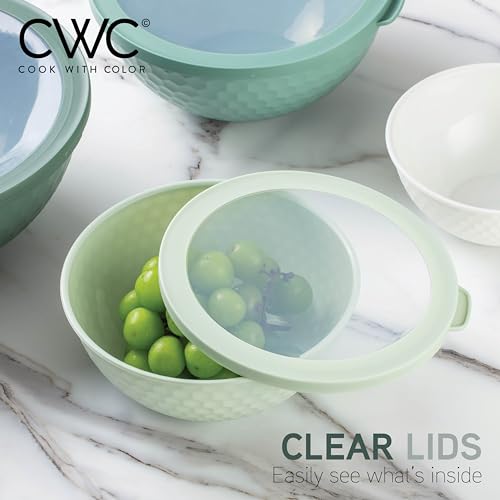
Food Prep and Storage Mixing Bowls with Lids, COOK WITH COLOR Sage Embossed Set
This COOK WITH COLOR set handles food prep, serving, and storage while nesting bowls and tight-fitting lids reduce cabinet clutter and simplify transport. It suits home cooks who want microwave-safe, freezer-safe plastic bowls for fruit, salads, snacks, and leftovers.
Pros and Cons
Pros
- The set combines six plastic bowls with six lids for prep, serving, storage, and transport.
- BPA-free polypropylene provides a food-safe material for regular kitchen use.
- Microwave, freezer, and top-rack dishwasher compatibility adds practical versatility.
- Nesting storage and a sage embossed finish keep the set organized and visually coordinated.
Cons
- The bowls are plastic rather than glass or metal, which may not suit buyers seeking heavier cookware.
- The product data lists five capacities even though the set includes six bowls, so size selection is not fully clear.

Nuogo
Extra Large 8 Qt Stainless Steel Mixing Bowls for Big Batch Baking and Holiday Meal Prep (Set of 4)
This set of four 13.4-inch stainless steel bowls gives you 8 quarts of mixing space per bowl, enough for large bread dough batches, family-sized salads, and holiday fillings without spills. Best for home bakers and cooks who regularly prepare food for gatherings or need bowls that won't slide during heavy mixing.
Pros and Cons
Pros
- 8-quart capacity handles large recipes that smaller bowls can't accommodate, confirmed by buyers using them for bread dough and batch cooking.
- Heavy gauge stainless steel stays put during mixing without needing a non-slip base, according to reviewer feedback.
- Mirror finish resists staining from tomato sauces and turmeric-based marinades better than matte stainless steel.
Cons
- Some units arrive with sharp unpolished edges in hidden spots like the rim underside, requiring careful inspection before first use.
- 13.4-inch diameter may not fit inside standard refrigerator shelves if you need to chill mixed ingredients overnight.

COOK WITH COLOR
Mixing and Baking Prep: COOK WITH COLOR 6-Piece Nesting Plastic Bowl Set with Pour Spouts
This six-piece plastic mixing bowl set supports cooking and baking with non-slip bases, handles, pour spouts, and interior measurement markings, while nesting saves storage space. It suits home cooks who want easy measuring, controlled pouring, and top-rack dishwasher cleanup in one organized set.
Pros and Cons
Pros
- Six bowls provide multiple sizes for mixing, measuring, and ingredient preparation.
- Handles, pour spouts, and non-slip construction improve control during everyday use.
- Interior measurement markings add convenient measuring directly inside each bowl.
- The plastic set is freezer safe and top-rack dishwasher safe for practical kitchen use.
Cons
- The bowls are specified for top-rack dishwasher cleaning, not unrestricted dishwasher use.
- Exact bowl dimensions and individual weights are not provided in the product data.

Cuisinart
3-Piece Stainless Steel Nesting Mixing Bowl Set for Baking, Cooking & Food Prep (1.5, 3, 5 Qt)
This three-bowl stainless steel set handles everyday mixing, prepping, and storage with dishwasher-safe cleanup and refrigerator-freezer compatibility. Home bakers and meal preppers who need durable, space-saving bowls that go from counter to fridge without transferring containers should consider this set.
Pros and Cons
Pros
- High-quality stainless steel withstands daily use without denting or rusting, maintaining a clean appearance over time.
- Three versatile sizes cover most home cooking and baking tasks, from whisking eggs to tossing large salads.
- Dishwasher-safe construction and smooth surface make cleanup faster than textured or coated bowls.
Cons
- Lacks non-slip bases or handles, so bowls may slide on smooth countertops during vigorous mixing.
- No lids included, requiring separate plastic wrap or covers for refrigerator storage.
COOK WITH COLOR Food Prep and Storage Mixing Bowls with Lids, COOK WITH COLOR Sage Embossed Set
COOK WITH COLOR
Food Prep and Storage Mixing Bowls with Lids, COOK WITH COLOR Sage Embossed Set
This COOK WITH COLOR set handles food prep, serving, and storage while nesting bowls and tight-fitting lids reduce cabinet clutter and simplify transport. It suits home cooks who want microwave-safe, freezer-safe plastic bowls for fruit, salads, snacks, and leftovers.
Check PriceEditors' Favorite
Color: Sage Embossed Size: 12 Pc. Dimensions: 12 x 12 x 5.5 inches Product Group: Kitchen Binding: Kitchen
Shop NowNuogo Extra Large 8 Qt Stainless Steel Mixing Bowls for Big Batch Baking and Holiday Meal Prep (Set of 4)
Nuogo
Extra Large 8 Qt Stainless Steel Mixing Bowls for Big Batch Baking and Holiday Meal Prep (Set of 4)
This set of four 13.4-inch stainless steel bowls gives you 8 quarts of mixing space per bowl, enough for large bread dough batches, family-sized salads, and holiday fillings without spills. Best for home bakers and cooks who regularly prepare food for gatherings or need bowls that won't slide during heavy mixing.
$37.99 at AmazonGreat Value
Number of Pieces: 4 Brand Name: Nuogo Specific Uses For Product: Salad, Pasta, Dinner, Pasta, Soup, Noodle, Dessert, Cereal, Snack, Ice Cream, Rice, Beans, Chili, Stews, Risotto, Casserole, Appetizers Set Name: 4 Manufacturer: Nuogo Model Number: AO-Nuogo-4638 Manufacturer Part Number: AO-Nuogo-4638 Item Weight: 3.45 Pounds Best Sellers Rank: #21,541 in Kitchen & Dining (See Top 100 in Kitchen & Dining) #111 in Mixing Bowls ASIN: B0D7LN13MC Customer Reviews: 4.2 4.2 out of 5 stars (242) 4.2 out of 5 stars Other Special Features of the Product: Dishwasher Safe, Durable Color: Silver Product Style: Classic Shape: Round Pattern: Solid Bowl Material: Stainless Steel Product Care Instructions: Dishwasher Safe Is the item dishwasher safe?: Yes Is the item microwaveable?: No Material Type: Stainless Steel Capacity: 8 Quarts Item Dimensions W x H: 12.99"W x 4.13"H Size: 13 Inch (8 Qt) Brand: Nuogo Style: Classic
Shop NowCOOK WITH COLOR Mixing and Baking Prep: COOK WITH COLOR 6-Piece Nesting Plastic Bowl Set with Pour Spouts
COOK WITH COLOR
Mixing and Baking Prep: COOK WITH COLOR 6-Piece Nesting Plastic Bowl Set with Pour Spouts
This six-piece plastic mixing bowl set supports cooking and baking with non-slip bases, handles, pour spouts, and interior measurement markings, while nesting saves storage space. It suits home cooks who want easy measuring, controlled pouring, and top-rack dishwasher cleanup in one organized set.
Check PriceColor: Mint Size: 6 Piece Non-Slip Dimensions: 11 x 11 x 7.28 inches Product Group: Kitchen Binding: Kitchen
Shop NowCuisinart 3-Piece Stainless Steel Nesting Mixing Bowl Set for Baking, Cooking & Food Prep (1.5, 3, 5 Qt)
Cuisinart
3-Piece Stainless Steel Nesting Mixing Bowl Set for Baking, Cooking & Food Prep (1.5, 3, 5 Qt)
This three-bowl stainless steel set handles everyday mixing, prepping, and storage with dishwasher-safe cleanup and refrigerator-freezer compatibility. Home bakers and meal preppers who need durable, space-saving bowls that go from counter to fridge without transferring containers should consider this set.
$39.99 at AmazonNumber of Pieces: 6 Brand Name: Cuisinart Specific Uses For Product: 5 Quart Bowl Lid, Baking, Cooking, Food Prep, Serving Included Components: 1.5 Quart Bowl, 3 Quart Bowl, 5 Quart Bowl, Lid Global Trade Identification Number: 00086279039842, 10086279039849 Recommended Uses For Product: Baking, Cooking, Food Prep Unit Count: 1.0 Count Set Name: 3-Piece Nesting Bowl Set Manufacturer: Cuisinart UPC: 086279274229 086279039842 Model Number: CTG-00-SMB Manufacturer Part Number: CTG-00-SMB Item Type Name: 3-Piece Nesting Bowl Set Item Weight: 3.9 Pounds Best Sellers Rank: #2,308 in Kitchen & Dining (See Top 100 in Kitchen & Dining) #17 in Mixing Bowls ASIN: B004YZEO9K Color: Stainless Steel Product Style: 3-Piece Nesting Bowl Set Shape: Bowl Theme: Kitchen and Dining"}"/oriquez"Kitchen and Dining Pattern: Solid Occasion: kitchen Bowl Material: Stainless Steel Product Care Instructions: Dishwasher Safe Is the item dishwasher safe?: Yes Is the item microwaveable?: No Material Type: Stainless Steel Capacity: 5 Quarts Item Dimensions W x H: 10.5"W x 10.5"H Size: 3-Piece Nesting Bowl Set Other Special Features of the Product: Dishwasher Safe, Freezer Safe, Stackable, Stainless Steel Construction Brand: Cuisinart Style: 3-Piece Nesting Bowl Set
Shop Now


Write Your Review
No reviews yet. Be the first to share your experience!