

If you keep seeing perfectly pink, edge-to-edge steaks and wondering is sous vide worth it, you’re asking the right question, because the honest answer is “it depends on how you cook.” Sous vide (French for “under vacuum”) means cooking food in a sealed bag in precisely temperature-controlled water, and it produces results that are genuinely hard to match any other way. But it also has real downsides the marketing skips. Here’s a balanced look so you can decide.
What Sous Vide Actually Is
Sous vide works by holding water at an exact temperature, say 130F for a medium-rare steak, using an immersion circulator (a wand that heats and circulates the water). You season the food, seal it in a bag (vacuum-sealed or zip-top with the air pressed out), and drop it in the water bath. Because the water never gets hotter than your target, the food cannot overcook: it cooks to exactly the temperature you set, edge to edge, and then holds there. A steak comes out the same shade of pink from surface to center, with no gray band. The trade-off is time (a steak takes about an hour, tougher cuts can take 24-48 hours) and that the food comes out pale and needs a quick, hot sear in a pan or with a torch to develop the browned crust that flavor depends on. As the cooking forums put it, sous vide is “less effort” in attention but “more effort” in gear and waiting.
Is It Worth It? The Honest Verdict
Here’s the balanced picture the reviews and forums converge on. Sous vide is worth it if you value foolproof consistency and hands-off cooking: you can drop a steak in, ignore it for an hour (or several), and it’s perfect with zero risk of overcooking, ideal for cooking proteins to an exact doneness, batch-cooking, entertaining (everything’s ready when you are), and notoriously finicky foods like eggs or chicken breast that dry out easily by other methods. It also seasons proteins deeply since the rub sits on the food in the bag. It’s not worth it if you want fast weeknight cooking (it’s slow), you’re bothered by the plastic-bag waste and the extra dishes (a container, the circulator, the bag, plus a pan for searing), or you mostly cook things sous vide isn’t suited to. And critically, sous vide alone doesn’t brown food, you still need a hot pan or torch for the crust, so it’s an extra step, not a replacement for the stove. The honest summary: it’s a genuinely excellent tool for precision and convenience, but it’s a complement to conventional cooking, not a magic do-everything device. Many owners love it for steak and eggs and rarely use it for much else. For the searing side, see our cast iron skillet guide.
What to Look For When Buying
Immersion circulator: The core device. Look for sufficient wattage (around 1000W heats the bath faster), accurate temperature control, and either WiFi/Bluetooth (handy for monitoring long cooks) or simple manual controls if you don’t want an app. Container: A dedicated sous vide container with a lid holds heat better and wastes less energy than a stockpot; many circulators clip onto either. Waterproofing: An IPX7-rated circulator survives accidental splashes and submersion. Bags: You can use a vacuum sealer for best results or just zip-top bags with the air pressed out (the water-displacement method), no sealer required to start. A way to sear: Budget for a cast iron pan or a kitchen torch, since sous vide doesn’t brown food. Capacity: Match the container size to how much you cook at once.

Pros & Cons
Pros
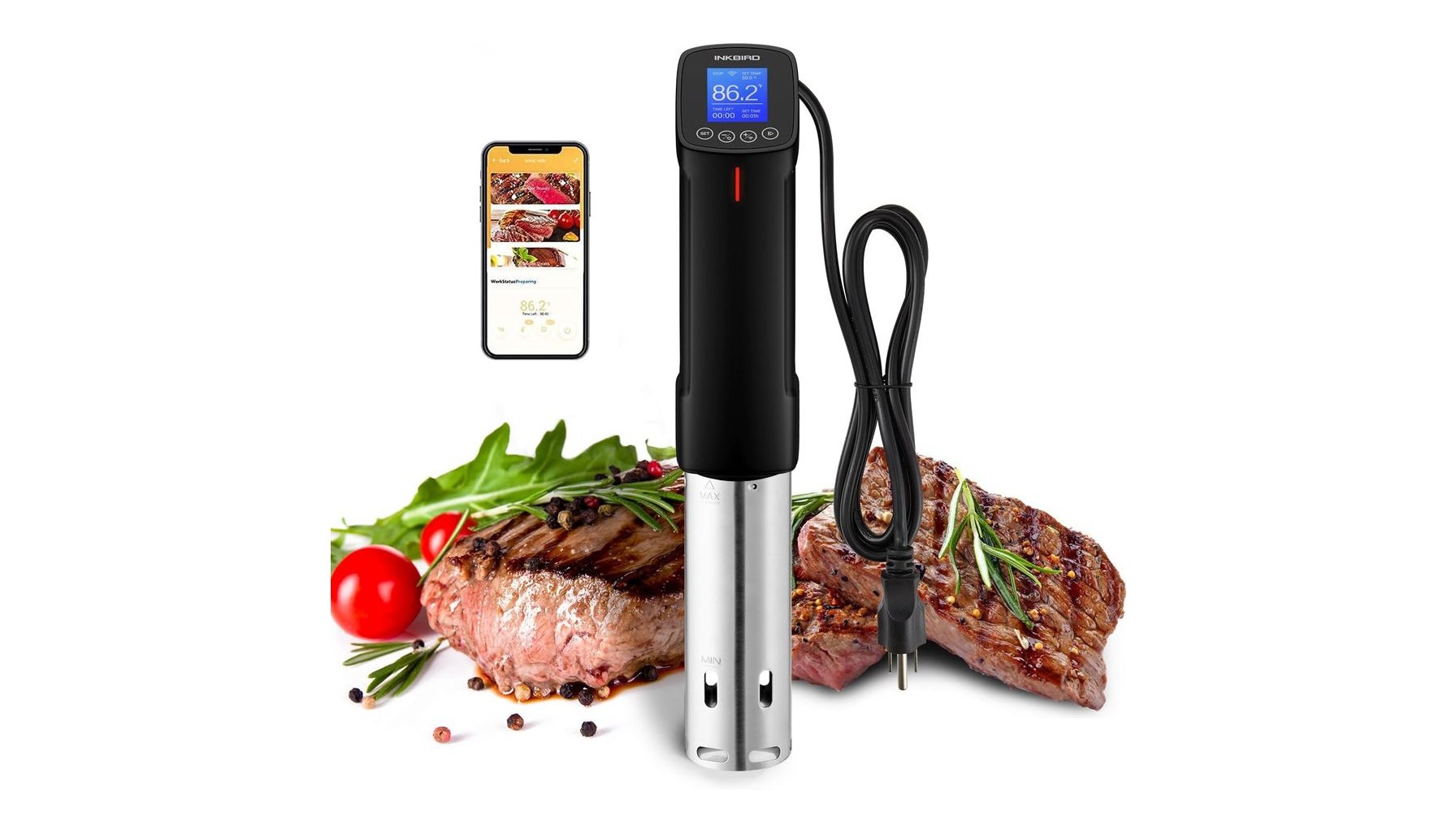
- WiFi connectivity and app control let you monitor and adjust cooks from another room or while running errands.
- The 1000-watt heating element reaches target temperature faster than lower-wattage models, especially with larger water volumes.
- Timer supports up to 99 hours for long cooks like brisket or pork shoulder that need 24+ hours to tenderize.
Cons
- No waterproof rating means you must keep the control head completely clear of splashes and steam during use.
- Temperature range starts at 77°F, preventing low-temperature applications like yogurt or fermentation that require 68-75°F holds.
Details
This WiFi-enabled immersion circulator solves the problem of cooking proteins to exact doneness by holding water at a precise temperature while food cooks in sealed bags.
The 1000-watt heater circulates and heats up to 15 liters with accuracy within 0.1°C. The 2.4GHz WiFi connection lets you start, stop, and monitor cooks through the INKBIRD app from anywhere in your home.
The unit features an LCD touchscreen, stainless steel heating coil, and adjustable clamp that fits pots 4 to 10 inches deep. It weighs under 3 pounds and measures compact enough for drawer storage.
The control head lacks waterproof protection, so you must position it away from boiling splashes. The 77°F minimum temperature excludes some fermentation and low-temp applications.
Best for home cooks who want repeatable results on steaks, chicken, and fish without constant kitchen monitoring.
How to Use
Clamp the circulator to your pot, fill with water to cover the minimum line, and set your target temperature through the touchscreen or app. Wait for the water to reach temperature before adding sealed food bags.
Use the app’s 14 preset recipes to automatically set time and temperature for common items like salmon, chicken breast, or ribeye. The unit beeps and sends an app notification when your cook finishes.
After cooking, pat proteins dry and sear in a hot pan for 60-90 seconds per side to develop crust and color. Store the circulator upright in a dry location since the control head is not waterproof.

Pros & Cons
Pros
- Heats 20 liters of water efficiently with 1100W power and reaches target temperature noticeably faster than lower-wattage competitors.
- Fully waterproof construction survives direct rinsing and eliminates the careful cleaning required by non-sealed models.
- Compact vertical design stores in drawers and takes up minimal counter space during multi-hour cooking sessions.
Cons
- The 120V AC limitation means this unit will not work outside North America without a voltage converter.
- At 4.5cm minimum water depth, shallow pans and small containers may not provide adequate clearance for the heating element.
Details
The Wancle sous vide circulator clamps onto any pot or container to heat water precisely, eliminating the guesswork that leads to overcooked chicken breasts or rubbery salmon.
The 1100W heating coil reaches target temperature faster than 850W competitors, and the 0.1°C accuracy holds steady for up to 99 hours without temperature drift that toughens proteins.
The unit weighs enough to stay secure on pot rims but remains compact at 40% smaller than previous-generation sous vide models. The IPX7 rating allows full submersion and tap rinsing.
The 4.5cm minimum water depth requirement limits use in very shallow pans, and the single-button interface lacks app connectivity found on premium models.
Best for home cooks who want reliable sous vide results without spending on app-connected models or dealing with bulky equipment.
How to Use
Attach the adjustable clip to your container edge with water filled between the MIN and MAX lines marked on the unit. Seal your protein in a vacuum bag or ziplock with air pressed out.
Set temperature using the angled touchscreen display: 130°F for medium-rare steak, 140°F for chicken breast, 122°F for salmon. Set the timer or use the reservation function to delay the start.
When the alarm sounds, remove the bag and quickly sear proteins in a hot pan for 60 seconds per side to add crust. The circulator rinses clean under running water immediately after use.

Pros & Cons
Pros
- Produces consistently tender, evenly cooked results across all protein types from steaks to chicken breasts without constant monitoring.
- Compact 12.8-inch design stores easily in drawers and attaches securely to any pot with a simple fixed clamp.
- Bluetooth connectivity and app control let you start, monitor, and adjust cooking remotely with real-time notifications.
- Water-resistant durable plastic construction cleans easily after each use and withstands up to 3,000 hours of continuous operation.
Cons
- Bluetooth-only connectivity limits range compared to WiFi models, requiring you to stay within roughly 30 feet of the cooker.
- Fixed clamp design cannot be removed for compact storage or adjusted for unusually shaped containers like the higher-end models.
Details
The Anova Precision Cooker Nano solves the problem of overcooked, unevenly done meat by maintaining water temperature within 0.2°F for hours.
Its 750-watt heating element and 5-liter-per-minute circulation rate handle pots large enough to cook for 4 people. Bluetooth app control lets you set time and temperature remotely and sends notifications when food reaches target doneness.
Built from water-resistant plastic, the unit stands 12.8 inches tall and weighs just over 2 pounds. The fixed clamp attaches to pot edges up to 0.75 inches thick and stays secure during extended cooks.
The Bluetooth range limits you to about 30 feet from the cooker, and the fixed clamp cannot accommodate unusually shaped containers or detach for storage.
Best for home cooks who want foolproof results on steaks, chicken, and fish without learning advanced stovetop techniques.
How to Use
Attach the Nano to any water-filled pot using the fixed clamp, ensuring water covers the minimum fill line. Seal your seasoned food in a plastic bag, removing as much air as possible.
Set your target temperature and cook time either on the device or through the Bluetooth-connected Anova app. Submerge the bagged food once the water reaches temperature. The Nano maintains exact heat throughout the cook.
When the app notifies you that time is up, remove the bag and quickly sear proteins in a hot pan for 60 to 90 seconds per side to develop a browned crust. Vegetables and eggs go straight from bag to plate.
Save $60.04
Pros & Cons
Pros
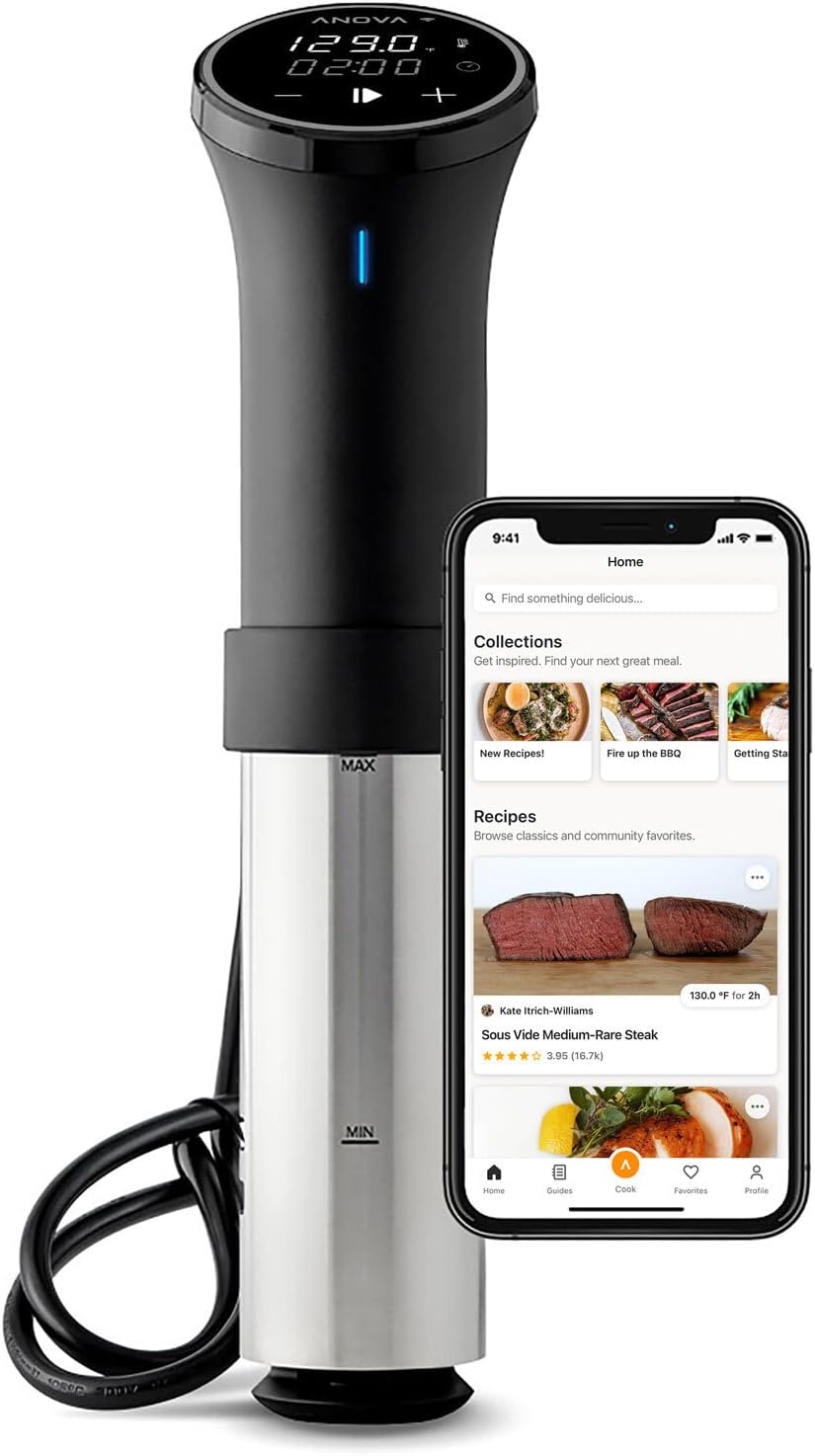
- Maintains temperature accuracy to 0.2°F, which is precise enough to cook a perfect medium-rare steak at 129°F without any gray band.
- The adjustable clamp and removable skirt make this cooker compatible with most existing cookware and easy to clean after use.
- Dual-band WiFi connectivity is more stable than the previous model, reducing dropped connections during long cooks.
Cons
- The paid app subscription costs $1.99 per month for recipe access and cook history, though basic time and temperature control remain free.
- At 1100 watts, this model heats slower than the 1200-watt Pro version when cooking for large groups in oversized containers.
Details
The Anova Precision Cooker 3.0 is a sous vide circulator that clamps to the side of a pot and heats water to a precise temperature, cooking vacuum-sealed food to exact doneness.
It maintains water temperature within 0.2°F of your target setting, which prevents the 3-degree margin of error that separates rare from medium-rare steak. The 1100-watt heater and 8-liter-per-minute pump handle pots up to 5 gallons.
The unit features a stainless steel construction with an adjustable clamp that fits most pot widths. The lower skirt detaches for dishwasher cleaning. The two-line touchscreen shows time and temperature simultaneously.
Dual-band WiFi connectivity can drop during firmware updates, and the paid app subscription locks some recipe features behind a paywall.
Best for home cooks who want restaurant-quality proteins without guesswork and have space to run multi-hour cooks.
How to Use
Clamp the cooker to your pot, fill with water above the minimum line, and set your target temperature on the touchscreen or via the Anova app. The circulator heats and holds the water at that exact temperature.
Seal your protein in a plastic bag, submerge it once the water reaches temperature, and set the timer. For a 1.5-inch ribeye at 129°F, cook for 1-2 hours. The extended cook time breaks down connective tissue without overcooking the exterior.
After cooking, remove the bag and sear the protein in a hot pan for 60-90 seconds per side to develop a crust. The interior stays at your target doneness because sous vide already brought it to temperature.

Pros & Cons
Pros
- The hinged collapsible lid seals tightly enough to prevent significant evaporation during cooks lasting 12 hours or more.
- NSF certification on the container provides verified food-safety assurance for a vessel used in prolonged low-temperature cooking.
- Built-in bag retention from the snug lid eliminates floating bags without adding clamps or weights to your workflow.
- Compatibility with four distinct Anova models plus the Instant Pot sous vide cooker makes this useful across a range of existing setups.
Cons
- The lid is not NSF certified, only the container itself, which matters to buyers with strict commercial or health-code requirements.
- The hole is slightly oversized for the Instant Pot sous vide cooker, meaning the fit is snug for Anova Nano but not perfectly tight for Instant Pot users.
Details
The EVERIE EVC-12 is a 12-quart polycarbonate sous vide container designed to replace improvised pots and eliminate the water-loss and bag-floating problems that interrupt long cooks.
Its collapsible hinged lid positions the opening near the circulator head, so you can access ingredients mid-cook without fully removing or repositioning the lid.
The container is NSF approved for heated water contact. The lid is food-safe but not NSF certified. Both are built from durable, BPA-free materials suited for repeated daily use.
Compatibility is limited to Anova Nano, AN500-US00, Anova Pro 3.0, and Instant Pot sous vide cookers. It does not fit Anova Bluetooth or WiFi models.
Best for home cooks who use an Anova Nano or compatible circulator and want a dedicated, clamp-free container that handles overnight and multi-hour cooks without supervision.
How to Use
Mount your Anova Nano or compatible circulator through the pre-cut lid hole before filling the container. The hole is sized for a secure fit on Nano models specifically.
Fill the container to your circulator’s minimum water line, place vacuum-sealed bags inside, and close the hinged lid. The lid’s snug fit holds bags submerged without additional weights or clamps.
For cooks over 4 hours, the sealed lid reduces evaporation enough to run unattended overnight. Check water level before starting any cook longer than 8 hours as a precaution.
About These Recommendations
The technique above is the point of this guide; the products are here because they help. We have not tested them ourselves — we did not buy or use this gear. The recommendations come from comparing specifications and materials against the patterns in verified owner reviews, so treat them as a shortlist worth researching rather than a verdict from our own kitchen.
Availability and prices change often, so check the current listing before buying. We earn a commission on purchases made through links on this page, which never affects what we recommend.
Quick Picks for Different Budgets
If you decide to try sous vide, here’s the gear, from the circulator itself to a container, so you can start without overbuying.
Best Value Circulator: INKBIRD ISV-100W (1000W, WiFi)
The pick for trying sous vide affordably. This 1000-watt WiFi immersion circulator heats the water bath quickly and holds temperature accurately, with app control so you can monitor a long cook from another room. The WiFi is genuinely useful for the multi-hour cooks sous vide is known for. For someone testing whether sous vide is worth it without spending much, INKBIRD delivers the core precision-cooking experience at a budget-friendly price. A sensible starting point.
Best Waterproof: Wancle Thermal Immersion Circulator (1100W, IPX7)
The durable, splash-proof pick. At 1100 watts with an IPX7 waterproof rating, this circulator survives the inevitable splashes and even full submersion, addressing a real worry with electronics that live in a water bath. It heats fast and holds steady. For someone who wants a rugged, no-app circulator that just works and won’t die from a splash, the Wancle’s waterproofing and power make it a reassuring, practical choice.
Best Compact: Anova Precision Cooker Nano 2.0 (750W, Bluetooth)
The pick from the brand that popularized home sous vide. The Anova Nano 2.0 is compact and Bluetooth-connected at 750 watts, backed by Anova’s mature app and recipe ecosystem, the easiest on-ramp for a beginner who wants guided cooks. It’s a bit lower-wattage (slower to heat a big bath) but perfect for typical home portions. For someone who values a proven brand and a polished app experience, the Anova Nano is the friendly, well-supported choice.
Best WiFi Upgrade: Anova Precision Cooker 3.0 (WiFi)
The step-up Anova for serious or frequent users. The Precision Cooker 3.0 adds WiFi and more power than the Nano, so it heats larger baths faster and lets you start and monitor cooks remotely through Anova’s app. It’s the pick for someone who’s decided sous vide is part of their routine and wants the capacity and connectivity for bigger or longer cooks. More investment, more capability, for the committed sous vide cook.
Best Container: EVERIE 12-Quart with Collapsible Lid
The accessory that makes sous vide better. This 12-quart container with a hinged, collapsible lid (fitted for Anova Nano and Instant Pot circulators) holds heat far better than a stockpot, so your circulator works less and energy waste drops, and the lid reduces evaporation on long cooks. A dedicated container is the upgrade owners say makes the biggest day-to-day difference. Pair it with any circulator to make multi-hour cooks more efficient and tidy.
Getting Started
Starting sous vide is simpler than it looks, and you don’t need to buy everything at once. Fill a large pot or a dedicated container with water, clip in the circulator, and set your target temperature (130F for medium-rare steak, 145F for chicken breast, common charts are everywhere). Season your food, seal it in a vacuum bag or a zip-top bag using the water-displacement method (lower the open bag into the water so pressure pushes the air out, then seal), no vacuum sealer required to start. Drop it in and wait, an hour for a steak, longer for tough cuts. When it’s done, the crucial final step: pat the food bone-dry and sear it hard in a screaming-hot cast iron pan or with a torch for a minute a side to build the browned crust, because sous vide alone leaves it pale. That sear is non-negotiable for steak. Once you’ve done it a few times, you’ll know whether the consistency and hands-off ease are worth the wait and the extra gear for how you cook.
Frequently Asked Questions
Is sous vide worth it for the average home cook?
It’s worth it if you value foolproof, edge-to-edge perfect doneness and hands-off cooking, especially for steak, chicken, and eggs, and don’t mind the wait and the extra gear. It’s less worth it if you want fast weeknight meals or are bothered by the plastic bags and extra dishes. Many owners love it for a few specific foods and rarely use it beyond those. Try it for steak first and judge.
What are the downsides of sous vide cooking?
The main downsides: it’s slow (an hour for steak, up to 24-48 hours for tough cuts), it uses plastic bags (waste concerns), it requires a separate hot sear afterward to brown the food (sous vide alone leaves it pale), and it dirties extra gear, a container, the circulator, the bag, and a searing pan. It’s a precision and convenience tool, not a fast or all-in-one one.
Do you need a vacuum sealer for sous vide?
No. While a vacuum sealer gives the best results and lets you store sealed food, you can start with just zip-top bags using the water-displacement method: lower the open bag into the water so the pressure pushes the air out around the food, then seal it just above the waterline. This works well for most cooks and means you can try sous vide without buying a sealer.
Does sous vide food need to be seared?
For most proteins, yes. Sous vide cooks food to a perfect internal temperature but doesn’t brown it, so a steak comes out pale and a bit unappetizing-looking. A quick, very hot sear in a cast iron pan or with a torch (about a minute per side) develops the flavorful browned crust. This final sear is essential for steak and most meats; eggs and some foods are exceptions.
What foods is sous vide best for?
Sous vide shines for proteins you want cooked to an exact doneness without overcooking risk: steak (edge-to-edge pink), chicken breast (juicy, never dry), eggs (custardy perfection), pork, fish, and tough cuts that benefit from long low cooking. It’s less suited to foods you want crispy or browned throughout, or quick weeknight cooking. It’s a precision tool for proteins, primarily.
The Last Word
So, is sous vide worth it? Yes, if you value foolproof, edge-to-edge perfect proteins and hands-off cooking and don’t mind the wait, the plastic bags, and the extra searing step. It’s a genuinely excellent precision tool for steak, chicken, and eggs, but a complement to conventional cooking, not a fast or do-everything device. Start with an affordable circulator like the INKBIRD, use zip-top bags to begin, and always finish with a hard sear. For that crust, see our cast iron skillet guide.

Write Your Review
No reviews yet. Be the first to share your experience!