

TL;DR — Yes, a carbon steel chef knife is safe to cook with. The “carbon” is simply iron alloyed with a small amount of carbon (roughly 0.6 to 1.5 percent) — it is not toxic, and the dark patina that forms with use is stable iron oxide, not the flaky red rust that signals neglect. The real trade-off is maintenance, not safety: carbon steel reacts with moisture, acids, and salt, so it must be dried immediately and lightly oiled or it will corrode. In exchange it takes a keener edge and holds it longer than most stainless. If you will dry your knife after every use, it is safe and rewarding; if it will sit wet in a sink, choose stainless. For picks, see our best chef knife guide.
The HomeWhisk editorial team researches kitchen equipment by analyzing steel metallurgy, manufacturer specifications, and aggregated owner feedback from major retailers and communities like Reddit’s r/chefknives and r/TrueChefKnives. “Is a carbon steel chef knife safe” comes up constantly from cooks eyeing their first high-carbon blade, usually worried about two things: whether the patina or a bit of rust is dangerous to eat off of, and whether the metal itself leaches anything harmful. Below we separate the genuine safety facts from the maintenance concerns they are often confused with.

DDF iohEF
Everyday Kitchen Prep Knife Set: DDF iohEF 4-Piece High Carbon Stainless Steel Collection
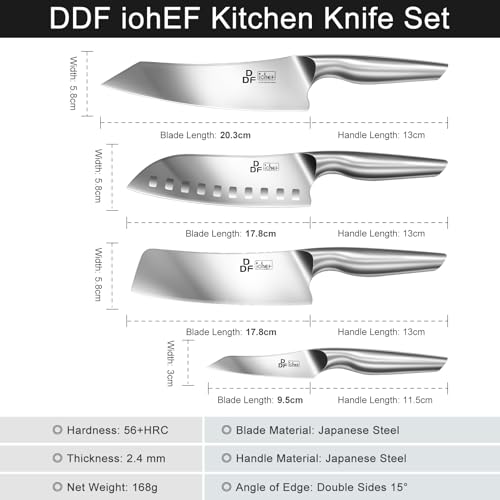
This four-piece DDF iohEF set handles chef-knife, santoku, nakiri, and fruit-cutting tasks, with its biggest advantage being balanced, double-edged blades for controlled prep. It suits frequent home cooks who want one left- or right-handed, dishwasher-safe set covering essential kitchen cuts.
Pros and Cons
Pros
- The set includes a chef knife, santoku knife, nakiri knife, and fruit knife for varied kitchen tasks.
- Double-edged blades accommodate both left-handed and right-handed users.
- The balanced design and stainless steel ergonomic handles support comfortable frequent use.
- The listed dishwasher-safe construction makes post-meal cleanup easier.
Cons
- The set does not include a bread knife or dedicated utility knife, so some tasks require another blade.
- Product data does not provide knife dimensions or weights, making balance and storage fit harder to judge before buying.

MAD SHARK
8-Inch Chef Knife for Everyday Prep: MAD SHARK German High Carbon Stainless Steel Kitchen Knife, White
This 8-inch chef knife handles vegetables, fruit, bread, seafood, and meat on one blade, and its 2mm German high carbon stainless steel edge holds sharpness through repeated prep sessions. Buy it if you cook most nights and want a single all-purpose knife that stays keen without frequent honing.
Pros and Cons
Pros
- One blade covers produce, bread, seafood, and meat, reducing how many knives you keep on the counter.
- Ice-quenched German high carbon stainless steel targets both edge retention and corrosion resistance.
- Handle geometry is tuned for balance and grip security rather than looks alone.
- Ships in a presentation box, so it works as a gift without extra packaging.
Cons
- Dishwasher cycles dull edges and loosen handles over time on any knife, so hand washing is still the smarter routine despite the rating.
- At 2mm the blade is thin for a chef knife, which favors slicing over heavy tasks like splitting squash or bone-in cuts.

Hinye
8-Inch Chef Knife for Daily Chopping and Slicing: Hinye German 1.4116 Steel Blade with Blackwood Handle
This 8-inch chef knife handles everyday chopping, slicing, and dicing with a German 1.4116 high-carbon stainless blade honed to a 15-degree edge that cuts through dense produce with noticeably less downward force. It suits home cooks who prep in volume and want a contoured, anti-slip handle that stays comfortable through a full mise en place session.
Pros and Cons
Pros
- German 1.4116 steel is a proven cutlery-grade alloy that balances edge retention with easy resharpening.
- The textured blade face genuinely helps with sticky, starchy foods that normally cling to a flat blade.
- The 8-inch length is the standard all-purpose size, covering everything from herbs to roasts.
- Blackwood handle and full gift box presentation punch above what the blade typically offers at this tier.
Cons
- Despite the dishwasher-safe claim, the wood handle will dry out and the edge will dull faster in a dishwasher, so hand washing is effectively required.
- The listing's percentage claims about reduced force, comfort, and food adhesion are marketing figures with no published testing behind them.

Dexter
8-Inch Chef's Knife for Daily Slicing, Chopping and Mincing: Dexter-Russell SANI-SAFE S145-10PCP
This 8-inch Dexter-Russell SANI-SAFE chef's knife handles slicing, chopping, dicing, and mincing across produce and proteins, with an individually ground and honed high-carbon stainless blade that holds a working edge through heavy prep. It suits home cooks and line cooks who want an NSF-certified, USA-made workhorse with a slip-resistant grip rather than a display-case knife.
Pros and Cons
Pros
- High-carbon stainless steel takes a keen edge and is simple to bring back with a steel or stone.
- The slip-resistant textured handle reduces hand fatigue during long prep sessions.
- NSF certification and the sealed-feel polypropylene handle make sanitation straightforward.
- Light, balanced 8-inch format is easy to control for fine dicing and mincing.
Cons
- The plain white polypropylene handle is purely functional and stains or scuffs over time, so it looks utilitarian next to a forged knife.
- The thin, lightweight stamped blade lacks the heft some cooks want for splitting squash or dense root vegetables.
The Best Deals This Week*
-
Everyday Kitchen Prep Knife Set
$44.99
($64.99)Save $20.00 -
8-Inch Chef Knife for Daily Chopping and Slicing
$9.39
($9.99)Save $0.60
*Deals are selected by our commerce team
DDF iohEF Everyday Kitchen Prep Knife Set: DDF iohEF 4-Piece High Carbon Stainless Steel Collection
DDF iohEF
Everyday Kitchen Prep Knife Set: DDF iohEF 4-Piece High Carbon Stainless Steel Collection
This four-piece DDF iohEF set handles chef-knife, santoku, nakiri, and fruit-cutting tasks, with its biggest advantage being balanced, double-edged blades for controlled prep. It suits frequent home cooks who want one left- or right-handed, dishwasher-safe set covering essential kitchen cuts.
Check price on AmazonThis four-piece set solves the need for separate knives for everyday chopping, slicing, vegetable prep, and fruit cutting.
Double-edged blades sharpened to 15 degrees per side support controlled cuts for either hand, while the claimed professional-level sharpness helps streamline prep.
The blades use 5Cr15Mov Japanese stainless steel, and the balanced stainless steel handles are designed for comfortable frequent use.
Exact knife dimensions and weights are not provided, so buyers cannot confirm storage fit or handling preferences from the listing alone.
Best for frequent home cooks who want a compact, dishwasher-safe set for core prep tasks.
MAD SHARK 8-Inch Chef Knife for Everyday Prep: MAD SHARK German High Carbon Stainless Steel Kitchen Knife, White
MAD SHARK
8-Inch Chef Knife for Everyday Prep: MAD SHARK German High Carbon Stainless Steel Kitchen Knife, White
This 8-inch chef knife handles vegetables, fruit, bread, seafood, and meat on one blade, and its 2mm German high carbon stainless steel edge holds sharpness through repeated prep sessions. Buy it if you cook most nights and want a single all-purpose knife that stays keen without frequent honing.
Check price on AmazonAn 8-inch all-purpose chef knife for cooks tired of dull blades that crush tomatoes and tear bread instead of cutting them.
The 2mm German high carbon stainless steel blade is ice quenched and forged for edge retention, so it stays sharp through weeks of daily onion, herb, and protein prep.
Ergonomic 2.0 handle geometry balances weight against the thin blade and adds a non-slip grip, keeping control steady across long prep sessions.
The thin profile favors slicing and dicing; heavy chopping through bone or hard winter squash calls for a thicker cleaver.
Best for home cooks who want one versatile blade for nightly prep instead of a full block set.
Hinye 8-Inch Chef Knife for Daily Chopping and Slicing: Hinye German 1.4116 Steel Blade with Blackwood Handle
Hinye
8-Inch Chef Knife for Daily Chopping and Slicing: Hinye German 1.4116 Steel Blade with Blackwood Handle
This 8-inch chef knife handles everyday chopping, slicing, and dicing with a German 1.4116 high-carbon stainless blade honed to a 15-degree edge that cuts through dense produce with noticeably less downward force. It suits home cooks who prep in volume and want a contoured, anti-slip handle that stays comfortable through a full mise en place session.
Check price on AmazonAn 8-inch all-purpose chef knife built for the daily grind of chopping vegetables, slicing proteins, and mincing aromatics on a home cutting board.
The blade is German 1.4116 high-carbon stainless steel ground to a 15-degree edge angle, which is narrower than the 20-degree grind on most Western knives and bites into dense produce with less pressure.
A laser-etched wave texture runs along the blade face to break suction on starchy and sticky foods. The blackwood handle is contoured with an anti-slip surface and moisture-resistant finish.
The dishwasher-safe rating applies to the steel, not the wood. Repeated machine washing will fade and crack the handle over time.
Best for home cooks who want a full-size chef knife with a real wood handle and are willing to hand wash it.
Dexter 8-Inch Chef's Knife for Daily Slicing, Chopping and Mincing: Dexter-Russell SANI-SAFE S145-10PCP
Dexter
8-Inch Chef's Knife for Daily Slicing, Chopping and Mincing: Dexter-Russell SANI-SAFE S145-10PCP
This 8-inch Dexter-Russell SANI-SAFE chef's knife handles slicing, chopping, dicing, and mincing across produce and proteins, with an individually ground and honed high-carbon stainless blade that holds a working edge through heavy prep. It suits home cooks and line cooks who want an NSF-certified, USA-made workhorse with a slip-resistant grip rather than a display-case knife.
Check price on AmazonAn 8-inch all-purpose chef's knife built for the bulk of daily cutting: breaking down vegetables, portioning proteins, and mincing aromatics without switching tools.
The high-carbon stainless blade is individually ground and honed, and the curved profile lets you rock through herbs and onions from tip to choil instead of lifting between cuts.
The blade pairs with a textured polypropylene handle that stays secure with wet hands. The overall build is light and NSF certified for commercial sanitation.
Honest limitation: this is a lightweight stamped knife, so it lacks the mass some cooks rely on for dense squash or thick root vegetables.
Best for home cooks and working kitchen staff who want a sanitary, easily resharpened daily driver over a showpiece knife.
What “Carbon Steel” Actually Means
All knife steel is iron with carbon added; the label “carbon steel” just means the alloy is defined mainly by its carbon content without the large chromium addition that makes steel “stainless.” A typical carbon steel chef knife runs around 1 percent carbon (steels like 1095, White #2 / Shirogami, and Blue / Aogami are common), which lets the blade be hardened to a high Rockwell rating and sharpened to a very fine edge.
The key distinction is chromium. Stainless steel contains at least about 10.5 to 13 percent chromium, which forms an invisible passive oxide layer that resists corrosion. Carbon steel has little or no chromium, so that protective layer never forms — the bare iron is exposed to whatever touches it. That single difference explains everything people love and everything they fear about carbon steel: the same lack of chromium that lets it take a sharper, longer-lasting edge is what makes it reactive and prone to rust. None of this makes it unsafe to eat from; it makes it higher-maintenance. If you want the edge performance without the upkeep, our best japanese chef knife guide covers both stainless and carbon options.
Is It Safe to Eat From? Patina vs. Rust
This is the heart of the safety question, and the answer hinges on telling two different iron oxides apart.
Patina is the grey, blue, or brownish film that develops on carbon steel as it reacts with food, especially acidic ingredients. It is a thin, stable, adherent layer of oxide (largely magnetite) that actually protects the steel underneath and slows further corrosion. Patina is completely food-safe — it is the same principle behind a seasoned cast-iron pan or a best carbon steel pan for cooking, both of which are prized cookware surfaces. A patina is not dirt and does not need to be scrubbed off.
Rust is different: it is red or orange iron oxide (hydrated ferric oxide) that forms flaky, powdery deposits when bare iron sits in contact with water and oxygen. Rust is loose, pits the surface, and can flake into food. While ingesting a trace of ordinary rust is not acutely poisonous for a healthy person, rusty flakes are unpleasant, can carry bacteria in the pits, and indicate a knife that has been neglected. Light surface rust wipes off with a scouring pad, a paste of baking soda, or a chemical-free abrasive; deeper pitting is permanent. The practical rule: a well-used patina is good and safe, active red rust is bad and should be removed and prevented.
There is no meaningful concern about the steel itself leaching harmful substances into food. Plain carbon steel is iron and carbon; quality kitchen knives are not made with lead or other toxic additives, and iron in trace amounts is a dietary nutrient, not a contaminant.
Carbon Steel vs. Stainless Steel: The Real Differences
Understanding the comparison makes the safety question easier to put in context.
- Edge sharpness and retention: Carbon steel’s fine, uniform grain structure takes a keener edge and, at equal hardness, tends to hold it well. Many cooks find carbon easier to get screaming sharp on a stone. High-end stainless has closed much of this gap, but carbon still has a reputation for a “toothy,” precise edge.
- Ease of sharpening: Carbon steel is generally easier and faster to sharpen and to touch up on a stone, which matters if you maintain your own edges.
- Corrosion resistance: This is where stainless wins decisively. Stainless shrugs off moisture, acids, and neglect; carbon steel will spot, stain, or rust within minutes of contact with a cut tomato, lemon, or onion if not wiped and dried.
- Reactivity with food: Carbon steel can impart a faint metallic taste to highly acidic foods before a patina forms, and can discolor light foods. A seasoned patina reduces this.
- Maintenance load: Stainless is close to fuss-free. Carbon demands drying after every use, occasional oiling, and never being left wet or run through a dishwasher.
Neither is “safer” to eat from in a toxicity sense. Stainless is safer for the knife in the sense that it tolerates neglect. If you cook daily and enjoy maintenance, carbon rewards you; if the knife will be shared, left in a sink, or used by a busy household, stainless or a mixed set is the sane pick. Our best chef knife set and best knife sets guides cover balanced options.
Pros and Cons of a Carbon Steel Chef Knife
Advantages:
- Takes an exceptionally fine, sharp edge and holds it at high hardness.
- Quick and satisfying to sharpen and maintain on a whetstone.
- Develops a protective, food-safe patina that many cooks value aesthetically and functionally.
- Often lighter and thinner behind the edge, especially in Japanese single-bevel and gyuto styles, for precise cutting.
Disadvantages:
- Rusts and stains easily; requires immediate drying and periodic oiling.
- Reacts with acidic foods, which can taint delicate flavors and discolor food before a patina builds.
- Not dishwasher-safe and intolerant of soaking or sitting wet.
- The maintenance can be a genuine burden for cooks who want to grab, use, rinse, and forget.
For a cook who wants most of the edge benefit with less anxiety, a well-made stainless or semi-stainless blade in our best chef knife under 100 guide is a reasonable middle ground.
How to Care for a Carbon Steel Knife Safely
Keeping a carbon steel knife safe and rust-free is a short routine, not a chore:
1. Wipe as you work. When cutting acidic or wet foods, wipe the blade with a damp cloth periodically so juices do not sit on the steel. 2. Hand-wash only. Wash with warm water and mild dish soap right after use. Never put a carbon steel knife in the dishwasher — the prolonged moisture, heat, and harsh detergent will corrode it and can damage the handle. 3. Dry immediately and completely. This is the single most important step. Towel-dry the blade the moment you finish washing; do not let it air-dry or sit in a rack wet. 4. Oil for storage. If storing for more than a day or two, wipe a very thin film of food-safe mineral oil (or a neutral cooking oil like camellia oil) over the blade to block moisture. Mineral oil is inert and food-safe. 5. Encourage an even patina. Cutting acidic foods early on, or a controlled forced patina, builds the protective oxide layer faster and evenly, which reduces future rust and reactivity. 6. Store dry and protected. Keep the knife in a knife block, on a magnetic strip, or in a blade guard — never loose in a wet drawer.
Handle it the way you would season and store a best carbon steel pan for cooking, and the same iron chemistry works in your favor.
Frequently Asked Questions
Is it safe to cook with a carbon steel knife?
Yes. Carbon steel is iron with a small percentage of carbon and contains no toxic additives in quality kitchen knives. The metal does not leach anything harmful, and iron itself is a dietary nutrient in trace amounts. The only real difference from stainless is corrosion resistance: carbon steel reacts with moisture and acids and must be dried after use. As long as you keep it clean, dry, and free of active red rust, it is completely safe to prepare food with. For options, see our best chef knife guide.
Is the patina on a carbon steel knife safe to eat off of?
Yes. Patina is a thin, stable layer of iron oxide (mainly magnetite) that forms as the steel reacts with food, and it is food-safe — the same protective principle as a seasoned cast-iron or carbon steel pan. It appears grey, blue, or brown and is firmly bonded to the blade rather than flaking off. Patina actually protects the steel beneath and reduces further corrosion, so there is no need to scrub it away. Do not confuse it with flaky red rust, which should be removed.
Is a little rust on my knife dangerous?
Light surface rust is not acutely toxic to a healthy person, but it is not something to ignore. Red rust is flaky and can shed into food, and rust pits can harbor bacteria, so remove it promptly. Use a non-abrasive scouring pad, a baking-soda paste, a wine cork with a mild abrasive, or a rust eraser, then wash, dry, and oil the blade. Prevent recurrence by drying immediately after every use. Deep pitting cannot be reversed, only halted.
Does a carbon steel knife make food taste metallic?
It can, but usually only before a patina develops and mainly with highly acidic foods like lemons, tomatoes, or onions. A bare, brand-new carbon blade can impart a faint metallic note and discolor pale foods. Once the knife builds an even patina through normal use, this reactivity drops sharply and the taste effect largely disappears. Wiping the blade during acidic prep and encouraging an even patina early both minimize it.
Carbon steel or stainless — which is better for a home cook?
It depends on your habits, not on safety. Carbon steel takes a keener edge, holds it well, and is easy to sharpen, but it demands drying after every use and will rust if neglected. Stainless resists corrosion and tolerates busy or shared kitchens with almost no fuss, at the cost of slightly more effort to get a truly fine edge. Diligent cooks who enjoy maintenance love carbon; households that want grab-and-go convenience should choose stainless. Our best chef knife set guide covers both.
Can a carbon steel knife go in the dishwasher?
No. The dishwasher is the fastest way to ruin a carbon steel knife. Prolonged exposure to water, high heat, and harsh detergents strips any protective oil, corrodes the bare steel, and can crack or loosen wooden handles. The blade jostling against other items also dulls and chips the edge. Always hand-wash a carbon steel knife with mild soap, dry it immediately and completely, and oil it for storage. This applies to good stainless knives too, but for carbon it is non-negotiable.
The Bottom Line
A carbon steel chef knife is safe to cook with — the safety worry is largely a misunderstanding of patina versus rust. The dark patina is a stable, food-safe oxide you should welcome; active red rust is a maintenance failure to remove and prevent, not a poison. The steel itself leaches nothing harmful. What carbon steel genuinely demands is discipline: wash by hand, dry immediately, oil for storage, and never let it sit wet or go through the dishwasher. In return you get a keener, longer-lasting, easily sharpened edge. If that routine fits your kitchen, buy carbon with confidence; if you want zero fuss or share the knife across a busy household, stainless is the smarter call. To compare picks across steels and styles, start with our best chef knife, best japanese chef knife, and best chef knife under 100 guides.






Write Your Review
No reviews yet. Be the first to share your experience!