

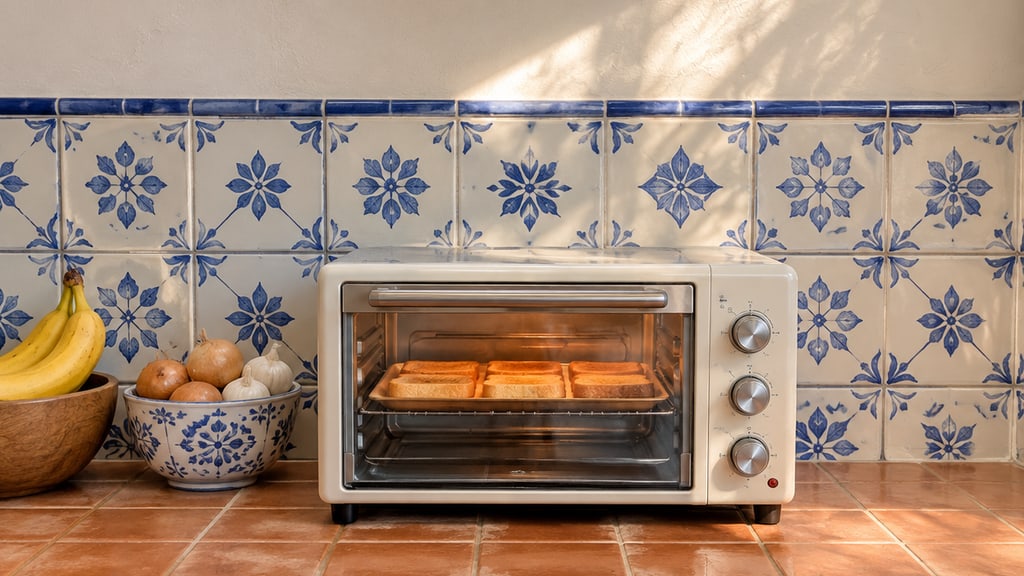
TL;DR — A toaster oven works like a small convection or radiant oven: you pick a function (toast, bake, broil, or often air-fry/convection), set the temperature and time, preheat when baking, and use the rack position to control browning. It heats faster and wastes less energy than a full-size oven for small jobs, but its compact cavity runs hotter near the elements, so recipes often need a 25F lower temperature and closer watching. Master the functions, rack height, and preheating and it replaces the big oven for most weeknight tasks. For picks, see our best toaster oven guide.
The HomeWhisk editorial team researches kitchen appliances by studying how their heating systems work, manufacturer instructions, and aggregated owner reviews from major retailers and cooking communities. A toaster oven is one of the most versatile countertop appliances, but many people use only the toast setting and never learn the rest. Here is how to actually use one — every function, how to bake and convert recipes, and the habits that get even, reliable results.

Independently published
Air Frying & Baking Made Easy: NuWave Bravo Smart Oven Mastery Complete Recipe & Heat Control Guide
This complete guidebook teaches beginners and advanced cooks how to master air frying, baking, roasting, and precise heat control on the NuWave Bravo Smart Oven with foolproof recipes. Buy it if you own or plan to own a NuWave Bravo and want faster, healthier results without guesswork on temperature and timing.
Pros and Cons
Pros
- Spans beginner through advanced, so new and experienced NuWave Bravo owners both benefit.
- Focuses on real cooking modes like air frying, baking, and roasting rather than theory.
- Emphasizes precise heat control for faster, healthier meals.
Cons
- It only helps if you own the NuWave Bravo Smart Oven, since the content is model-specific.
- As an independently published guide, it carries limited buyer feedback to reference.

Air Fryer Toaster Oven Setup and Recipe Guide: Cuisinart TOA-70 8-in-1 1800W Manual with Troubleshooting
This is a standalone owner's guide rather than the appliance, walking TOA-70 users through setup, all eight cooking functions, recipes, and troubleshooting in one document. Buy it if you own or recently acquired the Cuisinart TOA-70 and want plain-language function settings and cook times that the in-box paperwork skips.
Pros and Cons
Pros
- Written for the TOA-70 specifically, so control names and function labels match the unit in front of you.
- Bundles setup, function reference, recipes, and troubleshooting into one document instead of scattered PDF downloads.
- Troubleshooting coverage targets owner-fixable issues, which can save a support call over something simple.
- Useful for secondhand buyers who received the oven with no paperwork at all.
Cons
- Independently produced documentation, not an official Cuisinart publication, and the appliance is not included.
- The listing gives no page count, format details, or sample pages, so recipe depth is hard to judge before buying.

Ymapinc
Oven Rack Puller for Safe Hot Rack Handling - Ymapinc Beech Wood Push Pull Stick Tool
This beech wood stick uses a middle slot to pull oven racks out and a top groove to push them back in, keeping your hands well clear of hot metal and heating elements. It suits home bakers and anyone who regularly reaches into a hot oven and wants a cool-to-touch alternative to bunched-up mitts.
Pros and Cons
Pros
- Beech wood does not conduct oven heat the way metal utensils do.
- Two distinct grooves handle both pulling out and pushing in, so one tool does both jobs.
- Handle length puts real distance between your skin and the oven door opening.
- Hanging hole makes storage simple in kitchens with no spare drawer space.
Cons
- As a single-piece wooden tool it is best for sliding and repositioning racks, not for bearing the full weight of a loaded roasting pan.
- Wood needs to be kept dry and should not be soaked or run through the dishwasher, which adds a small step to cleanup.
ziHenryDa
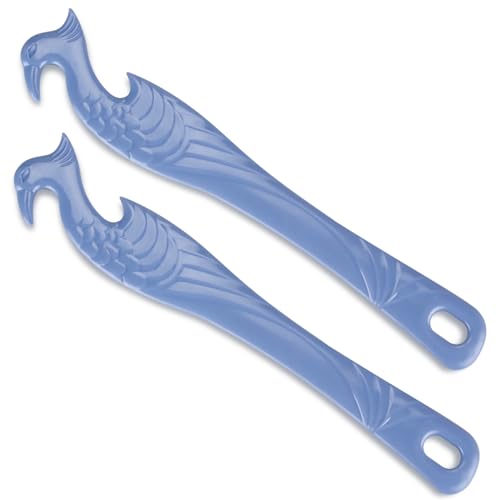
Oven Rack Push Pull Tool for Toaster and Convection Ovens: ziHenryDa 11-Inch Rack Puller, 2-Pack
This 11-inch hooked tool lets you pull or push hot oven racks from outside the oven, keeping hands and forearms away from the heating elements and hot walls. It suits anyone who bakes in toaster or convection ovens with tight openings, where reaching in with mitts is awkward and burns happen fast.
Pros and Cons
Pros
- Long handle works in small-opening appliances like toaster ovens where standard mitts do not fit comfortably.
- Single tool does both jobs, hooking racks out and pushing them back in.
- Two included tools cover multiple ovens or wide racks without buying a second set.
- Cleans up in the dishwasher and stores flat in a drawer.
Cons
- The hook notch is sized for standard wire rack edges, so unusually thick or square-profile racks may not seat securely.
- It moves racks and pans but does not lift them, so you still need mitts for removing hot dishes.

bouti1583
11" Non-Stick Toaster Oven Liner by bouti1583: Catch Spills & Skip Scrubbing (2-Pack, PTFE)
This PTFE liner sits on your toaster oven's floor to catch every drip and crumb, turning scrubbing sessions into a quick wipe. Buy it if you bake often and want to stop scraping burnt-on gunk from the oven bottom after every use.
Pros and Cons
Pros
- Non-stick PTFE surface releases baked-on spills with almost no effort.
- Trimmable design fits convection, electric, gas, and microwave ovens alike.
- Reusable and dishwasher safe, replacing disposable foil over the long run.
Cons
- PTFE liners can degrade or release fumes if pushed past the 500-degree limit, so high-broil use needs caution.
- You must measure and cut the sheet yourself before first use, adding a small setup step.

Oster
Toaster Oven Baking Set for Compact Meals, Oster Greystone Premium 4-Piece Carbon Steel Bakerware
The Oster Greystone set provides four compact toaster oven baking pieces, with nonstick surfaces as its biggest advantage for easier food release and cleanup. It suits toaster oven owners who need stackable pans for baking, roasting, crisping, reheating, and cooling food in smaller portions.
Pros and Cons
Pros
- Includes a 9-inch roasting pan, crisping tray, cookie sheet, and cooling rack.
- Nonstick coating supports easier food release and cleanup.
- Carbon steel construction distributes heat evenly for baking and browning.
- Stackable design makes the set easier to store in compact kitchens.
Cons
- Hand washing is required, so cleanup is less convenient than with dishwasher-safe bakeware.
- The 9-inch pieces are designed for toaster ovens and may not suit large-batch baking.

Brentwood
Compact Countertop Toasting and Griddling: Brentwood 3L Stainless Steel Mini Toaster Oven with Removable Griddle (Pink)
This 3-liter Brentwood mini oven toasts and bakes single servings while a removable non-stick griddle handles eggs or sandwiches on the same 500-watt unit. It suits dorm rooms, studio apartments, offices, and small kitchens where a full-size toaster oven would eat the entire counter.
Pros and Cons
Pros
- Two appliances in one footprint thanks to the swappable griddle plate.
- Small enough at roughly 6 by 6 by 3 inches inside to fit under most upper cabinets.
- Timer and adjustable temperature give real control rather than a single on-off setting.
- Cool touch handle and slide-out crumb tray make daily use and cleanup low-friction.
Cons
- The 3-liter cavity fits single servings only, so it will not handle a full pizza, casserole dish, or multiple slices for a family.
- 500 watts means slower preheat and browning than higher-wattage toaster ovens, so timing takes a few tries to dial in.
Independently published Air Frying & Baking Made Easy: NuWave Bravo Smart Oven Mastery Complete Recipe & Heat Control Guide
Independently published
Air Frying & Baking Made Easy: NuWave Bravo Smart Oven Mastery Complete Recipe & Heat Control Guide
This complete guidebook teaches beginners and advanced cooks how to master air frying, baking, roasting, and precise heat control on the NuWave Bravo Smart Oven with foolproof recipes. Buy it if you own or plan to own a NuWave Bravo and want faster, healthier results without guesswork on temperature and timing.
$14.99 at AmazonEditors' Favorite
Dimensions: 6 x 0.32 x 9 inches Weight: 0.4299014109 pounds Formats: Large Print Product Group: Book Binding: Paperback
Shop NowAir Fryer Toaster Oven Setup and Recipe Guide: Cuisinart TOA-70 8-in-1 1800W Manual with Troubleshooting
Air Fryer Toaster Oven Setup and Recipe Guide: Cuisinart TOA-70 8-in-1 1800W Manual with Troubleshooting
This is a standalone owner's guide rather than the appliance, walking TOA-70 users through setup, all eight cooking functions, recipes, and troubleshooting in one document. Buy it if you own or recently acquired the Cuisinart TOA-70 and want plain-language function settings and cook times that the in-box paperwork skips.
$6.99 at AmazonGreat Value
Formats: Kindle eBook Product Group: Digital Ebook Purchas Binding: Kindle Edition
Shop NowYmapinc Oven Rack Puller for Safe Hot Rack Handling - Ymapinc Beech Wood Push Pull Stick Tool
Ymapinc
Oven Rack Puller for Safe Hot Rack Handling - Ymapinc Beech Wood Push Pull Stick Tool
This beech wood stick uses a middle slot to pull oven racks out and a top groove to push them back in, keeping your hands well clear of hot metal and heating elements. It suits home bakers and anyone who regularly reaches into a hot oven and wants a cool-to-touch alternative to bunched-up mitts.
Check PriceColor: Wood Size: 11.02 x 1.57 x 0.39 inches Product Group: BISS
Shop NowziHenryDa Oven Rack Push Pull Tool for Toaster and Convection Ovens: ziHenryDa 11-Inch Rack Puller, 2-Pack
ziHenryDa
Oven Rack Push Pull Tool for Toaster and Convection Ovens: ziHenryDa 11-Inch Rack Puller, 2-Pack
This 11-inch hooked tool lets you pull or push hot oven racks from outside the oven, keeping hands and forearms away from the heating elements and hot walls. It suits anyone who bakes in toaster or convection ovens with tight openings, where reaching in with mitts is awkward and burns happen fast.
$9.99 at AmazonColor: Light Blue Size: 2 Dimensions: 11 x 1.9 x 0.3 inches Weight: 0.3 pounds Product Group: Kitchen Binding: Unknown Binding
Shop Nowbouti1583 11" Non-Stick Toaster Oven Liner by bouti1583: Catch Spills & Skip Scrubbing (2-Pack, PTFE)
bouti1583
11" Non-Stick Toaster Oven Liner by bouti1583: Catch Spills & Skip Scrubbing (2-Pack, PTFE)
This PTFE liner sits on your toaster oven's floor to catch every drip and crumb, turning scrubbing sessions into a quick wipe. Buy it if you bake often and want to stop scraping burnt-on gunk from the oven bottom after every use.
$6.99 at AmazonColor: Black Size: 11 x 9 inches Dimensions: 11 x 9 x 0.09842519675 inches Weight: 0.11 pounds Product Group: Kitchen Binding: Kitchen
Shop NowOster Toaster Oven Baking Set for Compact Meals, Oster Greystone Premium 4-Piece Carbon Steel Bakerware
Oster
Toaster Oven Baking Set for Compact Meals, Oster Greystone Premium 4-Piece Carbon Steel Bakerware
The Oster Greystone set provides four compact toaster oven baking pieces, with nonstick surfaces as its biggest advantage for easier food release and cleanup. It suits toaster oven owners who need stackable pans for baking, roasting, crisping, reheating, and cooling food in smaller portions.
$20.25 at AmazonColor: Grey w/ Speckle Size: 4-Piece Bakeware Set Product Group: Kitchen Binding: Kitchen
Shop NowBrentwood Compact Countertop Toasting and Griddling: Brentwood 3L Stainless Steel Mini Toaster Oven with Removable Griddle (Pink)
Brentwood
Compact Countertop Toasting and Griddling: Brentwood 3L Stainless Steel Mini Toaster Oven with Removable Griddle (Pink)
This 3-liter Brentwood mini oven toasts and bakes single servings while a removable non-stick griddle handles eggs or sandwiches on the same 500-watt unit. It suits dorm rooms, studio apartments, offices, and small kitchens where a full-size toaster oven would eat the entire counter.
$31.99 at AmazonColor: Pink Size: 3 liters Dimensions: 8 x 7.3 x 6.8 Inches Weight: 2.9 pounds Product Group: Kitchen Binding: Kitchen
Shop NowUnderstanding the Functions and Controls
Before anything else, learn what your dials do. Most toaster ovens share a common set of functions, even if the labels differ across Breville, Hamilton Beach, Black and Decker, and other brands.
- Toast: Both elements cycle to brown bread evenly on a shade setting (light to dark) rather than a temperature. The oven runs a preset time based on how dark you choose.
- Bake: Both top and bottom elements maintain a set temperature, like a mini conventional oven, for cookies, casseroles, and roasts.
- Broil: Only the top element runs at high heat to brown and crisp the surface — for melting cheese, finishing gratins, or searing tops.
- Convection (if equipped): A fan circulates hot air for faster, more even cooking and better browning. Many newer units combine this into an air-fry setting.
- Keep warm / reheat: Low steady heat to hold food without overcooking.
The core controls are a temperature dial or pad (typically 150-450F, some to 500F), a timer (which on many units must be set for the oven to power the elements at all), and a function selector. If your oven won’t heat, confirm the timer is wound past zero and a function is chosen. When you’re comparing models, our best toaster oven guide notes which functions each pick includes.
How to Preheat and Bake
Baking in a toaster oven is where the appliance shines for small batches, but it rewards a few habits.
1. Preheat. Set the bake function and temperature and let the oven come up to heat — usually 3 to 5 minutes, far faster than a full-size oven. Some units beep or have a preheat indicator; others don’t, so give it a few minutes. Baked goods like cookies and biscuits especially need a preheated cavity for proper rise. 2. Choose the right pan. Use a pan sized to fit with air space around it — never blocking the vents or touching the elements. A heavy-gauge quarter-sheet resists warping in the intense, close heat. 3. Position the rack. For even baking, center the rack. Move it down and away from the top element for anything that browns too fast on top. 4. Lower the temperature slightly. Because the cavity is small and the elements are close, many recipes brown faster than in a big oven. Dropping the temperature about 25F and checking early prevents over-browning. 5. Rotate if needed. Small cavities can have hot spots; rotating the pan halfway through evens out browning. 6. Check doneness early. Start checking a few minutes before the recipe’s stated time. The close elements can cook the surface faster than the interior.
For serious bread baking where a covered, heat-retaining vessel matters more than a small cavity, our best dutch oven for bread baking guide covers the better tool for that specific job.
Toaster Oven vs. Regular Oven: Temperatures and Conversions
The biggest source of toaster-oven frustration is treating it exactly like a full-size oven. It isn’t.
A full oven has a large cavity that buffers temperature swings and keeps heat sources far from the food. A toaster oven has a small cavity and elements just an inch or two away, so surfaces heat and brown faster even at the same dial setting. The practical conversion:
- Lower the temperature by about 25F from a conventional-oven recipe, especially for baked goods and anything prone to over-browning.
- Shorten the time and check early. Small items may finish faster; watch rather than trusting the original bake time.
- If your oven has convection, you may want to lower another 25F or shorten time further, since the fan speeds cooking.
For temperature units, if a recipe lists Celsius, common conversions are 180C ≈ 350F, 200C ≈ 400F, and 220C ≈ 425F. There’s no separate “toaster oven scale” — it uses the same Fahrenheit or Celsius settings, just with the small-cavity adjustments above. When a recipe was written for a large oven and browns too fast, the fix is almost always lower heat and a lower rack position, not a different appliance.
What You Can (and Can’t) Cook in a Toaster Oven
A toaster oven handles far more than toast. Good uses include reheating leftovers (crispier than a microwave), baking cookies and small batches, roasting a chicken or vegetables, toasting nuts, melting and broiling cheese, baking small casseroles, and — on convection/air-fry models — crisping fries and wings.
Its limits are size and even-heat capacity. It won’t hold a large roasting pan, a full sheet of cookies, or tall bakes, and very delicate items (like a fussy layer cake) can suffer from the close, uneven heat. Don’t put anything flammable or oversized inside, don’t block the vents, and use only oven-safe cookware — no sealed containers, thin plastic, or paper touching elements.
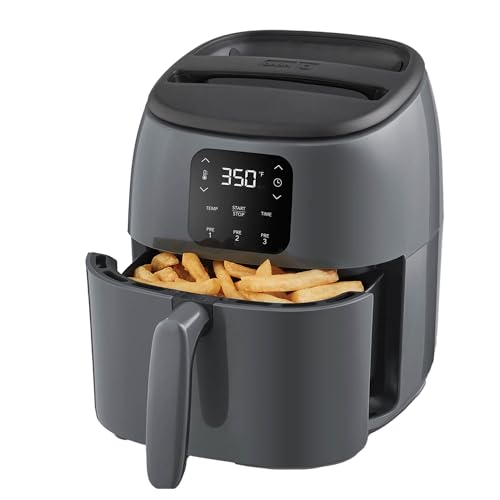
If your main goal is crisp fried textures, a dedicated appliance from our best air fryer guide does that job with less fuss; for large-batch stews and one-pot meals, our best instant pot guide is the better fit; and for tasks like mixing dough or batter that a toaster oven can’t do at all, our best stand mixer and best blender guides cover the prep side.
Cleaning and Care for Reliable Results
A toaster oven that’s kept clean cooks better and lasts longer. Because food sits close to the elements, grease and crumbs build up fast and will smoke and smell if ignored.
Empty the crumb tray regularly and wipe the interior with a damp cloth and baking-soda paste once it’s cool and unplugged, keeping moisture away from the elements. Wash removable racks and pans by hand or as the manual allows. Avoid harsh oven-cleaner sprays, which can damage the interior coating and leave fumes. Never scrub or wet the heating elements directly. A quick wipe after messy cooks prevents the baked-on buildup that shortens an oven’s life and taints food flavor.
Frequently Asked Questions
How do I make toast in a toaster oven?
Place bread on the rack (or on the tray) in a single layer, select the toast function, and choose a shade from light to dark rather than a temperature — the oven runs a preset time for that darkness. Center the rack so both elements brown the bread evenly. Check the first batch, since breads vary in thickness and moisture; adjust the shade setting up or down next time. For just a slice or two, toast is faster and more even than using the bake function.
Do I need to preheat a toaster oven?
For baking, yes — preheat 3 to 5 minutes so items like cookies, biscuits, and cakes hit hot air immediately and rise properly. It’s much faster than a full-size oven. For toasting, broiling, or reheating, preheating is usually unnecessary because those functions work as the oven heats. When a recipe depends on structure or rise, always preheat; for casual reheating and crisping, you can skip it and just add a minute or two to account for the warm-up.
How do I convert regular oven recipes to a toaster oven?
Lower the temperature by about 25F and start checking doneness several minutes early, because the small cavity and close elements brown food faster than a large oven at the same setting. If your toaster oven has convection, consider lowering another 25F or shortening the time, since the fan accelerates cooking. Use a lower rack position for anything browning too fast on top. There’s no special scale — it’s the same temperatures, just with a downward nudge and closer watching.
What temperature should I use in a toaster oven?
Use the same target temperature your recipe calls for, then adjust down by roughly 25F to account for the compact, element-close cavity that browns quickly. For Celsius recipes, 180C is about 350F, 200C about 400F, and 220C about 425F. Most toaster ovens span 150-450F, with some reaching 500F for broiling. When in doubt, set slightly lower than a full-oven recipe and check early — it’s easier to add time than to rescue over-browned food.
Can you bake a cake in a toaster oven?
Yes, for small cakes and single layers that fit with air space around the pan. Preheat fully, lower the temperature about 25F from the recipe, use a pan sized to your cavity, and position the rack in the center or slightly low so the top doesn’t brown before the middle sets. Check with a toothpick a few minutes early. Tall or large layer cakes are harder because the close top element can over-brown the surface before the interior cooks through.
Is baking in a toaster oven the same as a regular oven?
Not quite. Both use radiant heat to a set temperature, but a toaster oven’s small cavity and nearby elements make it heat faster, brown surfaces quicker, and show more hot spots than a large oven’s buffered space. That’s why you lower the temperature about 25F, watch closely, and rotate pans. For small batches it’s faster and more energy-efficient; for large items, delicate bakes, or big batches, a full oven still does a more even job.
The Bottom Line
Using a toaster oven well comes down to understanding it’s a small, fast, element-close oven rather than a shrunken version of your wall oven. Learn the functions (toast, bake, broil, convection), preheat for baking, use rack height to control browning, and drop recipe temperatures about 25F while checking early. Keep it clean so it cooks true and doesn’t smoke. Do that and it handles the majority of weeknight cooking faster and cheaper than the big oven. For the right model, our best toaster oven guide has the picks, and the best air fryer and best instant pot guides cover appliances that complement it.




Write Your Review
No reviews yet. Be the first to share your experience!