

TL;DR — How to choose a measuring cups is mostly about method: use the right touch, avoid shortcuts that damage the tool, and build the habit into normal kitchen cleanup. If you are comparing products, start with best baking sheets, best kitchen scale, and best dutch oven for bread baking; those guides give the model-level context behind this advice.
We looked at manufacturer details, material behavior, recurring owner-review patterns, and where this topic overlaps with related buying guides. For baking tools, sizing, material, accuracy, cleaning, and storage usually decide whether a tool stays useful or gets replaced.

Pros & Cons
Pros
- The adjustable plunger handles various volumes without requiring multiple measuring tools.
- The silicone disk acts as a squeegee to help release sticky ingredients from the cup.
- The rotating body and comfortable knob make dispensing thick ingredients more controlled.
- BPA-free construction and dishwasher-safe cleanup suit regular kitchen use.
Cons
- The 2-cup capacity may not suit recipes requiring larger measurements.
- Its specialized adjustable design is most useful for sticky ingredients rather than basic liquid measuring alone.
Details
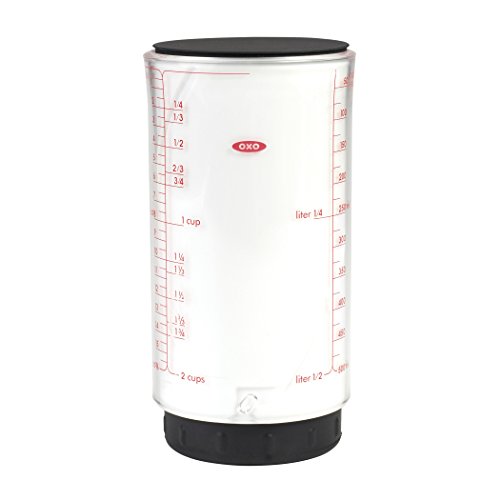
The OXO Good Grips Adjustable Liquid Measuring Cup solves the mess of measuring and releasing sticky ingredients such as peanut butter and honey.
A guided internal track positions the plunger, while the silicone disk sweeps the cup interior as ingredients are dispensed.
The 2-cup BPA-free cup has a rotating body, comfortable knob, and generous rim for pouring wet or dry ingredients.
Its capacity is limited to 2 cups, so larger recipes require additional measuring.
Verdict: best for home cooks who frequently measure sticky ingredients.
Best Uses
Use the cup for peanut butter, honey, syrups, shortening, and other thick ingredients that normally cling to measuring tools.
Rotate the knob to set the desired volume, then press the plunger to release the ingredient through the rim.
For easier cleanup, place the dishwasher-safe cup in the dishwasher after use.
How To Choose
Choosing a choose a measuring cups starts with your own use: how often you cook, the space you have, and which finishes that scratch off you most want to avoid. Match those to nonstick or bare finish, and measurement accuracy and the decision makes itself. Do not start from the spec sheet — start from your kitchen. If you are shopping, our best baking sheets and best kitchen scale guides are the fastest way in.
Common Mistakes To Avoid
The usual failure is treating a durable baking tool as indestructible. Harsh shortcuts lead to warping in a hot oven, and batter that sticks. Do not assume pricier gear removes the need for care, either — technique matters more than the badge. Start your shortlist with best baking sheets, best kitchen scale, and best dutch oven for bread baking before narrowing by budget.
Step By Step
1. Identify the material or type — baking tools vary, so avoid one-size-fits-all advice. 2. Use the gentlest effective method first, prioritizing hand-washing to protect the finish. 3. Work slowly and check progress; rushing causes rust on bare steel. 4. Finish with avoiding thermal shock so the result actually lasts. 5. Build the habit into normal cleanup instead of waiting for a problem.
What You Will Need
Keep it simple: the baking tool itself, a clean workspace, and any basic supplies the material calls for. Set up before you start so you are not improvising mid-task.
Related Product Guides
If this topic is part of a buying decision, these are the HomeWhisk guides most closely tied to it:
- best baking sheets
- best kitchen scale
- best dutch oven for bread baking
- best mixing bowls
- best cutting board
- best food storage containers
Frequently Asked Questions
How do I choose a choose a measuring cups?
Weigh sizing and volume, and measurement accuracy against how you cook. Start your shortlist with best baking sheets and best kitchen scale.
Who is this most useful for?
Mainly cooks short on cabinet space, and weekend bakers. If that is you, treat release performance as a requirement rather than a nice-to-have.
How do I keep it in good shape?
Build skipping abrasive scrubbers, and lining with parchment into normal cleanup. Light, consistent care prevents warping in a hot oven far better than occasional deep effort.
What is the bottom line?
Match the baking tool to your real habits: buy for durability if it is daily, for value and storage if it is occasional.
What should I avoid?
Avoid buying by brand alone, ignoring skipping abrasive scrubbers, and oversizing for your space. Each invites rust on bare steel down the line.
The Bottom Line
How to choose a measuring cups comes down to fit: how often you use the tool, how much care it needs, and whether it solves a real kitchen problem. If you are buying, compare best baking sheets, best kitchen scale, and best dutch oven for bread baking before you spend.



Write Your Review
No reviews yet. Be the first to share your experience!