

TL;DR — How does a pastry brush work is one of those kitchen questions where the useful answer is usually more practical than complicated. The right move depends on how you cook, what you already own, and how much maintenance you are willing to do. Use this as the practical background, then check best baking sheets, best kitchen scale, and best dutch oven for bread baking for specific product options.
We treated this as an editor’s note for home cooks: what matters, what is optional, and which related product guides are worth checking before you buy. For baking tools, sizing, material, accuracy, cleaning, and storage usually decide whether a tool stays useful or gets replaced.

Pros & Cons
Pros
- Bristles stay put, avoiding the loose-hair problem common with natural and nylon pastry brushes.
- Handles both hot grill work and delicate egg wash on pastry, so one set covers two jobs.
- Seamless silicone surface wipes or rinses clean and does not stain from tomato-based or turmeric sauces.
- Backed by a 30-day return window and a 720-day replacement policy for quality faults.
Cons
- Silicone bristles hold less liquid per dip than natural boar bristle, so thin glazes need more passes.
- The stiffer bristle feel can drag on very soft raw dough compared with a traditional pastry brush.
Details
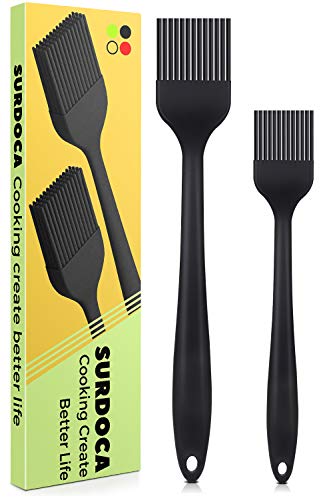
A two-piece silicone basting and pastry brush set that solves the two failures of old brushes: bristles falling into food and sauce soaking into the head.
Rated to 446F, so it stays intact leaning over grill grates while you baste ribs or chicken. The non-absorbent silicone releases marinade onto the food instead of holding it.
One-piece construction with a stainless steel core inside a fully silicone-covered handle, in 10 inch and 8 inch lengths. No seam or metal ferrule for food to lodge in.
Silicone carries less liquid per dip than boar bristle, so thin egg washes and syrups take an extra pass.
Best for home grillers and weekend bakers who want one hygienic set for both marinades and pastry glazes.
Best Uses
Use the 10 inch brush for grilling: BBQ sauce on ribs, butter on corn, and oil on grates, with enough handle length to stay clear of the heat.
Use the 8 inch for baking: egg wash on bread and pie crust, butter on rolls, and syrup glazes on cakes where control matters more than reach.
Also handles oiling roasting pans, coating vegetables before air frying, and brushing marinade onto meat before it goes in the fridge.

Pros & Cons
Pros
- Boar bristles are soft enough for raw laminated dough yet stiff enough to push heavy glaze.
- Angled brush head makes edge work and corner coverage easier than a straight brush.
- Epoxy-set bristle base is built for restaurant and catering volume, not occasional home use.
- Wide 2 inch face speeds up basting large roasts and trays of rolls.
Cons
- Natural bristles and a wood handle mean hand washing and full air drying, so this is not a dishwasher tool.
- Boar bristle brushes hold onto strong odors and colors from garlic butter or barbecue sauce, so a second brush for savory work is worth considering.
Details
A 2 inch angled pastry brush for applying egg wash, melted butter, glazes, and marinades evenly without tearing dough or leaving streaks.
The boar bristles pick up thick glaze and release it in a controlled layer, while the angled head reaches crust edges and pan corners cleanly.
Build is a hardwood handle with epoxy-set bristles, a construction meant to survive daily commercial washing and heavy batch work.
Natural bristles and wood require hand washing and thorough drying, and they can retain odors from savory sauces.
Best for bakers, caterers, and serious home cooks who glaze in volume and want a brush that lasts.
Best Uses
Egg wash on pie crusts, braids, and laminated dough. The soft boar bristles lay down an even sheen without pressing down or deflating proofed pastry.
Butter and oil on sheet pans, rolls, and flatbreads. The wide face covers a full tray in a few passes during rush prep.
Thick glazes, barbecue sauce, and pan basting for roasts. Rinse in hot water right after, then hang or lay flat to dry fully.
Common Misconceptions
The biggest myth is that the most expensive baking tool is automatically the best for you. In reality, the right choice depends on material and gauge, and nesting or storage shape — plus your own habits. Another trap is buying by brand alone — the same maker sells both excellent and forgettable lines.
When It Is Worth Paying More
Spending up pays off when you use the baking tool often enough to notice better easier cleanup every week. If it only comes out occasionally, a mid-range pick is the smarter call. Match the money to frequency of use, not marketing.
Who Benefits Most
This matters most for cooks short on cabinet space, and beginners baking their first loaves. If that is you, treat measurement accuracy, and nesting or storage shape as non-negotiable. Casual users can relax the requirements and prioritize price and storage instead.
How To Get It Right
Think through the whole workflow: storing flat to prevent bending, lining with parchment, and hand-washing to protect the finish. A baking tool that fits your routine and cleanup habits beats a technically superior one you fight with. We cover specific models in best baking sheets, best kitchen scale, and best dutch oven for bread baking.
Related Product Guides
If this topic is part of a buying decision, these are the HomeWhisk guides most closely tied to it:
- best baking sheets
- best kitchen scale
- best dutch oven for bread baking
- best mixing bowls
- best cutting board
- best food storage containers
Frequently Asked Questions
What matters most for how does a pastry brush work?
Focus on nesting or storage shape, measurement accuracy, and sizing and volume first. Those decide real performance; the rest is secondary. Compare best baking sheets and best kitchen scale for options that get the basics right.
How do I keep it in good shape?
Build storing flat to prevent bending, and skipping abrasive scrubbers into normal cleanup. Light, consistent care prevents uneven browning far better than occasional deep effort.
Is a premium baking tool worth it?
Only if you use it enough to notice better control, durability, or cleanup regularly. Occasional users are well served by a mid-range pick like those in best dutch oven for bread baking.
What should I avoid?
Avoid buying by brand alone, ignoring storing flat to prevent bending, and oversizing for your space. Each invites uneven browning down the line.
What gear pairs well with it?
Start with a reliable core piece, then add as needs appear. Compare best baking sheets, best kitchen scale, and best dutch oven for bread baking for related choices.
The Bottom Line
A good how does a pastry brush work decision should feel obvious after you line up size, material, cleaning, and durability. If it is still a purchase question, the next step is best baking sheets, best kitchen scale, and best dutch oven for bread baking.



Write Your Review
No reviews yet. Be the first to share your experience!