


You open the fridge, and it’s chaos — condiments three rows deep, a yogurt that expired two weeks ago hiding behind the milk, and produce slowly wilting in a drawer you forgot to check. Fridge organization bins are the small, cheap fix for exactly this. They’re clear, usually stackable containers that group your food into zones, so you can pull out the whole “breakfast” bin instead of excavating the shelf, and actually see what you have before it goes bad. If you’ve never used them, here’s everything you need to know to get started.
What Fridge Organization Bins Actually Are
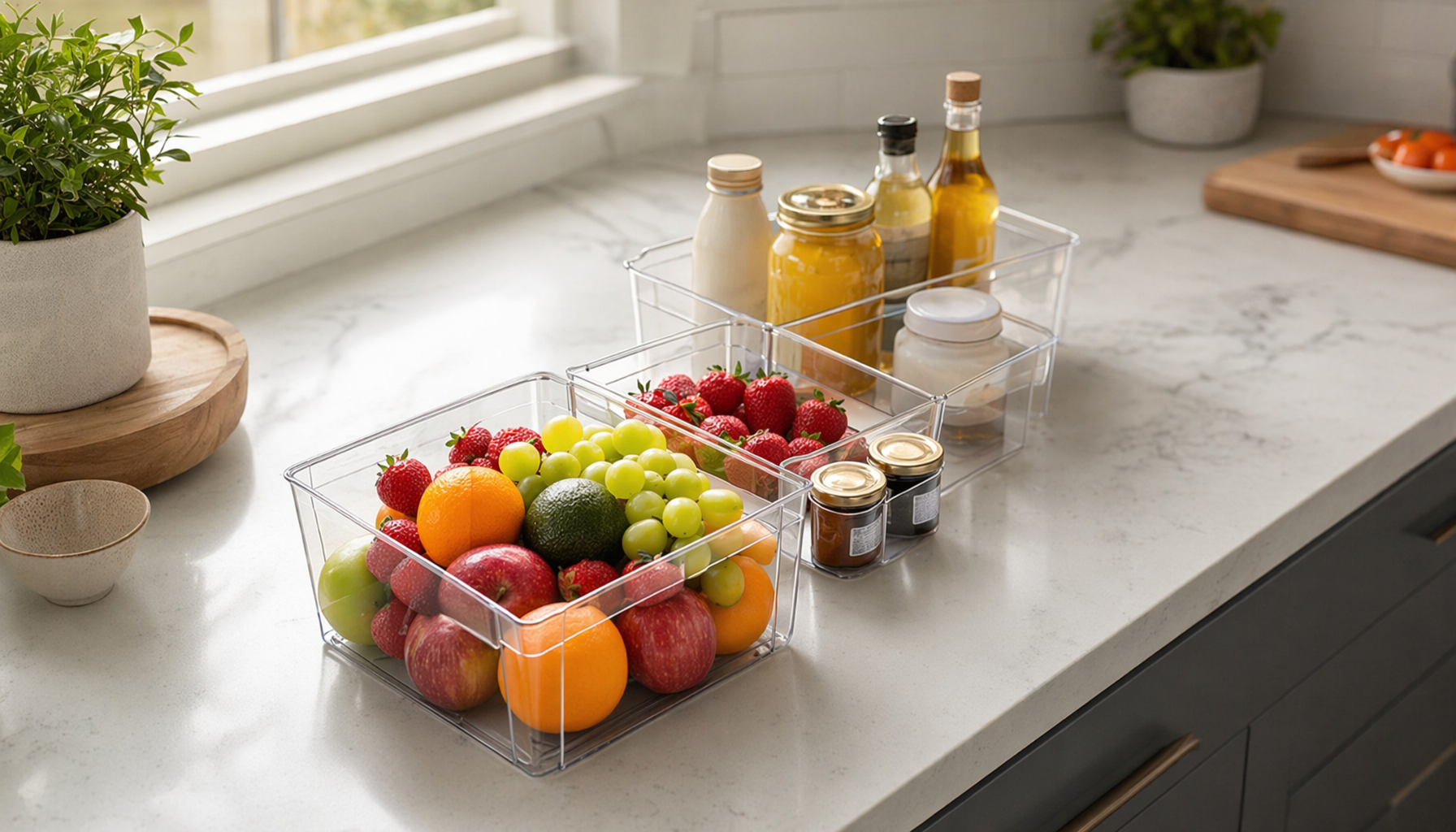
At their simplest, these are open-top plastic containers (usually clear) that sit on your fridge shelves and group loose items together. Some have handles so you can pull them out like a drawer; some are tall and narrow for condiment bottles; some are wide and shallow for eggs, cheese, or deli meat. The clear material is the whole point — you can see what’s inside without opening every container, which is what stops food from disappearing into the back and rotting. Most are made from BPA-free plastic, and the good ones are sturdy enough to hold a row of full glass jars without flexing. They’re not airtight food-storage containers (that’s a different product); they’re organizers that corral the packaging your food already comes in.
Why They’re Worth It
The payoff is mostly about food waste and time. When everything has a zone and you can see it, you stop buying a second jar of mustard because you couldn’t find the first one, and you catch leftovers before they turn. Pulling out a single bin to grab breakfast items — or to wipe down a shelf — is far faster than rearranging a crowded shelf by hand. Bins also protect the shelf itself: a spilled jar drips into the bin, not across the glass and down onto the drawer below. None of this requires a fancy system. Even a few well-placed bins meaningfully cut down on the “what is in here?” archaeology most fridges accumulate. It’s one of the highest-return-for-the-money changes you can make in a kitchen.
What to Look For When Buying
Clear vs. Opaque
Buy clear. The entire benefit of bins is being able to see your food at a glance; opaque bins just create new hiding spots. Clear plastic also makes it obvious when a bin needs cleaning.
Stackable and Modular
Look for bins that stack or sit flush side-by-side so you use vertical space and don’t leave awkward gaps. Sets that mix sizes (a few wide, a few narrow) fit a real fridge better than a pack of identical boxes.
Handles for Deep Items
For anything that lives at the back of a deep shelf, a bin with a handle is the difference between using it and ignoring it. Handled bins act like pull-out drawers — grab, slide, done.
Material and Sturdiness
BPA-free plastic is the standard; check that it’s labeled food-safe. Sturdiness matters most for bins holding heavy glass jars or cans — thin, flimsy plastic flexes and cracks. Some people prefer the look of acrylic, but it’s more brittle than the tougher PET and PP plastics. Measure your shelf depth and height before buying, since the most common mistake is bins that don’t fit.

Pros & Cons
Pros
- The 12.4-inch length fits standard fridge shelves and deep pantry shelves without cutting off air circulation.
- Transparent construction lets you do a full fridge inventory without touching a single bin.
- Eight bins in one purchase covers most fridge, freezer, and pantry zones in a single order.
- Handles are integrated into the mold, so nothing snaps off or loosens with daily pulling and sliding.
Cons
- Not dishwasher safe, so sticky spills from sauces or fruit require immediate hand-washing to avoid residue buildup.
- All eight bins are the same size, which limits options if you need to store items taller than 3.5 inches.
Details
These are clear plastic storage bins designed to impose order on a crowded fridge, freezer, or pantry shelf by grouping similar items into defined zones.
The transparent walls let you read labels and gauge quantities without moving anything, cutting the time spent searching before meals or grocery runs.
Each bin measures 12.4 x 6.2 x 3.5 inches and is built to stack, so unused bins store compactly inside each other or on top of a full one.
Hand-wash only and not rated for dishwasher cycles, which is worth noting if your household generates high-volume spills regularly.
Best for anyone reorganizing a full fridge or pantry and wanting a uniform, scalable system that works across multiple storage zones.
What Fits
Each bin holds a full row of standard yogurt cups, sauce jars, or snack packs side by side, with room to slide them forward for access without rearranging the shelf.
The 3.5-inch height fits canned drinks, condiment bottles laid on their side, deli meats in packaging, and most bagged produce without the lid pressing down on contents.
At 6.2 inches wide, two bins sit side by side on a typical 24-inch fridge shelf, giving you two separate categories per shelf row with a clear dividing line between them.

Save $4.05
Pros & Cons
Pros
- 10x6x3 inch size fits standard fridge shelves while holding full-size yogurt containers, wide jars, and bagged vegetables.
- Stackable design with dedicated feet prevents bins from sliding when stacked three or four high.
- Handles stay attached during heavy use and make one-handed retrieval possible even when bins are fully loaded.
Cons
- Hand wash only since dishwasher heat can warp the plastic and loosen the handle attachments.
- No dividers included, so small items like cheese sticks or sauce packets may shift around inside the 10-inch length.
Details
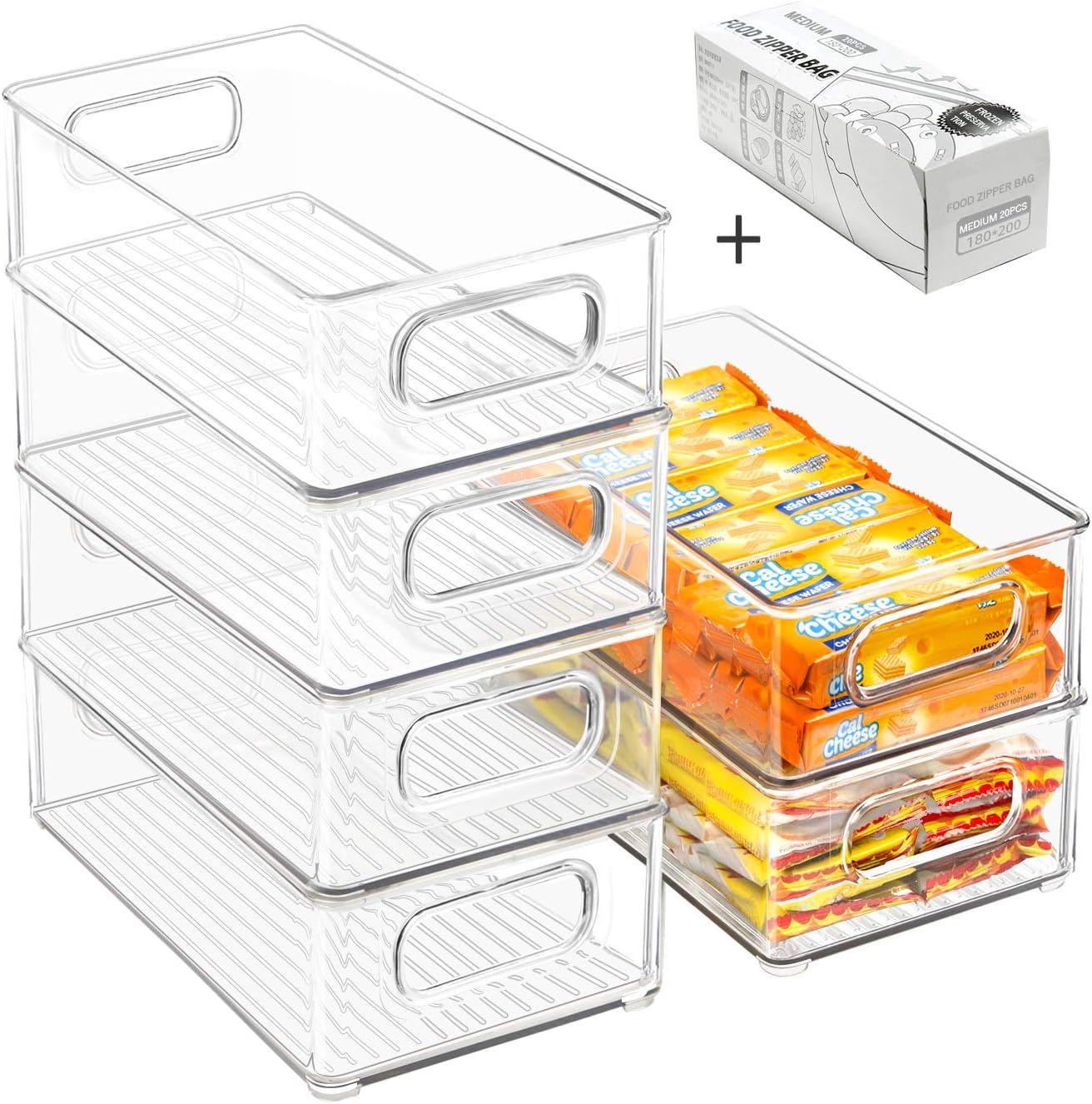
Six clear plastic bins that corral loose fridge items into portable, stackable containers so you stop losing food in back corners.
Side handles support the weight of canned goods, bottles, and bagged produce. Lifting feet on the bottom lock stacked bins in place and create airflow between layers.
Made from BPA-free shatter-resistant plastic. Each bin measures 10 inches long, 6 inches wide, and 3 inches tall. Lightweight enough for kids to carry but rigid enough to hold multiple glass jars without flexing.
Must be hand washed since dishwasher heat can warp the plastic over time.
Best for families with packed refrigerators who need grab-and-go access to breakfast items, snack stations, or meal prep containers.
What Fits
Single bin holds six standard yogurt cups, eight snack-size applesauce pouches, or twelve soda cans standing upright. Width accommodates wide pickle jars, salad dressing bottles, and 16-ounce cheese blocks side by side.
Stack three bins high in most full-size refrigerators without blocking the top shelf. Two bins fit side by side on standard 30-inch fridge shelves with room to spare for a third row.
Use the included plastic bags to portion snacks, separate deli meat, or store cut vegetables before placing bags inside the bins for double organization.

Pros & Cons
Pros
- The 8-piece count is enough to tackle multiple zones — fridge drawers, pantry shelves, and cabinet space — in a single purchase.
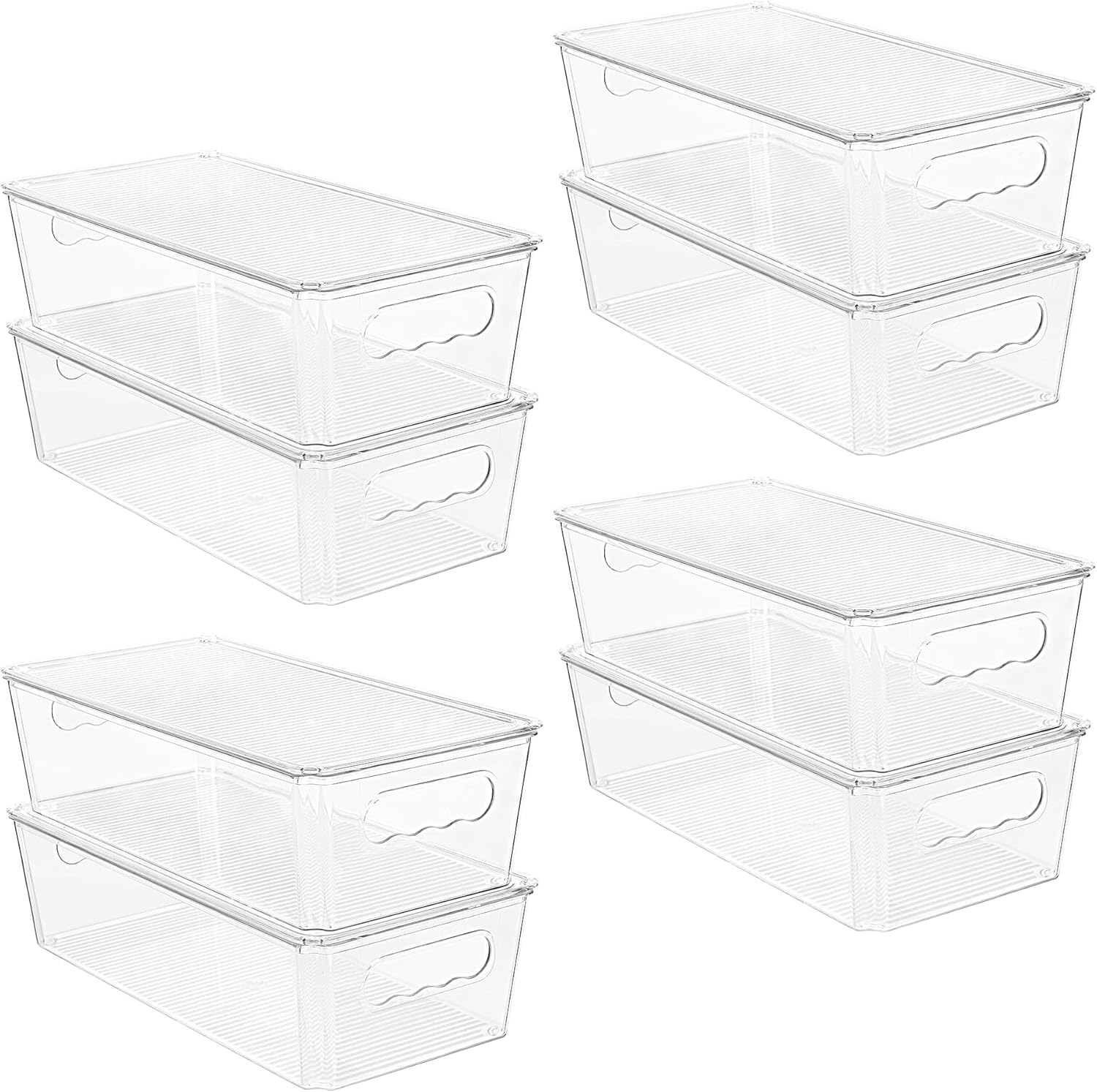
- Lids are the key differentiator: they create a flat stacking surface so bins stay level and contents stay intact.
- BPA-free, food-grade PET means you can store raw produce, snacks, and condiments directly without a liner.
- At 12 inches long, each bin spans most standard refrigerator shelf depths, maximizing usable space per tier.
Cons
- Hand-wash only — no dishwasher — adds cleanup time if you are rotating bins weekly with produce residue.
- All 8 bins are the same size, so they do not fit odd shelf heights or narrow cabinet slots well.
Details
These bins solve the common problem of items getting buried, forgotten, and expired in deep fridges and packed pantries by grouping and labeling categories you can pull out as a unit.
The lidded stacking system is the core performance feature: lids create a rigid flat top so stacked bins do not compress contents below, which matters most for produce and soft snacks.
Made from food-grade, shatter-resistant PET plastic. Each bin is 12 inches long, 6 inches wide, and 3.4 inches tall — a standard fit for most refrigerator shelves and pantry tiers.
They are hand-wash only, so if you rotate them frequently with wet produce, factor in that cleaning step before committing to the full 8-bin system.
Best for households that want to reorganize the fridge, freezer, and pantry with one consistent bin system without buying multiple sizes.
What Fits
Each bin holds a typical deli drawer’s worth of produce — think a bag of carrots, several bell peppers, or a cluster of snack pouches laid flat. The 3.4-inch height fits most standard egg-carton-sized items upright.
In the pantry, a single bin holds chip bags, sauce packets, or boxed seasoning mixes grouped by category. Two bins stacked with lids fit on a standard 7-inch pantry shelf without touching the shelf above.
In the freezer, the shatter-resistant PET handles low temperatures and fits a layer of frozen meal pouches or bagged vegetables per bin. The handle stays accessible even when bins are packed side by side.

Pros & Cons
Pros
- The 8-bin pack covers multiple zones at once — fridge drawers, pantry shelves, and cabinet interiors — in a single purchase.
- 100% transparent construction works in every lighting condition, including dim refrigerator interiors.
- Ergonomic handles are integrated into the bin walls, so there are no loose parts or clips that break over time.
- Stackable profile keeps bins stable when loaded with cans, condiment bottles, or bagged snacks.
Cons
- All 8 bins are identical in size, so buyers needing varied dimensions for mixed shelf depths will need a supplemental set.
- Acrylic can show fine surface scratches over time if scrubbed with abrasive pads rather than wiped clean.
Details
The Oizeir 8-Pack consists of clear acrylic bins designed to replace loose, shifting items in refrigerators, freezers, pantries, and kitchen cabinets with a structured, visible system.
The built-in handles are the standout functional feature — they let you slide a fully loaded bin off a fridge shelf cleanly, which matters most in deep or tightly packed refrigerators.
Made from shatterproof, BPA-free acrylic rated for freezer use. The high sidewalls contain spills before they reach the shelf liner.
All bins share the same dimensions, so the set is best suited to shelves with consistent depth; it is not a fit for varied or angled cabinet layouts.
Best for households that want a uniform, pull-out bin system across fridge, freezer, and pantry without buying multiple SKUs.
What Fits
Each bin holds standard refrigerator staples: condiment bottles, yogurt cups, cheese blocks, deli packs, or a row of snack bags standing upright. Canned goods stack two-high inside the bin on most pantry shelves.
In the freezer, the bins corral frozen meal pouches, ice packs, and bagged vegetables that otherwise shift and avalanche when the door opens. The stackable design works here too, since frozen items are less likely to spill.
In pantry cabinets, the bins are sized well for spice jars, sauce packets, granola bars, and small canned goods — any loose category that typically migrates to the back of the shelf.

Pros & Cons
Pros
- Six varied pieces cover most fridge organization needs in one purchase instead of buying bins separately over time.
- Slim narrow bins fit into door shelves and tight gaps where standard containers cannot go.
- Rated 4.7 stars across over 6,500 verified reviews, with buyers consistently praising the visible storage and space efficiency.
Cons
- Bins are not airtight, so they organize but do not extend the freshness of uncovered produce or opened packages.
- Egg holder lacks a lid, leaving eggs exposed to absorbing fridge odors if you store pungent foods nearby.
Details
The Sorbus 6-piece set solves the universal problem of losing food in a messy refrigerator by giving every item a visible, designated home.
Two wide bins hold bulky produce like lettuce and cucumbers. Two narrow bins fit yogurt cups, cheese sticks, and condiments. The soda can organizer stacks 12 cans in a gravity-fed rack. The egg holder secures 14 eggs in molded slots.
Made from BPA-free, shatter-resistant clear plastic. Wide bins measure approximately 10 inches long. Narrow bins fit standard fridge door shelves. Total weight under 3 pounds, so even kids can pull bins out for snacks.
Bins are not sealed or insulated, so they organize but do not replace airtight food storage containers for items that need maximum freshness.
Best for households tired of digging through cluttered shelves or wasting groceries that expire unseen in the back of the fridge.
What Fits
Wide bins hold 6 to 8 yogurt cups, a full head of lettuce, or 4 bell peppers side by side. Stack two wide bins to separate raw meat on the bottom from ready-to-eat snacks on top.
Narrow bins fit 10 to 12 cheese sticks, a row of condiment bottles, or a dozen snack-size applesauce pouches. Slide them into door shelves to corral small jars that tip over.
The soda can organizer loads from the top and dispenses from the front, keeping older cans accessible first. The egg holder fits standard large eggs but not jumbo or quail sizes.
About These Recommendations
The technique above is the point of this guide; the products are here because they help. We have not tested them ourselves — we did not buy or use this gear. The recommendations come from comparing specifications and materials against the patterns in verified owner reviews, so treat them as a shortlist worth researching rather than a verdict from our own kitchen.
Availability and prices change often, so check the current listing before buying. We earn a commission on purchases made through links on this page, which never affects what we recommend.
Quick Picks for Different Budgets
You don’t need to spend much to fix a messy fridge. Here are solid sets across price tiers, from a cheap multipack to a complete kit with specialty organizers.
Utopia Home Fridge Organizer Bins, 8-Pack — Best Value Starter Set
The easiest place to start. Eight clear, stackable, durable plastic bins for a budget-friendly price, which is enough to zone an entire average fridge in one purchase. They’re a simple open-top design with no frills, but that’s exactly what most people need to go from chaos to organized. Sturdy enough to hold a row of jars or cans without flexing. If you’ve never used bins and want to try the system without overthinking it, this is the no-regret buy.
Stackable Refrigerator Organizer Bins with Handles, 6-Pack — Best for Deep Shelves
These add the feature that makes bins genuinely usable on deep shelves: handles. The six clear bins pull out like little drawers, so the stuff at the very back is no longer lost territory. Stackable design uses vertical space well, and the handles make grabbing and wiping down quick. A great pick if your fridge is deep or you found yourself ignoring the back of the shelf — pair a few of these with the cheaper open bins for the front.
Vtopmart 8-Piece Clear Storage Bins with Lids — Best with Lids
This set adds lids, which nudges it toward light food-storage duty as well as organization — handy for produce, snacks, or anything you’d rather keep a bit more protected. Eight stackable clear containers in a mix that suits both fridge and pantry, so you can move them around as your needs change. The lids mean the bins double as loose storage when not in the fridge. A flexible pick if you want organizers that pull a little extra weight.
Oizeir 8-Pack Clear Plastic Storage Bins with Handles — Best All-Purpose Set
A well-rounded eight-pack that combines the two features people end up wanting most: clear plastic and handles, in a stackable form that works in the fridge, freezer, or pantry. Eight bins is enough to set up a complete system, and the handles keep every one of them practical even on deep or high shelves. If you want a single purchase that covers most of the fridge with a consistent look, this is the versatile middle-ground choice.
Sorbus Fridge Bins and Freezer Bins, Stackable Set — Best Complete Kit
The most complete option here, and a frequent top result for this category. The Sorbus set typically bundles a mix of wide and narrow bins plus specialty organizers — a soda can holder and an egg holder are common inclusions — so it tackles the whole fridge, including the odd items (cans, eggs) that loose bins handle poorly. BPA-free and stackable throughout. If you’d rather buy one coordinated kit than assemble a system piece by piece, this is the grab-and-go answer.
Getting Started: Setting Up Your Bins
The setup is simpler than the product photos make it look. First, empty the fridge and toss anything expired — there’s no point organizing food you should throw out. Wipe the shelves while they’re clear. Then think in zones: a snack bin, a condiment bin, a breakfast bin (yogurt, jam, butter), a deli/cheese bin, a produce bin. Put the items you reach for most at eye level and the back-stock lower or behind. The one habit that makes the whole thing work long-term is “first in, front”: when you restock, move older items to the front of the bin so they get used before the new ones. Don’t over-buy bins before you know your zones — start with one set, live with it for a week, and add specialty pieces (egg holder, can dispenser) only where you actually feel the need. For tall door shelves and condiment bottles, narrow bins keep things from tipping every time you open the door.
For longer-term storage of leftovers and prepped food, bins pair well with proper sealed containers — see our guide to the best food storage containers. If you batch-cook and freeze, a vacuum sealer keeps frozen portions from freezer burn, and the right mixing bowls make prep day faster.
Frequently Asked Questions
Are fridge organization bins worth it?
For most people, yes — they’re one of the cheapest kitchen upgrades with a real payoff. By grouping food into visible zones, they cut food waste (you stop losing items in the back and buying duplicates), make cleaning faster (pull a bin instead of clearing a shelf), and protect shelves from spills. A starter set costs $20-40, which usually pays for itself quickly in reduced wasted groceries.
What size fridge bins should I buy?
Measure your shelf depth and height first — the most common mistake is buying bins that don’t fit. A mix of sizes works best: wide shallow bins for eggs, cheese, and deli items; tall narrow bins for condiment bottles and cans; and a few medium bins for snacks and produce. Most starter sets include a range, so you don’t have to figure out exact dimensions for every zone.
What’s the best material for refrigerator bins?
BPA-free, food-safe plastic is the standard and the most practical — it’s clear, light, durable, and inexpensive. Tougher PET and PP plastics resist cracking better than brittle acrylic, which matters if your bins will hold heavy glass jars or cans. Clear is strongly preferred over opaque so you can see your food at a glance, which is the entire point of using bins.
How do I organize my fridge with bins?
Empty and wipe the fridge, discard expired food, then assign zones — snacks, condiments, breakfast, deli/cheese, produce — one bin per zone. Keep frequently used items at eye level, and practice ‘first in, front’ by moving older items forward when you restock so they get used first. Start with one set, live with it a week, then add specialty organizers (egg holders, can dispensers) only where you need them.
Can fridge bins go in the dishwasher?
Many BPA-free plastic bins are top-rack dishwasher safe, but it varies by product and material — check the label, since some thinner or acrylic bins can warp or crack under dishwasher heat. For most clear plastic organizer bins, a quick hand-wash with warm soapy water is easy and safe, and you’ll rarely need more than that since the bins mostly hold already-packaged food.


Write Your Review
No reviews yet. Be the first to share your experience!