

TL;DR — A pastry mat and a cutting board solve different problems, so the real question is whether you need both, not which wins. When this turns into a purchase decision, compare best cutting board, best baking sheets, and best kitchen scale before narrowing your shortlist.
The HomeWhisk approach is research-first: compare construction, usability, cleaning, and long-term complaints before recommending a direction. For baking tools, sizing, material, accuracy, cleaning, and storage usually decide whether a tool stays useful or gets replaced.

Save $3.00
Pros & Cons
Pros
- Double-thickness 0.7 mm silicone holds its shape better than standard thin mats under heavy rolling.
- BPA-free food-grade silicone is odorless, and the pattern pigments stay put without bleeding into dough.
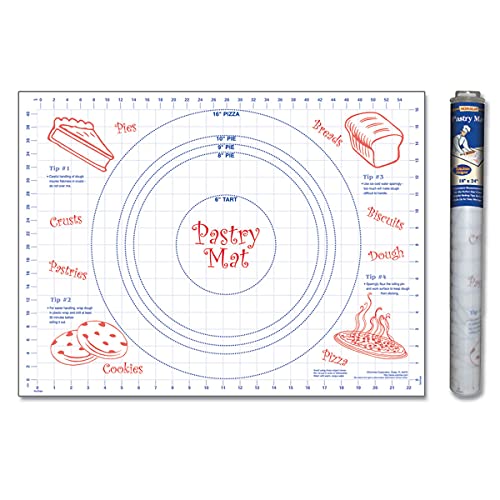
- Built-in measurement markings and conversion chart speed up recipe work.
- Large 24 by 16 inch footprint covers most standard counter workspaces.
Cons
- Very wet or high-hydration doughs still need a dusting of flour or a touch of oil to release cleanly.
- It must be rolled rather than folded for storage, and the protective film has to be removed before first use, which is easy to overlook.
Details
A large silicone work surface that replaces floured countertops for rolling, kneading, and shaping dough, keeping flour mess and sticking under control.
The non-stick face lets pastry and cookie dough lift away with minimal flour, while the anti-slip bottom keeps the mat anchored during hard rolling.
Food-grade BPA-free silicone at 0.7 mm thick, measuring 24 by 16 inches, with printed measurement guides and a conversion chart that resist fading.
High-hydration doughs like wet sourdough will still stick without a light dusting of flour or oil.
Best for home bakers who work with dough often and want a large, storable prep surface.
Cooking Tips
Peel off the protective film before first use. Wipe the counter dry underneath so the anti-slip backing grips fully.
Use the printed circles to size pizza bases and pie crusts, and the conversion chart to scale recipes without stopping to check measurements.
For sticky sourdough, dust lightly with flour rather than flooding the surface. Wash with warm soapy water or run through the dishwasher, then roll for storage.

Pros & Cons
Pros
- Made from 100% food grade silicone that resists staining and does not discolor with repeated use.
- Grease and stuck dough wipe off the non-stick surface without soaking or scraping.
- The raised lip contains liquids, making it usable for wet doughs and messy fondant work.
- Doubles as a kids' craft mat, table protector, or heat pad when not used for baking.
Cons
- At 32 by 24 inches it needs significant counter space and can be awkward to store without rolling or hanging it.
- The raised edge can catch a rolling pin at the very ends of a large dough sheet, forcing you to work more toward the center.
Details
A full-counter silicone work surface for rolling and kneading, aimed at bakers tired of flour-caked countertops and dough stuck to bare stone or wood.
The 5mm raised edge is the standout: wet doughs, oil, and water pool on the mat instead of running onto the counter or floor.
Built from 2mm food grade silicone at 32 by 24 inches, with a grippy underside that anchors to the counter and printed inch and metric guides for sizing crusts.
The footprint is large, so smaller kitchens will need to roll it up for storage rather than leave it out.
Best for home bakers who work with bread dough, pie crust, or fondant regularly and have counter space to match.
Cooking Tips
Wipe the counter and the mat’s underside before laying it down. The anti-slip backing grips hardest on a clean, dry surface and will shift on crumbs.
Use the printed circles and rulers to roll pie crust two inches wider than your pan, then transfer by draping the dough over your rolling pin.
Chill sticky dough on the mat before rolling, and store it rolled with the printed side facing out so the surface does not crease.

Save $1.95
Pros & Cons
Pros
- Food-grade silicone construction is dishwasher safe and wipes clean with warm soapy water.
- Rolls or folds flat for drawer storage, with side holes for hanging to dry.
- Non-stick surface releases sticky dough without added flour, keeping your ratios accurate.
- Handles pies, pizza, bread, biscuits, and macarons on one mat.
Cons
- At 28×20 inches it will overhang smaller counters and most standard half-sheet pans, so measure your workspace before buying.
- The electrostatic backing needs a clean, smooth countertop to grip properly and may slide on textured or crumb-covered surfaces.
Details
A large silicone work surface for kneading and rolling dough, sized to replace flouring your bare countertop.
The 5mm raised edge is the standout: water and flour stay on the mat during wet doughs instead of running onto the counter.
Built from 100% food-grade silicone at 1.5mm thick, about double typical mats, across a 28×20 inch surface with printed millimeter scales.
The footprint is genuinely large, so confirm your counter can take it and note it is bigger than a standard baking sheet.
Best for home bakers working with bread, pizza, and pastry doughs who want a full-size dedicated station.
Cooking Tips
Wipe the countertop clean and dry before laying the mat down. The electrostatic backing grips smooth surfaces best, and crumbs underneath will break the seal.
Skip the dusting flour for sticky doughs. The surface releases on its own, so you avoid working extra flour into the dough and stiffening the crumb.
Use the printed millimeter scales to portion dough and roll crusts to an even diameter. Roll from the center outward and check against the grid as you go.
Pastry mat and Cutting board: Do You Need Both?
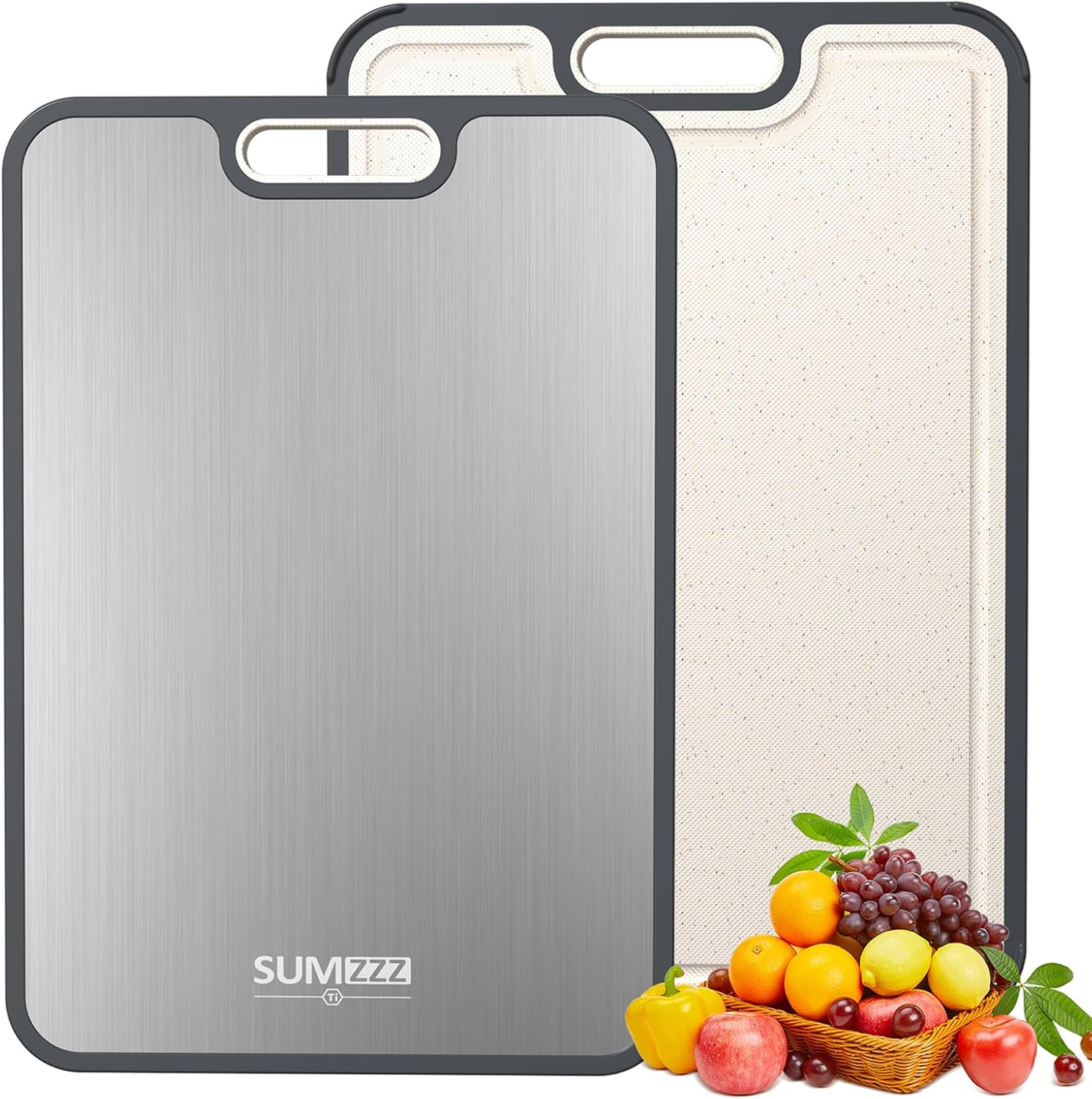
This is not really a versus question. A pastry mat and a cutting board do different jobs — the pastry mat does the actual work, while the cutting board supports it. Most cooks who care about results end up using both rather than choosing one. For product picks, compare best cutting board, best baking sheets, and best kitchen scale.
How They Work Together
Think of the cutting board as part of keeping the pastry mat performing the way it should. Used together, they make the whole task easier and more consistent; skipping the cutting board usually means the pastry mat underperforms or wears faster. The two are complements, not competitors.
When You Actually Need the Cutting board
You do not always need the cutting board on day one, but the more often you use the pastry mat, the more it pays off. If you use the pastry mat regularly, adding the cutting board is a small cost for a real improvement in nonstick or bare finish. If you are shopping, our best cutting board and best baking sheets guides are the fastest way in.
Bottom Line
If your budget forces a choice, start with the pastry mat — it is the tool that does the job. Add the cutting board soon after; together they beat either one alone.
Related Product Guides
If this topic is part of a buying decision, these are the HomeWhisk guides most closely tied to it:
- best cutting board
- best baking sheets
- best kitchen scale
- best dutch oven for bread baking
- best mixing bowls
- best food storage containers
Frequently Asked Questions
Do I need both a pastry mat and a cutting board?
They serve different purposes, so most cooks use both. The pastry mat does the work; the cutting board supports it. If budget forces a choice, start with the pastry mat. See best cutting board and best baking sheets for options.
Can a cutting board replace a pastry mat?
No — they are complements, not substitutes. A cutting board does not do the pastry mat’s job; it makes the pastry mat work better or last longer.
Is a premium baking tool worth it?
Only if you use it enough to notice better control, durability, or cleanup regularly. Occasional users are well served by a mid-range pick like those in best kitchen scale.
How do I keep it in good shape?
Build avoiding thermal shock, and lining with parchment into normal cleanup. Light, consistent care prevents finishes that scratch off far better than occasional deep effort.
What matters most for cutting board?
Focus on warp resistance, measurement accuracy, and heat conductivity first. Those decide real performance; the rest is secondary. Compare best cutting board and best baking sheets for options that get the basics right.
The Bottom Line
For most home cooks, the best choice is the one that removes friction without adding maintenance you will ignore. Start with your use case, then cross-check best cutting board, best baking sheets, and best kitchen scale.




Write Your Review
No reviews yet. Be the first to share your experience!