

TL;DR — It depends entirely on the material. Bare aluminum baking sheets (the most common kind, including Nordic Ware) should not go in the dishwasher: harsh alkaline detergents and hot water cause oxidation, dull chalky discoloration, and pitting. Nonstick and dark-coated sheets survive occasionally but degrade faster with each cycle. Fully clad stainless steel is the only type reliably labeled dishwasher-safe, though it may spot. When in doubt, hand-wash — it’s usually faster than the damage-control a dishwasher creates. For picks, see our best baking sheets guide.
The HomeWhisk editorial team researches kitchen equipment by analyzing manufacturer care instructions, metallurgy, and aggregated owner reviews from major retailers and communities like Reddit r/AskCulinary and r/Cooking. The short version most people miss is that “baking sheet” describes a dozen different materials that behave very differently under dishwasher conditions, so a blanket yes-or-no answer is wrong. Below is the material-by-material breakdown, why the damage happens chemically, and how to keep your pans usable for years.

Why This Question Matters More Than It Seems
A baking sheet looks like a simple slab of metal, so it’s tempting to treat it like a dinner plate. But the dishwasher is a genuinely hostile environment: water temperatures reach 130 to 160 degrees Fahrenheit, the wash cycle blasts abrasive detergent for 30 to 90 minutes, and most dishwasher detergents are strongly alkaline with enzymes and bleaching agents designed to strip baked-on grease. That chemistry is great for ceramic and glass and terrible for reactive metals.
The stakes are also practical. A warped or pitted sheet heats unevenly, so cookies brown on one side, and a corroded surface sheds gray residue onto food. Replacing pans repeatedly costs more than the two minutes of hand-washing would have. Pairing a quality pan with the right care is the same logic behind buying good best mixing bowls or a best cutting board once instead of cheap ones repeatedly.
Material-Specific Risks: What the Chemistry Says
Bare aluminum is the workhorse of baking sheets — it’s light, conducts heat superbly, and is cheap. It’s also the most dishwasher-vulnerable. Alkaline detergent reacts with aluminum’s protective oxide layer and etches the metal, producing a dull, chalky gray or white discoloration and, over repeated cycles, visible pitting. This is oxidation, not dirt, and it does not scrub off. Nordic Ware, the most popular sheet-pan maker, explicitly recommends hand-washing its natural aluminum pans for exactly this reason.
Anodized aluminum has a hardened, sealed oxide surface that resists corrosion far better than bare aluminum. Some is labeled dishwasher-safe, but many manufacturers still advise against it because harsh detergent can degrade the anodized layer over time. Treat it as hand-wash-preferred unless the maker says otherwise.
Nonstick and dark-coated sheets won’t corrode, but the coating is the weak point. Repeated dishwasher cycles combine heat, abrasive detergent particles, and thermal stress that break down the nonstick polymer faster than hand-washing, leading to flaking and loss of release. An occasional cycle won’t ruin them, but daily dishwasher use shortens their life considerably.
Stainless steel (fully clad, like tri-ply or 18/10) is the one type that reliably tolerates the dishwasher. It resists corrosion because of its chromium oxide layer. The main cosmetic issue is water spotting and, occasionally, faint rainbow “heat tint,” neither of which affects performance.
Carbon steel and tin-coated sheets should never go in the dishwasher — they rely on a seasoned oil layer or a soft tin plating that dishwasher chemistry destroys, causing rust almost immediately. This is the same rust-risk logic that makes a well-seasoned pan a strictly hand-wash item.
The Dishwasher Isn’t the Problem — It’s How You Use It
Even for dishwasher-tolerant pans, three variables decide whether they survive intact.
1. Detergent Chemistry Matters More Than Heat
The single biggest cause of pan damage is not temperature — it’s the detergent. Highly alkaline powders and old-style phosphate or citrate formulas are the most aggressive toward aluminum. Gel and pod detergents vary widely. If you must run a borderline pan, a milder, less-alkaline detergent and a lower-temperature “eco” or “china/crystal” cycle reduces etching dramatically compared with a heavy pots-and-pans cycle.
2. Loading Geometry Determines Thermal Stress
Lay sheets flat or angle them so spray reaches both faces evenly and water drains fully. Sheets wedged where one side stays wet and hot while the other cools develop uneven stress, and thin pans can warp. Keep them away from the heating element at the bottom of the tub. Never let two metal pans rest against each other where they can scratch coatings during the wash.
3. Rinse Aid Isn’t Optional — It’s Corrosion Control
Rinse aid lowers the surface tension of water so it sheets off instead of beading, which means pans dry faster and spend less time in contact with mineral-laden, detergent-residue water. Less standing water means fewer water spots on stainless and less prolonged chemical exposure on aluminum. For hard-water homes, a rinse aid plus dishwasher salt makes a noticeable difference in spotting.
When Hand-Washing Is Not Just Safer — It’s Faster
For a single sheet pan, hand-washing is usually quicker than loading, running, and unloading a dishwasher. Warm water, a drop of dish soap, and a non-scratch nylon scrubber handle most messes in under two minutes. For baked-on grease, fill the pan with hot water and a squirt of soap and let it soak for 15 to 20 minutes, or make a paste of baking soda and a little water, spread it on the stuck spots, wait 15 minutes, and scrub. For stubborn brown polymerized oil, baking soda plus a splash of hydrogen peroxide lifts it without abrasives that scratch.
The critical final step for any metal pan is to dry it immediately and completely with a towel rather than letting it air-dry. Standing water is what starts spotting on stainless and oxidation on aluminum. Weighing ingredients accurately with a best kitchen scale also means less overflow and burnt-on spillage in the first place, which is the easiest cleaning win of all.
Red Flags: When to Never Use the Dishwasher
- The pan is bare or natural aluminum (most sheet pans, including Nordic Ware) — expect chalky discoloration and pitting.
- The pan is carbon steel or has a tin coating — it will rust.
- The nonstick coating is already scratched or flaking — dishwasher cycles accelerate the breakdown.
- The manufacturer’s care label says hand-wash — that instruction reflects real metallurgy, not liability boilerplate.
- The pan has riveted handles or seams where water pools and corrodes from the inside out.
If any of these apply, hand-wash. The same care mindset applies across the kitchen: reactive and coated tools last far longer with hand-washing, whether that’s a sheet pan, a good knife, or a best dutch oven for bread baking with an enameled interior.
Proper Storage Prevents Recontamination
Cleaning is only half the job — how you store pans decides whether they stay clean and flat. Dry pans completely before stacking; trapped moisture between nested sheets causes water spots and, on aluminum, oxidation rings. Slide a paper towel or thin cloth between stacked pans to prevent scratching and to wick residual moisture. Store sheets on edge in a vertical organizer if you have the space — it avoids the scratching and slow warping that comes from heavy stacking. Keep freshly cleaned pans away from a damp sink cabinet; a dry, ventilated spot preserves both metal and coating. The same “dry fully before you put it away” rule keeps best food storage containers odor-free and mold-free.
Kitchen Hacks That Actually Work (and Why)
- Baking soda paste (mildly alkaline and gently abrasive) lifts baked-on grease without scratching coatings. It works because it mechanically loosens carbonized food while its alkalinity saponifies fats.
- Bar Keepers Friend (oxalic acid) restores dull stainless and removes rainbow heat tint — but never use it on aluminum, where the acid etches, or on nonstick, where the abrasive scratches.
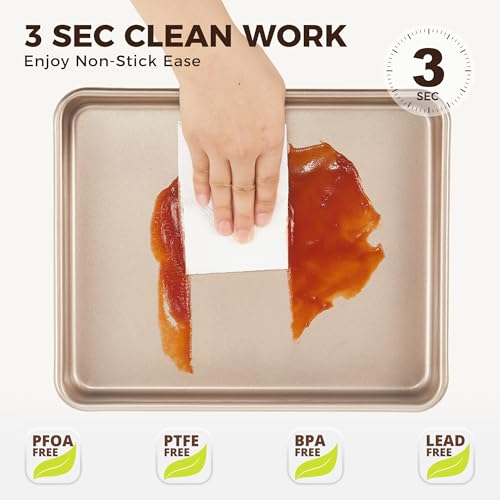
- Line pans with parchment or a silicone mat so cleanup is often just a wipe, eliminating the dishwasher question entirely for everyday baking.
- Deglaze while warm: add hot water to a still-warm (not hot) pan to loosen residue before it hardens. Don’t shock a hot pan with cold water — thermal shock is a real cause of warping in thin aluminum.
Frequently Asked Questions
Can I put my Nordic Ware aluminum baking sheets in the dishwasher?
No. Nordic Ware and virtually every maker of natural aluminum bakeware recommend hand-washing. The dishwasher’s alkaline detergent and hot water oxidize the aluminum, leaving a dull, chalky gray or white discoloration and, over time, pitting. This is a chemical reaction with the metal, not surface grime, so it can’t be scrubbed off once it happens. Hand-wash with warm water and mild dish soap, then dry immediately. If a pan is already discolored, it’s still safe to bake with — the change is cosmetic — but the damage is permanent.
Why do my stainless steel sheets get water spots even after dishwasher use?
Water spots are mineral deposits left behind when hard water evaporates on the surface. Stainless is dishwasher-safe and the spots don’t harm it, but they look cloudy. The fixes are a rinse aid (which helps water sheet off instead of beading), dishwasher salt if your machine has a softener reservoir, and — most reliably — toweling the pan dry the moment the cycle ends instead of letting it air-dry. To remove existing spots, a little white vinegar or Bar Keepers Friend restores the shine.
Is it safe to wash baking sheets with parchment stuck to them?
Remove all parchment, silicone mats, and food debris before washing. Baked-on paper and grease can clog a dishwasher filter and spray arms, and they redeposit as a greasy film on everything in the load. Loose parchment can also block the spray or melt against the heating element. Scrape the pan first; for stuck residue, soak in hot soapy water for 15 to 20 minutes, then wash. This pre-cleaning step is exactly why hand-washing a single sheet is often faster than running a whole dishwasher cycle.
Do I need to replace baking sheets every few years?
Not if you care for them. A quality bare-aluminum or stainless sheet that’s hand-washed and dried can last a decade or more; discoloration and minor warping are cosmetic and rarely affect baking. Nonstick and coated sheets have a shorter life — typically a few years — because the coating eventually wears regardless of care, and dishwasher use accelerates it. Replace any pan when the surface is flaking into food, deeply pitted, or so warped it rocks on a flat surface and heats unevenly. See our best baking sheets guide for durable options.
What’s the safest way to clean a sheet with rust spots?
Rust appears on carbon steel, tin-coated, or damaged pans. Make a paste of baking soda and water, or use a cut potato dipped in baking soda, and scrub the rust with a non-metallic pad; for stubborn rust, a paste of equal parts baking soda and white vinegar works. Rinse, dry immediately and thoroughly, then wipe a very thin layer of neutral oil over carbon steel to re-establish protection. Never put a rust-prone pan back in the dishwasher — that’s what caused the rust. Keep it hand-wash-only going forward.
Can oven racks and glass baking dishes go in the dishwasher?
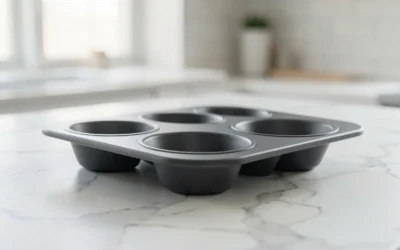
Chrome-plated oven racks can go in but often don’t fit, and harsh cycles can dull or spot the plating over time — many people prefer soaking them in the bathtub with dish soap. Tempered glass baking dishes are dishwasher-safe and handle it well since glass doesn’t react with detergent, though thermal shock from sudden temperature changes is the real risk to avoid. Muffin tins follow the same rule as sheet pans: stainless is fine, bare aluminum and nonstick are better hand-washed.
The Bottom Line
Whether you can put a baking sheet in the dishwasher comes down to what it’s made of. Fully clad stainless steel handles it fine, aside from cosmetic water spots. Nonstick and coated sheets tolerate the occasional cycle but wear out faster. Bare and natural aluminum — the most common sheet-pan material — should be hand-washed to avoid permanent chalky oxidation and pitting, and carbon steel or tin-coated pans must never go in because they’ll rust. For most home bakers with a single pan to clean, hand-washing with warm soapy water and an immediate towel-dry is both safer and faster than a dishwasher cycle. When you’re ready to upgrade to pans built to last, see our best baking sheets guide.




Write Your Review
No reviews yet. Be the first to share your experience!