

If you have read more than three wok guides this year, the same argument keeps surfacing: a hand-hammered carbon steel wok from a traditional Chinese workshop versus a Western-designed carbon steel wok like the YOSUKATA or a Made In style flat-bottom. Both camps have loud defenders. One side argues that nothing replaces the thin-gauge, hand-forged steel that has been used in Cantonese kitchens for generations. The other side insists that a slightly heavier, flat-bottomed wok with an ergonomic handle is a better fit for a Western gas range with grates that were never designed to cradle a round-bottomed pan.
For more, see our How to Season a Wok and What Is a Wok Used for guides.
This guide is built around that exact comparison. We line up the two finalists wok by wok, criterion by criterion, then circle back to the other three picks for cooks whose needs fall outside the main matchup. The stakes are real: the right wok for gas stove cooking will last a decade and reward technique, while the wrong one will warp, rust, or sit unused after the novelty wears off. If you are still deciding between a wok and a flat skillet for everyday stir-fry and searing, our best carbon steel pan for cooking guide breaks down the flat-bottom alternative in detail.

Pros & Cons
Pros
- Flat bottom design sits flush on all cooktop types, eliminating wobbling and heat loss.
- Pre-seasoned finish means you skip the tedious seasoning process and cook the same day.
- Chemical-free carbon steel develops its own non-stick patina, improving with every meal you prepare.
- Ergonomic wooden handle stays cool and provides secure grip during extended cooking sessions.
Cons
- Requires hand-washing only and careful drying to prevent rust—no dishwasher convenience.
- At 4.1 lbs, it's heavy for extended overhead cooking and demands proper storage space.
Details
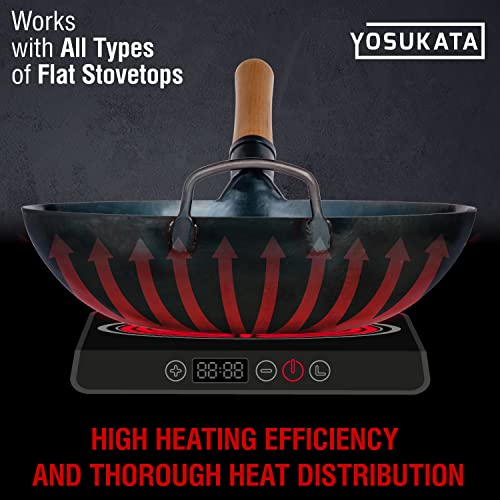
A pre-seasoned carbon steel wok with flat bottom that works on every cooktop type—gas, electric, induction, ceramic, and open flame. Solves the problem of buying a wok that only works on one heat source.
Pre-seasoning technology eliminates the 30-minute burn-in most woks require. Natural non-stick surface builds from cooking oil over time, getting better with use instead of degrading like chemical coatings.
15-gauge heavy-duty carbon steel at 4.1 lbs provides the thermal mass professional chefs need for proper searing and stir-frying. Flat bottom design ensures full contact with cooktop surface.
Requires hand-washing and complete drying after each use to prevent rust; acidic foods in early uses can cause pitting if the seasoning layer isn’t fully established.
Best for home cooks and outdoor enthusiasts who want authentic wok cooking without chemical non-stick coatings and need versatility across multiple heat sources.
Cooking Tips
Preheat until the wok just begins to smoke before adding oil—this temperature is critical for proper searing and preventing sticking. Add enough oil to coat the cooking surface, then work in smaller batches rather than overcrowding.
Use metal utensils freely; scratches won’t harm the wok and will naturally disappear with regular cooking. Avoid prolonged contact with acidic ingredients like tomatoes or vinegar until the seasoning layer is fully developed after 10-15 uses.
Cool the wok gradually before washing to prevent warping. Hand-wash with hot water and a soft brush, dry completely, then apply a light oil coat immediately to maintain the seasoning and prevent rust between uses.

Pros & Cons
Pros
- Pre-seasoned construction means you can start cooking immediately instead of spending hours seasoning before first use.
- Flat bottom provides stable contact on all stovetop types, including induction and electric ranges that round-bottom woks can't use.
- Carbon steel builds authentic flavor through proper oil layering and handles high heat better than non-stick alternatives.
Cons
- Requires hand-washing only and careful drying to prevent rust—dishwasher use and storage in moisture will damage the seasoning.
- Food sticks if the wok isn't preheated until smoking or if you don't use enough oil, requiring a cooking technique adjustment.
Details
A pre-seasoned carbon steel wok that solves the problem of buying non-stick cookware that degrades over time or contains harmful chemicals. This 13.5″ flat-bottom design works on every heat source: gas, induction, electric, and outdoor fire.
The 600°F pre-seasoning gives you immediate cooking capability without days of break-in. High-grade carbon steel distributes heat evenly across the 3.8″ depth, essential for proper stir-frying and searing. The wok weighs 3.6 lbs—light enough to toss food confidently but heavy enough for durability.
The wooden handle stays cool during cooking and provides ergonomic grip for both stovetop and outdoor use. The flat bottom eliminates wobbling on electric and induction cooktops, a major advantage over traditional round-bottom woks.
One honest limitation: acidic ingredients like tomatoes or vinegar can cause pitting in early uses before the seasoning fully develops. Plan your first 10–15 cooks around neutral or oil-based ingredients.
Best for home cooks and campers who want authentic wok cooking without chemical coatings and need one tool that works everywhere.
Cooking Tips
Preheat the wok until it just begins to smoke before adding oil—this prevents sticking and creates proper searing. Add enough oil to coat the entire surface, then work in smaller batches rather than overcrowding. This maintains heat and builds the natural non-stick layer faster.
For best results, use high-heat cooking methods: stir-frying, searing, deep-frying, and braising. Avoid prolonged contact with acidic foods (tomatoes, vinegar, citrus) during the first 10–15 cooks while seasoning develops. After cooking, clean with hot water and a soft brush, dry completely, then apply a thin oil coat to prevent rust.
Metal utensils are safe—scratches won’t damage performance since there’s no synthetic coating. Store in a dry place; moisture causes rust. Re-season occasionally by wiping with oil-soaked paper towel after each use to maintain and improve the non-stick surface.

Save $5.00
Pros & Cons
Pros
- Embossed base eliminates cold spots and distributes heat evenly across the cooking surface for consistent results.
- PFOA-free construction with certified 304 stainless steel interior makes this safe for families concerned about chemical coatings.
- Ergonomic stay-cool handle and 13-inch diameter provide comfortable control and ample space for tossing without spillage.
Cons
- Stainless steel surface requires proper technique to prevent sticking initially, though the laser-etching minimizes this issue significantly.
- Heavier than non-stick aluminum woks, which some cooks may find fatiguing during extended high-heat cooking sessions.
Details
A 13-inch stainless steel wok designed to solve uneven heating and lengthy cleanup on traditional cookware. The embossed 3-ply base heats 30% faster while the laser-etched nonstick surface reduces sticking by 50%.
The 304 stainless steel interior resists rust and scratching without PFOA coatings. At 13 inches, it accommodates family-sized portions while remaining manageable for tossing. The included tempered glass lid locks moisture and heat.
This wok works on induction, gas, electric, ceramic, and halogen stovetops, eliminating compatibility concerns. The stay-cool handle ensures safe handling during high-heat cooking.
Initial sticking may occur if too little oil is used, though the laser-etching minimizes this compared to standard stainless steel.
Best for home cooks who stir-fry frequently and want durable, chemical-free cookware that cleans quickly without scrubbing.
Cooking Tips
Preheat the wok for 2-3 minutes on medium-high heat to activate the laser-etched surface and ensure proper food release. Use 1-2 tablespoons of oil for most stir-fries; the embossed base requires less oil than traditional stainless steel.
For seared meats and proteins, maintain medium-high to high heat. The even heat distribution prevents hot spots that typically cause sticking. Toss ingredients frequently to maximize the benefits of the curved design.
The glass lid works best for braising vegetables or finishing dishes that need moisture retention. Hand wash with warm soapy water and a soft cloth immediately after cooking; most food residues rinse away instantly without soaking.

Save $10.00
Pros & Cons
Pros
- Flat bottom design provides stable contact with electric and induction cooktops, unlike traditional round-bottom woks that require ring adapters.
- Heavy construction absorbs and retains heat efficiently, maintaining consistent cooking temperature even when adding cold ingredients mid-stir-fry.
- Removable wooden handle allows oven seasoning up to 500°F, giving you two seasoning methods to build a stronger nonstick layer.
Cons
- Requires initial seasoning before first use and ongoing maintenance to prevent rust, adding prep time compared to nonstick or stainless steel pans.
- Carbon steel is reactive to acidic foods like tomato sauce or lemon juice, which can strip seasoning and affect flavor if not rinsed quickly.
Details
A 14-inch carbon steel wok with a flat 6-inch bottom designed for stir-frying and high-heat cooking on any stovetop. It solves the problem of uneven heating in traditional skillets and excessive oil use in shallow pans.
Heavy-gauge steel distributes heat rapidly and evenly across the cooking surface. The naturally nonstick seasoning layer reduces oil dependency while the high, sloping sides contain splatter and allow ingredient tossing.
The wok weighs approximately 4.5 pounds and features riveted wooden handles that stay cool to the touch. The flat bottom sits flush on gas, electric, ceramic, glass, and induction cooktops without adapters.
Carbon steel requires seasoning before use and ongoing care to prevent rust. Acidic foods can strip the seasoning layer if not rinsed promptly.
Best for home cooks who stir-fry regularly and want a durable, multi-cooktop wok that improves with use.
Cooking Tips
Season your wok using the stovetop method for quick results: wash, dry thoroughly, apply oil with a paper towel, heat until smoking, then cool. For a stronger nonstick layer, remove the wooden handle and oven-season at 475–500°F for one hour.
Preheat the wok for 2–3 minutes on medium-high heat before adding oil. This ensures even temperature distribution and prevents sticking during the first stir-fry. Add ingredients in stages—proteins first, then vegetables—to maintain consistent heat.
Avoid prolonged contact with acidic foods like tomato sauce or vinegar, which can damage the seasoning. Rinse immediately after cooking, dry with a towel, and apply a light oil coating to maintain the nonstick surface between uses.

Pros & Cons
Pros
- Made in USA by a family-owned company since 1896, ensuring quality control and ethical manufacturing standards.
- PFOA and PTFE-free construction means no synthetic chemicals leach into food during cooking.
- Flat base sits stable on all stovetop types and conducts heat evenly across bottom and sidewalls for consistent results.
Cons
- Cast iron requires hand-washing and immediate drying to prevent rust; dishwasher use will damage the seasoning layer.
- Heavy weight (approximately 10 lbs) makes it challenging to handle for users with limited grip strength or mobility.
Details
A 14-inch cast iron wok designed for high-heat cooking, stir-fries, frying, and steaming. It solves the problem of uneven heat distribution and food sticking that plague lightweight woks.
Superior heat retention means your oil and pan stay hot between ingredient additions, creating proper wok hei (breath of the wok). The pre-seasoned finish with natural vegetable oil provides immediate non-stick performance without PFOA or PTFE chemicals.
Weighs approximately 10 pounds; bowl-shaped design with 14-inch diameter and dual cast iron loop handles. Flat base ensures stability on all cooktops.
Requires hand-washing and prompt drying after each use to maintain the seasoning layer and prevent rust spots.
Best for home cooks who prepare Asian cuisine regularly and value durability, chemical-free cookware, and equipment that improves with age.
Cooking Tips
Preheat the wok for 2-3 minutes on medium-high heat before adding oil. The thermal mass of cast iron requires longer preheating than steel, but this ensures even heat distribution and proper searing.
Use high smoke-point oils like peanut, vegetable, or avocado oil. Cast iron’s heat retention can scorch butter or olive oil, affecting flavor and seasoning.
After cooking, wipe the hot pan with a damp cloth while still warm to remove food residue. Dry immediately with a towel, then apply a light coat of oil to the entire surface to maintain seasoning and prevent rust.
How We Evaluated These Picks
This guide is research-based, not a hands-on test. We did not buy, cook with, or measure the products above. What we did compare: manufacturer specifications, materials and construction, capacities and wattages, and the patterns that repeat across large volumes of verified owner reviews — especially the complaints that only surface after weeks of use, like coatings failing, motors weakening, controls drifting, or a design proving awkward to clean and store.
Where this page describes how something performs, it is reporting what the specifications state and what owners consistently report — not a result we produced ourselves. Prices and availability change constantly, so check the current listing before buying. We earn a commission on purchases made through links on this page, which never affects which products we include or how we rank them.
The Two Finalists
The matchup that matters most for any wok for gas stove buyer is Craft Wok versus YOSUKATA. Craft Wok represents the traditional hand-hammered Chinese school: a 14-inch round-bottomed carbon steel wok forged in a small workshop, light enough to toss with one hand, and built to sit on a wok ring over a powerful open flame. YOSUKATA represents the modern Western-influenced approach: a 13.5-inch flat-bottomed carbon steel wok with a thicker base, a riveted wooden handle, and pre-seasoning intended to shorten the break-in period. Both are carbon steel. Both can deliver restaurant-style stir-fry on a home gas range. The differences are in shape, weight, handle ergonomics, and how patient you need to be during seasoning.
Side by Side: Craft Wok vs YOSUKATA
Bottom Shape: Round vs Flat
The most consequential difference between these two wok contenders is the bottom shape, and it determines almost everything else about how each one cooks. The Craft Wok is round-bottomed in the classical Cantonese style, which means it needs a wok ring to sit steadily on a Western gas grate. Set on a properly sized ring over a high-BTU burner, the flame wraps up the curved walls and produces a temperature gradient that is genuinely useful: a roaring hot bottom for searing protein, cooler sloped walls for parking aromatics, and an upper rim that finishes vegetables gently. This is the geometry that gives traditional stir-fry its layered texture, and it only works on a gas flame.
The YOSUKATA flat-bottom wok takes a different approach. The flat base sits directly on the burner grate without a ring, which means it stays put when you toss vigorously and it transfers heat through conductive contact rather than radiant flame-wrap. On a typical residential gas stove that produces 12,000 to 18,000 BTU per burner, the flat bottom heats faster and more evenly than a round wok set on a ring, because more of the steel is actually touching a heat source. The trade-off is a smaller hot zone and less of the dramatic wall-temperature gradient that defines classical wok cooking. For most home cooks on a standard gas range, the YOSUKATA is the more forgiving wok for gas stove use. For cooks with a dedicated high-BTU wok burner or a proper ring setup, the Craft Wok is the more capable one.
Wall Thickness and Heat Behavior
Wall thickness is the second axis where these two woks diverge, and it directly shapes how each one responds to a gas flame. The Craft Wok is built from approximately 1.5mm hand-hammered carbon steel, which is on the thinner end of the spectrum and intentionally so. Thin steel responds almost instantly to changes in burner output. Turn the flame down and the wok cools within seconds; crank it back up and you are back at searing temperature before the next ingredient hits the steel. This responsiveness is exactly what high-heat stir-fry technique demands, where the cook adjusts the flame constantly to control the rate of caramelization on aromatics, proteins, and finishing sauces.
The YOSUKATA is built from approximately 2mm carbon steel, noticeably thicker. That extra mass holds heat longer, which means it recovers temperature faster after a cold ingredient hits the pan. Drop room-temperature chicken into a thin Craft Wok and the steel temperature plummets; the same drop in a YOSUKATA loses less heat because there is more thermal mass storing it. For batch cooking, large portions, or cooks who tend to overload the wok, the YOSUKATA is more tolerant. For genuine restaurant-style velocity where the wok is supposed to behave more like a responsive tool than a heat reservoir, the thinner Craft Wok is closer to the traditional ideal.
Handle Style and Maneuverability
The Craft Wok uses a single long wooden handle attached at a slight upward angle, with a small steel helper loop opposite. The long handle is sized for the classic flick-and-toss motion that moves food through the wok without a spatula. Because the body of the wok is light, you can lift, swirl, and return it to the burner one-handed without strain. The helper loop is a steel ring rather than a full grip, intended only for moments when you need to stabilize a heavy pour. This is a wok that assumes the cook will be active and physical with it, and the handle geometry rewards that style.
The YOSUKATA uses a riveted wooden handle on the long side and a substantial wooden helper handle on the opposite side, both designed for a two-handed grip. The wok itself is heavier because of the thicker steel and the flat bottom, and the second wooden handle reflects that. Lifting a full YOSUKATA off the burner is a two-handed move, not a one-handed flick. For cooks who do not toss in the air and instead stir-fry with a wok spatula and ladle in the bowl, the YOSUKATA’s handle layout is genuinely more comfortable. For cooks who came to the wok specifically to learn the tossing motion, the Craft Wok handle is the one that supports the technique.
Seasoning and Maintenance
Both woks ship as raw carbon steel that needs seasoning before serious cooking, but the experience is meaningfully different. The Craft Wok arrives with a thin factory coating that must be scrubbed off entirely with hot water and a metal scrubber before the first seasoning. From there, you build patina the traditional way: thin oil layers, high heat, repeat over many cooking sessions. The thin steel and round shape make seasoning slightly tricky because the wok flexes a bit on the burner and oil pools at the bottom, which can create uneven patina if you are not attentive. The reward is a wok that, over six to twelve months, develops a deep black mirror finish that no other cookware in your kitchen will match.
The YOSUKATA arrives with a pre-seasoning layer that gets you to a usable surface faster. Owners report being able to cook eggs without sticking within three or four sessions, whereas the Craft Wok typically needs eight to twelve sessions to reach the same point. Long-term, both develop comparable patinas, but the YOSUKATA is more beginner-tolerant during the first month. Maintenance is identical for both: hot-water rinse, no soap on a seasoned surface, dry immediately on the burner, wipe with a thin oil film before storage. Neither wok is dishwasher safe. Neither tolerates acidic tomato sauces or wine reductions for extended cooking. If you understand carbon steel, both behave predictably; if you are new to the material, the YOSUKATA shortens the learning curve.
What the Other Three Bring
Goodful Flat-Bottom Carbon Steel for Apartment Cooks
The Goodful carbon steel wok (B0FHK5TQLN) is the entry point for cooks who want to try wok cooking without committing to a 14-inch finalist. At roughly 13 inches with a flat bottom and a helper handle, it slides easily onto a standard gas grate, fits in cabinets that cannot accommodate the larger options, and costs noticeably less. The carbon steel is thinner than the YOSUKATA but seasons predictably, and the included helper handle makes it more secure on a busy stovetop. This wok is the right pick for renters, first-time wok buyers, or anyone whose stir-fry portions usually serve two rather than four. It will not match the Craft Wok’s responsiveness or the YOSUKATA’s heat retention, but it covers everyday weeknight stir-fry on a gas burner without any drama.
A 12.5-Inch Compact Option for Smaller Burners (B09GRXQGRN)
The fourth pick (B09GRXQGRN) is a 12.5-inch carbon steel wok aimed specifically at cooks with smaller gas burners or limited stovetop real estate. Many residential gas ranges have a high-output burner around 12,000 BTU and three lower-output burners around 7,000 to 9,000 BTU. A 14-inch wok on a 7,000 BTU burner heats unevenly because the flame footprint is too small for the pan. The 12.5-inch diameter brings the heated area closer to the wok footprint, so even a moderate burner can drive the whole cooking surface. This is the best wok for gas stove setups where the primary cooking burner is mid-range, for college apartment kitchens, and for cooks who stir-fry single-serving portions and want fast preheats.
A Hybrid-Construction Wok for Lower Maintenance (B09VJ779W4)
The fifth pick (B09VJ779W4) is a hybrid-construction wok that combines a carbon steel cooking surface with stainless steel exterior components, designed to reduce the seasoning maintenance burden. Pure carbon steel woks reward attention; hybrid woks reduce it. The cooking surface still benefits from seasoning, but the exterior is more resistant to rust spots if the wok gets stored damp, and the construction tolerates an accidental soap wash better than a fully traditional wok would. This is the right wok for cooks who love the idea of wok cooking but know themselves well enough to admit they will not maintain a raw carbon steel pan for ten years. It costs more than the Craft Wok and the YOSUKATA, but it asks less in return.
When You Should Look Outside This List
A wok is one of the most specialized pans in a home kitchen, and there are situations where buying any wok at all is the wrong move. The first and most common is induction. Every wok on this list has a round or thin flat bottom that performs poorly on induction cooktops, where the magnetic field needs a substantial flat ferrous surface to couple efficiently. Some flat-bottom carbon steel woks technically work on induction, but the experience is compromised: smaller hot zones, slower recovery, and none of the radiant heat that defines wok cooking. If your kitchen is induction-only, a heavy carbon steel or stainless skillet handles stir-fry better than any compromise wok, and our best cookware for gas stove guide is essentially irrelevant to your setup.
The second situation is ventilation. Real wok cooking on a gas burner produces aggressive amounts of smoke, vaporized oil, and aerosolized seasoning. In an apartment without a high-CFM range hood vented to the outside, that smoke fills the room within minutes, sets off detectors, and leaves an oily film on cabinets and ceilings within months. Recirculating hood filters do not handle wok-level smoke. Cooks in apartments with weak or recirculating ventilation are better served by lower-heat techniques in a covered skillet, an outdoor wok burner on a balcony where allowed, or accepting that stir-fry will be a once-a-month event rather than a weekly habit.
The third situation is style mismatch. A wok is a stir-fry tool first, with secondary uses for steaming and deep-frying. Cooks who rarely make stir-fry, who cook mostly Italian, French, or American-style food, and who already own a cast iron skillet and a stainless saute pan will use a wok roughly four times a year. There is nothing wrong with admitting that and skipping the purchase. A wok is not a general-purpose pan; it is a specialist, and it earns its cabinet space only in kitchens where stir-fry is a regular event.
Questions Readers Ask Most
Round-bottom or flat-bottom wok for a gas stove?
For a standard residential gas range with regular grates, a flat-bottom wok is more practical because it sits stable without a wok ring. For a dedicated high-BTU wok burner or for cooks willing to use a properly sized wok ring, a round-bottom wok delivers more of the classical heat gradient. Most home cooks should default to flat-bottom unless they specifically want traditional Cantonese geometry.
Why does my wok rust so quickly?
Carbon steel rusts when water sits on the surface, which happens when the wok is washed and not dried immediately or stored before fully cooled. Always dry a seasoned wok on the burner over low heat after washing, wipe with a thin oil film, and store somewhere dry. Light surface rust scrubs off with steel wool and re-seasoning; deep pitting means the patina was never properly built.
Can I use a wok on a glass-top stove?
A flat-bottom wok works on a glass-top stove, but carefully. The wok must be lighter than the cooktop’s weight rating, must not be dragged across the glass during tossing, and must not be used with extreme thermal shock. Round-bottom woks cannot be used on glass-top stoves at all. Performance is also weaker than on gas because the heat output is lower.
How big a wok do I really need at home?
For one or two diners, a 12 to 13 inch wok is right-sized and fits standard burners well. For three or four diners, a 14 inch wok handles batch sizes without crowding. Anything above 14 inches is restaurant-scale and requires a dedicated high-output burner to drive properly. Most home cooks should pick 13 or 14 inches based on portion size, not on the assumption that bigger is better.
Related Guides
- How to Season a Wok
- What Is a Wok Used for
- What Is Carbon Steel Cookware
The Verdict
Between the two finalists, the Craft Wok is the technically superior wok for gas stove cooks who already understand stir-fry technique, who have a high-BTU burner or a proper wok ring, and who want the most responsive cooking tool possible. The YOSUKATA is the more practical wok for gas stove cooks on a typical residential range who want the carbon steel experience without fighting the cookware. The other three picks cover the edges: Goodful for budget and small kitchens, the 12.5-inch option for smaller burners, and the hybrid wok for lower maintenance. Whichever wok for gas stove you choose, the gas flame itself is the equalizer that makes any of these work better than they would on any other cooktop.
- If you have a dedicated wok burner or wok ring and want the most traditional experience: Craft Wok Hand Hammered (B08HMXMG2H).
- If you cook on a standard residential gas range and want flat-bottom stability with quick pre-seasoning: YOSUKATA (B084DQYNNM).
- If you are buying your first wok and want to keep the budget low: Goodful flat-bottom (B0FHK5TQLN).



Write Your Review
No reviews yet. Be the first to share your experience!