

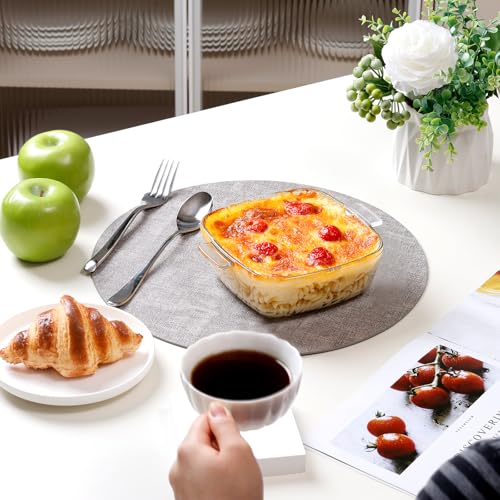
TL;DR — Glass is safe in a toaster oven only if it’s oven-rated borosilicate or tempered soda-lime glass (like Pyrex or Anchor Hocking) used within its temperature limits. The real danger isn’t the toaster oven’s average temperature — it’s the exposed heating elements just inches from the glass, which create intense, uneven radiant heat and hot spots that ordinary glass can’t survive. Never use drinking glasses, mason jars, or thin glassware. Even oven-safe glass can shatter from sudden temperature changes (thermal shock). Follow the manufacturer’s limits and keep glass away from the elements. For picks, see our best toaster oven guide.
The HomeWhisk editorial team researches kitchen equipment by analyzing manufacturer specifications, material science, and aggregated user reviews from major retailers and communities like Reddit r/Cooking and r/AskCulinary. Our guidance reflects how glass actually behaves under heat, not blanket yes-or-no answers.
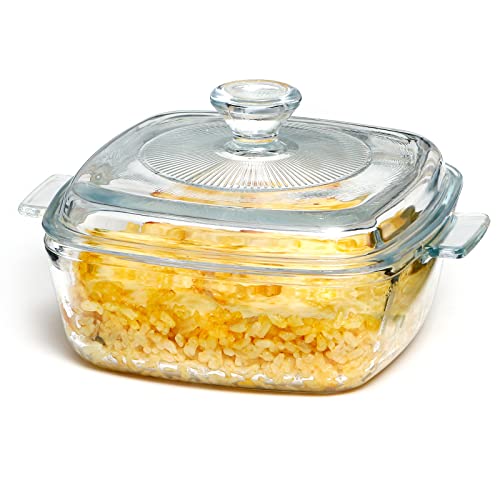
“Is glass toaster oven safe?” is one of the most searched toaster-oven questions, and the honest answer is “it depends on the glass and how close it sits to the elements.” A toaster oven isn’t a small conventional oven — its geometry is different in a way that specifically stresses glass. Understanding that difference tells you exactly which dishes are fine and which will crack. If your current oven’s small cavity is forcing you into risky bakeware, our best toaster oven guide covers models with more usable clearance.
NUTRIUPS
Single-Serving Glass Casserole Dish with Lid, Oven Safe to 482°F - NUTRIUPS 0.8L Square
This 0.8L tempered glass casserole bakes, reheats, and stores single portions in one clear dish that lets you check food without lifting the lid. Ideal for solo cooks or couples who want oven-to-freezer versatility without wasting leftovers.
Pros and Cons
Pros
- Oven safe up to 482°F for baking and roasting small dishes.
- Microwave, freezer, and dishwasher safe for flexible daily use.
- Non-porous glass resists food odors, stains, and lingering flavors.
- Right-sized for reheating a 10oz bag of frozen vegetables or a personal casserole.
Cons
- Not usable on a stovetop or induction cooker, so all cooking must happen in the oven or microwave.
- The 0.8L capacity is too small for family-sized meals or batch cooking.

Moss & Stone
Oven-to-Table Casserole Baking Set: Moss & Stone Clear Borosilicate Glass Dishes with Lids, 1qt 1.5qt 2qt
This three-piece borosilicate glass casserole set bakes, stores, and reheats in the same dish, with clear sides that let you check browning without opening the oven. It suits cooks who want one set that moves from oven to fridge to microwave to dishwasher without transferring food between containers.
Pros and Cons
Pros
- Matching glass lids turn each baking dish into a sealed storage container for the fridge or freezer.
- Clear glass looks presentable enough to serve directly at the table instead of plating separately.
- Three nesting-friendly sizes fit everyday cooking from snacks and salads to soups, rice, and chicken.
- Borosilicate resists staining and odor absorption better than plastic storage for repeat use.
Cons
- The largest dish tops out at 2 qt, so it is undersized for a full lasagna or a large-batch casserole feeding a crowd.
- Glass lids are not marketed as oven safe alongside the dishes, so covered baking instructions should be confirmed before use.

Pyrex
Deep Casserole Baking Dish for Lasagna and Leftovers: Pyrex 7x11 Glass Baker with BPA-Free Lid
This 7x11x2.75 inch glass baking dish runs up to 50% deeper than standard Pyrex basics, so layered casseroles and saucy bakes stay in the pan instead of on your oven floor. Buy it if you cook for a crowd and want one dish that bakes, stores in the fridge, and reheats without transferring food to a second container.
Pros and Cons
Pros
- Extra depth adds real capacity for party-sized portions compared to standard shallow bakers.
- The included lid fits tightly enough for fridge and freezer storage, removing the need for foil or wrap.
- Glass construction cleans easily and will not absorb flavors from repeated use with strong seasonings.
- Pyrex glass bakeware is a long-established line with wide availability of matching sizes.
Cons
- The plastic lid is not oven safe, so it must be removed before baking and set aside.
- Glass requires a pre-heated oven and careful handling around temperature swings, unlike metal pans.
NUTRIUPS Single-Serving Glass Casserole Dish with Lid, Oven Safe to 482°F - NUTRIUPS 0.8L Square
NUTRIUPS
Single-Serving Glass Casserole Dish with Lid, Oven Safe to 482°F - NUTRIUPS 0.8L Square
This 0.8L tempered glass casserole bakes, reheats, and stores single portions in one clear dish that lets you check food without lifting the lid. Ideal for solo cooks or couples who want oven-to-freezer versatility without wasting leftovers.
$19.99 at AmazonEditors' Favorite
Color: 5.9in square Size: 5.9in square Dimensions: 7.6 x 6.2 x 4.3 inches Product Group: Kitchen Binding: Unknown Binding
Shop NowMoss & Stone Oven-to-Table Casserole Baking Set: Moss & Stone Clear Borosilicate Glass Dishes with Lids, 1qt 1.5qt 2qt
Moss & Stone
Oven-to-Table Casserole Baking Set: Moss & Stone Clear Borosilicate Glass Dishes with Lids, 1qt 1.5qt 2qt
This three-piece borosilicate glass casserole set bakes, stores, and reheats in the same dish, with clear sides that let you check browning without opening the oven. It suits cooks who want one set that moves from oven to fridge to microwave to dishwasher without transferring food between containers.
$32.99 at AmazonGreat Value
Color: Clear Glass Dimensions: 10.2 x 9 x 4.1 inches Weight: 9 pounds Product Group: Kitchen Binding: Kitchen
Shop NowPyrex Deep Casserole Baking Dish for Lasagna and Leftovers: Pyrex 7x11 Glass Baker with BPA-Free Lid
Pyrex
Deep Casserole Baking Dish for Lasagna and Leftovers: Pyrex 7x11 Glass Baker with BPA-Free Lid
This 7x11x2.75 inch glass baking dish runs up to 50% deeper than standard Pyrex basics, so layered casseroles and saucy bakes stay in the pan instead of on your oven floor. Buy it if you cook for a crowd and want one dish that bakes, stores in the fridge, and reheats without transferring food to a second container.
$13.97 at AmazonColor: Glass Size: 7x11 (1-Count) Dimensions: 16 x 3.88 x 3.5 inches Weight: 3.88 pounds Product Group: Kitchen Binding: Unknown Binding
Shop NowWhy a Toaster Oven Is Harder on Glass Than a Full Oven
In a full-size oven, the heating elements are usually hidden below the floor or behind a wall, and a large air volume distributes heat fairly evenly. A toaster oven crams exposed metal heating elements into a tiny cavity, often just two to four inches above and below the rack. Glass placed there receives intense direct radiant heat from glowing elements rather than gentle, even convection.
That creates two problems glass hates:
- Hot spots. The part of the dish nearest a glowing element gets far hotter than the rest, so the glass expands unevenly. Uneven expansion is exactly what causes glass to crack.
- Rapid temperature spikes. Small toaster ovens heat up and cycle quickly, and the elements can flare, subjecting glass to fast swings rather than a slow, uniform ramp.
Glass is brittle and a poor conductor of heat, so it can’t equalize those differences fast enough. The result is thermal stress — and if it exceeds the glass’s tolerance, the dish cracks or shatters. This is why a Pyrex dish that’s perfectly happy in your wall oven can fail in a toaster oven at the same set temperature.
What Kind of Glass Is Actually Oven-Safe
Not all “glass” is the same material:
- Borosilicate glass (older Pyrex, many European brands, lab glassware) has a low coefficient of thermal expansion, so it handles temperature changes best. It’s the most thermal-shock-resistant option.
- Tempered soda-lime glass (most modern US Pyrex, Anchor Hocking) is heat-treated for strength and is oven-safe within stated limits, but it’s more prone to thermal shock than borosilicate and can fail dramatically if abused.
- Ordinary annealed glass — drinking glasses, storage jars, decorative dishes — is not oven-rated and should never go in.
Check the bottom of the dish for an “oven safe” stamp and a maximum temperature (commonly around 425–450°F / 220–230°C for tempered glass bakeware). The oven-safe symbol is usually a dish over wavy heat lines. If a piece has no marking, treat it as not safe. And critically: oven-safe glass is rated for use away from direct element contact, which is precisely the condition a cramped toaster oven struggles to guarantee.
Glassware to Never Put in a Toaster Oven
Some items are common enough to call out specifically:
- Mason jars and canning jars. Made of annealed glass not designed for dry oven heat; they crack readily and can burst.
- Drinking glasses, coffee mugs, and cups. Ordinary glass or ceramic-glazed pieces with no oven rating. The rapid, uneven heat is a shatter risk.
- Thin decorative or vintage glass dishes. No thermal-shock tolerance.
- Any glass with metallic paint or trim. Metal can arc if the oven has any microwave-style function, and the trim heats unevenly.
- Cold glass straight from the fridge or freezer placed under hot elements — even oven-safe glass can shatter from that sudden swing.
When you need to reheat leftovers, transfer them out of a glass storage jar into an oven-safe dish, or use a proper reheating appliance. The same thermal-shock caution carries over to a glass-top range, where cookware has to stay flat and heat-stable to avoid stressing the glass surface — our best cookware for glass top stove guide covers pans built for exactly that.
How to Use Glass in a Toaster Oven Safely
If your dish is oven-rated and fits with room to spare, you can use it — carefully:
1. Confirm the rating and temperature limit stamped on the base, and stay below it. Don’t run the toaster oven hotter than the glass allows. 2. Keep clearance from the elements. Leave at least an inch or two between the rim of the glass and the top element. If the dish nearly touches the element, don’t use it — pick a shallower dish or a metal pan. 3. Avoid the broil setting. Broil runs the top element at full blast right above the food, the single most dangerous mode for glass. Use bake instead. 4. Prevent thermal shock. Let refrigerated glass come toward room temperature before heating, don’t add cold liquid to hot glass, and never set a hot dish on a wet or cold surface. 5. Don’t preheat empty glass under the elements, and don’t dry-heat an empty dish — glass bakeware wants food or liquid in it to buffer the heat.
When in doubt, metal or ceramic is the lower-risk choice in a small toaster oven. Rigid metal pans handle direct radiant heat without cracking, which is why they’re the default toaster-oven bakeware. If you also cook on a glass-top range, our best cookware for glass top stoves guide explains which materials suit both direct heat and a delicate glass surface.
Better Bakeware Choices for a Small Cavity
Because clearance is the core issue, the safest toaster-oven bakeware is usually:
- Small metal sheet pans and quarter-sheet trays — they take direct heat, heat fast, and won’t shatter.
- Stoneware and ceramic dishes rated for oven use — good heat retention and no thermal-shock drama if quality-made, though they’re heavier and slower to heat.
- Oven-safe glass only when it clearly fits with element clearance and you’re baking, not broiling.
If you find yourself constantly fighting clearance, the appliance may simply be too small for how you cook. Many people bridge toaster ovens, air fryers, and small convection ovens; our best toaster oven and best air fryer guides compare cavity sizes and what bakeware each accepts. For heavier baking like bread, a dedicated vessel in the main oven beats forcing glass into a toaster oven — see our best dutch oven for bread baking guide.
Frequently Asked Questions
Can you put Pyrex glass in a toaster oven?
Sometimes, but cautiously. Modern Pyrex is tempered soda-lime glass rated as oven-safe up to a stated limit, so in principle it can go in a toaster oven set below that temperature. The catch is clearance and thermal shock: a toaster oven’s exposed elements sit close to the dish and create hot spots that stress the glass more than a full oven does. Keep the Pyrex an inch or two from the top element, avoid the broil setting, don’t put it in cold, and stay under its rated temperature. If it barely fits, use metal instead.
What is the oven-safe symbol on glass dishes?
The oven-safe symbol is typically a picture of a baking dish sitting above two or three wavy horizontal lines representing heat, sometimes with a temperature figure beside it. You’ll find it molded into or printed on the underside of the dish. If present, the glass is rated for oven use up to the stated limit; if there’s no symbol or temperature, treat the piece as not oven-safe. Note the symbol assumes normal oven conditions, so still keep the dish away from a toaster oven’s close elements.
Why can’t I use parchment paper in a toaster oven?
Parchment is rated to around 420–450°F, but the real hazard in a toaster oven is proximity to the elements. If a corner of parchment lifts or overhangs and touches or nears a glowing element, it can scorch or ignite because there’s so little space. In a full oven the paper stays well away from any element; in a toaster oven it can drift right up against one. If you use parchment, cut it to fit inside the pan with no overhang, weigh it down with food, and never use it on broil.
Are ceramic plates safe in a toaster oven?
Only if they’re specifically labeled oven-safe. Many dinner plates are decorative earthenware or have glazes and metallic trim that aren’t rated for oven heat and can crack or arc. Oven-safe stoneware and ceramic bakeware, by contrast, handle toaster-oven heat well and resist thermal shock better than glass. Check the underside for an oven-safe marking, keep metallic-trimmed pieces out, and give the plate clearance from the elements just as you would glass.
Can cold glass shatter in a toaster oven?
Yes, and it’s one of the most common ways glass fails. Putting refrigerated or frozen glass directly under hot elements subjects it to a large, sudden temperature difference — the surface expands fast while the core stays cold, and the resulting stress can crack or shatter it. This is called thermal shock. Always let glass warm toward room temperature first, and never move a dish straight from freezer to a hot toaster oven, even if the glass is rated oven-safe.
Is a toaster oven or air fryer safer for glass?
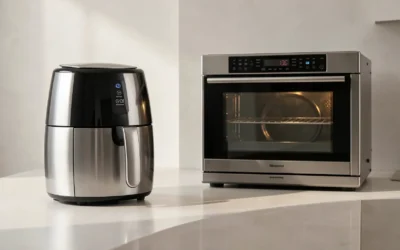
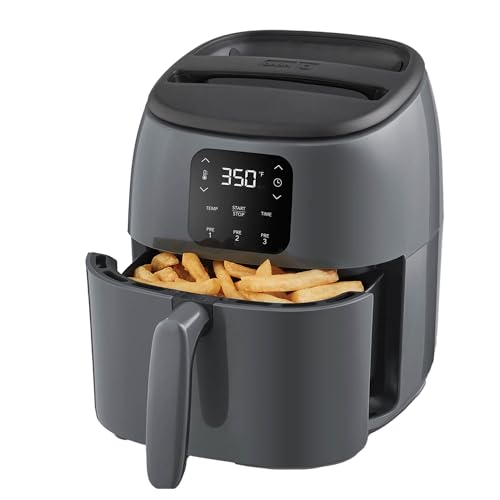
Both use close, exposed heating elements, so both stress glass more than a full oven — but many air fryers have even less clearance and stronger direct airflow, and their baskets aren’t shaped for glass dishes at all. For glass baking, a toaster oven with a flat rack and clearance is generally the more workable of the two, while air fryers are best used with their metal baskets and racks. If you want a countertop appliance for glass bakeware, prioritize cavity height; our best toaster oven and best air fryer guides compare them.
The Bottom Line
Glass can be safe in a toaster oven, but only oven-rated tempered or borosilicate glass, used within its temperature limit, kept clear of the close-set heating elements, and protected from sudden temperature swings. The toaster oven’s small cavity and exposed elements are what make it riskier for glass than a full oven — hot spots and thermal shock, not the average temperature, are the enemies. Skip mason jars, drinking glasses, and anything unmarked, avoid the broil setting, and reach for metal or oven-safe stoneware when clearance is tight. If your appliance keeps forcing risky choices, it may be too small for your needs. For picks, see our best toaster oven, best air fryer, and best dutch oven for bread baking guides.




Write Your Review
No reviews yet. Be the first to share your experience!