

TL;DR — A carbon steel baking sheet is a flat pan stamped from a thin sheet of steel that is roughly 99% iron and about 1% carbon — the same alloy family as a cast-iron skillet, just rolled thin and light. Because iron conducts heat evenly and the sheet is thin, it heats fast, browns aggressively, and holds a stable temperature. Bare carbon steel must be seasoned (baked with a thin layer of oil) to build a slick, rust-resistant, naturally non-stick surface. It out-browns aluminum and lasts for decades, but it needs hand-washing and drying. For picks, see our best baking sheets guide.
The HomeWhisk editorial team researches kitchen equipment by analyzing manufacturer specifications, metallurgy, and aggregated user reviews from major retailers and communities like Reddit’s r/castiron, r/Baking, and r/AskCulinary. This guide explains what carbon steel actually is, how a carbon steel baking sheet behaves in the oven, and whether it belongs in your kitchen.
Carbon steel quietly runs professional bakeries and bread kitchens, yet most home bakers have never used it. The confusion is understandable: “carbon steel” sounds industrial, the pans arrive looking dull gray or blue-black, and they don’t behave like the shiny aluminum trays most people grew up with. Here is the full picture — the metal, the seasoning, the trade-offs against aluminum and stainless, and the maintenance that keeps one working for a lifetime.
What Carbon Steel Actually Is
Carbon steel is an iron-carbon alloy. In cookware it typically contains about 99% iron and 1% carbon, sometimes with a trace of manganese. That small carbon content is the whole story: it makes the metal harder and stronger than pure iron while keeping it workable enough to roll into thin sheets. A carbon steel baking sheet is that thin sheet stamped and formed into a pan, usually 12 to 20 gauge thick.
The key contrast is with stainless steel, which adds roughly 10–20% chromium. That chromium forms an invisible passive oxide layer that resists rust — which is why stainless cookware needs no seasoning. Carbon steel has almost no chromium, so it will rust if left wet and bare. In exchange, it is denser and conducts heat more like cast iron, and it can be seasoned into a slick, food-releasing surface that stainless cannot match. If you want rust-proof convenience instead, our best stainless steel cookware guide covers that route.
You will also see “blue steel” or “blue carbon steel.” That blue-black color is not paint. It is an oxide layer created by heat-treating (bluing) the steel at the factory, which gives the bare pan a head start on rust resistance before you season it. Blue steel and plain black carbon steel are the same underlying alloy; the finish just changes how much initial protection you get.
How a Carbon Steel Baking Sheet Heats
Two properties make carbon steel a distinctive baking surface: its material and its thickness.
Iron is a good, even conductor of heat. It absorbs energy readily and spreads it across the pan without the pronounced hot spots you get from cheap, thin, warp-prone trays. Because a baking sheet is rolled thin, it also has low thermal mass, so it heats up fast and responds quickly when the oven cycles on and off.
The practical result is aggressive, even browning. Carbon steel radiates heat efficiently into whatever sits on it, so cookies spread and set with crisp bottoms, roasted vegetables caramelize, and pastry gets a deep, uniform base color. Professional bakers favor carbon steel and blued-steel pans for baguettes, croissants, and cookies precisely because the bottom crust develops so well. A darker seasoned surface absorbs oven heat even faster than shiny metal — the same reason dark pans brown more than light ones.
There is a flip side. That same efficiency means carbon steel can over-brown delicate items if you use a recipe calibrated for light aluminum. When switching from a shiny aluminum tray to seasoned carbon steel, drop the temperature by about 25°F or shorten the bake slightly and watch the bottoms. For crusty hearth breads, that heat retention is an asset — the same logic that makes a best dutch oven for bread baking produce a bakery crust applies to a preheated steel surface.
Seasoning: Why It Matters and How It Works
A bare carbon steel pan is not non-stick and will rust. Seasoning solves both problems, and it is the single concept a new owner must understand.
Seasoning is a layer of polymerized oil — not a coating that sits on top like Teflon, but oil that has been baked onto the metal until it chemically transforms into a hard, plastic-like film bonded to the surface. When you heat a thin layer of oil past its smoke point, the fat molecules cross-link into a durable, slick, water-repellent layer. Build up several thin layers and you get a bronze-to-black surface that releases food and shields the iron from moisture.
To season a new carbon steel baking sheet:
1. Scrub off the factory wax or oil. Most pans ship with a protective coating that must be washed off with hot, soapy water before first use. 2. Dry it completely, ideally with a minute on a warm burner or in the oven so no moisture remains. 3. Wipe on the thinnest possible layer of a high-smoke-point oil — grapeseed, canola, or flaxseed are common — then wipe it back off so the pan looks nearly dry. Too much oil turns sticky and streaky. 4. Bake it upside down at 400–450°F for about an hour, with foil below to catch drips, then let it cool in the oven. 5. Repeat two or three times. Each pass darkens and hardens the surface.
After that, the seasoning keeps improving with use as cooking oils continue to bake on. A kitchen scale helps you portion doughs and batters consistently once you are baking on it — our best kitchen scale guide covers reliable models.
Carbon Steel vs. Aluminum vs. Other Bakeware
The most common cross-shop is against aluminum, so here is the honest comparison.
Carbon steel vs. aluminum. Aluminum is the default for baking sheets because it is cheap, lightweight, rustproof, and a superb heat conductor. But aluminum is soft, dents easily, does not season, and thin trays warp with a loud pop under high heat. Carbon steel is heavier and denser, browns more aggressively, resists warping better, and develops a naturally non-stick seasoned surface — at the cost of needing hand-washing and seasoning. For everyday cookies and sheet-pan dinners, aluminum is easier; for serious browning, bread, and longevity, carbon steel wins. Our best baking sheets guide includes both materials.
Carbon steel vs. stainless steel. Stainless is rustproof and dishwasher-safe but conducts heat poorly on its own and never becomes non-stick, so food sticks and browning is patchy unless the pan is clad with aluminum or copper. Carbon steel browns better and releases better once seasoned, but demands maintenance. For pots and pans, many cooks keep stainless for its low upkeep — see our best stainless steel cookware set guide.
Carbon steel vs. the same metal as a skillet. A carbon steel baking sheet and a carbon steel frying pan are the same alloy in different shapes and behave the same way — both season, both rust if neglected. If you like how a carbon steel pan sears on the stovetop, you will recognize the browning on a baking sheet. Our best carbon steel pan for cooking guide covers the skillet side of the family.
Living With Carbon Steel: Care and Maintenance
Carbon steel rewards a simple routine and punishes neglect. The rules mirror cast iron.
- Hand-wash, never the dishwasher. Dishwasher detergent and prolonged water strip seasoning and cause rust. Wipe or rinse with hot water; a little mild soap is fine on modern seasoning despite old myths.
- Dry immediately and completely. Standing water is the enemy. Towel-dry, then heat the pan briefly to drive off any remaining moisture.
- Wipe on a whisper of oil after drying to protect the surface between uses.
- Skip acidic, long bakes on young seasoning. Tomato, lemon, and other acids can eat into fresh seasoning and impart a metallic taste. Well-established seasoning tolerates far more.
- Avoid harsh metal scrubbing that gouges the seasoning; a rust spot can simply be scoured off and the area re-seasoned.
Handled this way, a carbon steel baking sheet lasts decades and only gets better — a genuine buy-it-for-life piece.
Frequently Asked Questions
What is a carbon steel pan made of?
A carbon steel pan is an alloy of roughly 99% iron and about 1% carbon, sometimes with a trace of manganese. That composition puts it in the same family as cast iron but rolled far thinner, so it is lighter and heats faster. It contains almost no chromium, which is why — unlike stainless steel — it is not rust-proof and must be seasoned. The high iron content gives it the even heat retention and browning power that bakers and stovetop cooks prize.
Is a carbon steel baking sheet non-stick?
Not out of the box. Bare carbon steel is bare metal and food will stick to it. It becomes naturally non-stick only after seasoning — baking thin layers of oil onto the surface until they polymerize into a slick, food-releasing film. A well-seasoned carbon steel sheet releases cookies and roasted food comparably to a used cast-iron pan, and it keeps improving with use. It is not as effortlessly non-stick as Teflon, but it is far more durable and contains no synthetic coating.
What is the difference between a carbon steel and an aluminum baking sheet?
Aluminum is lightweight, cheap, rustproof, and an excellent conductor, but it is soft, dents, warps under high heat, and never becomes non-stick. Carbon steel is heavier and denser, browns more aggressively and evenly, resists warping, and develops a seasoned non-stick surface that lasts for decades. The trade-off is maintenance: carbon steel must be hand-washed, dried, and oiled, while aluminum can be tossed in the dishwasher. Choose aluminum for convenience, carbon steel for browning and longevity.
What is blue carbon steel?
Blue carbon steel is ordinary carbon steel that has been heat-treated at the factory until its surface forms a blue-black iron-oxide layer. That bluing gives the bare pan a measure of rust resistance and a head start on seasoning before you ever use it. Chemically the alloy is identical to plain black carbon steel; only the surface finish differs. Blued pans are popular for bread and pastry because they arrive semi-protected and season quickly.
Are carbon steel baking sheets safe, or do they have health risks?
Carbon steel is considered a safe, non-toxic cooking material. It has no synthetic non-stick coating, so there are no PFAS or Teflon-related concerns, and the seasoning is simply polymerized food-grade oil. The main thing it adds to food is a small amount of dietary iron, which is harmless for most people. The only real caveats are avoiding rust (keep it dry) and limiting long cooks with acidic foods on young seasoning, which can taste metallic. Once seasoned, it is one of the most inert surfaces available.
Can you use an uncoated carbon steel baking sheet right away?
You can, but you shouldn’t skip seasoning. An uncoated carbon steel sheet must first be scrubbed to remove the factory protective wax, then seasoned with a few baked-on layers of oil. Using it truly bare means food sticks badly and the pan starts to rust the moment it meets moisture. Season it first — three thin rounds of oil baked at 400–450°F — and it will release food and resist rust from the first real bake.
The Bottom Line
A carbon steel baking sheet is a thin, stamped iron-carbon pan that behaves like a lightweight cast-iron plate: fast to heat, superb at browning, and, once seasoned, naturally non-stick and effectively indestructible. It is the right choice for bakers who want deep, even bottom crusts on cookies, pastry, and bread and who don’t mind hand-washing, drying, and the occasional re-seasoning. If you want zero maintenance and dishwasher convenience, stick with aluminum or a clad stainless set. But if you value browning and buy-it-for-life durability, seasoned carbon steel is one of the best-value pans in any kitchen. For picks, see our best baking sheets and best carbon steel pan for cooking guides.

deBuyer
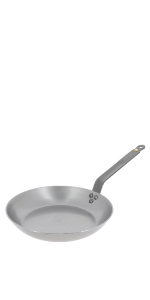
de Buyer MINERAL B 8" Carbon Steel Fry Pan - Naturally Non-Stick Searing
This French-made carbon steel pan develops a natural non-stick patina with use, heating faster and more evenly than cast iron while staying lighter for daily cooking. Buy it if you sear meat regularly, cook eggs frequently, or want cookware that improves over years of kitchen use.
Pros and Cons
Pros
- Heats more evenly than cast iron and responds faster to temperature changes, giving cooks precise control during high-heat searing.
- Seasoning improves with each use, creating a naturally non-stick surface without chemical coatings or reapplication requirements.
- Induction-compatible design works on all stovetop types without adapters or magnetic base concerns.
Cons
- Requires hand-washing only and careful seasoning maintenance; dishwashers and harsh soaps strip the non-stick patina.
- Initial seasoning process takes 20-30 minutes and must be repeated if the pan sits unused for extended periods.

Made In 13" Carbon Steel Wok | Swedish Professional Induction Compatible
This seasoned carbon steel wok delivers authentic wok hei with less oil and handles temperatures up to 1200F for restaurant-quality sears. Buy it if you want a naturally non-stick alternative to PTFE that works on any cooktop, including induction.
Pros and Cons
Pros
- Pre-seasoned from the factory, so it's ready for cooking immediately without multi-hour seasoning sessions.
- Induction-compatible magnetic base works seamlessly on all cooktop types, including newer induction ranges.
- Stainless steel handle stays cool during high-heat cooking and won't develop the patina that carbon steel handles do.
Cons
- Requires hand-washing and occasional re-seasoning to maintain the non-stick surface; not dishwasher-safe.
- Heavier than non-stick woks at 3.5 lbs, which takes adjustment if you're used to lighter aluminum woks.

deBuyer
de Buyer Blue Carbon Steel Crepe Pan 9.5 Inch French Made
This French-made carbon steel pan develops natural non-stick seasoning without chemical coatings, making it responsive to high heat and lighter than cast iron for precise crepe and tortilla cooking. Buy it if you want durable cookware that improves with age and eliminates synthetic coating concerns.
Pros and Cons
Pros
- Blue carbon steel seasoning process creates genuine non-stick performance without PTFE or PFOA chemicals.
- Thin, flat cooking surface with 7.75-inch usable area handles crepes, tortillas, and thin pancakes with precision.
- Welded steel handle stays cool and provides secure grip during flipping and sliding crepes onto plates.
- Heritage brand manufacturing since 1830 ensures engineering quality and long-term durability backed by culinary expertise.
Cons
- Requires initial seasoning and ongoing maintenance to maintain non-stick properties, unlike pre-coated non-stick pans.
- Smaller 7.75-inch cooking surface limits batch size compared to 12-inch versions, requiring more cooking rounds for large groups.

All-Clad D3 12 Inch Frying Pan with Lid - Professional Tri-Ply Stainless Steel
This 12-inch tri-ply frying pan sears, sautés, and simmers with even heat distribution across the entire cooking surface, thanks to its bonded aluminum core and professional-grade stainless steel construction. Buy it if you want a single versatile pan that handles everything from stovetop to oven and will outlast decades of daily use.
Pros and Cons
Pros
- The 3-ply bonded construction delivers professional-level heat control that home cooks typically find in restaurant kitchens.
- Riveted handle with chef's underhand grip design provides exceptional balance and control during intensive cooking tasks.
- Precision-engineered and third-party tested, backed by a limited lifetime warranty and five decades of manufacturing expertise.
- Included lid with flared edge ensures drip-free pouring and works as a steaming cover for versatile cooking techniques.
Cons
- Hand-washing is required to maintain the mirror-polished finish; dishwasher use can dull the surface over time.
- At 12 inches with a lid, this pan demands significant storage space and is heavier than non-bonded alternatives.
The Best Deals This Week*
-
de Buyer MINERAL B 8" Carbon Steel Fry Pan
$52.09
($75)Save $22.91 -
All-Clad D3 12 Inch Frying Pan with Lid
$119.95
($149.99)Save $30.04
*Deals are selected by our commerce team
deBuyer de Buyer MINERAL B 8" Carbon Steel Fry Pan - Naturally Non-Stick Searing
deBuyer
de Buyer MINERAL B 8" Carbon Steel Fry Pan - Naturally Non-Stick Searing
This French-made carbon steel pan develops a natural non-stick patina with use, heating faster and more evenly than cast iron while staying lighter for daily cooking. Buy it if you sear meat regularly, cook eggs frequently, or want cookware that improves over years of kitchen use.
$52.09 at AmazonEditors' Favorite
Brand Name: de Buyer Model Name: Mineral B 8-Inch Recommended Uses For Product: Searing, Sauteing, Reheating, Cooking Eggs Specific Uses For Product: Searing, Sautéing, Reheating, Cooking Eggs Global Trade Identification Number: 03011245610203 Manufacturer Warranty Description: Life time warranty Model Number: 5610.20 Manufacturer Part Number: 5610.20 Manufacturer: de Buyer Unit Count: 1.0 Count Item Type Name: de Buyer Carbon Steel Fry Pan Included Components: Frypan Best Sellers Rank: #10,825 in Kitchen & Dining (See Top 100 in Kitchen & Dining) #19 in Woks & Stir-Fry Pans ASIN: B00462QP0C Customer Reviews: 4.5 4.5 out of 5 stars (15,711) 4.5 out of 5 stars Color: Silver-Grey Material Type: Carbon Steel Product Care Instructions: Hand Wash Only Handle Material: Carbon Steel,Stainless Steel Has Nonstick Coating: Yes Is the item dishwasher safe?: No Metal Type: Carbon Steel Coating Description: Natural Non-Stick, Seasoned Additional Features: Induction Stovetop Compatible Compatible Devices: Smooth Surface Induction Maximum Temperature: 400 Degrees Fahrenheit Is Oven Safe: Yes Shape: Round Capacity: 0.4 Liters Item Weight: 0.9 Kilograms Brand: de Buyer Material: Carbon Steel Special Feature: Induction Stovetop Compatible
Shop NowMade In 13" Carbon Steel Wok | Swedish Professional Induction Compatible
Made In 13" Carbon Steel Wok | Swedish Professional Induction Compatible
This seasoned carbon steel wok delivers authentic wok hei with less oil and handles temperatures up to 1200F for restaurant-quality sears. Buy it if you want a naturally non-stick alternative to PTFE that works on any cooktop, including induction.
$149.00 at AmazonGreat Value
Brand Name: Made In Model Name: 13" Seasoned Carbon Steel Wok Recommended Uses For Product: Stir Frying Specific Uses For Product: Chinese cooking Model Number: COOK-12-WOK-CN-S Manufacturer Part Number: COOK-12-WOK-CN-S Manufacturer: Made In Unit Count: 1.0 Count Item Type Name: 13" Seasoned Carbon Steel Wok Included Components: Seasoned Carbon Steel Wok Best Sellers Rank: #10,175 in Kitchen & Dining (See Top 100 in Kitchen & Dining) #17 in Woks & Stir-Fry Pans ASIN: B0DXHKKR3M Customer Reviews: 4.2 4.2 out of 5 stars (391) 4.2 out of 5 stars Color: Black Material Type: Carbon Steel Product Care Instructions: Hand Wash Only Handle Material: Stainless Steel Has Nonstick Coating: Yes Is the item dishwasher safe?: No Metal Type: Carbon Steel Coating Description: Seasoned Carbon Steel Additional Features: Electric Stovetop Compatible, Gas Stovetop Compatible, Induction Stovetop Compatible Compatible Devices: Gas, Smooth Surface Induction, Smooth Surface Non Induction Maximum Temperature: 1200 Degrees Fahrenheit Is Oven Safe: Yes Shape: conical Capacity: 13.5 Cubic Inches Item Weight: 2.45 Kilograms Brand: Made In Material: Carbon Steel Special Feature: Electric Stovetop Compatible, Gas Stovetop Compatible, Induction Stovetop Compatible
Shop NowdeBuyer de Buyer Blue Carbon Steel Crepe Pan 9.5 Inch French Made
deBuyer
de Buyer Blue Carbon Steel Crepe Pan 9.5 Inch French Made
This French-made carbon steel pan develops natural non-stick seasoning without chemical coatings, making it responsive to high heat and lighter than cast iron for precise crepe and tortilla cooking. Buy it if you want durable cookware that improves with age and eliminates synthetic coating concerns.
$49.78 at AmazonBrand Name: de Buyer Model Name: HIC UPC: 400005047046 791769476273 400005046704 Global Trade Identification Number: 03011245303242 Manufacturer Warranty Description: 90 Day Warranty Model Number: 2465 Manufacturer Part Number: 530324 Manufacturer: de Buyer Unit Count: 1.0 Count Item Type Name: HIC Crepe Pan, Blue Steel, Made in France, 8-Inch Cooking Surface, 9.5-Inches Rim to Rim Best Sellers Rank: #26,809 in Kitchen & Dining (See Top 100 in Kitchen & Dining) #10 in Crepe Pans ASIN: B0019N4ZHQ Customer Reviews: 4.2 4.2 out of 5 stars (2,438) 4.2 out of 5 stars Color: Black Material Type: Carbon Steel Product Care Instructions: Hand Wash Only Handle Material: Carbon Steel,Stainless Steel Has Nonstick Coating: Yes Is the item dishwasher safe?: No Metal Type: Carbon Steel Coating Description: Naturally Non-Stick Additional Features: Non Stick, Oven Safe Compatible Devices: Smooth Surface Non Induction Maximum Temperature: 500 Degrees Fahrenheit Is Oven Safe: Yes Shape: Round Capacity: 1 Liters Item Weight: 0.93 Kilograms Brand: de Buyer Material: Carbon Steel Special Feature: Non Stick, Oven Safe
Shop NowAll-Clad D3 12 Inch Frying Pan with Lid - Professional Tri-Ply Stainless Steel
All-Clad D3 12 Inch Frying Pan with Lid - Professional Tri-Ply Stainless Steel
This 12-inch tri-ply frying pan sears, sautés, and simmers with even heat distribution across the entire cooking surface, thanks to its bonded aluminum core and professional-grade stainless steel construction. Buy it if you want a single versatile pan that handles everything from stovetop to oven and will outlast decades of daily use.
$119.95 at AmazonBrand Name: All-Clad Model Name: D3 Stainless Steel Frying Pan with Lid Recommended Uses For Product: Frying, Pan Roasting Specific Uses For Product: Kadai, Tadka UPC: 011644901318 Global Trade Identification Number: 00011644901318 Manufacturer Warranty Description: Limited Lifetime Warranty - All-Clad Cookware Model Number: 11644901318 Manufacturer Part Number: 11644901318 Manufacturer: Groupe SEB Unit Count: 1.0 Count Item Type Name: D3 Stainless Steel Frying Pan with Lid, Tri-Ply Bonded Best Sellers Rank: #2,300 in Kitchen & Dining (See Top 100 in Kitchen & Dining) #4 in Woks & Stir-Fry Pans ASIN: B00FUF5K8W Customer Reviews: 4.6 4.6 out of 5 stars (8,778) 4.6 out of 5 stars Color: Silver Material Type: Stainless Steel Product Care Instructions: Hand Wash Recomended, Oven Safe up to 600°F Handle Material: Stainless Steel Has Nonstick Coating: No Is the item dishwasher safe?: No Metal Type: Stainless Steel, Aluminum Coating Description: Stainless Steel Additional Features: Oven Safe Compatible Devices: Gas, Smooth Surface Induction Maximum Temperature: 600 Degrees Fahrenheit Is Oven Safe: Yes Shape: Bowl/Pan Capacity: 4.5 Pounds Item Weight: 4.74 Pounds Brand: All-Clad Material: Stainless Steel Special Feature: Oven Safe
Shop Now



Write Your Review
No reviews yet. Be the first to share your experience!