

TL;DR — How to clean an oven thermometer with vinegar is mostly about method: use the right touch, avoid shortcuts that damage the tool, and build the habit into normal kitchen cleanup. When this turns into a purchase decision, compare best dutch oven for bread baking, best toaster oven, and best baking sheets before narrowing your shortlist.
The HomeWhisk approach is research-first: compare construction, usability, cleaning, and long-term complaints before recommending a direction. For baking tools, sizing, material, accuracy, cleaning, and storage usually decide whether a tool stays useful or gets replaced.


Efeng
Oven Temperature Monitoring for Baking and Roasting: Efeng Large Dial Hanging Oven Thermometer, 2-Pack, NSF Rated to 600F
This two-pack of hanging dial thermometers sits inside an electric or gas oven and shows the real cavity temperature from 150 to 600 Fahrenheit, so you bake by actual heat instead of a dial setting. Buy it if your oven runs hot or cold and your cakes, breads, or roasts come out inconsistent, and you want one unit per rack level to check for hot spots.
Pros and Cons
Pros
- Wide 150 to 600 Fahrenheit range covers everything from proofing and warming to broiling.
- Rated for both oven and grill use, so one thermometer works in either setting.
- Two-pack means a spare on hand or simultaneous readings at different rack heights.
- Marked zones for warming, baking or roasting, and broiling give a quick visual reference without reading exact numbers.
Cons
- Analog dials need a minute or two to settle, so readings lag behind fast temperature swings during preheat.
- No calibration adjustment, so if a unit reads off you cannot correct it and must account for the offset yourself.
AWLKIM
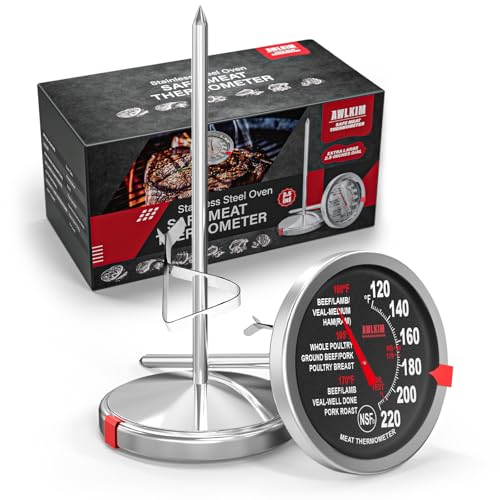
Oven-Safe Meat Thermometer for Roasts and Grilling: AWLKIM 2-Pack Analog Dial, No Battery Needed
This two-pack of analog dial thermometers stays in the meat while it cooks in ovens up to 500°F, giving continuous temperature readings without batteries or wires. It suits home cooks who roast turkey or multiple cuts at once and want a simple, dishwasher-safe backup always on hand.
Pros and Cons
Pros
- No batteries or charging, so it works every holiday cook without maintenance.
- NSF-certified stainless steel body resists rust from water, oil, and grease.
- Having a spare in the pack means a bent or lost probe does not stop dinner.
- Dishwasher-safe cleanup after raw poultry saves scrubbing time.
Cons
- The 120°F to 220°F range is too narrow for low-temp poultry pull points below 120°F or high-heat candy stages above 220°F.
- Analog dials are less precise than digital instant-reads, and they can drift out of calibration over time.

Taylor
Check Real Oven Temperature for Even Baking and Roasting: Taylor Oven Thermometer, 100 to 600 F Dial
This Taylor dial thermometer sits or hangs inside your oven and reads actual cavity temperature from 100 to 600 degrees Fahrenheit, exposing the calibration drift and hot spots that ruin cakes and roasts. Buy it if your baking browns unevenly or your oven has never been verified, since it costs almost nothing to confirm what the built-in display is really doing.
Pros and Cons
Pros
- Oven safe construction is built to live inside the cavity permanently rather than being pulled out between uses.
- The 100 to 600 degree Fahrenheit range covers low slow roasting through high heat pizza and bread baking.
- Two mounting options mean it works in ovens with crowded racks or shallow clearance.
- Roughly three inch dial face is readable through the oven door window on most ranges.
Cons
- Analog dials show general temperature rather than exact degrees, so fine increments require a close look.
- You have to check it visually since there is no alarm, timer, or remote readout.
Efeng Oven Temperature Monitoring for Baking and Roasting: Efeng Large Dial Hanging Oven Thermometer, 2-Pack, NSF Rated to 600F
Efeng
Oven Temperature Monitoring for Baking and Roasting: Efeng Large Dial Hanging Oven Thermometer, 2-Pack, NSF Rated to 600F
This two-pack of hanging dial thermometers sits inside an electric or gas oven and shows the real cavity temperature from 150 to 600 Fahrenheit, so you bake by actual heat instead of a dial setting. Buy it if your oven runs hot or cold and your cakes, breads, or roasts come out inconsistent, and you want one unit per rack level to check for hot spots.
$13.80 at AmazonEditors' Favorite
Color: Silver Product Group: BISS Binding: Misc.
Shop NowAWLKIM Oven-Safe Meat Thermometer for Roasts and Grilling: AWLKIM 2-Pack Analog Dial, No Battery Needed
AWLKIM
Oven-Safe Meat Thermometer for Roasts and Grilling: AWLKIM 2-Pack Analog Dial, No Battery Needed
This two-pack of analog dial thermometers stays in the meat while it cooks in ovens up to 500°F, giving continuous temperature readings without batteries or wires. It suits home cooks who roast turkey or multiple cuts at once and want a simple, dishwasher-safe backup always on hand.
$9.99 at AmazonGreat Value
Color: 2 Pack Black Dimensions: 5 x 2.5 x 2.5 inches Weight: 0.0875 Pounds Product Group: Kitchen Binding: Unknown Binding
Shop NowTaylor Check Real Oven Temperature for Even Baking and Roasting: Taylor Oven Thermometer, 100 to 600 F Dial
Taylor
Check Real Oven Temperature for Even Baking and Roasting: Taylor Oven Thermometer, 100 to 600 F Dial
This Taylor dial thermometer sits or hangs inside your oven and reads actual cavity temperature from 100 to 600 degrees Fahrenheit, exposing the calibration drift and hot spots that ruin cakes and roasts. Buy it if your baking browns unevenly or your oven has never been verified, since it costs almost nothing to confirm what the built-in display is really doing.
$9.75 at AmazonColor: Various Size: 3.75 in. x 8 in. x 5 in. Dimensions: 9 x 5 x 8 inches Product Group: Kitchen Binding: Kitchen
Shop NowCleaning an Oven Thermometer With Vinegar: The Essentials
Cleaning a oven thermometer with vinegar well is mostly about matching the method to the material and doing it before residue sets. The goal is to lift food and oils without stripping a finish or dulling a surface. Skip the dishwasher when the material calls for it, and never let rust on bare steel start from lazy rinsing.
Step By Step
1. Let the oven thermometer with vinegar cool to a safe temperature before washing. 2. Loosen residue with warm water and the gentlest tool that works. 3. Wash with a mild detergent unless the material forbids it, then rinse fully. 4. Dry immediately and completely — trapped moisture is what causes measurements that drift out of true.
How To Know You Did It Right
The result should be practical and repeatable: the baking tool should work cleanly, feel controlled, and show no signs of measurements that drift out of true. If the same issue returns quickly, the cause is usually a missed care step — not the tool itself.
Common Mistakes To Avoid
The usual failure is treating a durable baking tool as indestructible. Harsh shortcuts lead to measurements that drift out of true, and finishes that scratch off. Do not assume pricier gear removes the need for care, either — technique matters more than the badge. Start your shortlist with best dutch oven for bread baking, best toaster oven, and best baking sheets before narrowing by budget.
Related Product Guides
If this topic is part of a buying decision, these are the HomeWhisk guides most closely tied to it:
- best dutch oven for bread baking
- best toaster oven
- best baking sheets
- best kitchen scale
- best meat thermometer
- best mixing bowls
- best cutting board
Frequently Asked Questions
What is the right way to clean an oven thermometer with vinegar?
Cleaning a oven thermometer with vinegar well is mostly about matching the method to the material and doing it before residue sets. Do it consistently and you avoid warping in a hot oven.
Is a premium baking tool worth it?
Only if you use it enough to notice better control, durability, or cleanup regularly. Occasional users are well served by a mid-range pick like those in best baking sheets.
Who is this most useful for?
Mainly beginners baking their first loaves, and weekend bakers. If that is you, treat heat conductivity as a requirement rather than a nice-to-have.
How do I keep it in good shape?
Build avoiding thermal shock, and drying fully before storage into normal cleanup. Light, consistent care prevents rust on bare steel far better than occasional deep effort.
What should I avoid?
Avoid buying by brand alone, ignoring avoiding thermal shock, and oversizing for your space. Each invites measurements that drift out of true down the line.
The Bottom Line
For most home cooks, the best choice is the one that removes friction without adding maintenance you will ignore. Start with your use case, then cross-check best dutch oven for bread baking, best toaster oven, and best baking sheets.

Write Your Review
No reviews yet. Be the first to share your experience!