

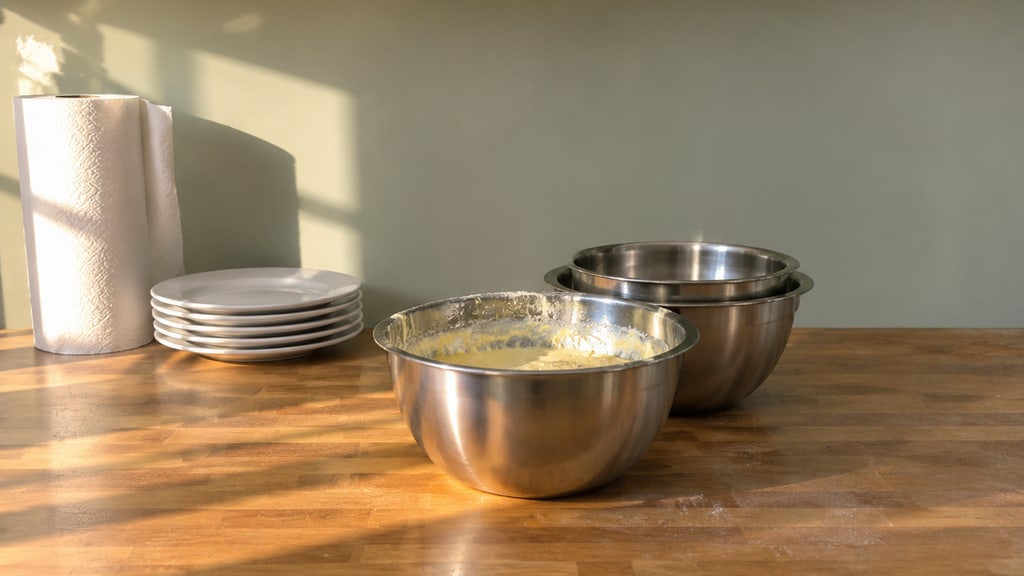
TL;DR — Stainless steel mixing bowls rust when their protective chromium-oxide layer gets damaged or overwhelmed. The usual culprits are deep scratches from metal utensils and abrasive scrubbers, prolonged contact with salt and acidic foods, sitting wet against other steel (dishwashers are the worst offender), and cheaper low-chromium alloys. Most “rust” is actually surface pitting or transferred iron that scrubs off with a baking-soda paste or a little vinegar. To prevent it, hand-wash, dry immediately, and avoid soaking. For durable replacements, see our best mixing bowls guide.
The HomeWhisk editorial team researches kitchen equipment by analyzing manufacturer specifications, material behavior, and aggregated user reviews from major retailers and cooking communities like Reddit r/AskCulinary and r/Cooking. Our conclusions are based on how metals actually behave, not marketing claims.
Rust on a stainless steel bowl feels like a contradiction — “stainless” is right there in the name. But stainless steel isn’t rust-proof; it’s rust-resistant, and that resistance depends on a microscopic layer that can be worn away. Understanding how that layer works explains every rust problem you’ll ever see on a bowl, and points directly to the fix. If you’re deciding whether to clean up your current set or replace it, our best mixing bowls guide covers the alloys that hold up best.
Why “Stainless” Steel Rusts at All
Stainless steel is iron alloyed with at least 10.5% chromium. That chromium reacts with oxygen in the air to form an invisible, self-repairing film of chromium oxide — the “passive layer.” This film is what actually protects the iron underneath from moisture. Scratch it and it normally re-forms in seconds, as long as oxygen can reach the bare metal.
Rust appears when that self-repair fails. Two things break it:
- Physical damage faster than it can heal, such as a deep gouge packed with food debris that seals out oxygen.
- Chlorides — chiefly salt — which attack the passive layer and create tiny pits where iron is exposed and corrosion takes hold.
Most kitchen bowls are made from 18/8 or 18/10 steel (18% chromium, 8–10% nickel), which resists corrosion well. Cheaper bowls made from 18/0 or unmarked “kitchen grade” steel have far less nickel and sometimes less chromium, so their passive layer is weaker and they pit more easily. This is the single biggest reason two similar-looking bowls behave differently, and why alloy grade is worth checking before you buy. Our best mixing bowls picks note the steel grade for each.
The Real Causes of Rust on Your Bowls
Using metal utensils improperly
Dragging a metal whisk, spoon, or the beaters of a hand mixer hard against the bowl wall scratches through the passive layer. A single scratch usually heals, but repeated gouging in the same spot — plus food acids sitting in the groove — outpaces repair and starts a rust streak. Silicone or nylon tools eliminate this entirely, which is why bakers who mix daily tend to switch.
Cleaning with abrasive materials
Steel wool and coarse scouring pads are the fastest way to wreck a bowl’s finish. They don’t just remove food; they tear open the chromium-oxide film and can even embed tiny iron particles from the pad itself into the surface. Those embedded particles rust and look like the bowl is corroding from within. Non-scratch sponges and a soft cloth are all stainless needs.
Improper storage and neglected water spots
Nesting bowls while still damp traps moisture between them with no airflow — a classic setup for pitting, especially where a steel rim rests inside another bowl (metal-on-metal contact concentrates corrosion). Hard-water spots left to dry leave mineral and chloride residue that slowly etches the surface. Drying immediately and storing bowls fully dry solves both.
The dishwasher problem
Dishwasher detergents are highly alkaline and often contain chlorides, and the long wet cycle plus other steel items touching the bowl is a near-perfect corrosion environment. Many bowls labeled “dishwasher safe” survive it, but budget bowls frequently come out spotted or rust-flecked. If a bowl matters to you, hand-washing is the safe choice. This same logic applies across your kitchen — the metal tools you want to last, from bowls to your best baking sheets and even a precision best kitchen scale platform, all prefer hand-washing.
Salt, acid, and temperature swings
Leaving a salty brine, a lemon-heavy marinade, or a tomato mixture sitting in a bowl for hours concentrates chlorides and acids against the steel long enough to defeat the passive layer, producing pinhole pits. Rapid temperature changes — pulling a bowl from the freezer and filling it with hot water — can also stress the finish over time. Mix and marinate in the bowl, but transfer acidic or salty foods to glass or a lidded container for storage. For that, a set of the best food storage containers keeps corrosive foods off your steel.
How to Remove Rust Marks From a Stainless Bowl
Good news: most surface rust comes off completely. Work from gentlest to strongest.
1. Baking-soda paste. Mix baking soda with a little water into a paste, spread it on the spots, let it sit 10–15 minutes, then scrub with a non-scratch sponge in the direction of the grain. This lifts most light rust and transferred iron. 2. White vinegar. Soak a cloth in white vinegar, lay it over stubborn spots for 5–10 minutes, then wipe. The mild acid dissolves iron oxide. Rinse thoroughly afterward so no acid lingers. 3. Bar Keepers Friend or a similar oxalic-acid cleanser. For deeper staining, make a paste, rub gently along the grain, then rinse well. Oxalic acid is specifically effective on iron stains. 4. Rinse, dry, and re-passivate. After cleaning, rinse completely, dry immediately, and leave the bowl exposed to air for an hour or so. Clean, dry steel rebuilds its chromium-oxide layer on its own.
Avoid the popular tip of spraying WD-40 on food bowls — it can loosen surface rust, but it’s a petroleum product you then have to fully degrease before the bowl touches food, so it’s not worth it here. If pitting has left visible pinholes that trap food and keep rusting, the passive layer is permanently compromised in that spot and it’s time to replace the bowl; start with our best mixing bowls guide.
Preventing Rust for Good
Prevention is almost entirely about moisture and abrasion:
- Hand-wash with a soft sponge and mild soap; skip steel wool and the dishwasher for bowls you value.
- Dry immediately and never nest bowls while damp.
- Don’t store salty or acidic foods in steel; transfer them out.
- Switch to silicone or wood utensils to protect the finish.
- Buy 18/8 or 18/10 steel rather than unmarked budget bowls.
These habits protect every metal tool in your kitchen. The same care that keeps bowls spotless extends the life of your best baking sheets, and pairing bowls with non-metal prep surfaces like a good best cutting board reduces the scratching that starts corrosion in the first place.
Frequently Asked Questions
Are stainless steel mixing bowls dishwasher safe?
Many are labeled dishwasher safe and will survive it, but the dishwasher is genuinely the harshest environment a bowl faces: alkaline, chloride-containing detergent, a long wet cycle, and other steel items resting against it. Higher-grade 18/8 and 18/10 bowls tolerate it better; thin budget bowls often emerge spotted or rust-flecked. If you want a bowl to stay pristine for years, hand-wash and dry it. Reserve the dishwasher for bowls you’re not precious about. Our best mixing bowls guide flags which sets are built to handle machine washing.
Can stainless steel bowls go in the microwave?
No. Metal reflects microwaves rather than absorbing them, so the food won’t heat, and the reflected energy can arc against the oven walls or the metal edges, potentially damaging the microwave. This is also why a metal bowl “won’t heat” — it physically can’t in a microwave. Use glass or microwave-safe ceramic for heating, and keep stainless bowls for mixing, whipping, and chilling, which is where their thermal conductivity actually helps.
Why does my new bowl already have rust spots?
Two common reasons. First, cheap low-nickel steel (18/0 or unmarked) has a weaker passive layer and pits easily out of the box. Second, manufacturing residue or iron particles from tooling can be left on the surface and rust after the first wash — this “surface contamination” scrubs off with a baking-soda or oxalic-acid paste and usually doesn’t return once cleaned. If spots keep reappearing on a new bowl despite proper care, the alloy is likely the problem and it’s worth returning.
Is the rust dangerous to my food?
Small amounts of surface rust are not considered a meaningful health hazard, but you shouldn’t ignore it. Rust flakes taste metallic, and deep pitting harbors food debris that’s hard to clean, raising a hygiene concern. Clean surface rust off before using the bowl. If pitting has created pinholes or the rust returns no matter what you do, retire the bowl for food use.
What’s the difference between rust and discoloration?
Not all marks are rust. Heat and minerals can leave a rainbow or bluish tint (harmless oxidation), and hard water leaves white chalky spots. True rust is orange-brown and often accompanied by tiny pits you can feel. Discoloration wipes away with vinegar or a stainless cleaner and doesn’t damage the metal, while rust indicates the passive layer has been breached and needs the removal steps above.
Do glass or plastic bowls avoid this problem entirely?
Yes — glass and plastic don’t rust because there’s no iron to corrode. Glass bowls are microwave- and oven-safe (great when you actually need to heat contents) but are heavier and can break, while plastic is light but scratches and stains. Many bakers keep a mix: stainless for whipping and chilling, glass for heating, plastic for quick tasks. If you’re rebuilding your set, our best mixing bowls guide compares all three materials.
The Bottom Line
Your mixing bowls are rusting because stainless steel’s protection is a thin, self-healing chromium-oxide layer — and scratches, salt, acid, standing moisture, and the dishwasher can all overwhelm it, especially on cheaper low-nickel alloys. The fix for existing rust is a baking-soda, vinegar, or oxalic-acid paste scrubbed along the grain, followed by immediate drying so the passive layer rebuilds. Prevention comes down to hand-washing, drying at once, keeping salty and acidic foods out of the bowl, and using non-metal utensils. If a bowl has developed permanent pitting, replace it with a quality 18/8 or 18/10 set. For durable picks and the surrounding baking gear, see our best mixing bowls, best baking sheets, and best kitchen scale guides.

COOK WITH COLOR
Food Prep and Storage Mixing Bowls with Lids, COOK WITH COLOR Sage Embossed Set
This COOK WITH COLOR set handles food prep, serving, and storage while nesting bowls and tight-fitting lids reduce cabinet clutter and simplify transport. It suits home cooks who want microwave-safe, freezer-safe plastic bowls for fruit, salads, snacks, and leftovers.
Pros and Cons
Pros
- The set combines six plastic bowls with six lids for prep, serving, storage, and transport.
- BPA-free polypropylene provides a food-safe material for regular kitchen use.
- Microwave, freezer, and top-rack dishwasher compatibility adds practical versatility.
- Nesting storage and a sage embossed finish keep the set organized and visually coordinated.
Cons
- The bowls are plastic rather than glass or metal, which may not suit buyers seeking heavier cookware.
- The product data lists five capacities even though the set includes six bowls, so size selection is not fully clear.

Nuogo
Extra Large 8 Qt Stainless Steel Mixing Bowls for Big Batch Baking and Holiday Meal Prep (Set of 4)
This set of four 13.4-inch stainless steel bowls gives you 8 quarts of mixing space per bowl, enough for large bread dough batches, family-sized salads, and holiday fillings without spills. Best for home bakers and cooks who regularly prepare food for gatherings or need bowls that won't slide during heavy mixing.
Pros and Cons
Pros
- 8-quart capacity handles large recipes that smaller bowls can't accommodate, confirmed by buyers using them for bread dough and batch cooking.
- Heavy gauge stainless steel stays put during mixing without needing a non-slip base, according to reviewer feedback.
- Mirror finish resists staining from tomato sauces and turmeric-based marinades better than matte stainless steel.
Cons
- Some units arrive with sharp unpolished edges in hidden spots like the rim underside, requiring careful inspection before first use.
- 13.4-inch diameter may not fit inside standard refrigerator shelves if you need to chill mixed ingredients overnight.

COOK WITH COLOR
Mixing and Baking Prep: COOK WITH COLOR 6-Piece Nesting Plastic Bowl Set with Pour Spouts
This six-piece plastic mixing bowl set supports cooking and baking with non-slip bases, handles, pour spouts, and interior measurement markings, while nesting saves storage space. It suits home cooks who want easy measuring, controlled pouring, and top-rack dishwasher cleanup in one organized set.
Pros and Cons
Pros
- Six bowls provide multiple sizes for mixing, measuring, and ingredient preparation.
- Handles, pour spouts, and non-slip construction improve control during everyday use.
- Interior measurement markings add convenient measuring directly inside each bowl.
- The plastic set is freezer safe and top-rack dishwasher safe for practical kitchen use.
Cons
- The bowls are specified for top-rack dishwasher cleaning, not unrestricted dishwasher use.
- Exact bowl dimensions and individual weights are not provided in the product data.

Cuisinart
3-Piece Stainless Steel Nesting Mixing Bowl Set for Baking, Cooking & Food Prep (1.5, 3, 5 Qt)
This three-bowl stainless steel set handles everyday mixing, prepping, and storage with dishwasher-safe cleanup and refrigerator-freezer compatibility. Home bakers and meal preppers who need durable, space-saving bowls that go from counter to fridge without transferring containers should consider this set.
Pros and Cons
Pros
- High-quality stainless steel withstands daily use without denting or rusting, maintaining a clean appearance over time.
- Three versatile sizes cover most home cooking and baking tasks, from whisking eggs to tossing large salads.
- Dishwasher-safe construction and smooth surface make cleanup faster than textured or coated bowls.
Cons
- Lacks non-slip bases or handles, so bowls may slide on smooth countertops during vigorous mixing.
- No lids included, requiring separate plastic wrap or covers for refrigerator storage.
COOK WITH COLOR Food Prep and Storage Mixing Bowls with Lids, COOK WITH COLOR Sage Embossed Set
COOK WITH COLOR
Food Prep and Storage Mixing Bowls with Lids, COOK WITH COLOR Sage Embossed Set
This COOK WITH COLOR set handles food prep, serving, and storage while nesting bowls and tight-fitting lids reduce cabinet clutter and simplify transport. It suits home cooks who want microwave-safe, freezer-safe plastic bowls for fruit, salads, snacks, and leftovers.
Check PriceEditors' Favorite
Color: Sage Embossed Size: 12 Pc. Dimensions: 12 x 12 x 5.5 inches Product Group: Kitchen Binding: Kitchen
Shop NowNuogo Extra Large 8 Qt Stainless Steel Mixing Bowls for Big Batch Baking and Holiday Meal Prep (Set of 4)
Nuogo
Extra Large 8 Qt Stainless Steel Mixing Bowls for Big Batch Baking and Holiday Meal Prep (Set of 4)
This set of four 13.4-inch stainless steel bowls gives you 8 quarts of mixing space per bowl, enough for large bread dough batches, family-sized salads, and holiday fillings without spills. Best for home bakers and cooks who regularly prepare food for gatherings or need bowls that won't slide during heavy mixing.
$37.99 at AmazonGreat Value
Number of Pieces: 4 Brand Name: Nuogo Specific Uses For Product: Salad, Pasta, Dinner, Pasta, Soup, Noodle, Dessert, Cereal, Snack, Ice Cream, Rice, Beans, Chili, Stews, Risotto, Casserole, Appetizers Set Name: 4 Manufacturer: Nuogo Model Number: AO-Nuogo-4638 Manufacturer Part Number: AO-Nuogo-4638 Item Weight: 3.45 Pounds Best Sellers Rank: #21,541 in Kitchen & Dining (See Top 100 in Kitchen & Dining) #111 in Mixing Bowls ASIN: B0D7LN13MC Customer Reviews: 4.2 4.2 out of 5 stars (242) 4.2 out of 5 stars Other Special Features of the Product: Dishwasher Safe, Durable Color: Silver Product Style: Classic Shape: Round Pattern: Solid Bowl Material: Stainless Steel Product Care Instructions: Dishwasher Safe Is the item dishwasher safe?: Yes Is the item microwaveable?: No Material Type: Stainless Steel Capacity: 8 Quarts Item Dimensions W x H: 12.99"W x 4.13"H Size: 13 Inch (8 Qt) Brand: Nuogo Style: Classic
Shop NowCOOK WITH COLOR Mixing and Baking Prep: COOK WITH COLOR 6-Piece Nesting Plastic Bowl Set with Pour Spouts
COOK WITH COLOR
Mixing and Baking Prep: COOK WITH COLOR 6-Piece Nesting Plastic Bowl Set with Pour Spouts
This six-piece plastic mixing bowl set supports cooking and baking with non-slip bases, handles, pour spouts, and interior measurement markings, while nesting saves storage space. It suits home cooks who want easy measuring, controlled pouring, and top-rack dishwasher cleanup in one organized set.
Check PriceColor: Mint Size: 6 Piece Non-Slip Dimensions: 11 x 11 x 7.28 inches Product Group: Kitchen Binding: Kitchen
Shop NowCuisinart 3-Piece Stainless Steel Nesting Mixing Bowl Set for Baking, Cooking & Food Prep (1.5, 3, 5 Qt)
Cuisinart
3-Piece Stainless Steel Nesting Mixing Bowl Set for Baking, Cooking & Food Prep (1.5, 3, 5 Qt)
This three-bowl stainless steel set handles everyday mixing, prepping, and storage with dishwasher-safe cleanup and refrigerator-freezer compatibility. Home bakers and meal preppers who need durable, space-saving bowls that go from counter to fridge without transferring containers should consider this set.
$39.99 at AmazonNumber of Pieces: 6 Brand Name: Cuisinart Specific Uses For Product: 5 Quart Bowl Lid, Baking, Cooking, Food Prep, Serving Included Components: 1.5 Quart Bowl, 3 Quart Bowl, 5 Quart Bowl, Lid Global Trade Identification Number: 00086279039842, 10086279039849 Recommended Uses For Product: Baking, Cooking, Food Prep Unit Count: 1.0 Count Set Name: 3-Piece Nesting Bowl Set Manufacturer: Cuisinart UPC: 086279274229 086279039842 Model Number: CTG-00-SMB Manufacturer Part Number: CTG-00-SMB Item Type Name: 3-Piece Nesting Bowl Set Item Weight: 3.9 Pounds Best Sellers Rank: #2,308 in Kitchen & Dining (See Top 100 in Kitchen & Dining) #17 in Mixing Bowls ASIN: B004YZEO9K Color: Stainless Steel Product Style: 3-Piece Nesting Bowl Set Shape: Bowl Theme: Kitchen and Dining"}"/oriquez"Kitchen and Dining Pattern: Solid Occasion: kitchen Bowl Material: Stainless Steel Product Care Instructions: Dishwasher Safe Is the item dishwasher safe?: Yes Is the item microwaveable?: No Material Type: Stainless Steel Capacity: 5 Quarts Item Dimensions W x H: 10.5"W x 10.5"H Size: 3-Piece Nesting Bowl Set Other Special Features of the Product: Dishwasher Safe, Freezer Safe, Stackable, Stainless Steel Construction Brand: Cuisinart Style: 3-Piece Nesting Bowl Set
Shop Now




Write Your Review
No reviews yet. Be the first to share your experience!