

TL;DR — VG-10 is a high-carbon Japanese stainless steel developed by Takefu Special Steel, prized for kitchen knives because it balances excellent sharpness, good edge retention, and stain resistance. It contains roughly 1% carbon plus chromium (for rust resistance), vanadium, cobalt, and molybdenum, hardened to about 60-61 HRC. That hardness lets it take a very fine, long-lasting edge, but also makes it more chip-prone and harder to sharpen than softer Western steels. It is the classic core steel in Damascus-clad Japanese knives. For picks, see our best japanese chef knife guide.
The HomeWhisk editorial team researches kitchen equipment by analyzing manufacturer specifications, metallurgy, and aggregated owner feedback from major retailers and communities like Reddit r/chefknives. VG-10 is one of the most name-dropped steels in kitchen cutlery, splashed across product pages as a mark of quality — but shoppers rarely get a straight explanation of what it actually is or what its hardness buys and costs them. Here is the real breakdown, from composition to how it behaves on your cutting board.
What VG-10 Actually Is
VG-10 is a stainless tool steel made by Takefu Special Steel in Fukui, Japan. The “V” stands for gold (the Japanese “gold” grade), and “10” reflects its composition class; it is sometimes labeled V-Gold 10. It was designed specifically for high-end cutting tools, and it became the default premium core steel for Japanese kitchen knives sold to Western cooks.
Its behavior comes down to its alloy recipe. Approximate composition by weight:
- Carbon ~0.95-1.05% — the key to hardness and edge retention. This is a genuinely high-carbon steel.
- Chromium ~14.5-15% — enough to make it stainless (rust resistant), the trait that separates it from traditional carbon steels like white or blue steel.
- Vanadium ~0.1-0.3% — forms hard carbides that refine grain and boost wear resistance and edge stability.
- Cobalt ~1.3-1.5% — strengthens the steel matrix, letting it hold hardness at a fine edge.
- Molybdenum ~0.9-1.2% — adds toughness and wear resistance.
That combination is why VG-10 sits in the sweet spot manufacturers love: harder and sharper than typical German stainless, but far more forgiving of moisture and acids than reactive carbon steels. Our best japanese chef knife guide covers knives built around this steel.
Why It Gets Hardened to ~60-61 HRC (and Why That Matters)
Steel is only half the story; heat treatment determines what the steel becomes. VG-10 kitchen knives are typically hardened to around 60-61 on the Rockwell C scale (HRC). For comparison, most German knives (Wüsthof, Henckels, using steels like X50CrMoV15) run around 56-58 HRC.
That extra few points of hardness has concrete consequences:
- A thinner, sharper edge that lasts longer. Harder steel supports a more acute edge angle — VG-10 knives are often ground to about 12-15 degrees per side, versus ~20 degrees on Western knives — and holds it through more cutting before dulling.
- Cleaner cutting feel. The thin, hard edge glides through tomatoes, onions, and proteins with less wedging, which is the “effortless” feel owners describe.
- The trade-off: less toughness. Hardness and toughness pull in opposite directions. A harder edge is more brittle, so VG-10 is more prone to microchipping if you twist it through bone, hit a hard cutting board, or pry with it.
This is the central tension of the steel, and it maps directly to who should buy it. See our best chef knife guide for the broader hardness-versus-durability landscape.
Advantages of a VG-10 Chef Knife
VG-10’s popularity is earned. Its strengths for a home cook:
- Outstanding sharpness. It takes a keen, refined edge that makes precise cuts — thin slices, fine julienne, clean protein work — noticeably easier.
- Strong edge retention. It stays sharp longer between sharpenings than most softer Western stainless steels, thanks to its hardness and vanadium carbides.
- Good corrosion resistance. With ~15% chromium, it resists rust and staining far better than traditional carbon steels, so it tolerates the moisture and acidity of real kitchen use.
- A refined, precise feel. Paired with the thin blade geometry typical of Japanese knives, VG-10 delivers the light, controlled handling enthusiasts prize.
- Beautiful presentation. VG-10 is frequently used as the hard cutting core inside a Damascus (san-mai) blade — softer stainless layers folded around it create the wavy pattern while the VG-10 core does the cutting.
For a set built on this steel, our best chef knife set and best japanese chef knife guides are the place to compare.
Disadvantages and Trade-offs
No steel is free of compromise, and honest buyers should know VG-10’s limits:
- Chip risk. Its hardness makes the fine edge brittle. Cutting frozen food, bone, or hard squash, or scraping the board edge-down, can chip it in a way a softer German knife would shrug off.
- Harder to sharpen. Hard steel resists abrasion, which is great for retention but means sharpening takes longer and rewards proper technique. Whetstones are strongly preferred; pull-through carbide sharpeners can wreck the fine edge.
- Not fully maintenance-free. It is stain-resistant, not stainless-proof. Left wet or coated in acidic residue for long periods, it can develop spotting. Wash and dry it promptly.
- Price. VG-10 knives cost more than entry-level stainless, reflecting the steel and the finishing. Budget shoppers can find capable knives in other steels; see our best chef knife under 100 guide.
VG-10 vs Other Common Knife Steels
Context helps you judge whether VG-10 is right for you:
- VG-10 vs German stainless (X50CrMoV15): VG-10 is harder, sharper, and holds its edge longer; German steel is tougher, more chip-resistant, and easier to sharpen. It is a precision-versus-durability choice.
- VG-10 vs 440C: Both are stainless, but VG-10’s cobalt and vanadium give it finer grain, a keener edge, and better edge stability at higher hardness. 440C is a solid steel but generally considered a tier below VG-10 for fine kitchen edges.
- VG-10 vs high-carbon (white/blue steel): Traditional carbon steels can get even sharper and are easier to sharpen, but they rust readily and demand constant care. VG-10 trades a sliver of ultimate sharpness for real-world stain resistance — a better fit for most home kitchens.
If you want an all-around workhorse rather than a specialist, a broader best knife sets roundup or a dedicated best bread knife covers the tools VG-10 is not ideal for.
Frequently Asked Questions
Is VG-10 a good steel for a chef knife?
Yes, VG-10 is widely regarded as an excellent kitchen steel, which is why it is a go-to core for premium Japanese knives. It balances high sharpness, strong edge retention, and good corrosion resistance, hardened to about 60-61 HRC. The trade-off is that it is more chip-prone and harder to sharpen than softer Western steels. For a cook who values a keen, long-lasting edge and treats the knife with reasonable care, it is a genuinely great choice.
How does VG-10 compare to 440C steel?
Both are stainless steels, but VG-10 is the more refined kitchen steel. Its cobalt and vanadium content produce a finer grain structure, letting it take a keener edge and hold it more reliably at a higher hardness. 440C is a respectable stainless used in many knives and offers good toughness, but for fine slicing and edge retention in a chef knife, VG-10 generally outperforms it. 440C can be a bit easier to sharpen and more forgiving of abuse.
Does VG-10 steel rust?
VG-10 is stain-resistant, not rustproof. Its roughly 15% chromium content gives it far better corrosion resistance than traditional carbon steels, so it handles normal kitchen moisture and acidity well. But it can still develop spots or light surface rust if left wet, soaked in the sink, or coated in acidic food residue for long stretches. The fix is simple: wash it by hand and dry it promptly after use rather than leaving it sitting damp.
Can you put a VG-10 knife in the dishwasher?
No. Never put a VG-10 knife — or any quality Japanese knife — in the dishwasher. The harsh detergents can promote corrosion on the exposed edge, the high heat can affect the handle, and the blade knocking against racks or other items can chip its hard, thin edge. Hand wash it with mild soap and dry it immediately. Dishwasher abuse is one of the fastest ways to ruin an otherwise excellent knife.
How do you sharpen VG-10 steel?
Use whetstones. VG-10’s hardness makes it more abrasion-resistant, so it rewards a proper progression — typically a medium grit around 1000 to reset the edge, then a finer 3000-6000 to refine it. Maintain the thin factory angle of roughly 12-15 degrees per side. Avoid pull-through carbide sharpeners, which remove too much metal and can chip the fine edge. A honing rod does little for such hard steel; periodic whetstone sharpening is the real maintenance.
Is VG-10 worth the extra cost over cheaper stainless?
For cooks who care about a keen, durable edge, generally yes. VG-10 delivers noticeably better sharpness and edge retention than budget stainless, plus the refined feel of thin Japanese blade geometry, and it resists rust well enough for everyday use. If you rarely cook, are rough on knives, or want a low-maintenance workhorse, a tougher and cheaper steel may serve you better. Match the steel to how you actually cook rather than paying for a spec you will not use.
The Bottom Line
VG-10 is a high-carbon Japanese stainless steel engineered for cutting tools, and it earns its reputation: hardened to roughly 60-61 HRC, it takes a keen, long-lasting edge while resisting the rust that plagues traditional carbon steels. That hardness is also its limit — it is more chip-prone and harder to sharpen, so it suits cooks who value precision and are willing to hand wash, dry, and whetstone-sharpen their knife. If you want an effortless, refined edge and will care for it, VG-10 is one of the best steels you can buy. If you want a rugged, low-maintenance blade, a tougher steel fits better. For our current recommendations, see the best japanese chef knife, best chef knife, and best chef knife set guides.

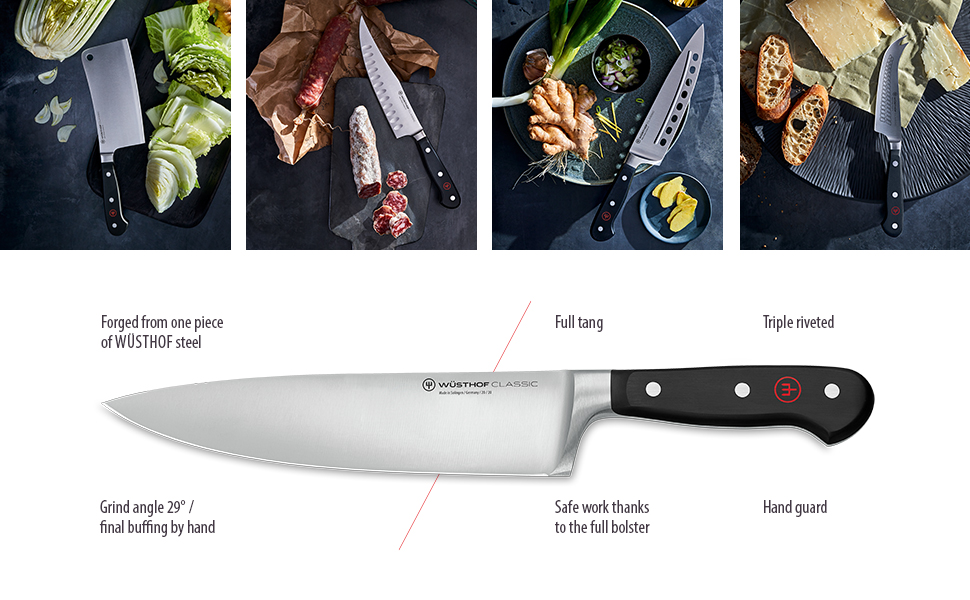
WÜSTHOF Classic 8-Inch Chef's Knife - Precision Forged German Steel for Professional Home Cooking
This precision-forged German chef's knife delivers 20% sharper cuts and twice the edge retention of previous models, making it ideal for daily chopping, mincing, and slicing tasks. Home cooks and professional chefs who want a reliable, balanced workhorse knife that holds its edge through heavy use should invest in this Classic series blade.
Pros and Cons
Pros
- German precision forging creates superior edge retention that stays sharp through months of regular kitchen use.
- The 8.5-ounce weight and ergonomic handle design reduce hand fatigue during extended meal prep.
- Backed by over 200 years of Solingen craftsmanship and strict German quality standards.
Cons
- The full bolster prevents sharpening the entire blade length on a standard whetstone without professional thinning.
- At 8.5 ounces, some cooks with smaller hands may find it heavier than Japanese-style chef's knives.

Zwilling
10-Inch Honing Steel for Kitchen Knife Maintenance and Edge Realignment
This honing steel uses an oval rod design that realigns knife edges with fewer strokes than traditional round rods, keeping your kitchen knives sharp between professional sharpening sessions. Home cooks who want to maintain their knife performance without learning complex sharpening techniques should consider this tool.
Pros and Cons
Pros
- Oval rod design requires fewer passes than traditional round honing steels to achieve the same edge realignment.
- Durable steel construction at 62 Rockwell hardness withstands regular contact with quality kitchen knives without deteriorating.
- Plastic handle with hanging hole makes storage simple in compact kitchens with limited drawer space.
Cons
- The product description contains a typo referring to the plastic handle, which may reflect less attention to quality control details.
- At this price point, some users may prefer a combination sharpening system that both hones and grinds rather than a honing-only tool.

Global Star Software
Mahjongg for Palm OS - Classic Tile Matching Game by Global Star Software for PC
This is a PC software product for installing Mahjongg solitaire on Palm OS handheld devices, not a kitchen product. It offers customizable tile sets and multiple difficulty levels for portable gaming on Palm-powered handhelds.
Pros and Cons
Pros
- Authentic mahjong solitaire experience optimized for Palm OS handhelds.
- Customizable graphics including tile sets and backgrounds for visual variety.
- Compatible with both color and grayscale Palm devices.
Cons
- Requires legacy Palm OS hardware that is no longer manufactured or widely supported.
- Not a kitchen product and provides no culinary functionality whatsoever.
WÜSTHOF Classic 8-Inch Chef's Knife - Precision Forged German Steel for Professional Home Cooking
WÜSTHOF Classic 8-Inch Chef's Knife - Precision Forged German Steel for Professional Home Cooking
This precision-forged German chef's knife delivers 20% sharper cuts and twice the edge retention of previous models, making it ideal for daily chopping, mincing, and slicing tasks. Home cooks and professional chefs who want a reliable, balanced workhorse knife that holds its edge through heavy use should invest in this Classic series blade.
$170.00 at AmazonEditors' Favorite
Brand Name: Wüsthof Set Name: Classic Manufacturer: Wüsthof UPC: 769194038526 670023145356 022934582438 Global Trade Identification Number: 00022934582438, 04002293158242, 40022931582422 Model Number: 4582-7/20 Manufacturer Part Number: 4582/20 Manufacturer Warranty Description: Lifetime warranty Item Type Name: Chef's Knives Unit Count: 16.0 Ounce Included Components: Cook's Knife Best Sellers Rank: #35,094 in Kitchen & Dining (See Top 100 in Kitchen & Dining) #103 in Chef's Knives ASIN: B00009ZK08 Blade Material Type: Stainless Steel Handle Material: Composite Is the item dishwasher safe?: No Material Type: Stainless Steel BladeLength: 8 Inches Item Weight: 0.24 Kilograms Item Length: 14 Inches Size: 8" Color: Black Blade Color: Silver Blade Edge: Chef's Knife Construction Type: Forged Blade Material: Stainless Steel Brand: Wüsthof
Shop NowZwilling 10-Inch Honing Steel for Kitchen Knife Maintenance and Edge Realignment
Zwilling
10-Inch Honing Steel for Kitchen Knife Maintenance and Edge Realignment
This honing steel uses an oval rod design that realigns knife edges with fewer strokes than traditional round rods, keeping your kitchen knives sharp between professional sharpening sessions. Home cooks who want to maintain their knife performance without learning complex sharpening techniques should consider this tool.
$59.95 at AmazonGreat Value
Material: Stainless Steel Brand: ZWILLING Color: Black/Stainless Steel Product Dimensions: 17"L x 9.8"W x 5.5"H Item Weight: 0.32 Kilograms Grit Type: Extra Fine Number of Items: 1 Manufacturer: ZWILLING J.A. HENCKELS Number of Packs: 1 Unit Count: 1.0 Count
Shop NowGlobal Star Software Mahjongg for Palm OS - Classic Tile Matching Game by Global Star Software for PC
Global Star Software
Mahjongg for Palm OS - Classic Tile Matching Game by Global Star Software for PC
This is a PC software product for installing Mahjongg solitaire on Palm OS handheld devices, not a kitchen product. It offers customizable tile sets and multiple difficulty levels for portable gaming on Palm-powered handhelds.
Check PriceASIN: B00005OL39 Customer Reviews: 4.0 4.0 out of 5 stars (6) 4.0 out of 5 stars Package Dimensions: 8.3 x 5.7 x 0.5 inches; 4.8 ounces Type of item: Video Game Rated: Everyone Item model number: GLS99509 Item Weight: 4.8 ounces Manufacturer: Global Star Software Date First Available: July 12, 2002
Shop Now



Write Your Review
No reviews yet. Be the first to share your experience!