

TL;DR — A high carbon chef knife has a blade made from steel with a raised carbon content, which lets it be hardened to a higher degree so it takes a sharper edge and holds it longer than softer steel. The term covers two related things: traditional “high carbon steel” (non-stainless, extremely sharp but rust-prone and prone to patina) and “high-carbon stainless steel” (carbon added to a stainless alloy for sharpness plus rust resistance) — most modern kitchen knives are the latter. The payoff is keener, longer-lasting edges; the trade-off is more careful maintenance, and for true carbon steel, active rust prevention. For picks, see our best chef knife guide.
The HomeWhisk editorial team researches kitchen equipment by analyzing manufacturer specifications, steel data sheets, and aggregated user reviews from major retailers and communities such as Reddit’s r/chefknives and r/Cooking. “High carbon” is a phrase that gets used loosely on knife listings, so the first job is untangling what it actually means.
Steel is iron with carbon and other elements added. How much carbon a blade contains — and how it’s heat-treated — is one of the biggest factors in how sharp it gets, how long it stays sharp, and how much care it needs. That’s why “high carbon” shows up on so many knives, and why it’s worth understanding before you buy.
What “High Carbon” Actually Means
At its simplest, carbon content is what lets steel be hardened. More carbon (up to a point) allows the steel to reach a higher hardness during heat treatment, and harder steel supports a thinner, keener edge that resists rolling and dulling. “High carbon” generally refers to steel with roughly 0.6% carbon or more (many premium knife steels sit around 0.8-1.2%).
But the label is used two different ways on kitchen knives, and confusing them is the main source of shopper frustration:
- Traditional high carbon steel (non-stainless): Carbon steel with little or no chromium. It gets extremely sharp and is easy to resharpen, but it rusts and reacts with food, developing a patina and requiring diligent drying and oiling. Japanese White (Shirogami) and Blue (Aogami) steels and Western options like 1095 fall here.
- High-carbon stainless steel: A stainless alloy (13%+ chromium for rust resistance) with carbon boosted for hardness and edge-holding. This is what most modern “high carbon” chef knives actually are — German steels like X50CrMoV15 and Japanese steels like VG-10 or AUS-10. You get much of the sharpness benefit with far less rust worry.
So when a mainstream knife is advertised as “high carbon stainless,” it means: stainless-grade rust resistance plus enough carbon to hold a good edge. Our best chef knife and best japanese chef knife guides identify which steel each pick uses.
High Carbon vs Stainless: The Real Differences
The comparison people actually want is traditional carbon steel versus stainless, and the honest breakdown is:
- Sharpness and edge retention: Traditional high-carbon steel can be hardened higher (often 61-64+ HRC) and takes an exceptionally fine edge that lasts. Softer stainless (German knives around 56-58 HRC) dulls faster but is tougher and more forgiving. High-carbon stainless splits the difference.
- Ease of sharpening: Carbon steel is generally easier and quicker to bring back to a razor edge on a whetstone. Very hard stainless takes more effort.
- Corrosion resistance: This is the big divide. Traditional carbon steel rusts and stains readily; stainless (including high-carbon stainless) resists it. This single factor decides the material for most home cooks.
- Maintenance: Carbon steel demands drying immediately, occasional oiling, and acceptance of a patina. Stainless is far more forgiving.
- Reactivity: Bare carbon steel can impart a metallic taste to acidic foods until a stable patina forms; stainless does not.
The takeaway: if you want maximum sharpness and enjoy caring for a blade, traditional high carbon rewards you. If you want excellent performance with everyday convenience, high-carbon stainless is the sweet spot most buyers should choose. For value picks in that range, see our best chef knife under 100 guide.
Understanding Hardness (HRC) and Why It Matters
You’ll see steel rated on the Rockwell C scale (HRC). It measures hardness, and it governs the sharpness-versus-toughness balance:
- Higher HRC (61-64+): Thinner, sharper, longer-lasting edges — but more brittle, so the edge can chip if you twist, hit bone, or cut frozen food. Common in Japanese high-carbon knives.
- Lower HRC (56-58): Tougher, more chip-resistant, easier to sharpen, but dulls sooner. Common in German high-carbon stainless.
High carbon content is what allows a high HRC, but the maker’s heat treatment is what realizes it. Two knives with the same steel can perform differently depending on how well they’re hardened and tempered. This is why buying from reputable makers matters more than chasing a spec number.
The Patina: A Feature, Not a Flaw
If you choose a traditional (non-stainless) high carbon knife, it will develop a patina — a grayish-blue or brownish surface layer that forms as the steel reacts with food and air. New owners often mistake this for damage. In fact, a stable patina is a protective oxide layer that actually slows further corrosion and is completely food-safe. Cooks sometimes deliberately “force” a patina (for example, with a wipe of vinegar or by cutting acidic food early on) to build that protection quickly.
The patina is different from rust, which is active orange-red corrosion that pits the metal and must be scrubbed off and prevented. A patina protects; rust destroys. Keeping the blade dry is what tips the balance toward one and away from the other.
Caring for a High Carbon Chef Knife
Whether traditional carbon or high-carbon stainless, hard steel rewards good habits:
1. Hand wash and dry immediately after each use — never the dishwasher. For traditional carbon steel this is non-negotiable to prevent rust. 2. Wipe the blade during long prep sessions, especially after cutting acidic foods like onions, tomatoes, or citrus. 3. Oil traditional carbon blades lightly (food-safe mineral or camellia oil) before storage if you won’t use them for a while. 4. Sharpen on whetstones — 1000-grit to set the edge, 3000-6000 to refine. Hard steel chips in pull-through sharpeners. 5. Hone gently and cut on wood or plastic, never glass, stone, or ceramic, which chip hard edges. 6. Store on a magnetic strip, in a block, or with edge guards so the edge doesn’t knock against other tools.
Do this and a high carbon knife stays scary-sharp for years and lasts decades. Our best knife sets and best chef knife set guides cover matched options, and our best bread knife guide rounds out the serrated tasks a chef knife can’t handle.
Frequently Asked Questions
What is high carbon steel, and is it good for knives?
High carbon steel is steel with a raised carbon content — roughly 0.6% or more, often 0.8-1.2% in knife steels — which lets it be hardened to a higher degree. That higher hardness supports a thinner, sharper edge that holds longer and is easy to resharpen, which is exactly what you want in a knife. It’s genuinely excellent for blades. The catch with traditional (non-stainless) high carbon steel is that it rusts and needs careful drying and oiling. High-carbon stainless steel adds chromium for rust resistance while keeping much of the sharpness, and it’s what most modern chef knives use.
What’s the difference between high carbon steel and high-carbon stainless steel?
Traditional high carbon steel has little or no chromium, so it rusts and reacts with food but gets exceptionally sharp and is easy to hone. High-carbon stainless steel is a stainless alloy (13%+ chromium) with extra carbon added for hardness and edge retention, so it resists rust while still taking a keen edge. Most mainstream “high carbon” chef knives are actually high-carbon stainless — you get most of the performance with far less maintenance. Pure carbon steel is for enthusiasts who want maximum sharpness and don’t mind the upkeep and patina.
Does a high carbon chef knife rust?
Traditional (non-stainless) high carbon steel does rust if it’s left wet or stored damp, which is why it needs drying immediately after washing and occasional oiling. High-carbon stainless steel — what most modern chef knives are made from — resists rust well thanks to added chromium. Note the difference between rust and patina: a patina is a stable, food-safe protective layer that forms on carbon steel and is desirable, while rust is active orange corrosion that pits the blade and must be removed. Keeping the blade dry is the key to preventing rust either way.
How do you sharpen a high carbon knife?
Use whetstones for the best results: a 1000-grit stone to set the edge and a 3000-6000 grit to refine and polish it. Soak or splash the stone as directed, hold a consistent angle (around 15 degrees per side for Japanese-style blades, 18-20 for Western), and alternate sides with light passes, finishing by removing the burr. Avoid pull-through sharpeners, which can chip hard high-carbon edges. Traditional carbon steel sharpens quickly and easily; harder stainless takes more effort. A honing rod between sharpenings keeps the edge aligned but doesn’t replace real sharpening.
Is a high carbon knife better than a regular kitchen knife?
For cutting performance, usually yes — the higher carbon content and hardness let it take a sharper edge and hold it longer than a soft, basic stainless knife. That means cleaner slices and less frequent sharpening. The trade-off is more careful maintenance, and for traditional carbon steel, active rust prevention. If you cook often and value a keen edge, a high carbon (ideally high-carbon stainless) chef knife is a clear upgrade. If you want zero maintenance and never sharpen, a basic stainless knife is more forgiving, just duller. Most engaged home cooks benefit from high carbon.
What should I do about the patina on my carbon steel knife?
Leave it — a patina is good. It’s a thin, stable oxide layer that forms as carbon steel reacts with food and air, and it’s completely food-safe while actually helping protect the blade from deeper corrosion. Many owners speed it up by wiping the blade with vinegar or cutting acidic foods early on to build even coverage. Just don’t confuse patina with rust: patina is gray, blue, or brown and protective; rust is orange, flaky, and damaging. Keep the knife dry and lightly oiled, and the patina will develop into a natural, attractive finish over time.
The Bottom Line
A high carbon chef knife is one whose steel carries enough carbon to be hardened for a sharper, longer-lasting edge than ordinary soft stainless. The term spans traditional carbon steel — supremely sharp and easy to hone, but rust-prone and patina-forming — and high-carbon stainless, which most modern chef knives use to blend that sharpness with real rust resistance. Either way you get a keener edge in exchange for more attentive care: hand wash, dry immediately, sharpen on whetstones, and for true carbon steel, oil and embrace the patina. For most home cooks, a high-carbon stainless chef knife is the smart middle ground; enthusiasts who love maintenance will treasure traditional carbon steel. See our best chef knife, best japanese chef knife, best chef knife under 100, best chef knife set, and best knife sets guides.

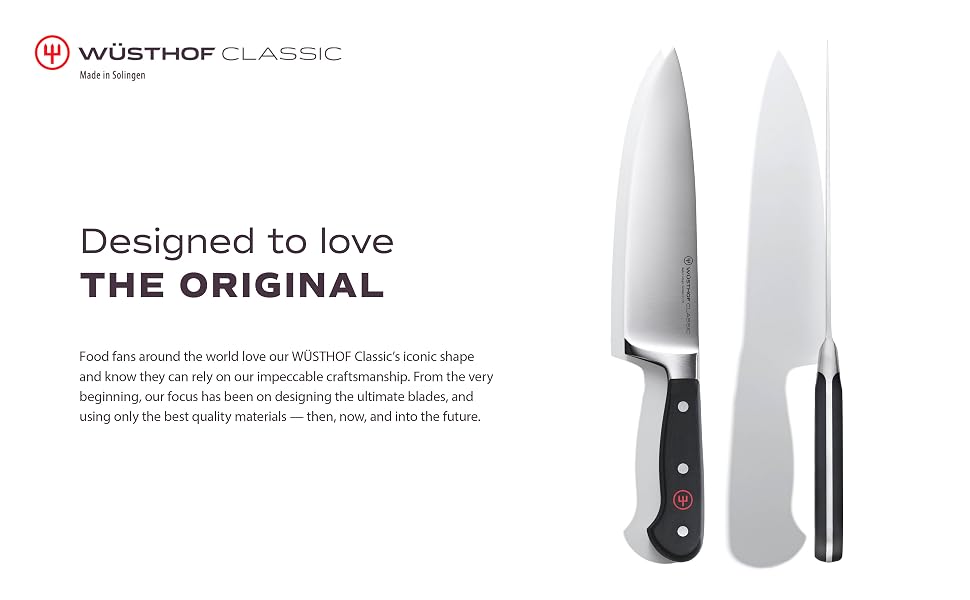
WÜSTHOF Classic 8-Inch Chef's Knife - Precision Forged German Steel for Professional Home Cooking
This precision-forged German chef's knife delivers 20% sharper cuts and twice the edge retention of previous models, making it ideal for daily chopping, mincing, and slicing tasks. Home cooks and professional chefs who want a reliable, balanced workhorse knife that holds its edge through heavy use should invest in this Classic series blade.
Pros and Cons
Pros
- German precision forging creates superior edge retention that stays sharp through months of regular kitchen use.
- The 8.5-ounce weight and ergonomic handle design reduce hand fatigue during extended meal prep.
- Backed by over 200 years of Solingen craftsmanship and strict German quality standards.
Cons
- The full bolster prevents sharpening the entire blade length on a standard whetstone without professional thinning.
- At 8.5 ounces, some cooks with smaller hands may find it heavier than Japanese-style chef's knives.

Zwilling
10-Inch Honing Steel for Kitchen Knife Maintenance and Edge Realignment
This honing steel uses an oval rod design that realigns knife edges with fewer strokes than traditional round rods, keeping your kitchen knives sharp between professional sharpening sessions. Home cooks who want to maintain their knife performance without learning complex sharpening techniques should consider this tool.
Pros and Cons
Pros
- Oval rod design requires fewer passes than traditional round honing steels to achieve the same edge realignment.
- Durable steel construction at 62 Rockwell hardness withstands regular contact with quality kitchen knives without deteriorating.
- Plastic handle with hanging hole makes storage simple in compact kitchens with limited drawer space.
Cons
- The product description contains a typo referring to the plastic handle, which may reflect less attention to quality control details.
- At this price point, some users may prefer a combination sharpening system that both hones and grinds rather than a honing-only tool.

Global Star Software
Mahjongg for Palm OS - Classic Tile Matching Game by Global Star Software for PC
This is a PC software product for installing Mahjongg solitaire on Palm OS handheld devices, not a kitchen product. It offers customizable tile sets and multiple difficulty levels for portable gaming on Palm-powered handhelds.
Pros and Cons
Pros
- Authentic mahjong solitaire experience optimized for Palm OS handhelds.
- Customizable graphics including tile sets and backgrounds for visual variety.
- Compatible with both color and grayscale Palm devices.
Cons
- Requires legacy Palm OS hardware that is no longer manufactured or widely supported.
- Not a kitchen product and provides no culinary functionality whatsoever.
WÜSTHOF Classic 8-Inch Chef's Knife - Precision Forged German Steel for Professional Home Cooking
WÜSTHOF Classic 8-Inch Chef's Knife - Precision Forged German Steel for Professional Home Cooking
This precision-forged German chef's knife delivers 20% sharper cuts and twice the edge retention of previous models, making it ideal for daily chopping, mincing, and slicing tasks. Home cooks and professional chefs who want a reliable, balanced workhorse knife that holds its edge through heavy use should invest in this Classic series blade.
$170.00 at AmazonEditors' Favorite
Brand Name: Wüsthof Set Name: Classic Manufacturer: Wüsthof UPC: 769194038526 670023145356 022934582438 Global Trade Identification Number: 00022934582438, 04002293158242, 40022931582422 Model Number: 4582-7/20 Manufacturer Part Number: 4582/20 Manufacturer Warranty Description: Lifetime warranty Item Type Name: Chef's Knives Unit Count: 16.0 Ounce Included Components: Cook's Knife Best Sellers Rank: #35,094 in Kitchen & Dining (See Top 100 in Kitchen & Dining) #103 in Chef's Knives ASIN: B00009ZK08 Blade Material Type: Stainless Steel Handle Material: Composite Is the item dishwasher safe?: No Material Type: Stainless Steel BladeLength: 8 Inches Item Weight: 0.24 Kilograms Item Length: 14 Inches Size: 8" Color: Black Blade Color: Silver Blade Edge: Chef's Knife Construction Type: Forged Blade Material: Stainless Steel Brand: Wüsthof
Shop NowZwilling 10-Inch Honing Steel for Kitchen Knife Maintenance and Edge Realignment
Zwilling
10-Inch Honing Steel for Kitchen Knife Maintenance and Edge Realignment
This honing steel uses an oval rod design that realigns knife edges with fewer strokes than traditional round rods, keeping your kitchen knives sharp between professional sharpening sessions. Home cooks who want to maintain their knife performance without learning complex sharpening techniques should consider this tool.
$59.95 at AmazonGreat Value
Material: Stainless Steel Brand: ZWILLING Color: Black/Stainless Steel Product Dimensions: 17"L x 9.8"W x 5.5"H Item Weight: 0.32 Kilograms Grit Type: Extra Fine Number of Items: 1 Manufacturer: ZWILLING J.A. HENCKELS Number of Packs: 1 Unit Count: 1.0 Count
Shop NowGlobal Star Software Mahjongg for Palm OS - Classic Tile Matching Game by Global Star Software for PC
Global Star Software
Mahjongg for Palm OS - Classic Tile Matching Game by Global Star Software for PC
This is a PC software product for installing Mahjongg solitaire on Palm OS handheld devices, not a kitchen product. It offers customizable tile sets and multiple difficulty levels for portable gaming on Palm-powered handhelds.
Check PriceASIN: B00005OL39 Customer Reviews: 4.0 4.0 out of 5 stars (6) 4.0 out of 5 stars Package Dimensions: 8.3 x 5.7 x 0.5 inches; 4.8 ounces Type of item: Video Game Rated: Everyone Item model number: GLS99509 Item Weight: 4.8 ounces Manufacturer: Global Star Software Date First Available: July 12, 2002
Shop Now


Write Your Review
No reviews yet. Be the first to share your experience!