

TL;DR — An espresso machine is used to force hot water (around 200°F) through finely ground, tightly packed coffee under roughly 9 bars of pressure, producing a small, concentrated shot of espresso in 25 to 30 seconds. That shot is the base for espresso drinks — straight shots, Americanos, and milk drinks like lattes, cappuccinos, and flat whites, which is why most machines include a steam wand. It’s a fundamentally different process from a drip coffee maker, which slowly drips water through grounds by gravity. For grinder picks that pair with any machine, see our best coffee grinder guide.
The HomeWhisk editorial team researches kitchen equipment by analyzing manufacturer specifications, brewing mechanics, and aggregated reviews from major retailers and coffee communities like Reddit’s r/espresso. “What is an espresso machine used for” usually comes from someone deciding whether they need one, or trying to understand how it differs from the drip machine already on their counter. This guide covers what the machine actually does, the drinks it makes, how it compares to a coffee maker, and who should own one.
What an Espresso Machine Actually Does
An espresso machine’s single job is to brew espresso: a small, intense extraction of coffee produced by pressure, not just hot water and time.
The mechanism has four ingredients working together. Finely ground coffee — much finer than drip, roughly the texture of table salt — is dosed into a metal filter basket in the portafilter. That grounds bed is tamped (compressed firmly) into a level, dense puck. The machine heats water to around 195–205°F and a pump drives it through the puck at about 9 bars of pressure (nine times atmospheric pressure). The fine grind and tight puck create resistance; the pressure overcomes it. In 25 to 30 seconds you get one to two ounces of espresso topped with crema, the caramel-colored foam of emulsified oils and dissolved CO2 that only pressure brewing produces.
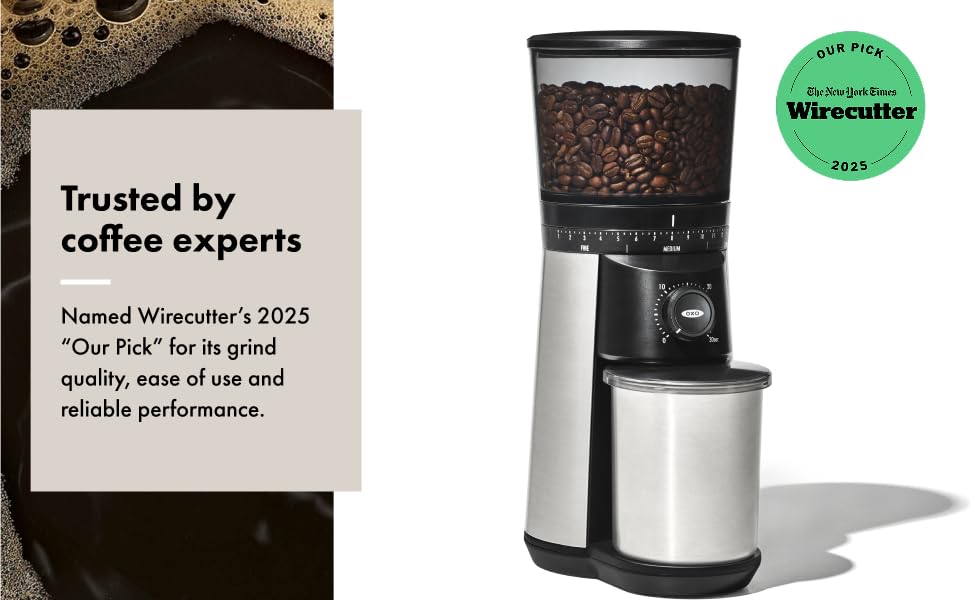
That pressure is the entire point. It extracts coffee oils and solubles that gravity-fed brewing leaves behind, concentrating flavor into a syrupy shot. Because the process is so grind-sensitive, the grinder matters as much as the machine — a good burr grinder is what makes precise, uniform espresso grounds possible. Our best coffee grinder guide explains why, and pairs with any machine.
The Drinks an Espresso Machine Makes
The reason people buy an espresso machine is rarely the plain shot — it’s everything you build from it. A single machine covers a wide menu:
- Espresso: the straight shot, 1 oz single or 2 oz double, drunk on its own.
- Americano: espresso diluted with hot water, similar strength to drip but with espresso’s body.
- Latte: espresso with a large amount of steamed milk and a thin layer of foam.
- Cappuccino: espresso with roughly equal parts steamed milk and thick foam.
- Flat white: espresso with steamed milk and a very thin microfoam layer.
- Macchiato: espresso “stained” with just a dollop of foam.
- Cortado: espresso cut with a small amount of warm milk.
This is why nearly every home machine includes a steam wand — a nozzle that shoots pressurized steam into a pitcher of milk, heating it and injecting air to create the silky microfoam these drinks require. Learning to steam milk is a genuine skill, but it’s what lets one appliance replace a café’s entire espresso menu. If milk drinks aren’t your focus and you mainly want strong black coffee, a combo unit may suit you better — see our best coffee and espresso maker combo guide.
Espresso Machine vs. Coffee Maker: How They Differ
This is the comparison behind most searches, and the differences are real and mechanical, not marketing.
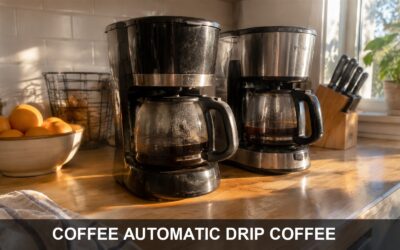
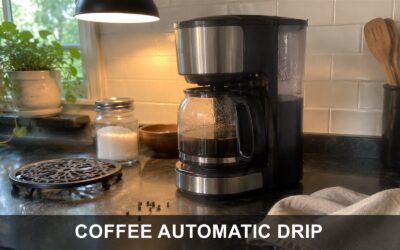
How a drip coffee maker works: it heats water and lets it drip, by gravity, through a bed of medium-coarse grounds in a paper or metal filter. There is no meaningful pressure. Contact time is long (several minutes), the water passes through gently, and the result is a large volume of comparatively mild, clean coffee — a full pot at once.
How an espresso machine works: it uses a pump to force water through fine grounds under high pressure in seconds, yielding a tiny, concentrated shot with crema.
The practical differences that follow:
- Strength and flavor: espresso is intense, syrupy, and full-bodied; drip is lighter and milder, meant to be sipped by the cupful.
- Serving size: drip makes 4–12 cups in one cycle; espresso makes 1–2 shots at a time.
- Versatility: an espresso machine plus its steam wand makes lattes, cappuccinos, and Americanos; a drip maker makes drip coffee, full stop.
- Ease and speed: drip is push-button and forgiving; espresso demands the right grind, dose, and tamp, and has a learning curve.
- Price and footprint: capable espresso machines cost more and take more counter space than a comparable drip maker.
If you want convenient volume in the morning, a drip maker wins. If you want café drinks and don’t mind the ritual, the espresso machine wins. Many people end up wanting both — which is exactly what combo units address. See our best coffee maker with grinder and best grind and brew coffee maker guides for drip machines that grind on demand.
A Brief History and the Types of Machines
Espresso is a genuine invention, not just a brewing style, and the machine types map to its history.
The idea of using pressure to brew coffee fast dates to early-19th-century steam apparatus, with a recognizable espresso patent in Italy in the early 1900s. But early steam machines could only reach 1.5–2 bars — enough to speed brewing, not enough for true espresso as we know it. The breakthrough came in 1948 when Achille Gaggia commercialized the spring-piston lever machine, which used a manually loaded spring to push water through at around 9 bars. That pressure is what first produced crema, and 9 bars remains the espresso benchmark today.
That history explains the main drive mechanisms you’ll still see:
- Steam-driven: the oldest and weakest, using boiler steam pressure. Found only in the cheapest machines; can’t reach true espresso pressure.
- Piston/lever-driven: the manual lever pulls a spring or your arm to generate pressure. Prized by enthusiasts for control; the origin of the phrase “pulling a shot.”
- Pump-driven: the modern standard. An electric pump reliably delivers 9 bars, in either vibratory (home) or rotary (commercial) form. Nearly every machine you’ll buy today is pump-driven.
Understanding the mechanism helps you read spec sheets: a machine advertising “15 bars” simply means the pump’s maximum, not the pressure at the puck, which the design regulates back toward 9. What matters more for daily results is temperature stability and, again, a consistent grinder.
What to Consider Before Buying One
If the drinks and mechanism sound right, a few practical factors decide whether an espresso machine fits your life:
- The grinder is not optional. Espresso lives or dies on a fine, uniform, adjustable grind. A blade grinder can’t produce it. Budget for a burr grinder alongside the machine — see our best coffee grinder guide — or choose a machine with a built-in grinder.
- Milk drinks vs. black coffee. If you mainly want lattes, prioritize a good steam wand.
- Budget realism. Capable entry machines exist without breaking the bank; our best espresso machine under 200 guide covers the value tier honestly, including where corners get cut.
- Counter space and maintenance. Espresso machines need daily wiping, regular backflushing, and periodic descaling. They ask more of you than a drip maker.
- How much you brew at once. For a household that drinks pots of coffee, a grind-and-brew drip maker may serve better — see our best grind and brew coffee maker guide. And if you like iced coffee, a dedicated best cold brew coffee maker is a cheaper, simpler path than an espresso setup.
Frequently Asked Questions
What is the difference between an espresso machine and a coffee maker?
An espresso machine forces hot water through finely ground, tamped coffee at about 9 bars of pressure, producing a small concentrated shot with crema in under 30 seconds. A drip coffee maker lets heated water fall by gravity through medium-coarse grounds with no pressure, making a large pot of milder coffee over several minutes. Espresso is intense and versatile (the base for lattes and cappuccinos via a steam wand); drip is convenient and high-volume. They are different processes, not two versions of the same thing. See our best coffee maker with grinder guide for the drip side.
Can you make regular coffee in an espresso machine?
Not “drip” coffee, but you can make an Americano — a shot or two of espresso diluted with hot water — which is close to drip strength while keeping espresso’s body. What an espresso machine can’t do is brew a large pot at once; it works one or two shots at a time. If you want both café drinks and easy pots of coffee, a combo unit is the practical answer. See our best coffee and espresso maker combo guide for machines that handle both jobs.
Do I need a separate grinder for an espresso machine?
Effectively yes, unless the machine has a good built-in grinder. Espresso requires a very fine, uniform, adjustable grind that a blade grinder physically cannot produce — uneven grounds channel water and pull sour or bitter shots. A quality burr grinder with fine, precise adjustment is considered essential equipment, and many enthusiasts say it matters more than the machine itself. Budget for one alongside your machine; our best coffee grinder guide covers espresso-capable options at each price.
Is an espresso machine hard to use?
There’s a real learning curve. Unlike a push-button drip maker, espresso depends on dialing in the grind, dose, and tamp, then adjusting based on how the shot runs. Milk steaming is a separate skill. Most people get drinkable shots quickly and dial in over a few weeks. Machines with pressurized “dual-wall” baskets ease the curve for beginners by forgiving grind inconsistency. If you want café results with minimal fuss, factor the learning time in honestly before buying.
What is crema and why does it matter?
Crema is the caramel-colored foam that sits on top of a fresh espresso shot. It forms only under pressure brewing: the 9 bars emulsify coffee oils and release dissolved CO2 from fresh beans into a fine foam. Crema is a rough sign of a well-pulled shot from fresh beans, though it’s not the whole story — dark roasts and pressurized baskets can produce crema even when flavor is mediocre. It contributes body and aroma but isn’t the sole measure of quality; taste is.
Is an espresso machine worth it if I mostly drink iced coffee?
Maybe not. Espresso shines for hot shots and milk drinks, and while iced lattes are excellent, a full espresso setup is a lot of equipment and maintenance for cold coffee. If iced and cold brew are your main drinks, a dedicated cold brew maker steeps coarse grounds in cold water for 12–24 hours to make a smooth, low-acid concentrate at a fraction of the cost and effort. See our best cold brew coffee maker guide before committing to espresso for cold drinks.
The Bottom Line
An espresso machine is used to brew espresso — a small, pressure-extracted, concentrated coffee shot — and, through its steam wand, to turn that shot into the full menu of café milk drinks. It differs fundamentally from a drip coffee maker, which gently drips water through grounds to make a large pot of milder coffee. Choose an espresso machine if you want lattes, cappuccinos, and intense shots and don’t mind the grinder investment, the learning curve, and the maintenance. Choose (or add) a drip or combo machine if convenience and volume matter more. Whichever way you lean, the grinder is the piece that most determines your results. For picks that pair with any setup, see our best coffee grinder and best espresso machine under 200 guides.

Learn Home Espresso Brewing, Beans, Grinders and Latte Art with All About Espresso by Lenin Dev
This home barista guide explains espresso machines, beans, grinders, roasting, crema, latte art and specialty coffee drinks in one resource. It suits aspiring home baristas who want to build foundational espresso knowledge before choosing equipment or refining their coffee routine.
Pros and Cons
Pros
- Covers the main parts of a home espresso setup, including machines, beans and grinders.
- Includes both technical subjects such as roasting and practical topics such as latte art.
- Addresses specialty coffee drinks beyond basic espresso.
Cons
- The available product data does not specify the book's page count, format or included illustrations.
- The description does not identify a specific espresso machine, grinder or brewing method.
Learn Home Espresso Brewing, Beans, Grinders and Latte Art with All About Espresso by Lenin Dev
Learn Home Espresso Brewing, Beans, Grinders and Latte Art with All About Espresso by Lenin Dev
This home barista guide explains espresso machines, beans, grinders, roasting, crema, latte art and specialty coffee drinks in one resource. It suits aspiring home baristas who want to build foundational espresso knowledge before choosing equipment or refining their coffee routine.
$4.99 at AmazonEditors' Favorite
Formats: Kindle eBook Product Group: Digital Ebook Purchas Binding: Kindle Edition
Shop NowIndependently published The Breville Barista Express Espresso Machine Cookbook: 200 Artisan Coffee Recipes to Master Your Home Espresso Bar

Independently published
The Breville Barista Express Espresso Machine Cookbook: 200 Artisan Coffee Recipes to Master Your Home Espresso Bar
$12.00 at AmazonGreat Value
Dimensions: 8.5 x 0.28 x 11 Inches Product Group: Book Binding: Paperback
Shop NowBrew Ratio LLC Coffee Under Pressure: A Guide to Espresso Machine Ownership

Dimensions: 6 x 0.72 x 9 inches Product Group: Book Binding: Paperback
Shop NowMajosta ESPRESSO AT HOME: A PRACTICAL GUIDE FOR BEGINNERS: Step-by-step to grind size, yield, taste. Checklists, templates, and real-world examples.

Majosta
ESPRESSO AT HOME: A PRACTICAL GUIDE FOR BEGINNERS: Step-by-step to grind size, yield, taste. Checklists, templates, and real-world examples.
$9.99 at AmazonDimensions: 8.5 x 0.17 x 11.69 inches Product Group: Book Binding: Paperback
Shop NowMajosta Breville Espresso Machine User Guide: Essential Home Coffee Maker Companion With Easy Instructions For Setup, Calibration, And Brewing

Majosta
Breville Espresso Machine User Guide: Essential Home Coffee Maker Companion With Easy Instructions For Setup, Calibration, And Brewing
$23.99 at AmazonDimensions: 8.5 x 0.28 x 11 inches Weight: 0.65918216338 Pounds Product Group: Book Binding: Paperback
Shop Now

Write Your Review
No reviews yet. Be the first to share your experience!