

TL;DR — “Chef knife” is often used loosely to mean the whole family of kitchen knives, but strictly it refers to one workhorse: a 6–10 inch curved blade for chopping, slicing, and dicing most ingredients. The two dominant styles are the Western/German chef’s knife (heavier, more curved for rocking) and the Japanese gyuto (lighter, thinner, harder steel for precise push cuts), plus the santoku, nakiri, paring, utility, bread, boning, and cleaver for specialized jobs. Most home cooks need only three: a chef’s knife, a paring knife, and a bread knife. For picks, see our best chef knife guide.
The HomeWhisk editorial team researches kitchen equipment by analyzing manufacturer specifications, blade geometry, steel metallurgy, and aggregated user reviews from major retailers and communities like Reddit r/chefknives. People searching “types of chef knife explained” usually want two things: to understand the true chef’s knife and its variants (German vs. Japanese vs. santoku), and to know which other knives are worth owning. This guide covers both — what each knife is built to do, the geometry and steel that make it work, and which few you actually need.
What a Chef’s Knife Actually Is
A chef’s knife (also called a cook’s knife) is the all-purpose blade most kitchen tasks run through. Defining features:
- Length: typically 8 inches, with 6-inch options for smaller hands and 10-inch for more reach. Eight inches is the standard because it handles most cutting boards and ingredients without being unwieldy.
- A curved belly that rises to the tip, which lets you rock the blade for mincing herbs and garlic, or push-cut for slicing.
- A broad heel near the handle for power cuts through dense vegetables, and a fine tip for detail work.
- A full tang (steel running through the handle) in quality knives, for balance and durability.
It chops onions, dices vegetables, slices meat, minces herbs, and crushes garlic. If you buy one knife, buy this one. Our best chef knife guide covers standout options, and our best chef knife under 100 guide focuses on value picks that punch above their price.
German vs. Japanese Chef’s Knives
The single most useful distinction is Western (German) versus Japanese, because it changes how the knife feels and cuts.
Western/German chef’s knives (Wüsthof, Zwilling, Victorinox) use softer stainless steel, typically around 56–58 HRC on the Rockwell hardness scale. Softer steel is tougher and more forgiving — it resists chipping and is easy to re-sharpen — but loses its edge faster and won’t take as keen an edge. The blade is heavier, thicker, with a pronounced curve and usually a double bevel ground around 15–20° per side, built for rock-chopping and hard use.
Japanese chef’s knives (gyuto) use harder steel, often 60–63 HRC. Harder steel takes a sharper edge and holds it far longer, but is more brittle — it can chip if you hit bone or twist it, and is fussier to sharpen. Gyutos are lighter, thinner, and flatter, with a finer edge angle (often 10–15° per side), rewarding precise push and pull cuts. Our best japanese chef knife guide explains the steels and profiles in depth. Which is “better” depends on your technique: rockers and rough handlers lean German; precision-focused cooks lean Japanese.
Santoku and Nakiri: The Japanese Alternatives
Two Japanese knives get grouped with chef’s knives because they cover similar ground with different geometry.
The santoku (“three virtues” — slicing, dicing, mincing) is a shorter (5–7 inch), lighter general-purpose knife with a flatter edge and a sheep’s-foot tip that curves down sharply. The flat profile suits an up-and-down chopping motion rather than rocking, and the shorter length feels nimble for smaller hands. Many santokus have Granton edges (dimples along the blade) that reduce suction so slices release cleanly.
The nakiri is a rectangular, flat-edged vegetable knife. Its straight edge contacts the board along its full length, so a single downward push cuts all the way through — ideal for clean, fast vegetable prep and paper-thin slices. It has no belly for rocking and no fine tip for detail. Both santoku and nakiri appear in quality best chef knife set and best knife sets collections.
The Paring and Utility Knives
For small work the chef’s knife is too big for, two smaller blades matter.
A paring knife is a short 3–4 inch blade for in-hand precision: peeling, hulling strawberries, deveining shrimp, trimming, and detailed cuts you do off the board. Its small, maneuverable blade goes where a chef’s knife can’t. Every kitchen needs one — it’s the second knife most people should buy.
A utility knife bridges the gap at 4–7 inches — bigger than a paring knife, smaller than a chef’s knife. It handles sandwiches, small produce, and jobs where the chef’s knife feels oversized but a paring knife feels too small. It’s genuinely useful but not essential; many cooks skip it. Both show up in comprehensive best knife sets.
Specialty Knives: Bread, Boning, and Cleaver
The remaining common knives are task-specific, and you buy them only for jobs you actually do.
A bread knife has a long (8–10 inch) serrated edge. The scalloped teeth grip and saw through hard crusts and soft interiors without crushing the loaf, and the same action works on tomatoes and cakes. Serrations stay effective long after a plain edge would dull, but they’re impractical to sharpen at home, so you eventually replace them. This is the third knife most cooks should own — see our best bread knife guide.
A boning knife has a thin, narrow, often flexible 5–6 inch blade for separating meat from bone, filleting fish, and trimming fat and silverskin. The flex lets it follow contours; a stiffer version suits heavier butchery.
A cleaver is a heavy rectangular blade. A Western meat cleaver is thick and heavy for chopping through bone using its mass, while a Chinese “vegetable cleaver” (caidao) is thinner and lighter, used like an all-purpose knife for slicing and scooping despite its intimidating look.
Which Knives Do You Actually Need?
Ignore the block of a dozen knives. Most home cooks are fully equipped with three:
1. A chef’s knife (8 inch) — does 80–90% of everything. 2. A paring knife (3–4 inch) — for small, in-hand, and detail work. 3. A bread knife (serrated, 8–10 inch) — for anything with a crust or delicate skin.
Add a santoku or nakiri if you do lots of vegetable prep and prefer their feel, a boning knife if you break down whole proteins, and a utility knife if you want an in-between size. A matched best chef knife set can be convenient and cost-effective, but a few well-chosen individual knives usually beat a big cheap block. Whatever you buy, keep it sharp — a dull knife is more dangerous and less pleasant than any type mismatch. Our best knife sets and best chef knife under 100 guides cover both routes.
Frequently Asked Questions
What is the difference between a chef’s knife and a santoku?
A chef’s knife has a curved belly and a pointed tip, is usually 8 inches, and is designed for rock-chopping as well as slicing. A santoku is shorter (5–7 inches), lighter, with a flatter edge and a downturned sheep’s-foot tip, and it favors an up-and-down chopping motion rather than rocking. Santokus are often thinner with harder steel and sometimes have dimpled (Granton) edges to release food. Both are general-purpose; the choice comes down to length preference and cutting style.
Is a German or Japanese chef’s knife better?
Neither is universally better — they suit different cooks. German knives use softer steel (around 56–58 HRC), so they are tougher, more forgiving, easy to sharpen, and built for heavy rock-chopping, but they dull faster. Japanese gyutos use harder steel (60–63 HRC), take a sharper edge and hold it much longer, and are lighter and thinner for precise cuts, but they are more brittle and fussier to sharpen. Choose German for durability and rough use, Japanese for sharpness and precision.
How many kitchen knives do I really need?
Three cover almost everything: an 8-inch chef’s knife for the bulk of cutting, a 3–4 inch paring knife for small in-hand work, and a serrated bread knife for crusty bread and delicate skins. Beyond those, add a santoku or nakiri if you do heavy vegetable prep, a boning knife if you break down meat or fish, and a utility knife if you want an in-between size. A large knife block is mostly filler; a few good knives serve you far better.
What is a nakiri knife used for?
A nakiri is a rectangular, flat-edged Japanese knife made specifically for vegetables. Its straight edge meets the cutting board along its full length, so a single straight-down push cuts cleanly all the way through without the rocking a curved blade needs. That makes it excellent for fast, precise vegetable prep and very thin, even slices. It has no curved belly for rocking and no fine tip for detail work, so it complements rather than replaces a chef’s or paring knife.
What steel is best for a chef’s knife?
It depends on priorities. High-carbon stainless steels balance edge retention, corrosion resistance, and ease of sharpening, and are the practical choice for most home cooks. Harder steels (60+ HRC, common in Japanese knives) hold an edge longer and get sharper but chip more easily and are harder to sharpen. Softer stainless (mid-50s HRC, common in German knives) is tougher and easier to maintain but dulls sooner. Plain carbon steel takes a superb edge but rusts without careful drying and care.
Are expensive chef’s knives worth it?
Up to a point. Moving from a cheap knife to a solid mid-range one is a large, noticeable upgrade in edge quality, balance, and comfort — and you can get excellent knives for well under $100. Beyond that, higher prices buy premium steels, fit and finish, and refinement that matter to enthusiasts but deliver diminishing returns for everyday cooking. More important than price is keeping any knife sharp; a well-maintained affordable knife outperforms a neglected expensive one. See our best chef knife under 100 guide.
The Bottom Line
“Types of chef knife” spans a loose family, but the essentials are simple. The true chef’s knife — 8 inches, curved, all-purpose — is the one blade you can’t skip, and its main split is German (softer, tougher, rock-chopping) versus Japanese gyuto (harder, sharper, precise). Santoku and nakiri are Japanese general-purpose and vegetable alternatives; paring, utility, bread, boning, and cleaver each handle specific jobs. For nearly every home cook, a chef’s knife, a paring knife, and a bread knife are all you truly need, chosen for how you actually cook and kept sharp. For picks across every category, see our best chef knife, best japanese chef knife, and best chef knife set guides.

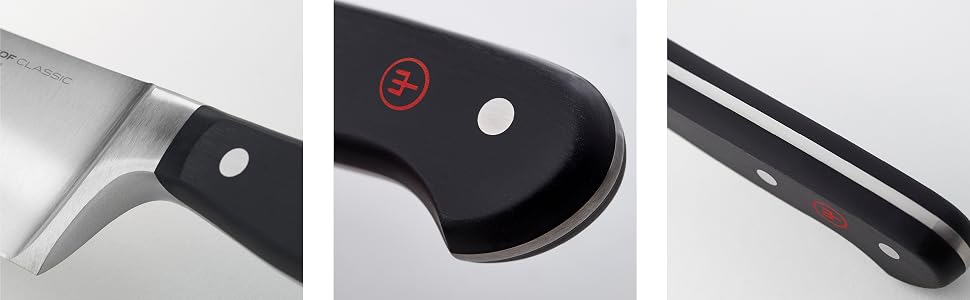
WÜSTHOF Classic 8-Inch Chef's Knife - Precision Forged German Steel for Professional Home Cooking
This precision-forged German chef's knife delivers 20% sharper cuts and twice the edge retention of previous models, making it ideal for daily chopping, mincing, and slicing tasks. Home cooks and professional chefs who want a reliable, balanced workhorse knife that holds its edge through heavy use should invest in this Classic series blade.
Pros and Cons
Pros
- German precision forging creates superior edge retention that stays sharp through months of regular kitchen use.
- The 8.5-ounce weight and ergonomic handle design reduce hand fatigue during extended meal prep.
- Backed by over 200 years of Solingen craftsmanship and strict German quality standards.
Cons
- The full bolster prevents sharpening the entire blade length on a standard whetstone without professional thinning.
- At 8.5 ounces, some cooks with smaller hands may find it heavier than Japanese-style chef's knives.

Zwilling
10-Inch Honing Steel for Kitchen Knife Maintenance and Edge Realignment
This honing steel uses an oval rod design that realigns knife edges with fewer strokes than traditional round rods, keeping your kitchen knives sharp between professional sharpening sessions. Home cooks who want to maintain their knife performance without learning complex sharpening techniques should consider this tool.
Pros and Cons
Pros
- Oval rod design requires fewer passes than traditional round honing steels to achieve the same edge realignment.
- Durable steel construction at 62 Rockwell hardness withstands regular contact with quality kitchen knives without deteriorating.
- Plastic handle with hanging hole makes storage simple in compact kitchens with limited drawer space.
Cons
- The product description contains a typo referring to the plastic handle, which may reflect less attention to quality control details.
- At this price point, some users may prefer a combination sharpening system that both hones and grinds rather than a honing-only tool.

Global Star Software
Mahjongg for Palm OS - Classic Tile Matching Game by Global Star Software for PC
This is a PC software product for installing Mahjongg solitaire on Palm OS handheld devices, not a kitchen product. It offers customizable tile sets and multiple difficulty levels for portable gaming on Palm-powered handhelds.
Pros and Cons
Pros
- Authentic mahjong solitaire experience optimized for Palm OS handhelds.
- Customizable graphics including tile sets and backgrounds for visual variety.
- Compatible with both color and grayscale Palm devices.
Cons
- Requires legacy Palm OS hardware that is no longer manufactured or widely supported.
- Not a kitchen product and provides no culinary functionality whatsoever.
WÜSTHOF Classic 8-Inch Chef's Knife - Precision Forged German Steel for Professional Home Cooking
WÜSTHOF Classic 8-Inch Chef's Knife - Precision Forged German Steel for Professional Home Cooking
This precision-forged German chef's knife delivers 20% sharper cuts and twice the edge retention of previous models, making it ideal for daily chopping, mincing, and slicing tasks. Home cooks and professional chefs who want a reliable, balanced workhorse knife that holds its edge through heavy use should invest in this Classic series blade.
$170.00 at AmazonEditors' Favorite
Brand Name: Wüsthof Set Name: Classic Manufacturer: Wüsthof UPC: 769194038526 670023145356 022934582438 Global Trade Identification Number: 00022934582438, 04002293158242, 40022931582422 Model Number: 4582-7/20 Manufacturer Part Number: 4582/20 Manufacturer Warranty Description: Lifetime warranty Item Type Name: Chef's Knives Unit Count: 16.0 Ounce Included Components: Cook's Knife Best Sellers Rank: #35,094 in Kitchen & Dining (See Top 100 in Kitchen & Dining) #103 in Chef's Knives ASIN: B00009ZK08 Blade Material Type: Stainless Steel Handle Material: Composite Is the item dishwasher safe?: No Material Type: Stainless Steel BladeLength: 8 Inches Item Weight: 0.24 Kilograms Item Length: 14 Inches Size: 8" Color: Black Blade Color: Silver Blade Edge: Chef's Knife Construction Type: Forged Blade Material: Stainless Steel Brand: Wüsthof
Shop NowZwilling 10-Inch Honing Steel for Kitchen Knife Maintenance and Edge Realignment
Zwilling
10-Inch Honing Steel for Kitchen Knife Maintenance and Edge Realignment
This honing steel uses an oval rod design that realigns knife edges with fewer strokes than traditional round rods, keeping your kitchen knives sharp between professional sharpening sessions. Home cooks who want to maintain their knife performance without learning complex sharpening techniques should consider this tool.
$59.95 at AmazonGreat Value
Material: Stainless Steel Brand: ZWILLING Color: Black/Stainless Steel Product Dimensions: 17"L x 9.8"W x 5.5"H Item Weight: 0.32 Kilograms Grit Type: Extra Fine Number of Items: 1 Manufacturer: ZWILLING J.A. HENCKELS Number of Packs: 1 Unit Count: 1.0 Count
Shop NowGlobal Star Software Mahjongg for Palm OS - Classic Tile Matching Game by Global Star Software for PC
Global Star Software
Mahjongg for Palm OS - Classic Tile Matching Game by Global Star Software for PC
This is a PC software product for installing Mahjongg solitaire on Palm OS handheld devices, not a kitchen product. It offers customizable tile sets and multiple difficulty levels for portable gaming on Palm-powered handhelds.
Check PriceASIN: B00005OL39 Customer Reviews: 4.0 4.0 out of 5 stars (6) 4.0 out of 5 stars Package Dimensions: 8.3 x 5.7 x 0.5 inches; 4.8 ounces Type of item: Video Game Rated: Everyone Item model number: GLS99509 Item Weight: 4.8 ounces Manufacturer: Global Star Software Date First Available: July 12, 2002
Shop Now




Write Your Review
No reviews yet. Be the first to share your experience!