

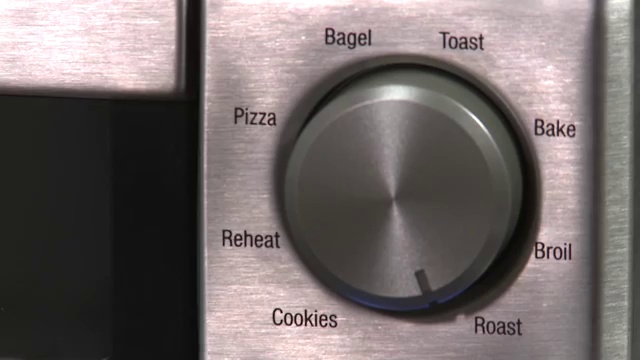
TL;DR — A microwave reheats and defrosts fast using water-exciting waves but leaves food soft; a toaster oven cooks, toasts, bakes, and crisps with dry radiant heat but is slower. They do different jobs — most kitchens benefit from both, but if choosing one, pick a microwave for speed and reheating or a toaster oven for cooking and crisping. The HomeWhisk team compared them on speed, food quality, versatility, and use cases. For picks, see our best toaster oven guide.
The HomeWhisk editorial team researches kitchen equipment by analyzing manufacturer specifications, heating methods, and aggregated user reviews from major retailers and cooking communities. Our recommendations are based on what the products actually deliver, not what brands promise.
Toaster ovens and microwaves both live on the counter and both heat food, so people often wonder if they need both or which to choose. They actually work in completely different ways. Here’s the breakdown.
How They Heat Food (The Core Difference)
Everything about which appliance suits which task comes from how each one heats — and the two methods are fundamentally different.
A microwave uses microwave radiation that excites water molecules in food, making them vibrate and generate heat from within. This heats food fast and from the inside out, but because it works on moisture, it steams and softens rather than browns or crisps. It can’t create a crust, brown a surface, or make anything crispy — physics won’t allow it (there’s no dry radiant heat). It’s a speed-and-reheat machine.
A toaster oven uses heating elements that produce dry radiant heat, like a small conventional oven. This heat browns, toasts, crisps, and bakes surfaces — the Maillard browning that makes food golden and crunchy. It’s slower (it heats the air and the food’s surface, and often needs preheating), but it produces oven-quality texture: crispy, browned, baked.
The fundamental contrast: the microwave is fast but makes food soft; the toaster oven is slower but browns and crisps. This single difference — moisture-exciting waves vs dry radiant heat — determines what each is good and bad at. Neither can do the other’s core job well: a microwave can’t crisp, a toaster oven can’t match microwave speed.
What Each Does Best
Knowing each appliance’s strengths clarifies which tasks call for which — and why many kitchens use both.
The microwave excels at:
- Reheating leftovers fast (soups, stews, saucy dishes, rice — anything where softness is fine)
- Defrosting frozen food quickly
- Steaming vegetables and cooking quick items
- Melting butter, chocolate; warming liquids
- Speed — seconds to a few minutes, no preheat
- Reheating moist foods that don’t need crisping
It’s unbeatable for fast, moisture-friendly reheating and defrosting — the everyday convenience tasks.
The toaster oven excels at:
- Toasting bread, bagels, English muffins (the classic use)
- Baking small batches — cookies, small pizzas, roasted vegetables, casseroles
- Crisping and reheating foods that should be crunchy — pizza, fried foods, fries, pastries (where a microwave makes them soggy)
- Broiling and browning tops
- Cooking small meals without heating a full-size oven
- Anything needing browning, crisping, or baked texture
It’s the choice for quality — real oven results in a compact appliance. Our best toaster oven guide covers versatile models, some with air-fry modes.
The clearest example of the difference: reheating leftover pizza. The microwave makes it hot but limp and soggy in 60 seconds; the toaster oven makes it hot with a crispy crust in a few minutes. Speed vs quality, in one dish.
Speed, Energy, and Practical Factors
Beyond food quality, practical differences shape which fits your kitchen and habits.
Speed: the microwave wins decisively — seconds to minutes, no preheat. The toaster oven is slower, often needing a few minutes to preheat plus longer cooking. For “I’m hungry now” reheating, the microwave is far faster.
Energy: both use less energy than a full-size oven for small jobs. The microwave is generally more energy-efficient for pure reheating (it heats food directly and briefly). The toaster oven uses more energy but still far less than a full oven, and it’s efficient for small baking jobs you’d otherwise heat a big oven for.
Counter space: both take similar counter space. If space is very tight and you can keep only one, that constraint may force the choice. Some combo units (microwave + convection, or microwave with a crisping function) try to do both, with compromises.
Versatility: the toaster oven is more versatile as a cooking appliance (it bakes, toasts, roasts, broils, crisps); the microwave is more versatile as a reheating/defrosting appliance. Modern toaster ovens increasingly add air-fry and convection, widening their range — see our best air fryer guide for overlap.
Ease of use and cleanup: the microwave is slightly easier (push-button, wipe interior); the toaster oven has a crumb tray and racks to clean and needs cool-down. Neither is difficult.
Which Should You Buy?
For most kitchens the ideal is both, but here’s how to decide based on your needs and space.
Get a microwave (or prioritize it) if your main need is fast reheating and defrosting, you reheat a lot of leftovers, soups, and moist foods, you value speed above texture, or you want the simplest, fastest heating. It’s the convenience workhorse most kitchens have.
Get a toaster oven (or prioritize it) if you want to toast, bake small batches, crisp foods, and cook small meals without a full oven, you care about food texture (crispy, browned), or you’d use it as a compact oven. Modern ones with air-fry modes add even more versatility. See our best toaster oven guide.
Get both (recommended if space allows) — this is what most well-equipped kitchens do, because they complement each other perfectly: the microwave for fast, moist reheating and defrosting, the toaster oven for toasting, baking, and crisping. Together they cover nearly every quick-heating and small-cooking need without firing up the full oven. They don’t overlap much, so both earn their space.
If you can only have one, decide by your dominant habit: mostly reheating moist leftovers and defrosting → microwave; mostly toasting, baking, and wanting crispy results → toaster oven. Consider a combo unit if you truly need both functions in one footprint.
Frequently Asked Questions
What’s the difference between a toaster oven and a microwave?
They heat food in completely different ways. A microwave uses radiation that excites water molecules, heating food fast from the inside but leaving it soft — great for reheating and defrosting, unable to brown or crisp. A toaster oven uses dry radiant heat from elements, like a small oven, to toast, bake, brown, and crisp — slower but producing oven-quality texture. The microwave is fast but soft; the toaster oven is slower but crisps and browns. They excel at different tasks.
Can a toaster oven replace a microwave?
Not fully. A toaster oven can’t match a microwave’s speed for reheating and defrosting, and it heats moist, saucy foods less efficiently — reheating a bowl of soup is faster and easier in a microwave. However, a toaster oven does everything a microwave can’t (toasting, baking, crisping, browning). So it replaces a microwave only if you don’t mind slower reheating and rarely defrost. Many people keep both because each does jobs the other can’t.
Which is better for reheating leftovers?
It depends on the food. For moist foods — soups, stews, saucy dishes, rice — the microwave is better: fast and keeps them moist. For foods that should be crispy — pizza, fried chicken, fries, pastries — the toaster oven is better: it restores the crunch a microwave turns soggy. The classic example is leftover pizza: soggy in 60 seconds in a microwave, crispy in a few minutes in a toaster oven. Match the appliance to whether the food should be moist or crisp.
Is a toaster oven or microwave more energy-efficient?
For pure reheating, the microwave is generally more energy-efficient, since it heats food directly and briefly. The toaster oven uses more energy (it heats the air and often preheats), but far less than a full-size oven for small baking or cooking jobs, so it’s efficient when replacing the big oven for small tasks. Overall, use the microwave for quick reheating efficiency and the toaster oven to avoid firing up a full oven for small bakes.
Do I need both a toaster oven and a microwave?
Not strictly, but many kitchens benefit from both because they complement each other — the microwave for fast, moist reheating and defrosting, the toaster oven for toasting, baking, and crisping. They don’t overlap much, so both earn their space if you have room. If you can keep only one, choose by your dominant habit: microwave for speed and reheating moist foods, toaster oven for cooking, toasting, and crispy results. Combo units try to do both in one footprint, with some compromises.
Can a toaster oven air fry?
Many modern toaster ovens include an air-fry mode, using a convection fan to circulate hot air for crisping — effectively combining a toaster oven and air fryer in one appliance. These oven-style air fryers hold more than basket air fryers and add baking and toasting, though a dedicated basket air fryer may crisp slightly more aggressively. If you want toasting, baking, and air-frying in one unit, an air-fry toaster oven is versatile. See our best toaster oven and best air fryer guides for options.
Related buying guides: best blender, best instant pot and best stand mixer.
The Bottom Line
Toaster ovens and microwaves heat food in fundamentally different ways: the microwave excites water molecules for fast reheating and defrosting but leaves food soft, while the toaster oven uses dry radiant heat to toast, bake, brown, and crisp, more slowly but with oven-quality texture. They excel at different tasks — microwave for speed and moist reheating, toaster oven for crisping and small-batch cooking — so most kitchens benefit from both. If choosing one, pick by your dominant need: fast reheating points to a microwave, cooking and crisping points to a toaster oven (especially one with an air-fry mode). See our best toaster oven and best air fryer guides.

Pros & Cons
Pros
- Element iQ system directs power to specific heating zones based on the cooking function, delivering more even results than standard toaster ovens.
- Compact footprint fits under standard cabinets while still accommodating a full 12-inch frozen pizza or small roasting chicken.
- LCD display and preset functions eliminate manual temperature guessing for common kitchen tasks like reheating leftovers or baking cookies.
Cons
- 11-inch interior depth limits you to smaller baking dishes and sheet pans compared to full-size ovens.
- Single rack position during most cooking modes reduces flexibility for multi-level baking.
Details
The Breville BOV450XL is a compact countertop oven that replaces your toaster and handles small-batch baking, roasting, and reheating without firing up a full-size oven.
Element iQ technology distributes 1800 watts across 5 independent quartz heating elements based on your selected function. Toast mode concentrates heat on top elements for even browning, while bake mode balances top and bottom heat for cookies and casseroles.
Brushed stainless steel exterior measures compact enough for apartment kitchens. The 11x10x4 inch interior fits a 12-inch pizza, four toast slices, a 6-cup muffin tin, or a small whole chicken. Included 10×10 inch enamel baking pan handles most tasks.
The LCD only displays function and time, not actual internal temperature. Rack positioning is limited during certain modes, which reduces flexibility for bakers who rotate pans mid-cycle.
Best for singles, couples, or small households who want toaster oven convenience with more precise heating control than basic models offer.
How to Use
Select your function using the dial, then adjust time if needed. The oven calculates temperature automatically for each preset. Orange backlight indicates preheating and active cooking; blue signals completion.
For toast and bagels, use the top rack position for closest proximity to upper elements. For baking and roasting, center rack provides most even heat circulation. Pull the crumb tray from the front weekly to prevent smoke from accumulated debris.
The auto shut-off engages when your cycle completes, but the cavity stays hot for 10-15 minutes. Wait for the blue light before removing items with bare hands. Clean the non-stick interior with a damp cloth after it cools completely.

Pros & Cons
Pros
- 10 cooking functions cover everything from bagels to slow-cooked roasts, eliminating the need for separate toaster ovens and slow cookers.
- Element IQ technology adjusts heat intelligently for each function, preventing common issues like burnt toast edges or undercooked pizza centers.
- 1800 watt power delivers fast preheat times, and the LCD display shows exactly when the oven is ready and counts down cook time.
Cons
- At 18.5 x 16.25 x 11.25 inches, this oven requires significant counter space and may not fit under standard cabinets.
- The 1800 watt draw can trip older kitchen circuits if running simultaneously with other high-power appliances.
Details
The Breville Smart Oven Pro is a countertop convection oven designed to replace multiple kitchen appliances by handling tasks from toasting bread to slow cooking stews.
Element IQ technology uses 5 independent quartz heating elements that adjust power automatically based on your selected function. Convection mode circulates hot air with an internal fan to cook food 30% faster than traditional methods.
The brushed stainless steel housing measures 18.5 x 16.25 x 11.25 inches externally with a 13.5 x 11.5 x 5.5 inch interior. It weighs approximately 22 pounds and includes a removable crumb tray for cleanup.
The oven draws 1800 watts, which may overload circuits in older homes when used with other high-power appliances simultaneously.
Best for home cooks who want restaurant-quality results from a single countertop appliance and have the counter space to accommodate its footprint.
How to Use
Select one of 10 preset functions using the dial, then adjust time and temperature if needed. The LCD screen shows when preheat is complete and counts down remaining cook time.
For convection cooking, reduce standard recipe temperatures by 25°F or check food earlier than usual since it cooks faster. Place food in the center of the rack for even air circulation.
The slow cook function works like a countertop slow cooker: add ingredients to an oven-safe dish, select the function, set time up to 10 hours, and the oven automatically switches to warm when done.

Save $10.00
Pros & Cons
Pros
- Massive 26-quart capacity handles full family meals, from whole roasted chickens to multiple sheet pans at once.
- 24 one-touch presets cover everything from air frying and baking to dehydrating and slow cooking without manual temperature adjustments.
- Rotisserie function with included spit and fetch tool delivers evenly cooked, self-basting meats with crispy skin.
- French door design provides wide access and stays cooler to the touch than traditional drop-down doors.
Cons
- Large footprint requires significant counter space—measure before purchasing if your kitchen is compact.
- Learning curve for optimal rack positioning across different cooking modes may require trial and error initially.
Details
This is a countertop convection oven that air fries, bakes, roasts, broils, dehydrates, and slow cooks—eliminating the need for separate appliances. It solves the problem of limited counter space while expanding cooking methods.
The dual-speed fan and 360° air circulation cook food 30% faster than conventional ovens while using little to no oil. Digital controls and 24 presets remove guesswork from temperature and timing.
Stainless steel construction with French doors and tempered glass. Measures approximately 20 x 16 x 13 inches. Weighs around 25 pounds. Interior fits a 12-inch pizza or 6-pound chicken. Racks adjust to multiple heights.
The size is both an advantage and a limitation—it handles large batches but demands permanent counter real estate. Not ideal for small kitchens or infrequent cooks.
Best for families of four or more who cook daily and want appliance consolidation without sacrificing capacity or function variety.
How to Use
Place the oven on a heat-resistant surface with 4 inches of clearance on all sides. Plug into a grounded outlet. Select a preset or manually set temperature and time using the digital dial.
For air frying, use the included basket on the middle rack. For rotisserie, insert the spit through the center of the meat, secure with forks, and place on the rotisserie supports. The fetch tool removes hot accessories safely.
Preheat when baking or roasting for even results. Toast mode automatically shuts off when the timer ends—no need to monitor. Wipe interior and accessories after each use; removable crumb tray catches drips.

Save $21.78
Pros & Cons
Pros
- Always Even Shade Control adjusts cooking time in real time based on cavity temperature, delivering consistent toast darkness across multiple batches.
- 0.5 cubic foot capacity accommodates 6 slices or an 11-inch pizza, enough for small families without monopolizing counter space.
- Auto-slide rack extends when the door opens, eliminating the need to reach into a hot oven to pull out food.
- Non-stick interior and removable crumb tray simplify cleanup after baking or broiling greasy foods.
Cons
- No convection fan, so baking times run longer and heat distribution is less uniform than convection models in the same price range.
- Manual dial controls lack a digital timer with automatic shutoff, requiring you to monitor cooking progress or use a separate timer.
Details
The Cuisinart TOB-40N is a non-convection toaster oven that toasts, bakes, broils, and warms food in a 0.5 cubic foot cavity. It solves the problem of inconsistent toast color by using Always Even Shade Control, which monitors internal temperature and adjusts timing automatically.
The 1800-watt heating elements deliver enough power for broiling and baking, though without a convection fan, heat circulates passively. The auto-slide rack extends when you open the door, so you never reach into the hot interior to remove food.
Brushed stainless steel exterior with black accents measures compact enough for most countertops. The non-stick interior resists baked-on residue, and the front-mounted crumb tray slides out for emptying without moving the unit.
Manual dial controls are simple but lack a countdown timer with auto-shutoff, so you need to track cooking time yourself or use an external timer. The oven shuts off automatically only after the toast cycle completes.
Best for households that prioritize consistent toast quality and straightforward operation over convection speed or digital programming.
How to Use
Preheat for 5 minutes before baking or broiling to stabilize cavity temperature. For toast and bagels, skip preheating and select your shade setting; the Always Even Shade Control will adjust timing based on starting temperature.
Use the wire rack for toast and the baking pan for anything that drips. The broiling rack elevates food closer to the top element for faster browning. Position racks before turning the oven on to avoid burns.
Clean the crumb tray after every few uses to prevent smoke from accumulated debris. Wipe the non-stick interior with a damp cloth once cool; avoid abrasive scrubbers that damage the coating.

Pros & Cons
Pros
- EvenToast Technology delivers consistent browning edge to edge, solving the common problem of unevenly toasted bread in budget toaster ovens.
- The included baking and broiler pan fits the interior perfectly, eliminating the guesswork of finding compatible cookware.
- Natural convection airflow speeds up cooking and produces crispier results than traditional toaster ovens without convection.
- Simple manual dials require no learning curve and work reliably without the failure points of digital controls.
Cons
- Outer surfaces become very hot during use, requiring oven mitts and careful placement away from walls or cabinets.
- The 30-minute maximum timer requires resetting for longer baking tasks like roasting chicken or slow-cooking casseroles.
Details
The BLACK+DECKER TO1313SBD is a compact countertop toaster oven that solves the problem of heating a full-size oven for small meals. It handles breakfast toast, reheated pizza, and broiled sandwiches without wasting energy or counter space.
EvenToast Technology is the standout feature, using reflective interior surfaces to distribute heat toward the center and eliminate the burnt edges and pale centers that plague standard toaster ovens. The built-in convection heating circulates air for faster, crispier results on everything from frozen fries to roasted vegetables.
The stainless steel exterior measures 14.5 x 10.8 x 8.8 inches and weighs under 10 pounds. The curved interior accommodates a 9-inch pizza or four bread slices. The removable crumb tray and included baking pan simplify cleanup and eliminate the need to hunt for compatible cookware.
The outer shell gets hot during use, so placement requires clearance from walls and cabinets. The 30-minute timer works for most tasks but requires resetting for longer roasts or bakes.
Best for apartment renters, dorm residents, and anyone with limited counter space who wants reliable toasting and small-batch baking without a full-size oven.
How to Use
Preheat for 10 minutes before baking or broiling to ensure even heat distribution and consistent results. Place food at least 1.5 inches from the top heating elements to prevent burning and allow proper air circulation.
Use the included baking pan for pizzas, casseroles, and roasted vegetables. The rack alone works for toast, bagels, and open-faced sandwiches. Adjust the temperature dial up to 450°F and set the timer, or select stay-on for longer tasks that exceed 30 minutes.
Clean the removable crumb tray after every few uses to prevent smoke and maintain heating efficiency. Wipe the interior with a damp cloth once cooled, and avoid abrasive cleaners that can damage the reflective surfaces responsible for EvenToast Technology.
How We Evaluated These Picks
This guide is research-based, not a hands-on test. We did not buy, cook with, or measure the products above. What we did compare: manufacturer specifications, materials and construction, capacities and wattages, and the patterns that repeat across large volumes of verified owner reviews — especially the complaints that only surface after weeks of use, like coatings failing, motors weakening, controls drifting, or a design proving awkward to clean and store.
Where this page describes how something performs, it is reporting what the specifications state and what owners consistently report — not a result we produced ourselves. Prices and availability change constantly, so check the current listing before buying. We earn a commission on purchases made through links on this page, which never affects which products we include or how we rank them.





Write Your Review
No reviews yet. Be the first to share your experience!