

TL;DR — When people ask about toaster maker, they are usually trying to make a buying or care decision without wasting money. This guide keeps the focus on what changes day-to-day use. For product picks, the closest next steps are best air fryer, best blender, and best instant pot.
Our view is based on product specs, material trade-offs, and repeated owner feedback — not one-off kitchen anecdotes or brand claims. For appliance topics, we pay close attention to capacity, controls, cleanup, storage, reliability complaints, and whether the machine saves enough effort to justify the space.
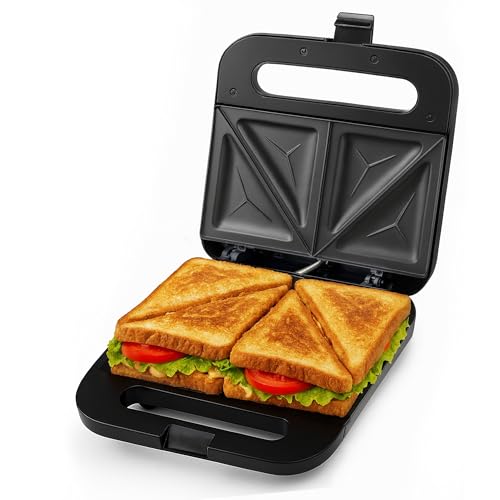
Pros & Cons
Pros
- Fast-heating element delivers evenly toasted sandwiches without hot spots, based on the manufacturer's heat-distribution design.
- Compact, lightweight build makes it practical for dorm rooms and small apartments where counter real estate is limited.
- Non-stick coating prevents bread from tearing during removal, which matters most for softer sandwich styles like brioche or sourdough.
- Vertical upright storage means the unit does not need to stay on the counter between uses.
Cons
- Plate size is fixed to a standard sandwich footprint, so thicker hoagies or oversized bread slices will not fit or close properly.
- Non-removable plates mean cleaning requires careful hand-wiping rather than a dishwasher run, which can be slower with melted cheese buildup.
Details
The OVENTE GPS401B is an electric sandwich press that solves the slow-morning problem by toasting and pressing sandwiches, omelets, and French toast in minutes on a single compact appliance.
Its fast-heating stainless steel element distributes heat evenly across both non-stick plates, preventing the uneven browning that plagues cheaper sandwich makers.
Built with heat-resistant stainless steel and a cool-touch handle, the unit is lightweight enough to move easily but stable enough on anti-skid feet during pressing.
Plates are non-removable, so cleanup relies on wiping rather than soaking — a minor inconvenience for dishes involving melted fillings.
Best for college students, small-apartment dwellers, or minimalist home cooks who want one affordable tool that handles breakfast and snack prep without taking up counter space.
How to Use
Plug in the unit and wait for the preheat indicator light to signal it has reached cooking temperature before placing any food on the plates.
Lay your sandwich, omelet, or French toast on the bottom plate, close the lid, and apply light downward pressure through the cool-touch handle to ensure full plate contact.
Once the indicator light confirms the unit is powered off and plates have cooled, wipe both surfaces with a damp cloth to clear residue before storing the maker upright.
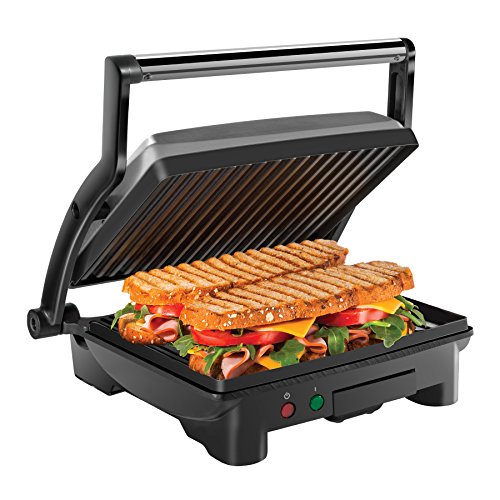
Save $15.04
Pros & Cons
Pros
- The 180-degree hinge expands the appliance from a sandwich press into a contact grill.
- The four-slice capacity handles two large paninis or four sandwiches in one batch.
- The non-stick plates and removable drip tray make post-meal cleanup more manageable.
- The stainless steel surface and UL approval support regular kitchen use.
Cons
- The product data does not list adjustable temperature controls, which may limit cooking precision.
- The compact cooking area may be restrictive for unusually large foods despite the flexible hinge.
Details
The Chefman RJ02-180-4 solves the need for quick sandwiches and small-batch grilling without requiring a separate countertop appliance.
Its four-slice surface handles two large paninis, while the floating hinge accommodates different sandwich thicknesses and the 180-degree opening supports flat grilling.
The stainless steel exterior, compact footprint, non-stick plates, tilt-up feet, and removable drip tray suit frequent use where storage and cleanup space are limited.
Temperature adjustment is not listed, so buyers seeking precise heat control should consider another model.
Best for small households, dorm residents, office kitchens, and anyone wanting one compact appliance for sandwiches and basic grilling.
How to Use
Place sandwiches on the non-stick plates, close the floating hinge, and cook until the bread reaches your preferred level of crispness. Cooking spray is not required.
For burgers, steaks, vegetables, or other foods, open the press 180 degrees to use both plates as a flat grill.
After cooking, use the tilt-up feet and removable drip tray to direct and collect grease before cleaning the coated plates.

Save $5.02

Save $20.00
Pros & Cons
Pros
- The touchscreen with countdown timer removes all guesswork from browning level selection, a real upgrade over rotary dials on comparable-priced toasters.
- Anti-jam auto shutoff stops heating if bread gets stuck, reducing a common kitchen safety risk with wide-slot toasters.
- Four function modes including Defrost and Frozen Waffle mean you can go straight from freezer to toasted without a separate thaw step.
- Compact footprint with cord wrap storage makes it practical for kitchens where counter space is limited.
Cons
- At 925W maximum power, this toaster operates at the lower end of the wattage range, so back-to-back batches may take slightly longer than higher-wattage models.
- With zero published customer reviews at launch, there is no long-term reliability data yet to confirm how the touchscreen holds up after months of daily use.
Details
The Ganiza 2-slice toaster is a touchscreen-controlled countertop appliance that solves the common problem of inconsistent browning and wasted time watching a toaster with no visible feedback.
Its 925W element paired with upgraded heating technology browns both faces of a slice simultaneously and evenly, which matters most when toasting thick artisan bread or dense bagels that standard toasters char on the outside before the center warms.
The body is full stainless steel with food-grade slot liners and a heat-resistant exterior, keeping it odor-free and durable. The compact footprint fits a single square foot of counter space.
The touchscreen adds a layer of complexity over a simple dial; if the screen develops faults over time, repair is less straightforward than replacing a mechanical knob.
Best for small households or singles who toast daily and want repeatable results without adjusting settings every morning.
How to Use
Select your browning level by tapping the touchscreen shade scale from 1 to 6, then press the lever down. The countdown timer starts immediately so you know exactly when toast will pop up.
For frozen items, tap the Defrost or Frozen Waffle mode before pressing the lever. The toaster automatically extends the cycle to account for the lower starting temperature without you adjusting the shade setting.
Use the plus-or-minus 10-second buttons during any active cycle to nudge the result darker or lighter. After toasting, slide out the crumb tray, empty it over a bin, and slide it back. Wrap the cord around the base storage clips before putting the unit away.

Pros & Cons
Pros
- The long slot accommodates both standard slices and thick artisan breads.
- Its slim footprint works well where countertop space is limited.
- Six browning settings and a cancel function provide useful toast control.
- The high-lift lever and removable crumb tray add practical daily convenience.
Cons
- The product data does not specify its materials or weight, so build heft is difficult to assess before buying.
- A single long slot may be less convenient for households that prefer separate controls for each slice.
Details
The BELLA Fits-Anywhere 2-Slice Slim Toaster solves the problem of limited counter space while handling standard slices, bagels, baguettes, and thick Texas-style toast.
Its 10-inch long slot fits two slices side by side, while six shade settings and a cancel function give you control over browning.
The 3.58-inch profile keeps the appliance compact, and the cord wrap reduces countertop clutter. Materials and weight are not specified.
The single long slot may not suit buyers who want independently controlled toasting for each slice.
Best for small kitchens and households that toast both everyday bread and thick artisan varieties.
How to Use
Place up to two slices in the 10-inch slot, or use it for a bagel, baguette, or thick toast. Turn the shade dial to select your browning level.
Press the lever down to begin, then use the cancel function whenever you want to stop the cycle early.
Use the high-lift lever for smaller foods, and slide out the removable crumb tray for quick cleanup.
Common Misconceptions
The biggest myth is that the most expensive appliance is automatically the best for you. In reality, the right choice depends on speed under load, and noise level — plus your own habits. Another trap is buying by brand alone — the same maker sells both excellent and forgettable lines.
The Short Answer
The short version of toaster maker: fit the appliance to your real cooking, not to a feature list. The practical takeaway is that speed under load matters more day to day than headline features. For product picks, compare best air fryer, best blender, and best instant pot.
Who Benefits Most
This matters most for busy weeknight cooks, and small-kitchen owners. If that is you, treat cleaning access, and storage bulk as non-negotiable. Casual users can relax the requirements and prioritize price and storage instead.
When It Is Worth Paying More
Spending up pays off when you use the appliance often enough to notice better cleaner results every week. If it only comes out occasionally, a mid-range pick is the smarter call. Match the money to frequency of use, not marketing.
Why It Matters
The variables that decide the outcome — cleaning access, storage bulk, and digital versus dial controls — are the ones buyers most often overlook. That is why two appliances that look alike can feel completely different in use — one saves time, the other quietly adds friction to every task. If you are shopping, our best air fryer and best blender guides are the fastest way in.
What To Look For
The keeper is the one you reach for without thinking; the drawer occupant is the one that asks too much for too little payoff. Those are the variables that decide whether it earns a spot in your kitchen or ends up unused. Ignore cosmetic upgrades until the fundamentals check out.
Related Product Guides
If this topic is part of a buying decision, these are the HomeWhisk guides most closely tied to it:
Frequently Asked Questions
What is the bottom line?
Match the appliance to your real habits: buy for durability if it is daily, for value and storage if it is occasional.
How do I keep it in good shape?
Build not overfilling past the max line, and cleaning removable parts by hand into normal cleanup. Light, consistent care prevents motors that bog down under load far better than occasional deep effort.
Who is this most useful for?
Mainly small-kitchen owners, and gadget-minimalists who want one do-it-all unit. If that is you, treat preset controls as a requirement rather than a nice-to-have.
What gear pairs well with it?
Start with a reliable core piece, then add as needs appear. Compare best air fryer, best blender, and best instant pot for related choices.
What matters most for toaster maker?
Focus on capacity and footprint, cleaning access, and storage bulk first. Those decide real performance; the rest is secondary. Compare best air fryer and best blender for options that get the basics right.
The Bottom Line
The simplest takeaway: buy for your real routine, not the most impressive feature list. Match the toaster maker to your cooking frequency, cleanup habits, and storage, then use best air fryer, best blender, and best instant pot to compare actual products.






Write Your Review
No reviews yet. Be the first to share your experience!