

TL;DR — When people ask about steel loaf pan, they are usually trying to make a buying or care decision without wasting money. This guide keeps the focus on what changes day-to-day use. When this turns into a purchase decision, compare best baking sheets, best mixing bowls, and best kitchen scale before narrowing your shortlist.
The HomeWhisk approach is research-first: compare construction, usability, cleaning, and long-term complaints before recommending a direction. For baking tools, sizing, material, accuracy, cleaning, and storage usually decide whether a tool stays useful or gets replaced.

Pros & Cons
Pros
- Superior heat conductivity produces evenly browned cookies, roasted vegetables, and baked goods without rotating pans mid-cycle.
- Reinforced steel rim prevents warping even after years of high-temperature roasting and repeated thermal shock.
- Light aluminum color prevents overbrowning on delicate items like shortbread cookies and pastries that burn easily on dark pans.
Cons
- Aluminum reacts with acidic foods like tomatoes and vinegar, causing darkening and pitting that affects appearance but not performance.
- Hand wash only since dishwasher detergent causes permanent cosmetic discoloration on natural aluminum.
Details
These are commercial-grade half sheet pans designed to solve the home baker’s most common frustration: uneven browning and warped pans that rock on the oven rack.
Pure aluminum construction conducts heat uniformly across the 17.9 x 12.9 inch surface, eliminating hot spots. The encapsulated galvanized steel rim adds structural support that prevents warping even when you move pans straight from a 450°F oven to a cold counter.
Each pan measures 17.9 x 12.9 x 1 inches exterior with a 17.1 x 12.1 inch interior cooking surface. Natural uncoated aluminum weighs less than heavy ceramic or cast iron but provides professional-level heat distribution. The raised rim gives you a secure grip with oven mitts.
Aluminum reacts with acidic ingredients like tomatoes and vinegar, causing cosmetic darkening over time. Hand washing is required since dishwasher detergent discolors the natural finish, though this does not affect baking performance.
Best for home bakers and cooks who want commercial durability and even heating without paying for individual professional-grade pans that cost $30 each.
Cooking Tips
Line pans with parchment paper when baking cookies or roasting acidic vegetables to prevent sticking and protect the aluminum from reactive ingredients. The natural surface releases cleanly with parchment, eliminating the need for chemical nonstick coatings.
Preheat empty pans in the oven for five minutes before adding food when roasting vegetables. This jump-starts caramelization and produces crispy edges instead of steamed, soggy results.
Stack pans with paper towels between them for storage to prevent scratching. Minor surface scratches from metal utensils do not affect heat distribution or baking performance, but separating pans preserves the appearance longer.
Save $9.00
Pros & Cons
Pros
- Heats evenly across the entire surface with no hot spots, producing uniformly golden cookies and perfectly roasted vegetables every time.
- Steel-reinforced rims stay completely flat even after repeated high-heat use under the broiler or in 450°F ovens.
- Pure aluminum construction is safer than nonstick coatings and will last decades with proper hand washing and care.
Cons
- Reactive aluminum darkens and pits when used with acidic foods like tomatoes or vinegar-based marinades without parchment paper protection.
- Requires hand washing only since dishwasher detergents cause cosmetic discoloration that does not affect performance but looks unappealing.
Details
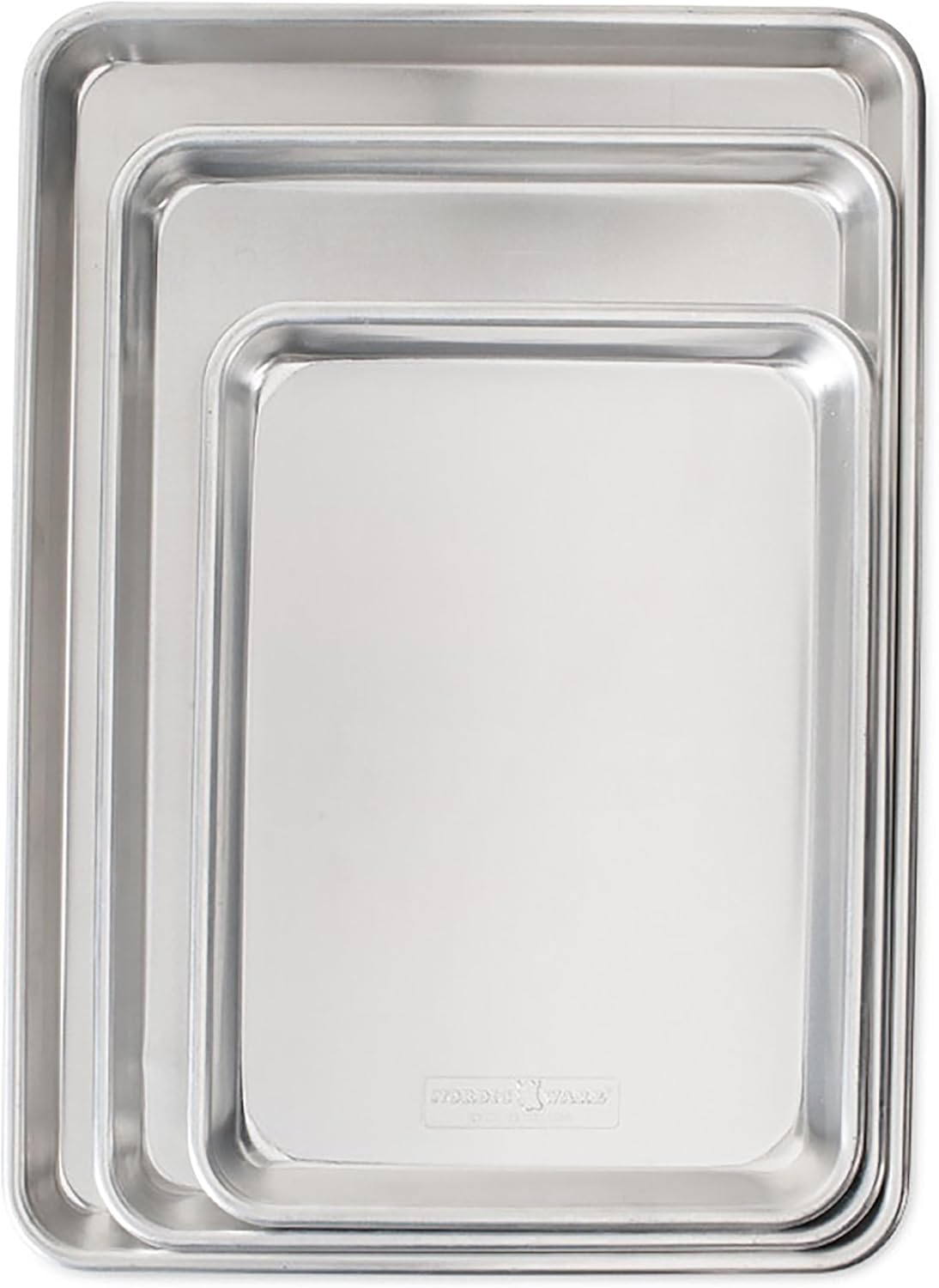
This three-piece set solves the frustration of unevenly baked goods and warped pans by using pure aluminum with steel-reinforced rims that conduct heat uniformly and stay flat for life.
The natural aluminum heats 30% faster than coated steel pans and distributes heat without hot spots, so cookies brown evenly and vegetables roast consistently. The encapsulated galvanized steel rim prevents the warping that ruins cheaper pans after a few months of use.
Each pan is made from hardened aluminum alloy in the USA. The half sheet measures 17.9 x 12.9 inches, the jelly roll 15.8 x 11.3 inches, and the quarter sheet 13 x 9.6 inches with 1-inch tall rims on all three.
Aluminum reacts with acidic foods like tomatoes and vinegar, causing permanent dark spots and pitting. Use parchment paper when roasting anything with citrus, tomato sauce, or vinegar marinades.
Best for home bakers and meal preppers who want commercial-grade pans that will outlast nonstick alternatives and produce consistently professional results.
Cooking Tips
Line pans with parchment paper when baking cookies or roasting acidic vegetables to prevent sticking and protect the aluminum from reactive ingredients. The natural surface releases baked goods easily when properly prepped with butter or parchment.
Preheat pans in the oven for 5 minutes before roasting vegetables to get better caramelization and crispier edges. The aluminum heats quickly and holds temperature steadily throughout cooking.
Use the quarter sheet for small batches and toasting nuts, the jelly roll for cookies and fish fillets, and the half sheet for full sheet pan dinners and large batches of roasted vegetables. Avoid metal spatulas that scratch the surface; nylon or silicone tools preserve the finish.

Pros & Cons
Pros
- Three size options cover everything from small batches to large family dinners without buying separate specialty pans.
- Carbon steel material heats quickly and maintains temperature better than thin aluminum sheets.
- Scratch-resistant coating holds up to metal spatulas and whisks without flaking or peeling over time.
Cons
- Hand washing recommended for longevity means the dishwasher-safe claim requires compromising coating durability.
- Gray nonstick surface makes it harder to visually monitor browning progress compared to lighter-colored baking sheets.
Details
This set solves the one-pan-fits-nothing problem by including 13×9, 15×10, and 17×11 inch sheets that handle different batch sizes without wasting oven space or crowding food.
The carbon steel core resists warping under 450°F heat and distributes temperature evenly, preventing the burnt-edges-raw-centers issue common with thin aluminum pans. The proprietary nonstick coating releases sticky doughs without greasing.
Heavy-gauge steel construction adds weight but provides rigidity that keeps pans flat through years of thermal cycling. Rolled rims reinforce edges and create a grip point for hot pads.
The dark gray nonstick finish makes visual browning checks harder than with natural aluminum or light-colored ceramic coatings.
Best for home bakers who rotate through different batch sizes weekly and want durable sheets that survive metal utensils.
Cooking Tips
Preheat pans for five minutes before adding cold dough to prevent sticking on first use. The carbon steel holds heat well, so cookies continue baking briefly after removal.
Use the smallest pan that fits your batch to maximize airflow around food. Crowding the large sheet reduces browning and extends bake time.
Reduce oven temperature by 25°F when switching from aluminum pans, as the dark nonstick coating absorbs more radiant heat and browns faster.

Pros & Cons
Pros
- The ceramic coating releases delicate items like roasted vegetables and thin cookies without tearing or sticking.
- Three different pan sizes handle everything from batch cookie baking to small-portion roasting without needing extra pieces.
- Square-rolled edges add rigidity that prevents flexing when carrying loaded pans across the kitchen.
Cons
- Hand washing is required to maintain the ceramic coating, adding time compared to dishwasher-safe metal pans.
- The storm blue exterior shows fingerprints and smudges more visibly than darker finishes.
Details
This three-piece set solves the problem of needing multiple pan sizes without sacrificing nonstick performance or oven durability.
The ceramic coating heats faster than traditional nonstick and releases food without oil or parchment, while the light interior color prevents the overbrowning that darker pans cause with delicate batters.
Heavy-gauge aluminized steel construction keeps pans flat under high heat, and expanded rims give you secure handling when moving hot loads. Each pan shows stamped size markings so you grab the right one mid-recipe.
Hand washing is mandatory to preserve the ceramic surface, which adds a step compared to dishwasher-safe alternatives.
Best for home bakers who prioritize even browning and chemical-free nonstick over low-maintenance cleanup.
Cooking Tips
Preheat the oven with pans inside for the first minute to eliminate temperature shock that can warp lighter gauge metals. The ceramic coating responds quickly to heat changes, so reduce oven temperature by 25 degrees from recipes written for dark pans to avoid overbrowning.
Use silicone or wooden utensils when flipping items directly on the pan surface. The ceramic resists scratching better than PTFE coatings, but metal spatulas will eventually wear through with repeated use.
Cool pans completely before washing by hand with non-abrasive sponges. Residual heat can bake on soap residue, and dishwasher detergents degrade the ceramic layer faster than manual cleaning with mild dish soap.

Pros & Cons
Pros
- Diamond texture delivers noticeably more even browning than flat pans, especially on cookies and biscuits.
- The extra thickness prevents the pans from buckling or popping in high heat, a common complaint with thinner sheets.
- All three sizes nest together for compact storage, taking up less cabinet space than bulky single pans.
Cons
- Hand washing is required to preserve the nonstick coating; the dishwasher will degrade it over time.
- The champagne gold color may show light scratches more visibly than darker finishes, though this does not affect performance.
Details
This is a three-piece carbon steel baking set designed to solve uneven baking and stuck-on food. The diamond texture increases surface area for better air circulation, so cookies brown evenly and release without tearing.
The 0.8mm carbon steel is thick enough to resist warping at 450°F, and the two-layer Whitford coating is free of PFOA, BPA, and PTFE. The pans measure 13×9, 15×10, and 17.5×12 inches, covering everything from small batches of cookies to full sheet pan dinners.
Each pan has a 1-inch rim to contain liquids during roasting. The champagne gold finish is corrosion-resistant and stackable for storage. At 0.8mm thick, these pans are heavier than discount alternatives but lighter than professional-grade aluminum.
The nonstick coating requires hand washing and will wear down if you use metal utensils or abrasive scrubbers. Buyers should avoid high-broiler settings to preserve the coating.
Best for home bakers who want reliable, evenly baked results across multiple pan sizes without paying for commercial-grade equipment.
Cooking Tips
Preheat the pans in the oven for 5 minutes before adding dough or vegetables. This activates the nonstick surface and prevents sticking, especially with sticky batters or marinated foods.
Use the quarter sheet for small batches of 8 to 12 cookies, the half sheet for standard recipes or roasted vegetables, and the full sheet for large dinners or multiple trays of appetizers. Rotate pans halfway through baking if your oven has hot spots.
Let the pans cool completely before washing. Thermal shock from cold water on a hot pan can warp even thick carbon steel. Wipe with a soft sponge and mild soap; avoid steel wool or harsh cleaners that damage the coating.
Materials That Matter
Material decides how a steel loaf pan performs and lasts: it drives heat conductivity, and rim and edge design and how much drying fully before storage it demands. There is rarely one best material — each trades cost against durability and upkeep, so pick for how you actually cook. If you are shopping, our best baking sheets and best mixing bowls guides are the fastest way in.
The Short Answer
Steel loaf pan usually comes down to one thing: matching the baking tool to how you actually cook rather than to a spec sheet. The practical takeaway is that release performance matters more day to day than headline features. For product picks, compare best baking sheets, best mixing bowls, and best kitchen scale.
Why It Matters
The variables that decide the outcome — release performance, sizing and volume, and nesting or storage shape — are the ones buyers most often overlook. That is why two baking tools that look alike can feel completely different in use — one saves time, the other quietly adds friction to every task. If you are shopping, our best baking sheets and best mixing bowls guides are the fastest way in.
When It Is Worth Paying More
Spending up pays off when you use the baking tool often enough to notice better cleaner results every week. If it only comes out occasionally, a mid-range pick is the smarter call. Match the money to frequency of use, not marketing.

Related Product Guides
If this topic is part of a buying decision, these are the HomeWhisk guides most closely tied to it:
- best baking sheets
- best mixing bowls
- best kitchen scale
- best cutting board
- best food storage containers
Frequently Asked Questions
Which material is best for a steel loaf pan?
It depends on your priorities around measurement accuracy, and nesting or storage shape. See best baking sheets and best mixing bowls for how materials play out in real models.
How do I keep it in good shape?
Build skipping abrasive scrubbers, and drying fully before storage into normal cleanup. Light, consistent care prevents finishes that scratch off far better than occasional deep effort.
What matters most for steel loaf pan?
Focus on warp resistance, sizing and volume, and nesting or storage shape first. Those decide real performance; the rest is secondary. Compare best baking sheets and best mixing bowls for options that get the basics right.
What gear pairs well with it?
Start with a reliable core piece, then add as needs appear. Compare best baking sheets, best mixing bowls, and best kitchen scale for related choices.
Is a premium baking tool worth it?
Only if you use it enough to notice better control, durability, or cleanup regularly. Occasional users are well served by a mid-range pick like those in best kitchen scale.
The Bottom Line
For most home cooks, the best choice is the one that removes friction without adding maintenance you will ignore. Start with your use case, then cross-check best baking sheets, best mixing bowls, and best kitchen scale.




Write Your Review
No reviews yet. Be the first to share your experience!