

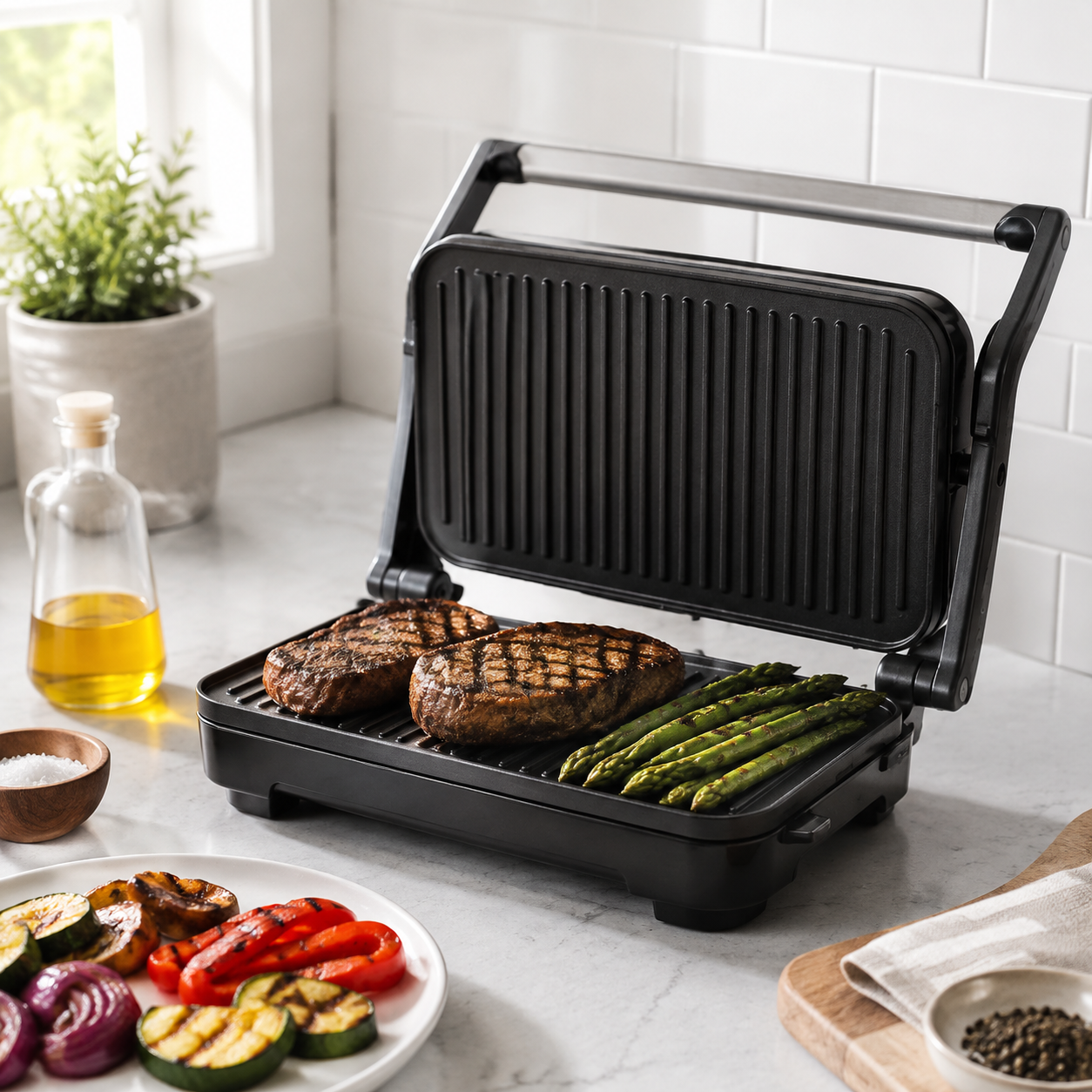
TL;DR — When people ask about small indoor grill, they are usually trying to make a buying or care decision without wasting money. This guide keeps the focus on what changes day-to-day use. If you are comparing products, start with best air fryer, best blender, and best instant pot; those guides give the model-level context behind this advice.
We looked at manufacturer details, material behavior, recurring owner-review patterns, and where this topic overlaps with related buying guides. For appliance topics, we pay close attention to capacity, controls, cleanup, storage, reliability complaints, and whether the machine saves enough effort to justify the space.
Pros & Cons
Pros
- The 35% faster heating helps shorten the time from plugging in to serving.
- Removable dishwasher-safe plates make post-meal cleanup easier.
- The 60-square-inch surface accommodates food for four servings.
- The nonstick coating supports cooking with less butter or oil.
Cons
- The 4-serving capacity may be limiting for larger households or batch cooking.
- The product data does not specify adjustable temperature controls, weight, or overall dimensions.
Details
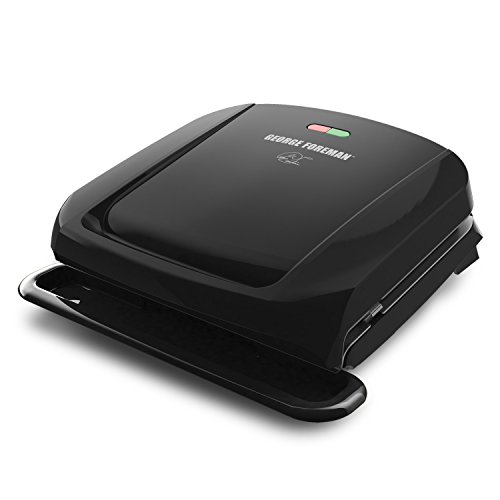
The George Foreman 4-Serving Indoor Grill provides countertop grilling for a main course or complete meal for four, helping households cook without an outdoor grill.
Its heating elements preheat 35% faster, while the advanced George Tough nonstick coating reduces the need for butter and oil.
The 60-square-inch surface offers practical room for four servings, and the removable plates simplify daily cleanup.
The product data does not list its weight, overall dimensions, or adjustable temperature settings.
Best for busy households needing quick indoor meals for up to four people.
How to Use
Plug in the grill and allow its faster-heating elements to preheat before adding food.
Use the nonstick cooking surface with less butter or oil, and arrange food within the 60-square-inch area for even access.
After cooking, remove the plates and place them in the dishwasher for easier cleanup.

Pros & Cons
Pros
- The PFAS-free George Tough ceramic nonstick coating is designed for 8x greater durability.
- The 1-inch hinge accommodates thick cuts of meat, fish, burgers, and sandwiches.
- Indoor and outdoor use provides year-round cooking flexibility.
- A 3-year limited warranty adds coverage for long-term ownership.
Cons
- The available product data does not list the grill's size or weight, so storage fit is difficult to confirm.
- Temperature-control settings are not specified, which may matter to cooks who want precise heat adjustment.
Details
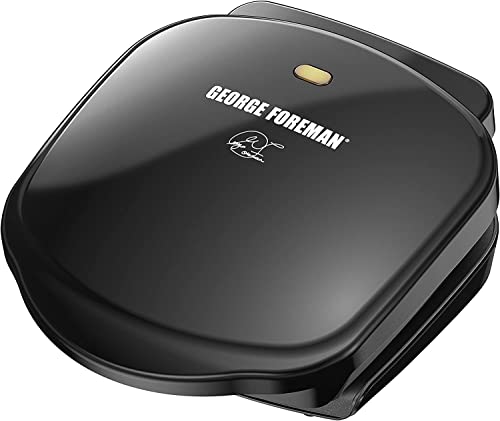
The George Foreman Family Grill combines a contact grill and flat panini press for households that need to cook 5+ servings without using an outdoor grill.
Its adjustable angle improves searing and lets fat drain away, while the 1-inch hinge handles thick meat, fish, burgers, and sandwiches without forcing them flat.
George Tough ceramic nonstick coating is PFAS-free and designed for 8x greater durability. The removable drip tray is dishwasher-safe, and vertical storage helps save space.
Exact dimensions and weight are not included in the available specifications, and temperature-control settings are not specified.
Best for families and hosts who want versatile indoor or outdoor grilling with simpler cleanup.
How to Use
Use the adjustable angle for grilling so excess fat can drain into the removable tray. The design supports cooking without added oil.
Lay the grill flat when pressing paninis or sandwiches. The 1-inch hinge leaves room for thick cuts and helps the plates cook evenly.
After cooking, remove the drip tray for dishwasher cleaning, then store the grill vertically with the cord tucked away.

Pros & Cons
Pros
- Five adjustable thermostat settings provide control over different indoor grilling recipes.
- The removable grill plate, drip tray, lid, and thermostat simplify cleaning and storage.
- The tempered glass lid lets you cover food while keeping it visible during cooking.
- A one-year warranty adds purchase support for the included grill components.
Cons
- The 12-inch cooking area may feel limited when preparing large meals for a crowd.
- It requires an indoor electrical outlet and cannot replace the capacity of a full-size outdoor grill.
Details
The Elite Gourmet EMG6505G brings barbecue-style cooking indoors, solving the problem of rain or limited outdoor space interrupting grilled meals.
Its 1200W circular heating element supports faster, more even cooking, while five thermostat settings reach up to 450°F.
The 12-inch nonstick grill plate, tempered glass lid, drip tray, cool-touch base, and handles support regular countertop use; product data does not specify its weight.
The cooking surface is smaller than a full-size outdoor grill, so large gatherings may require multiple batches.
Best for households wanting convenient indoor grilling and easier cleanup without relying on outdoor weather.
How to Use
Set the removable thermostat to one of five heat levels, then allow the circular heating element to warm the 12-inch nonstick plate.
Grill steaks, vegetables, ribs, salmon, and other foods on the surface, using the lid when covered cooking is helpful.
Unplug and detach the removable parts after cooking, then place the dishwasher-safe components in the dishwasher for cleanup.

Pros & Cons
Pros
- Heats to 500°F quickly and maintains consistent temperature across the entire 14-inch surface, preventing unevenly cooked food.
- Interchangeable grill and griddle plates handle breakfast through dinner without needing multiple appliances on your counter.
- Nonstick coating releases food easily and both plates plus the mesh lid go straight into the dishwasher.
- Fits six burgers or pancakes at once, making it practical for feeding a family without cooking in batches.
Cons
- The 14-inch cooking surface may feel cramped if you regularly cook for more than six people or need to prepare multiple dish types simultaneously.
- Some users report the nonstick coating requires careful handling with silicone or wooden utensils to prevent scratching over time.
Details
The Ninja GR101 is a countertop electric grill that solves the problem of indoor grilling without smoke filling your kitchen.
It reaches 500°F maximum heat, delivering char-grill marks comparable to gas grills. The edge-to-edge heating system eliminates hot and cold spots found in cheaper electric grills.
The unit includes two 14-inch interchangeable nonstick plates (one ribbed grill, one flat griddle), a perforated mesh lid to reduce smoke, and high-walled plates with grease catches. Each plate fits approximately six burger patties or pancakes.
The nonstick coating works well but requires non-metal utensils to maintain longevity, and the 14-inch surface may require batch cooking for gatherings larger than six people.
Best for families of 4-6 who want year-round indoor grilling with minimal smoke and fast cleanup.
How to Use
Preheat the unit for 5 minutes before cooking. For steaks and burgers, use the grill plate with the hood up and set to maximum heat. For pancakes and eggs, switch to the griddle plate and lower the temperature.
Drop the hood down when cooking chicken breasts or melting cheese on burgers to trap heat and cook faster. The mesh lid reduces smoke but does not eliminate it completely with fatty meats.
After cooking, wait for plates to cool, then remove and wash them in the dishwasher or by hand. Wipe the base with a damp cloth. Store plates flat to prevent warping.
Common Misconceptions
The biggest myth is that the most expensive appliance is automatically the best for you. In reality, the right choice depends on storage bulk, and noise level — plus your own habits. Another trap is buying by brand alone — the same maker sells both excellent and forgettable lines.
Who Benefits Most
This matters most for meal-preppers batching food, and families cooking in volume. If that is you, treat preset controls, and cleaning access as non-negotiable. Casual users can relax the requirements and prioritize price and storage instead.
What To Look For
The keeper is the one you reach for without thinking; the drawer occupant is the one that asks too much for too little payoff. Those are the variables that decide whether it earns a spot in your kitchen or ends up unused. Ignore cosmetic upgrades until the fundamentals check out.
When It Is Worth Paying More
Spending up pays off when you use the appliance often enough to notice better easier cleanup every week. If it only comes out occasionally, a mid-range pick is the smarter call. Match the money to frequency of use, not marketing.
Why It Matters
Small differences in speed under load, storage bulk, and motor or heating-element power change the result more than most buyers expect. That is why two appliances that look alike can feel completely different in use — one saves time, the other quietly adds friction to every task. If you are shopping, our best air fryer and best blender guides are the fastest way in.
The Short Answer
Cut through it and small indoor grill is a fit question — the appliance has to match how you cook. The practical takeaway is that storage bulk matters more day to day than headline features. For product picks, compare best air fryer, best blender, and best instant pot.
Related Product Guides
If this topic is part of a buying decision, these are the HomeWhisk guides most closely tied to it:
Frequently Asked Questions
What gear pairs well with it?
Start with a reliable core piece, then add as needs appear. Compare best air fryer, best blender, and best instant pot for related choices.
What is the bottom line?
Match the appliance to your real habits: buy for durability if it is daily, for value and storage if it is occasional.
Is a premium appliance worth it?
Only if you use it enough to notice better control, durability, or cleanup regularly. Occasional users are well served by a mid-range pick like those in best instant pot.
What should I avoid?
Avoid buying by brand alone, ignoring checking the seals and gaskets, and oversizing for your space. Each invites uneven cooking or heating down the line.
What matters most for small indoor grill?
Focus on preset controls, speed under load, and noise level first. Those decide real performance; the rest is secondary. Compare best air fryer and best blender for options that get the basics right.
The Bottom Line
Small indoor grill comes down to fit: how often you use the tool, how much care it needs, and whether it solves a real kitchen problem. If you are buying, compare best air fryer, best blender, and best instant pot before you spend.



Write Your Review
No reviews yet. Be the first to share your experience!