

Here’s an uncomfortable fact: most refrigerators don’t tell you their actual internal temperature. They have a dial that goes from 1 to 5, or a digital setpoint you hope is accurate, but the real temperature on the shelf can drift several degrees from what the controls claim — especially as the fridge ages, the door seal weakens, or you pack it full. That gap matters because food safety has a hard line. The USDA says refrigerators should stay at or below 40°F and freezers at 0°F; above 40°F, bacteria multiply quickly. A refrigerator thermometer is the cheap little device that tells you the truth.
The category is simple and inexpensive, splitting mainly into two types. Analog dial thermometers are the classic — a large dial you read at a glance, no batteries, often sold in multipacks for a few dollars each. Digital thermometers add a precise LCD readout and, on better models, min/max memory (so you can see if the fridge spiked overnight) and a remote probe. Both do the core job; the choice is about how much precision and data you want. Below are the most-bought picks with quick verdicts and detail.
Our Quick Picks
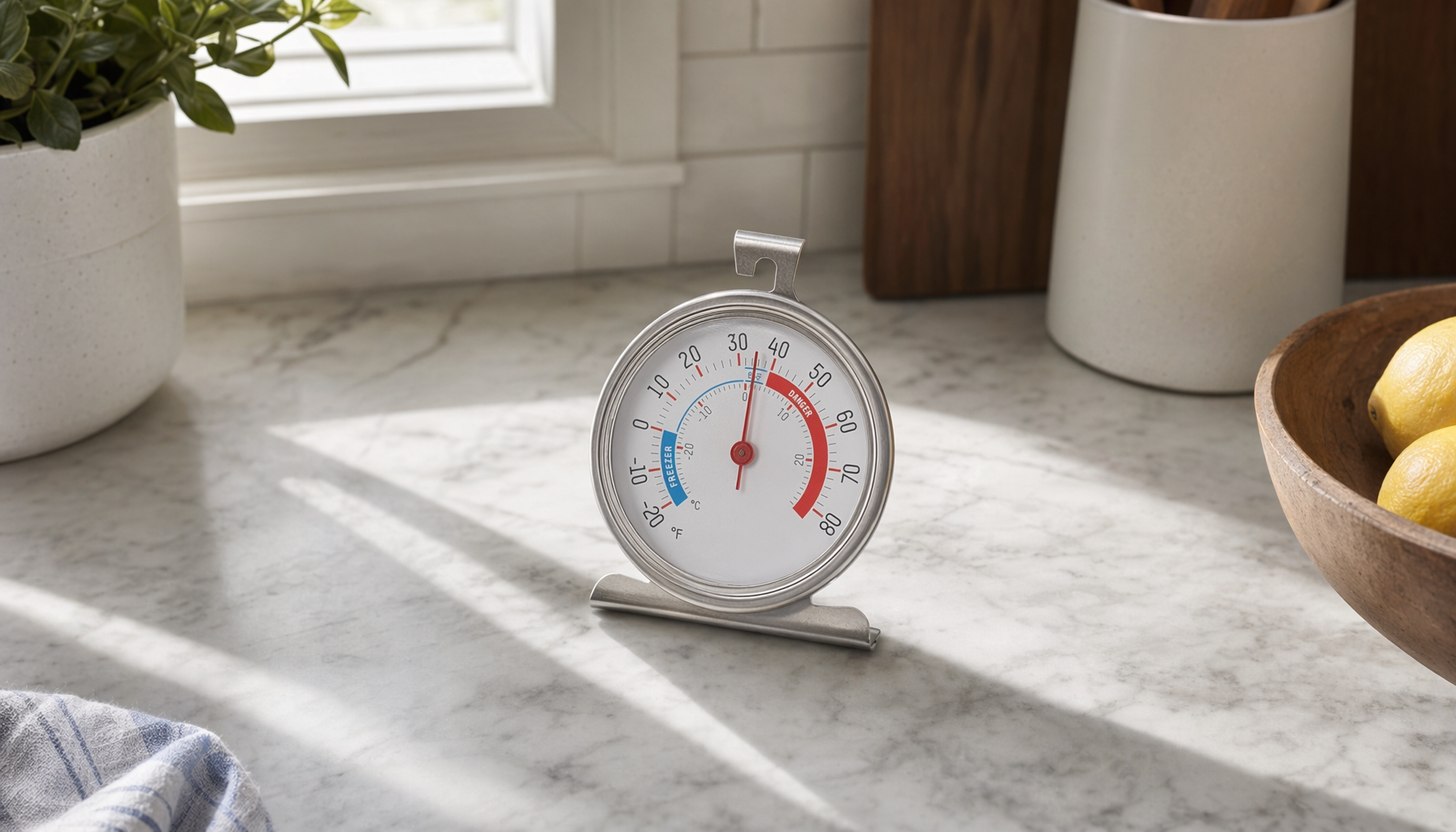
- Best Overall (Analog): Taylor 5924 Large Dial Refrigerator/Freezer Thermometer
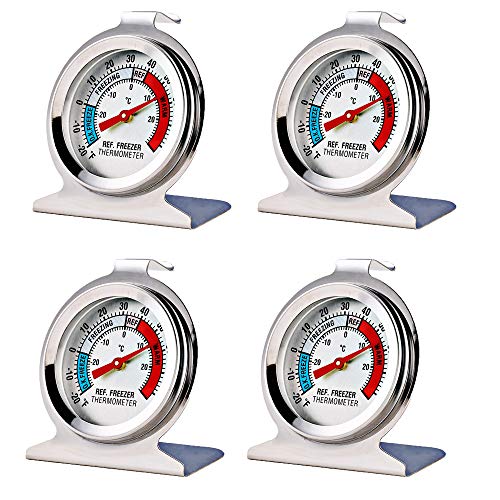
- Best Value Multipack: 4-Pack Large Dial Analog Refrigerator/Freezer Thermometers
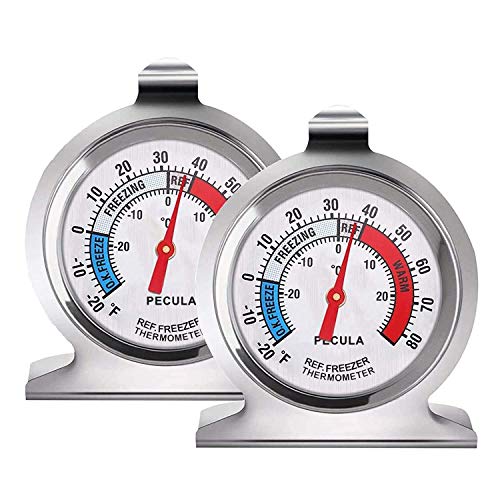
- Best for Two Zones: 2-Pack Classic Fridge Thermometers (Fridge + Freezer)
- Best Digital (Min/Max): Waterproof Digital Fridge/Freezer Thermometer with Max/Min Record
- Best Digital LCD: Digital Fridge/Freezer Room Thermometer, Waterproof Large LCD

Pros & Cons
Pros
- The extra-large 3-inch dial with labeled FREEZER, REF, and DANGER zones removes any ambiguity about whether your appliance is holding a safe temperature.
- No batteries or power source required, so it works continuously without needing replacement or recharging.
- NSF certification adds third-party verification that the thermometer performs to a documented standard, not just a manufacturer claim.
- The dual-mount design works in both refrigerators and freezers without buying separate thermometers for each appliance.
Cons
- Analog dials can shift slightly over time and may need periodic calibration checks against a verified reference thermometer.
- Hand-wash only care means it requires a bit more attention than tools that can go straight into the dishwasher.
Details
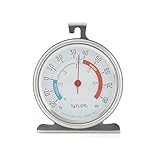
The Taylor 5924 is an analog refrigerator and freezer thermometer that solves the problem of not knowing whether your appliance is actually holding a food-safe temperature.
Its 3-inch dial spans -20F to 80F with printed FREEZER, REF, and DANGER zones, giving you an immediate visual read without any app or display to interpret.
The stainless steel casing handles condensation and temperature fluctuations without corroding, and the compact dial fits on a standard refrigerator shelf or wire rack.
It requires hand washing only, which adds a small maintenance step compared to dishwasher-safe alternatives.
Best for home cooks and households that want a simple, battery-free way to verify refrigerator and freezer temperatures daily.
Best Uses
Place it in the warmest zone of your refrigerator, typically near the door or top shelf, to catch temperature fluctuations before they affect perishables like dairy, deli meat, or leftovers.
In the freezer, position it away from the walls and vents so the reading reflects actual storage temperature rather than the air closest to the cooling element.
It also works as a quick diagnostic tool when a refrigerator seems off, giving you a real-time reading to decide whether to call for service or adjust the thermostat.

Pros & Cons
Pros
- The large dial face with distinct color zones makes temperature readings fast and accurate without leaning in close.
- Battery-free mechanical operation eliminates a recurring maintenance task and keeps the thermometer functional during power-related disruptions.
- Stainless steel construction with a glass lens holds up to repeated cold exposure and is easy to wipe clean.
- The two-pack value means you can cover both compartments of a standard fridge-freezer combo in one purchase.
Cons
- No digital readout means precision is limited to the nearest visible graduation on the dial, which may not satisfy users who need exact decimal readings.
- The analog display can be harder to read in poorly lit freezer drawers where the color zones are less distinct.
Details
The PECULA thermometer solves the common problem of guessing whether your fridge is cold enough to keep food safe, using a simple color-coded analog dial that works the moment you hang it up.
The wide -20 to 80°F range covers both freezer and refrigerator zones, while the large dial face and color banding let you spot a temperature problem before food spoils.
Built from stainless steel with a glass lens, the unit resists cracking in cold, humid conditions and cleans easily with a damp cloth.
Analog precision is limited to visible graduations, so buyers needing exact decimal accuracy should consider a digital model instead.
Best for households, renters, and campers who want a no-fuss, always-on temperature monitor for everyday food safety.
Best Uses
Hang one in your refrigerator’s main compartment to confirm dairy and leftovers are staying at or below 40°F, the FDA-recommended safe zone for perishables.
Place the second unit in your freezer to verify it holds 0°F or below, which matters most after a power outage or when the door seal starts to wear.
The compact size and hook design also make these a reliable fit for beverage coolers, mini-fridges, and insulated catering boxes where built-in displays are absent.

Pros & Cons
Pros
- The stainless steel body holds up in sub-zero freezer conditions where plastic-framed thermometers often become brittle.
- Flexible mounting with both a base stand and a hook means it fits virtually any shelf, drawer, or rack configuration.
- No power source needed makes it reliable year-round, including during outages when food safety monitoring is critical.
- Getting four thermometers in one purchase covers multiple appliances or zones without additional cost.
Cons
- Analog dials lack the precision of digital models, so readings reflect an approximate range rather than an exact degree readout.
- No alarm or alert function means you must visually check the dial to catch temperature changes rather than being notified automatically.
Details
The LinkDm 4-Pack monitors refrigerator and freezer temperatures to help you catch unsafe cold storage conditions before food spoils or freezer burn sets in.
A -20 to 80°F range handles both freezers and standard fridges. The large dial face makes readings visible at a glance without squinting or moving items.
Built from stainless steel, the body resists condensation and cold-temperature wear better than plastic alternatives common at this price point.
Analog thermometers read in approximate ranges, not exact degrees, so buyers who need precision within one degree should consider a digital model instead.
Best for households managing multiple refrigerators, chest freezers, or coolers who want simple, battery-free temperature monitoring across all units.
Best Uses
Keep one in a garage chest freezer where you may not open it daily. A quick glance through the lid window tells you whether the unit held temperature overnight without pulling items out to check.
Pack one in a camping cooler with ice to track melt rate and know when to add more ice. The stainless steel body handles the wet, condensation-heavy environment a standard paper-backed thermometer would not survive.
Pros & Cons
Pros
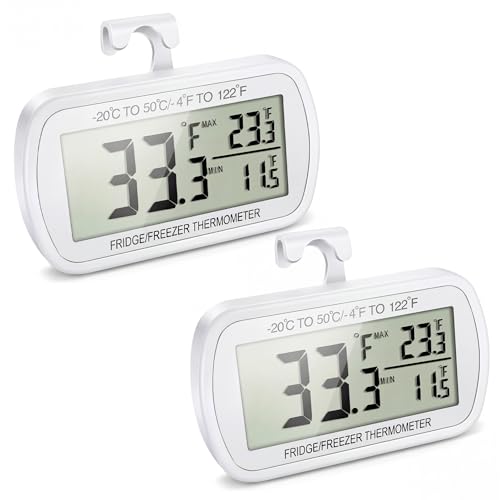
- The 2.56-inch LCD shows current, max, and min readings simultaneously, eliminating the need to scroll through menus to check temperature history.
- IPX3 waterproofing addresses the most common failure point for fridge thermometers — moisture damage from condensation and spills.
- Three placement methods give genuine flexibility for different fridge configurations, from wire shelves to flat freezer walls.
- The 2-pack provides one unit for the fridge and one for the freezer without purchasing separately, covering both zones at once.
Cons
- Accuracy of ±2°F may not satisfy users who need precision monitoring for fermentation, cheese aging, or other temperature-sensitive food projects.
- Rebooting the unit resets the max/min memory, so any historical temperature data is lost if the battery dies or the thermometer is turned off.
Details
The VOULOIR fridge thermometer solves the problem of not knowing whether your refrigerator held safe temperatures overnight or during a power fluctuation.
The simultaneous max/min/current display means you see the full temperature story at a glance — no button presses needed to review history.
The unit is compact with a magnetic back and fold-out stand, making it easy to reposition without tools as your fridge layout changes.
The max/min record resets on reboot, so it does not retain data across power cycles — a limitation if you need long-term logging.
Best for households and food service staff who want reliable, no-fuss temperature verification across both refrigerator and freezer zones.
How to Use
Insert the included CR2032 battery, press the power button, and use the °C/°F button on the back to set your preferred temperature unit before placing the thermometer.
Choose your mount: press the magnetic back against any metal fridge surface, flip the stand to hook over a wire shelf, or set it upright on a flat surface inside the unit.
Check the LCD periodically for the current reading and review the max/min values to confirm the fridge stayed within your target range since the last reset.
Pros & Cons
Pros
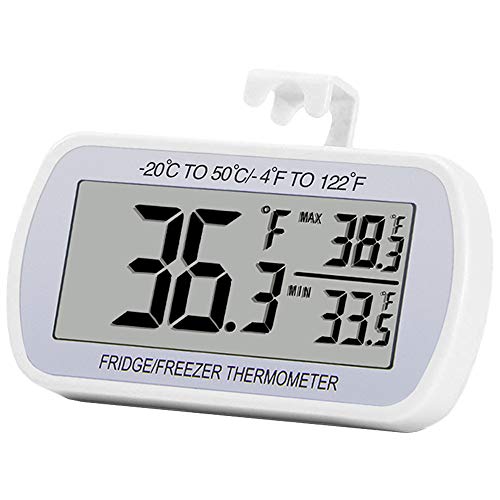
- Max/Min memory function lets you review the coldest and warmest points reached since the last reset, useful for food safety checks.
- Three mounting options give placement flexibility whether your fridge has metal shelves, hooks, or needs a freestanding unit.
- IPX3 waterproofing adds durability in the wet, condensation-heavy environment inside a refrigerator or freezer.
- Comes with the CR2032 battery included, so setup requires no extra trip to the store.
Cons
- Accuracy is rated at plus or minus 2°F, which is sufficient for home food storage but may fall short for lab-grade or pharmaceutical cold-chain requirements.
- The temperature sensing point is on the back of the unit, so placement against a solid surface could affect reading accuracy if not mounted correctly.
Details
The RIY Digital Refrigerator Thermometer solves the core kitchen problem of not knowing whether your fridge or freezer is holding a safe, consistent temperature without opening the door repeatedly.
Its Max/Min record function logs the highest and lowest temps since the last reset, letting you confirm food stayed within safe ranges overnight or during a power interruption.
Built from ABS plastic with an IPX3 waterproof rating, it handles fridge condensation reliably. The compact body fits on a shelf, door hook, or any magnetic surface without claiming meaningful storage space.
The plus-or-minus 2°F accuracy is adequate for food storage but not for precision applications like medication refrigeration where tighter tolerances are required.
Best for home cooks and small food-service operators who want a no-fuss, always-visible temperature reference without connecting to an app or power outlet.
Best Uses
Inside a household refrigerator, mount it magnetically at eye level on a center shelf where airflow is most representative of the overall internal temp, not directly against the back wall.
In a chest freezer or bar fridge, use the hook mount on the interior lip so the sensor hangs freely in the air rather than resting on a frozen surface, which can skew readings low.
Beyond food storage, the 122°F upper range makes it useful in fermentation chambers, proofing boxes, or wine coolers where you need to confirm temps stay within a specific window during a process.
About These Recommendations
The technique above is the point of this guide; the products are here because they help. We have not tested them ourselves — we did not buy or use this gear. The recommendations come from comparing specifications and materials against the patterns in verified owner reviews, so treat them as a shortlist worth researching rather than a verdict from our own kitchen.
Availability and prices change often, so check the current listing before buying. We earn a commission on purchases made through links on this page, which never affects what we recommend.
The Picks in Detail
Taylor 5924 Large Dial Refrigerator/Freezer Thermometer — Best Overall
Pros: The trusted-brand classic and the one to buy if you want a single dependable thermometer. Taylor has made kitchen thermometers for over a century, and the 5924 reflects it — a clear 3-inch dial that’s easy to read through a packed shelf, a temperature range covering both fridge and freezer, and a design that stands or hangs wherever you put it. No batteries, nothing to fail. It does exactly one thing and does it reliably for years.
Cons: Analog dials are less precise than a digital readout and have no memory, so they show the current temperature only — you won’t catch an overnight spike. Reading to the exact degree takes a careful look.
Best for: Anyone who wants one no-fuss, battery-free thermometer from a name they can trust, parked on a middle shelf.
4-Pack Large Dial Analog Refrigerator/Freezer Thermometers — Best Value Multipack
Pros: The value play, and genuinely useful beyond just price. For a few dollars you get four large-dial analog thermometers — enough to put one in the fridge, one in the freezer, and keep spares for a second fridge, a garage beer fridge, or a cooler. Large dials are easy to read, there are no batteries to replace, and having multiples means you can actually monitor every cold zone in the house instead of guessing.
Cons: Same analog limitations as any dial — no precise digits, no min/max memory. Build quality is basic at this price; treat them as functional tools, not heirlooms.
Best for: Households with more than one fridge/freezer, or anyone who wants cheap, reliable coverage everywhere without thinking about batteries.
2-Pack Classic Fridge Thermometers — Best for Two Zones
Pros: The right amount for the typical kitchen — one for the refrigerator, one for the freezer. These classic large-dial thermometers cover the standard fridge-and-freezer range, read clearly at a glance, and need no batteries. Buying a pair is the sensible default since your freezer needs monitoring just as much as the fridge (it should hold 0°F), and a two-pack covers both without the leftover spares of a four-pack.
Cons: Analog, so no exact-degree precision or memory of temperature swings. As budget units, they’re simple and functional rather than premium.
Best for: A standard single-fridge household that wants to monitor both the refrigerator and freezer compartments without overbuying.
Waterproof Digital Fridge/Freezer Thermometer with Max/Min Record — Best Digital
Pros: The pick when you want real data, not just a glance. The digital LCD shows the exact current temperature, and the standout feature is min/max memory — it records the highest and lowest temperatures since you last reset it, so you can tell whether the fridge crept above 40°F overnight or while you were away, which an analog dial can never reveal. Waterproof construction handles the damp fridge environment, and it typically includes a probe or mounting options.
Cons: Requires a battery, which will eventually need replacing. More features mean a slightly higher price than analog multipacks (still inexpensive overall).
Best for: Anyone serious about food safety, monitoring a fridge they suspect is failing, or wanting to verify temperature stability over time rather than at a single moment.
Digital Fridge/Freezer Room Thermometer, Waterproof Large LCD — Best Digital LCD
Pros: A digital alternative focused on readability, with a large, clear LCD that’s easy to read in a dim fridge, max/min recording to catch temperature swings, and waterproofing for the cold, humid environment. The big display is the draw — it’s faster to read at a distance than a small screen or a dial, useful if you check temps frequently or have less-than-perfect eyesight. Covers fridge, freezer, or room monitoring.
Cons: Battery-powered like any digital unit. Functionally similar to other digital models, so the choice between them often comes down to display size and price.
Best for: Buyers who want digital precision and min/max memory with the easiest-to-read screen, especially for frequent checks or multi-purpose monitoring.
What to Look For in a Refrigerator Thermometer
Analog vs. Digital
Analog dial thermometers are cheap, battery-free, and reliable — perfect if you just want to confirm the fridge is in the safe zone at a glance. Digital thermometers cost a little more and need a battery, but give exact readings and often add min/max memory, which records temperature swings you’d otherwise never see. If food safety is a real concern (medications, a suspect fridge, or you travel), the digital min/max feature is worth it; otherwise an analog dial is plenty.
Accuracy and Range
The thermometer should clearly cover refrigerator temperatures (around 32-40°F) and, ideally, freezer temperatures (down to 0°F and below) so one type works in both compartments. Accuracy within a degree or two is fine for food-safety monitoring. Place it in the middle of a shelf, away from the door and the cold-air vent, for a reading that reflects the actual food zone rather than a hot or cold spot.
Readability
You’ll glance at this thing constantly, so a large dial or a big LCD matters more than it sounds. Refrigerators are dim and often packed, so a clear, high-contrast display you can read without moving items around saves real annoyance. Digital backlit or large-LCD models win here, but a good 3-inch analog dial is also easy to read.
Mounting and Durability
Look for a model that hangs from a shelf wire, stands on a shelf, or both, so you can place it where it reads true. Waterproof or moisture-resistant construction matters because the fridge is a damp environment that can fog or damage cheap electronics over time. Multipacks are handy for covering multiple appliances at once.
Frequently Asked Questions
What temperature should my refrigerator be?
The USDA recommends keeping your refrigerator at or below 40°F, with 35-38°F being the ideal target for keeping food fresh without freezing it. The freezer should be at 0°F. Above 40°F, bacteria multiply rapidly and food becomes unsafe more quickly. Because a fridge’s built-in dial or setpoint can drift from the actual shelf temperature, a separate thermometer is the only reliable way to confirm you’re in the safe zone.
Why do I need a separate refrigerator thermometer?
Many refrigerators show only a relative dial (1-5) or a setpoint that doesn’t match the real internal temperature, and that gap widens as the appliance ages, the door seal weakens, or you overfill it. A dedicated thermometer shows the actual temperature on the shelf where your food sits, so you can confirm it’s at or below 40°F. It’s an inexpensive way to catch a failing fridge before food spoils or becomes unsafe.
Where should I place a refrigerator thermometer?
Place it in the middle of a central shelf, away from the door (which is the warmest spot and swings with every opening) and away from the cold-air vent (the coldest spot). This gives a reading that reflects where most of your food actually sits. For the freezer, place it centrally as well. If you’re checking for trouble spots, you can move it around, but the middle shelf is the best single location for everyday monitoring.
Are analog or digital fridge thermometers better?
It depends on your needs. Analog dial thermometers are cheaper, need no batteries, and reliably show the current temperature at a glance — ideal for simple monitoring. Digital thermometers give exact readings and often add min/max memory, which records the highest and lowest temperatures over time so you can catch overnight spikes an analog can’t show. For basic safety checks, analog is fine; for precise monitoring or a suspect fridge, digital with min/max is worth the small extra cost.
How do I know if my refrigerator is too warm?
Put a thermometer on a middle shelf and check it after the fridge has been closed and settled for several hours. If it reads above 40°F, the fridge is too warm and food safety is at risk — lower the setting and recheck, and make sure the door seals properly and isn’t overpacked (which blocks airflow). A digital model with min/max memory is especially useful here, since it reveals whether the temperature spiked while you weren’t looking.
The Bottom Line
A refrigerator thermometer is one of the cheapest pieces of food-safety insurance you can buy. For most people, a battery-free analog dial — the trusted Taylor 5924 or a budget 2-to-4 pack so you cover the freezer too — is all you need to confirm you’re in the safe zone. Step up to a digital model with min/max memory if you want exact numbers or suspect your fridge is drifting, since it catches the overnight spikes a dial can’t. Aim for 35-38°F in the fridge and 0°F in the freezer, place it on a central shelf, and check it now and then. To round out a food-safety-minded kitchen, see our guides to the best meat thermometer, the best food storage containers, and the best vacuum sealer for longer storage.


Write Your Review
No reviews yet. Be the first to share your experience!