

TL;DR — A good answer to pastry blender starts with real kitchen habits, not a perfect spec sheet. Most readers need a clear way to avoid the wrong tool, not another list of features. If you are comparing products, start with best air fryer, best blender, and best instant pot; those guides give the model-level context behind this advice.
We looked at manufacturer details, material behavior, recurring owner-review patterns, and where this topic overlaps with related buying guides. For appliance topics, we pay close attention to capacity, controls, cleanup, storage, reliability complaints, and whether the machine saves enough effort to justify the space.

Save $3.00


Pros & Cons
Pros
- Twice-thick metal blades are designed for durable, long-lasting use.
- The comfortable soft-grip handle is easier to hold than a rigid plastic handle.
- Large construction helps cut through cold butter more effectively than a fork or potato masher.
- Versatile design supports baking, mashing, chopping, salsa, guacamole, and egg salad preparation.
Cons
- The listing does not provide exact dimensions or weight, making storage fit harder to judge.
- Its large size may be more tool than needed for very small batches.
Details
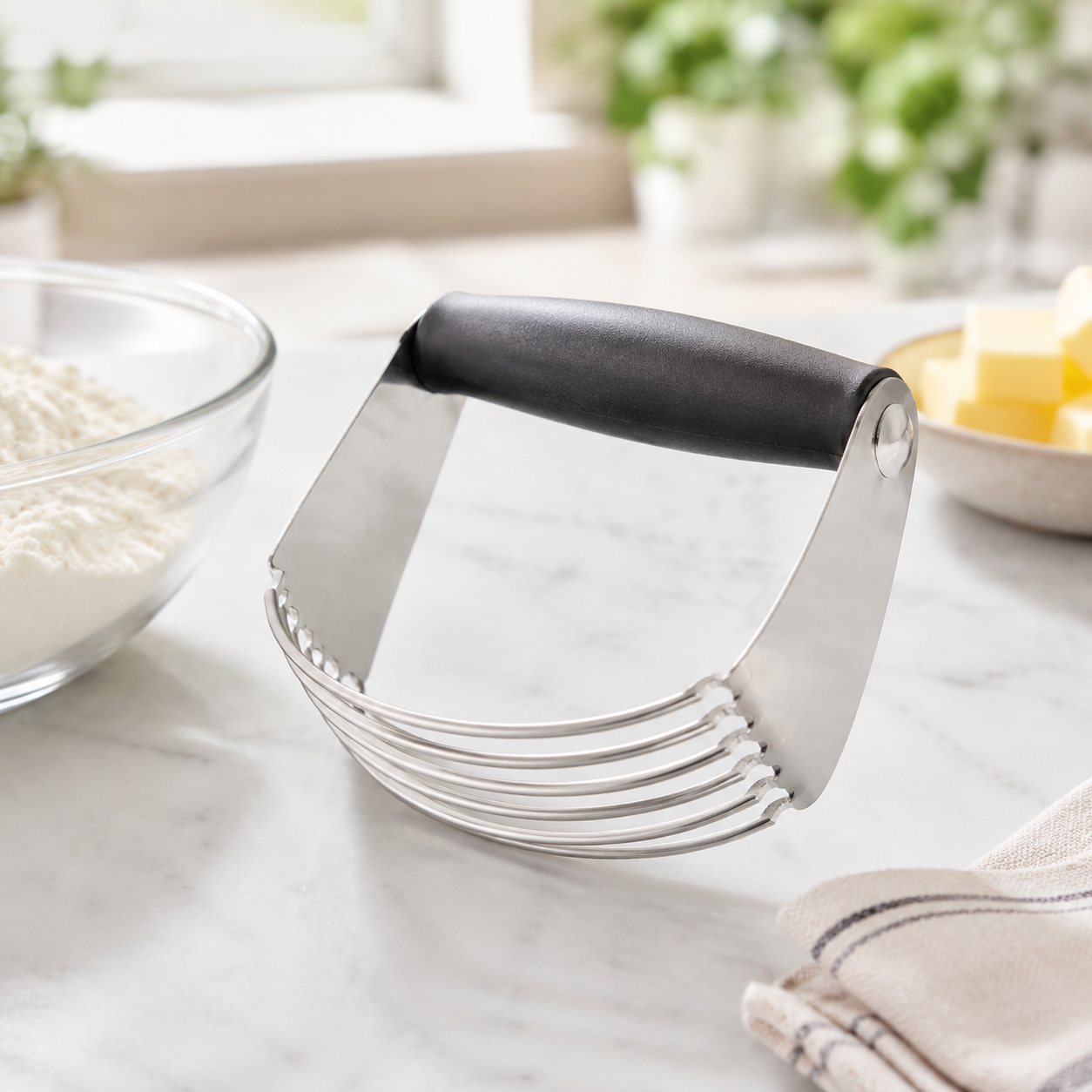
The Spring Chef Large Dough Blender cuts cold butter into flour, solving the uneven mixing that can lead to less flaky baked goods.
Its thick metal blades create uniform butter pieces, while the pressure-absorbing rubber handle makes repeated pastry preparation more comfortable.
The large tool combines durable metal blades with a soft-grip handle. Exact dimensions and weight are not provided, so check your storage space.
Its large design may feel excessive for very small batches or compact drawers.
Best for home bakers who regularly make pastries, biscuits, pie crusts, or scones.
Best Uses
Use it to cut cold butter into flour for biscuits, pie crusts, pizza dough, scones, pastries, and muffin toppings.
Beyond baking, use it to chop soft vegetables, fruit, nuts, and eggs, or mash baby food, salsa, and guacamole.
Place it in the dishwasher after use for simpler cleanup.

Pros & Cons
Pros
- Stainless steel blades are designed specifically for cutting butter and shortening into dry ingredients.
- The broad, soft handle helps reduce hand pressure during mixing.
- The non-slip grip supports controlled use.
- Dishwasher-safe construction makes cleanup straightforward.
Cons
- It is a manual, single-purpose tool rather than an electric mixer.
- Size and weight details are not provided in the product data.
Details
The OXO Good Grips Dough Blender and Cutter cuts cold butter or shortening into dry ingredients, solving the pastry-prep problem of evenly combining solid fats with flour.
Its stainless steel blades handle the cutting, while the broad, soft, non-slip handle absorbs pressure for more comfortable manual mixing.
Stainless steel blades support repeated kitchen use. The product data does not specify its size or weight, so storage and handling details are limited.
This is a focused manual tool, so it will not replace an electric mixer or perform broader mixing tasks.
Verdict: best for home bakers who regularly prepare pastry dough and want simple cleanup.
Best Uses
Use it to cut butter or shortening into flour and other dry ingredients when making pie dough, biscuits, or similar pastries.
Press the blades through the dry mixture repeatedly until the solid fat is broken into smaller pieces.
Place it in the dishwasher after use for easier cleanup.

Pros & Cons
Pros
- Twice-thick metal blades are designed for heavy-duty cutting through cold butter.
- Soft-grip BPA-free rubber handle fits small to medium-sized hands comfortably.
- Dishwasher-safe construction makes cleanup easier.
- Useful for pastry preparation plus soft-food chopping and mashing.
Cons
- The medium handle may feel less comfortable for users with larger hands.
- Its usefulness is centered on soft ingredients and dough preparation rather than broad food-processing tasks.
Details
This medium dough blender cuts cold butter into flour, solving the uneven mixing that can lead to less flaky baked goods.
Twice-thick metal blades cut through cold butter efficiently, while the soft-grip handle helps limit hand and wrist fatigue.
It combines durable metal blades with a BPA-free rubber handle in a medium size suited to small and medium-sized hands.
The handle may be less comfortable for users with larger hands, and the product data does not specify its weight.
Best for home bakers who regularly make pastries, biscuits, pie crusts, or similar doughs.
Best Uses
Use it to cut cold butter into flour for biscuits, pie crusts, scones, pastries, pizza dough, and muffin toppings.
Press and blend soft ingredients for salsa, guacamole, baby food, chopped fruit, vegetables, or nuts.
Place it in the dishwasher after use for simpler cleanup.
When It Is Worth Paying More
Spending up pays off when you use the appliance often enough to notice better less frustration during prep every week. If it only comes out occasionally, a mid-range pick is the smarter call. Match the money to frequency of use, not marketing.
How To Get It Right
Think through the whole workflow: descaling water-based units, cleaning removable parts by hand, and wiping the interior after use. A appliance that fits your routine and cleanup habits beats a technically superior one you fight with. We cover specific models in best air fryer, best blender, and best instant pot.
What To Look For
The keeper is the one you reach for without thinking; the drawer occupant is the one that asks too much for too little payoff. Those are the variables that decide whether it earns a spot in your kitchen or ends up unused. Ignore cosmetic upgrades until the fundamentals check out.
The Short Answer
The short version of pastry blender: fit the appliance to your real cooking, not to a feature list. The practical takeaway is that cleaning access matters more day to day than headline features. For product picks, compare best air fryer, best blender, and best instant pot.
Who Benefits Most
This matters most for small-kitchen owners, and families cooking in volume. If that is you, treat speed under load, and storage bulk as non-negotiable. Casual users can relax the requirements and prioritize price and storage instead.
Common Misconceptions
The biggest myth is that the most expensive appliance is automatically the best for you. In reality, the right choice depends on noise level, and speed under load — plus your own habits. Another trap is buying by brand alone — the same maker sells both excellent and forgettable lines.
Related Product Guides
If this topic is part of a buying decision, these are the HomeWhisk guides most closely tied to it:
Frequently Asked Questions
What gear pairs well with it?
Start with a reliable core piece, then add as needs appear. Compare best air fryer, best blender, and best instant pot for related choices.
How do I keep it in good shape?
Build not overfilling past the max line, and letting the motor rest between heavy loads into normal cleanup. Light, consistent care prevents uneven cooking or heating far better than occasional deep effort.
What should I avoid?
Avoid buying by brand alone, ignoring letting the motor rest between heavy loads, and oversizing for your space. Each invites trapped residue in seams down the line.
What matters most for pastry blender?
Focus on storage bulk, build quality of seals, and cleaning access first. Those decide real performance; the rest is secondary. Compare best air fryer and best blender for options that get the basics right.
Who is this most useful for?
Mainly meal-preppers batching food, and busy weeknight cooks. If that is you, treat capacity and footprint as a requirement rather than a nice-to-have.
The Bottom Line
Pastry blender comes down to fit: how often you use the tool, how much care it needs, and whether it solves a real kitchen problem. If you are buying, compare best air fryer, best blender, and best instant pot before you spend.




Write Your Review
No reviews yet. Be the first to share your experience!