

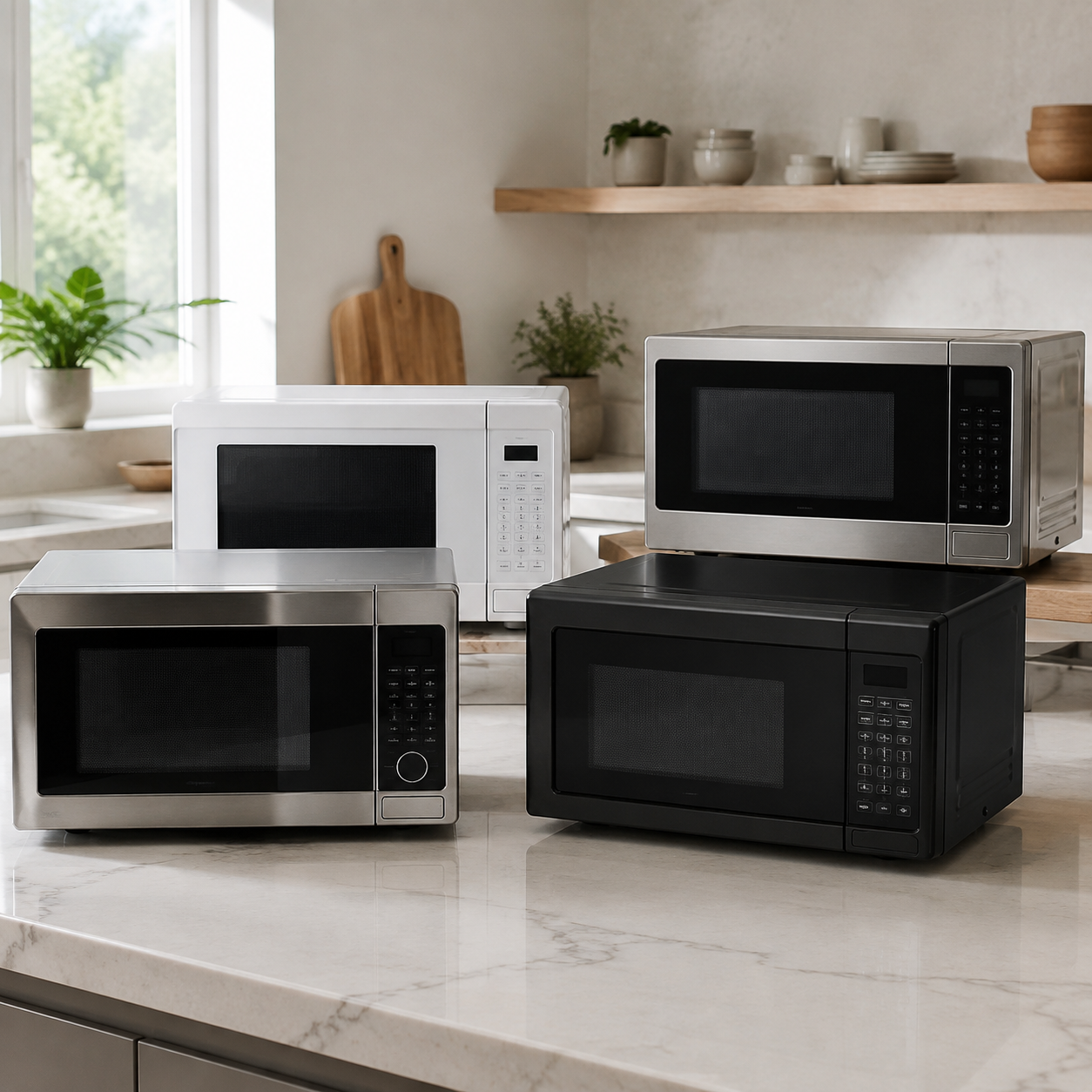
TL;DR — A good answer to microwave models starts with real kitchen habits, not a perfect spec sheet. Most readers need a clear way to avoid the wrong tool, not another list of features. When this turns into a purchase decision, compare best air fryer, best blender, and best instant pot before narrowing your shortlist.
The HomeWhisk approach is research-first: compare construction, usability, cleaning, and long-term complaints before recommending a direction. For appliance topics, we pay close attention to capacity, controls, cleanup, storage, reliability complaints, and whether the machine saves enough effort to justify the space.

Save $11.02


Save $10.00
Pros & Cons
Pros
- 1000 watts of power support quick everyday reheating and cooking.
- The 1.1 cu. ft. capacity provides useful cooking space while fitting smaller countertops.
- Express Cooking controls from one to six minutes and an Add 30-Seconds button speed up common tasks.
- A child safety lock adds an extra layer of protection in family kitchens.
Cons
- The 1.1 cu. ft. interior may not accommodate especially large dishes or cookware.
- Its countertop design requires dedicated counter space near a suitable power outlet.
Details
This countertop microwave solves everyday heating, cooking, and defrosting needs when kitchen space is limited.
Its 1000-watt output, ten power levels, multi-stage cooking, and six one-touch programs support quick meals and adjustable results.
The 1.1 cu. ft. format suits home or office counters, while the easy-clean finish, LED display, and interior lighting support daily use.
The compact capacity may restrict the size of dishes you can place inside.
Best for home or office users who want versatile microwave cooking without a full-size appliance.
How to Use
Use Express Cooking for one to six minutes, or press Add 30-Seconds when food needs a quick extension.
Select a one-touch option for popcorn, potatoes, pizza, and other common foods, or choose from ten power levels for more control.
Defrost by time or weight, then monitor progress through the interior light and use the child lock when needed.
Save $40.91
Pros & Cons
Pros
- Inverter and Genius technologies work together to prevent the overcooked edges and cold centers common to standard microwaves.
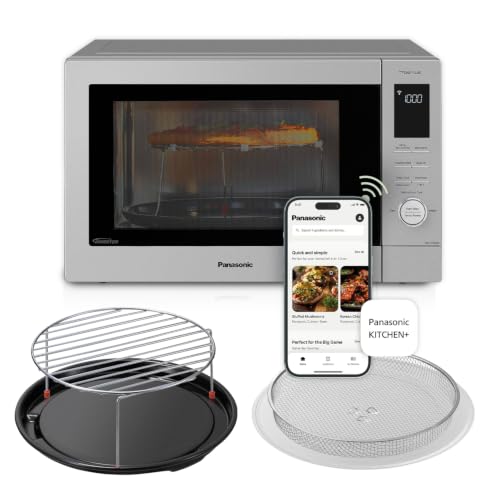
- Air fry and convection modes handle crisping and roasting jobs that would otherwise require a separate oven.
- The optional NN-TK81KCS trim kit converts it into a built-in unit if you later want the counter space back.
- Stainless steel exterior and Panasonic's reliability record make it a reasonable long-term kitchen fixture.
Cons
- Full functionality depends on the Panasonic Kitchen+ app, so buyers who avoid connected appliances lose much of the value.
- At 22 inches wide and 17.7 inches deep, it consumes significant counter depth and needs clearance behind it.
Details
The NN-CV87QS is a 1.2 cu ft countertop oven that merges microwave, convection, broiler, and air fryer into one unit, aimed at kitchens short on both counter space and cooking time.
Inverter technology supplies steady power rather than cycling between full and off, which matters most when defrosting proteins or reheating dishes with delicate textures. Genius sensor cooking reads the food and adjusts automatically.
The stainless steel cabinet measures 22 inches wide, 13.4 inches high, and 17.7 inches deep, with a 14.2 inch turntable that accommodates dinner plates and small casserole dishes.
It ships with the child safety lock engaged, which is mandatory for U.S. countertop microwaves. You will need to consult the manual to disengage it before first use.
Best for busy families who want one appliance handling reheating, roasting, and air frying, and who will actually use the app-linked recipes.
How to Use
Disengage the child lock first, following the instructions on the packaging or in the manual. The unit arrives locked by U.S. requirement, not because of a defect.
Download Panasonic Kitchen+, pair your phone with the oven, then choose a recipe. The app pushes mode, power, and timing to the unit so you only load the food.
For manual cooking, use Inverter and Turbo Defrost for frozen proteins, convection for roasts and baked goods, and air fry mode for wings, fries, and anything you want crisp.
What To Look For
The keeper is the one you reach for without thinking; the drawer occupant is the one that asks too much for too little payoff. Those are the variables that decide whether it earns a spot in your kitchen or ends up unused. Ignore cosmetic upgrades until the fundamentals check out.
Why It Matters
Small differences in speed under load, noise level, and cleaning access change the result more than most buyers expect. That is why two appliances that look alike can feel completely different in use — one saves time, the other quietly adds friction to every task. If you are shopping, our best air fryer and best blender guides are the fastest way in.
The Short Answer
Microwave models usually comes down to one thing: matching the appliance to how you actually cook rather than to a spec sheet. The practical takeaway is that capacity and footprint matters more day to day than headline features. For product picks, compare best air fryer, best blender, and best instant pot.
How To Get It Right
Think through the whole workflow: not overfilling past the max line, wiping the interior after use, and cleaning removable parts by hand. A appliance that fits your routine and cleanup habits beats a technically superior one you fight with. We cover specific models in best air fryer, best blender, and best instant pot.
Who Benefits Most
This matters most for gadget-minimalists who want one do-it-all unit, and busy weeknight cooks. If that is you, treat preset controls, and digital versus dial controls as non-negotiable. Casual users can relax the requirements and prioritize price and storage instead.
Common Misconceptions
The biggest myth is that the most expensive appliance is automatically the best for you. In reality, the right choice depends on capacity and footprint, and cleaning access — plus your own habits. Another trap is buying by brand alone — the same maker sells both excellent and forgettable lines.
Related Product Guides
If this topic is part of a buying decision, these are the HomeWhisk guides most closely tied to it:
Frequently Asked Questions
Is a premium appliance worth it?
Only if you use it enough to notice better control, durability, or cleanup regularly. Occasional users are well served by a mid-range pick like those in best instant pot.
What matters most for microwave models?
Focus on preset controls, digital versus dial controls, and noise level first. Those decide real performance; the rest is secondary. Compare best air fryer and best blender for options that get the basics right.
Who is this most useful for?
Mainly gadget-minimalists who want one do-it-all unit, and small-kitchen owners. If that is you, treat digital versus dial controls as a requirement rather than a nice-to-have.
What should I avoid?
Avoid buying by brand alone, ignoring wiping the interior after use, and oversizing for your space. Each invites motors that bog down under load down the line.
What is the bottom line?
Match the appliance to your real habits: buy for durability if it is daily, for value and storage if it is occasional.
The Bottom Line
For most home cooks, the best choice is the one that removes friction without adding maintenance you will ignore. Start with your use case, then cross-check best air fryer, best blender, and best instant pot.








Write Your Review
No reviews yet. Be the first to share your experience!