

TL;DR — Lunch box storage containers is one of those kitchen questions where the useful answer is usually more practical than complicated. The right move depends on how you cook, what you already own, and how much maintenance you are willing to do. For product picks, the closest next steps are best air fryer, best blender, and best instant pot.
Our view is based on product specs, material trade-offs, and repeated owner feedback — not one-off kitchen anecdotes or brand claims. For appliance topics, we pay close attention to capacity, controls, cleanup, storage, reliability complaints, and whether the machine saves enough effort to justify the space.

Save $5.01


Pros & Cons
Pros
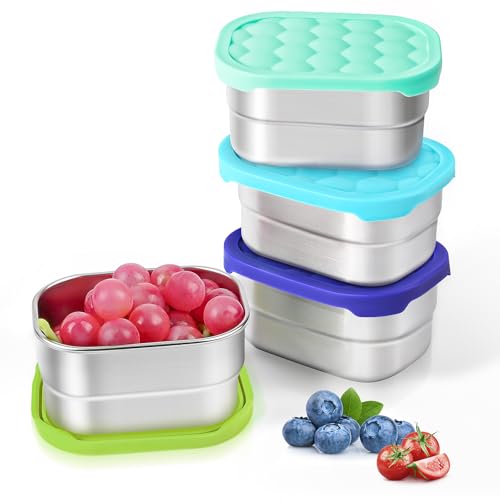
- The four-pack provides multiple containers for school lunches, office meals, camping, and travel.
- Three portioned sections make it easier to separate foods and manage serving sizes.
- Transparent lids are designed to stay in place and help preserve freshness for solid foods.
- The 6.1-by-6.1-by-2.2-inch size is lightweight and easy to carry in a backpack or lunch bag.
Cons
- The containers are not suitable for liquid foods because the leakproof design is intended for solid items.
- Lids should be removed before microwaving and hand-washed to help prevent deformation.
Details
These reusable 3-compartment containers solve the daily problem of packing separated meals and snacks without disposable packaging.
Stackable storage, freshness-preserving lids, and portioned sections keep solid foods organized in a lunch bag or refrigerator.
Food-grade PP and wheat straw construction is BPA-free, stain-resistant, and lightweight. Each container measures approximately 6.1 by 6.1 by 2.2 inches.
They are not intended for liquid foods, and lids require removal before microwaving and hand-washing to avoid deformation.
Best for families and commuters packing solid meals, snacks, or make-ahead portions.
What Fits
Use the three sections for a sandwich, fruit, and crackers, or divide vegetables, protein, and a side without mixing textures.
The containers fit solid snacks and prepared meals for school, work, camping, and travel. Avoid soups, sauces, and other liquid-heavy foods.
Stack them in the refrigerator or lunch bag, and remove each lid before reheating in the microwave.

Pros & Cons
Pros
- Five matching 3.2-cup containers provide a consistent system for lunches, meal prep, and leftovers.
- Tritan construction resists stains and odors while remaining lightweight and sturdy.
- Secure latches and leak-proof seals help contain sauces and other spill-prone foods.
- Built-in microwave vents add convenience when reheating food.
Cons
- The set includes only one 3.2-cup size, limiting options for very large or small portions.
- The product data provides no detailed user review feedback to confirm long-term seal performance.
Details
These five 3.2-cup containers solve the daily problem of storing, carrying, reheating, and cleaning up meals and leftovers with one coordinated set.
Leak-proof seals and secure latches help prevent spills, while built-in vents let you microwave food without removing the lid.
Clear Tritan is stain- and odor-resistant, and the lightweight, sturdy design suits regular refrigerator, freezer, lunch, and pantry use.
Every container has the same 3.2-cup capacity, so the set may not fit unusually large meals or small ingredients.
Best for meal-prep users and households wanting uniform, stackable everyday storage.
What Fits
Each 3.2-cup container suits individual meal portions, prepared lunches, cooked grains, vegetables, pasta, and standard leftover servings.
Use the stackable shape to group containers in the refrigerator or pantry, especially when consistent portion sizes make organizing easier.
For bulky family leftovers or very small ingredients, the single included capacity may require a different container size.
Why It Matters
Small differences in capacity and footprint, preset controls, and digital versus dial controls change the result more than most buyers expect. That is why two appliances that look alike can feel completely different in use — one saves time, the other quietly adds friction to every task. If you are shopping, our best air fryer and best blender guides are the fastest way in.
When It Is Worth Paying More
Spending up pays off when you use the appliance often enough to notice better more predictable performance every week. If it only comes out occasionally, a mid-range pick is the smarter call. Match the money to frequency of use, not marketing.
The Short Answer
Lunch box storage containers usually comes down to one thing: matching the appliance to how you actually cook rather than to a spec sheet. The practical takeaway is that storage bulk matters more day to day than headline features. For product picks, compare best air fryer, best blender, and best instant pot.
Common Misconceptions
The biggest myth is that the most expensive appliance is automatically the best for you. In reality, the right choice depends on digital versus dial controls, and capacity and footprint — plus your own habits. Another trap is buying by brand alone — the same maker sells both excellent and forgettable lines.
Related Product Guides
If this topic is part of a buying decision, these are the HomeWhisk guides most closely tied to it:
Frequently Asked Questions
Who is this most useful for?
Mainly gadget-minimalists who want one do-it-all unit, and busy weeknight cooks. If that is you, treat build quality of seals as a requirement rather than a nice-to-have.
What is the bottom line?
Match the appliance to your real habits: buy for durability if it is daily, for value and storage if it is occasional.
What matters most for lunch box storage containers?
Focus on noise level, build quality of seals, and digital versus dial controls first. Those decide real performance; the rest is secondary. Compare best air fryer and best blender for options that get the basics right.
What gear pairs well with it?
Start with a reliable core piece, then add as needs appear. Compare best air fryer, best blender, and best instant pot for related choices.
How do I keep it in good shape?
Build checking the seals and gaskets, and letting the motor rest between heavy loads into normal cleanup. Light, consistent care prevents trapped residue in seams far better than occasional deep effort.
The Bottom Line
The simplest takeaway: buy for your real routine, not the most impressive feature list. Match the lunch box storage containers to your cooking frequency, cleanup habits, and storage, then use best air fryer, best blender, and best instant pot to compare actual products.






Write Your Review
No reviews yet. Be the first to share your experience!