

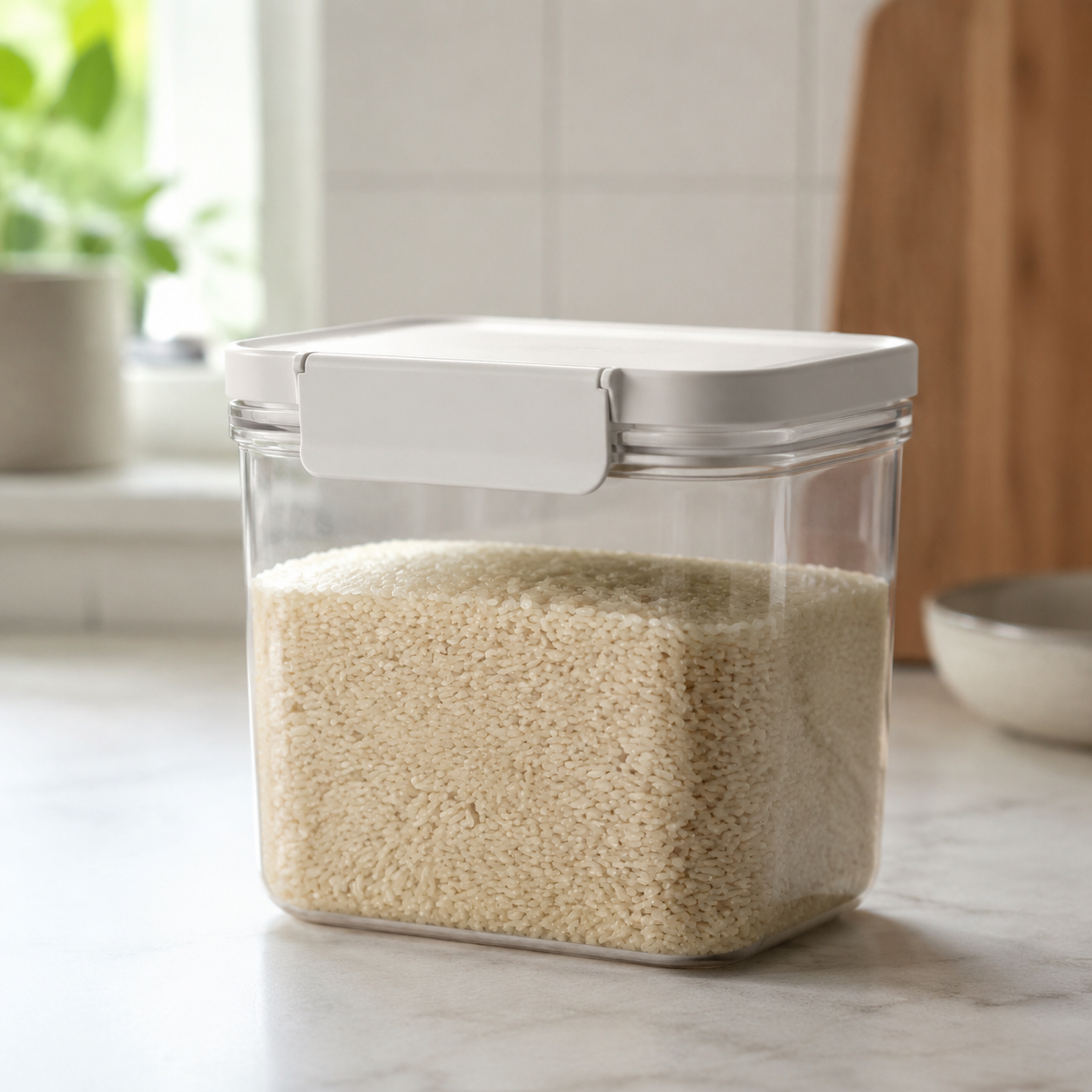
TL;DR — Kitchen storage container is one of those kitchen questions where the useful answer is usually more practical than complicated. The right move depends on how you cook, what you already own, and how much maintenance you are willing to do. If you are comparing products, start with best air fryer, best blender, and best instant pot; those guides give the model-level context behind this advice.
We looked at manufacturer details, material behavior, recurring owner-review patterns, and where this topic overlaps with related buying guides. For appliance topics, we pay close attention to capacity, controls, cleanup, storage, reliability complaints, and whether the machine saves enough effort to justify the space.

Pros & Cons
Pros
- Twenty-four containers in coordinated sizes outfit an entire pantry in one purchase.
- Flip-open lids latch with one hand, useful when you are mid-recipe with floured fingers.
- Bases are dishwasher safe, cutting cleanup time after sticky storage jobs like brown sugar or honey granola.
- Reusable labels remove the guesswork from identical-looking white powders like flour, baking soda, and powdered sugar.
Cons
- Lids must be hand-washed, so cleanup is not fully dishwasher-friendly.
- Tallest 2.8L canister still will not hold a full 5-pound bag of flour, so heavy bakers may need to decant in stages.
Details
A 24-piece airtight canister system that replaces torn bags and mismatched jars across your dry-goods shelf.
Silicone-gasket lids lock in freshness for cereal and flour, while clear walls show exact fill levels without opening anything.
Built from durable BPA-free plastic in four sizes (0.8L, 1.6L, 2.0L, 2.8L) with a stackable square footprint that fits standard cabinet depths.
Lids are not dishwasher safe, so plan on a quick hand wash for the sealing components.
Best for renters, new homeowners, and meal preppers organizing a pantry from zero.
What Fits
The six 2.8L tall canisters hold roughly a standard box of cereal, long spaghetti, or about 3 pounds of flour with room to scoop.
The 2.0L and 1.6L mediums suit rice, oats, granola, sugar, and pasta shapes like penne or rotini, covering most weekly baking and breakfast staples.
The 0.8L smalls work for coffee beans, tea bags, nuts, chia, baking powder, and sprinkles, keeping smaller ingredients visible instead of buried in a drawer.

Save $1.00

Save $1.50
Pros & Cons
Pros
- The 24-piece graduated bundle replaces a mismatched canister collection with one coordinated pantry system.
- Locking lids with silicone seals genuinely keep cereal crisp and flour dry over weeks of storage.
- Uniform footprints stack cleanly, making cabinet and countertop layouts look organized with minimal effort.
- Bundled labels and marker remove the guesswork that usually comes with clear, unmarked containers.
Cons
- New lids can feel stiff and need several open-close cycles before they latch smoothly.
- Lids must be hand washed since only the container bases are dishwasher safe.
Details
This is a 24-piece airtight canister system that brings flour, sugar, rice, pasta, cereal, and snacks under one matching, stackable lineup.
The four-clip lids with silicone gaskets create a leak-proof seal, so dry goods stay fresh and pantry moths stay out.
Containers are made from clear BPA-free plastic in four sizes from 0.7 to 2.5 quarts, light enough to lift one-handed off a shelf.
Lids are not dishwasher safe and may need a short break-in period before they lock easily.
Best for home bakers and pantry organizers who want a complete, label-ready set rather than piecing canisters together.
What Fits
The 2.5-quart tall containers hold a 5-pound bag of flour or sugar, long spaghetti, or a full box of cereal with room to scoop.
The 1.8 and 1.3-quart sizes handle rice, oats, pancake mix, brown sugar, coffee beans, and most snack bags transferred from their original packaging.
The 0.7-quart minis fit baking soda, baking powder, sprinkles, nuts, or kids’ snack portions, and all four sizes share a footprint that lines up cleanly on standard pantry shelves.
Pros & Cons
Pros
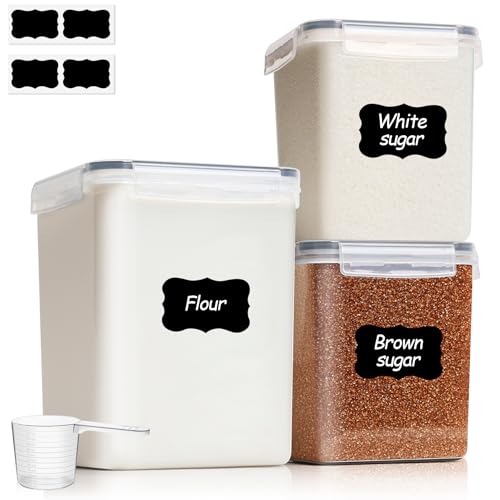
- The 7.1-inch wide mouth opening makes filling and scooping flour or sugar straightforward without spilling on the counter.
- Stackable square bodies use shelf space more efficiently than round containers, especially in narrow pantries.
- Food-grade clear plastic is durable for daily use and lets you monitor ingredient levels without opening the containers.
- The bundled measuring cup and labels add practical utility that most comparable sets leave out.
Cons
- The side-locking lids require pressing down firmly while latching both clips simultaneously, which can feel stiff until the seal breaks in.
- With only three containers, the set covers flour and sugar but does not accommodate a full baking pantry without purchasing additional pieces.
Details
The ComSaf 3-piece set solves the common problem of open flour and sugar bags going stale or spilling in the pantry by replacing them with sealed, labeled containers.
The dual side-locking lids create a firm airtight closure that resists humidity — critical for keeping flour from clumping and brown sugar from hardening.
All three containers are made from food-grade BPA-free clear plastic; the large unit measures 5.5 Qt and the two smaller units measure 2.6 Qt each, all with a 7.1-inch wide mouth.
The lids require two-handed latching and can feel stiff initially, which may be a minor inconvenience for users with limited hand strength.
Best for home bakers who bake regularly and want an organized, space-efficient pantry without spending heavily on storage.
What Fits
The 5.5 Qt container holds a standard 5 lb bag of all-purpose flour with room to spare; the two 2.6 Qt containers each fit approximately 2 lbs of granulated or powdered sugar.
Beyond baking staples, the containers also accommodate dry goods like oatmeal, rice, pasta, beans, cereal, and snacks — the wide mouth makes pouring and scooping easy for bulkier items.
The square footprint stacks securely and fits most standard pantry shelves; measure your shelf depth against the container dimensions before ordering if space is tight.
What To Look For
Judge a appliance by how it feels in normal use, how easy it is to clean, and whether it solves the job you bought it for. Those are the variables that decide whether it earns a spot in your kitchen or ends up unused. Ignore cosmetic upgrades until the fundamentals check out.
Why It Matters
You feel preset controls, speed under load, and cleaning access in the results far more than the price tag suggests. That is why two appliances that look alike can feel completely different in use — one saves time, the other quietly adds friction to every task. If you are shopping, our best air fryer and best blender guides are the fastest way in.
When It Is Worth Paying More
Spending up pays off when you use the appliance often enough to notice better more predictable performance every week. If it only comes out occasionally, a mid-range pick is the smarter call. Match the money to frequency of use, not marketing.
Common Misconceptions
The biggest myth is that the most expensive appliance is automatically the best for you. In reality, the right choice depends on storage bulk, and capacity and footprint — plus your own habits. Another trap is buying by brand alone — the same maker sells both excellent and forgettable lines.
The Short Answer
The short version of kitchen storage container: fit the appliance to your real cooking, not to a feature list. The practical takeaway is that speed under load matters more day to day than headline features. For product picks, compare best air fryer, best blender, and best instant pot.
Related Product Guides
If this topic is part of a buying decision, these are the HomeWhisk guides most closely tied to it:
Frequently Asked Questions
What should I avoid?
Avoid buying by brand alone, ignoring descaling water-based units, and oversizing for your space. Each invites unresponsive controls down the line.
What gear pairs well with it?
Start with a reliable core piece, then add as needs appear. Compare best air fryer, best blender, and best instant pot for related choices.
What matters most for kitchen storage container?
Focus on build quality of seals, speed under load, and motor or heating-element power first. Those decide real performance; the rest is secondary. Compare best air fryer and best blender for options that get the basics right.
What is the bottom line?
Match the appliance to your real habits: buy for durability if it is daily, for value and storage if it is occasional.
Who is this most useful for?
Mainly families cooking in volume, and busy weeknight cooks. If that is you, treat storage bulk as a requirement rather than a nice-to-have.
The Bottom Line
Kitchen storage container comes down to fit: how often you use the tool, how much care it needs, and whether it solves a real kitchen problem. If you are buying, compare best air fryer, best blender, and best instant pot before you spend.




Write Your Review
No reviews yet. Be the first to share your experience!