

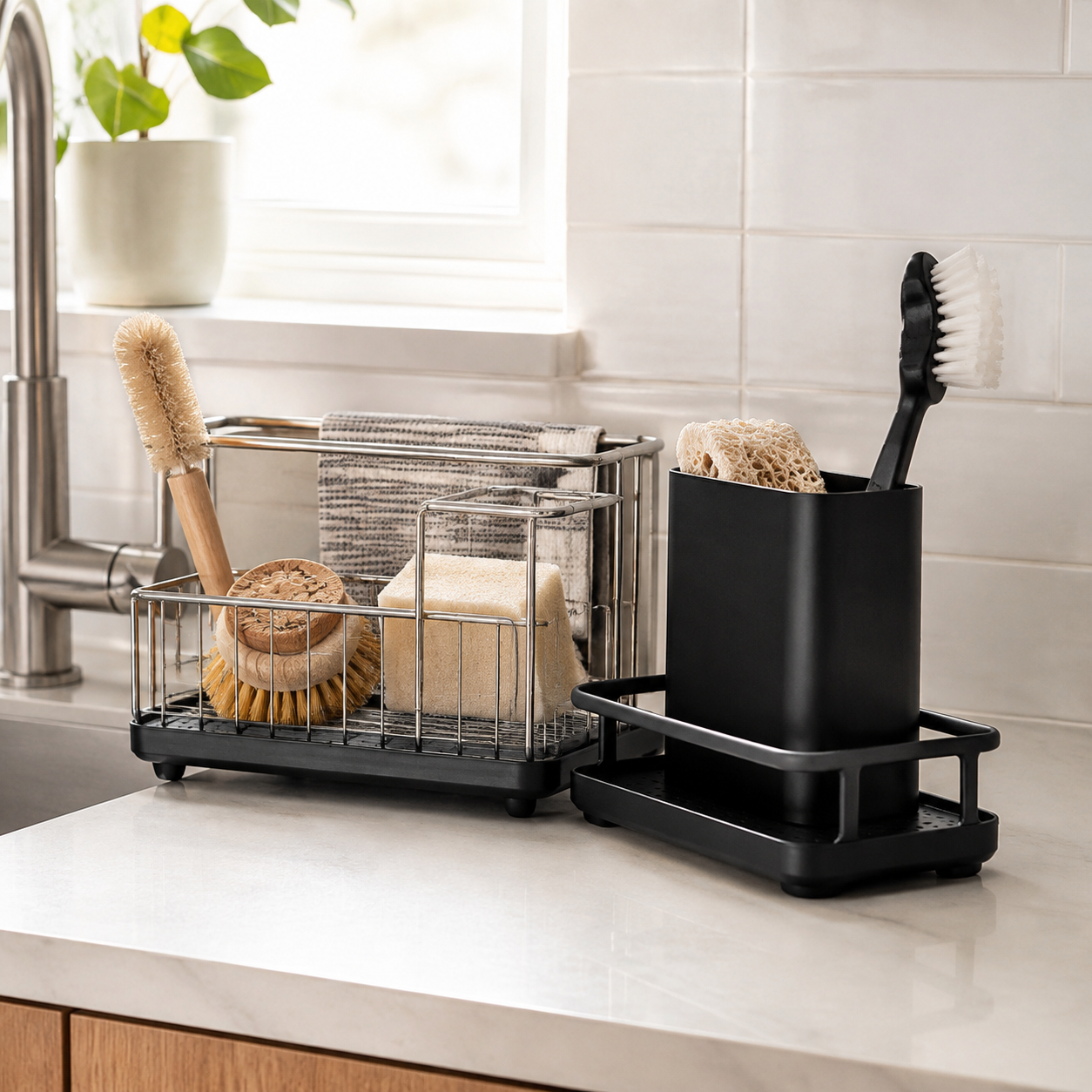
TL;DR — A good answer to kitchen sink organizers starts with real kitchen habits, not a perfect spec sheet. Most readers need a clear way to avoid the wrong tool, not another list of features. For product picks, the closest next steps are best air fryer, best blender, and best instant pot.
Our view is based on product specs, material trade-offs, and repeated owner feedback — not one-off kitchen anecdotes or brand claims. For appliance topics, we pay close attention to capacity, controls, cleanup, storage, reliability complaints, and whether the machine saves enough effort to justify the space.

Pros & Cons
Pros
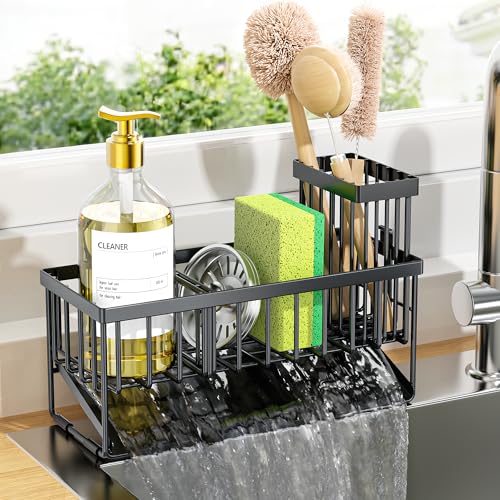
- The rotating drainage spout is a genuine differentiator — it actively channels water into the sink instead of relying on a removable tray you have to remember to empty.
- 304-grade stainless steel is a meaningful material upgrade over powder-coated carbon steel caddies that chip and rust at the welds within a year.
- Holding a detergent bottle, sponge, stopper, and four brushes in one 9.25-inch footprint delivers real space savings on crowded sink ledges.
- The USPTO-registered design signals a purpose-built product rather than a generic import, which typically means tighter tolerances on the divider fit and spout pivot.
Cons
- At 9.25 inches wide, it fits a standard sponge and a single upright bottle, but a full-sized dish-soap pump with a wide base may crowd the sponge compartment.
- The caddy sits flat on the counter without suction feet or a mounting option, so it can shift when you grab items one-handed in a hurry.
Details
The Cisily sink caddy solves the cluttered, waterlogged sink ledge by giving every common item a fixed slot and routing drainage away from your countertop surface.
Its standout feature is the three-direction rotating spout, which lets you aim runoff precisely into the drain rather than wiping up standing water after every dish session.
Built from 304 stainless steel in a matte black finish, it measures 9.25″ x 3.97″ x 6.37″ and cleans with a quick rinse rather than a scrub-down.
The flat base without grip feet means it can slide on smooth granite or quartz if bumped repeatedly during busy cooking prep.
Best for small-kitchen households or apartment dwellers who need a single, durable organizer that handles sponge, soap, stopper, and brushes in one footprint.
What Fits
The three divided slots are sized for a standard kitchen sponge or sponge ball, one upright dish-soap or detergent bottle, and a sink stopper or small scraper. Wide-base pump dispensers may feel tight in the bottle slot.
The rear brush holder is vertical and open-topped, tested to hold four brushes ranging from slim bottle brushes to wider dish brushes. Brushes with bulky hanging loops may stick out above the holder rim.
The caddy does not include a separate tray or liner, so items rest directly on the steel grid base. Anything smaller than the grid spacing will fall through, so it is not suited for storing loose small items like twist-ties or rubber bands.

Save $11.00

Save $3.01

What To Look For
The keeper is the one you reach for without thinking; the drawer occupant is the one that asks too much for too little payoff. Those are the variables that decide whether it earns a spot in your kitchen or ends up unused. Ignore cosmetic upgrades until the fundamentals check out.
Why It Matters
Small differences in storage bulk, motor or heating-element power, and cleaning access change the result more than most buyers expect. That is why two appliances that look alike can feel completely different in use — one saves time, the other quietly adds friction to every task. If you are shopping, our best air fryer and best blender guides are the fastest way in.
Who Benefits Most
This matters most for small-kitchen owners, and gadget-minimalists who want one do-it-all unit. If that is you, treat motor or heating-element power, and capacity and footprint as non-negotiable. Casual users can relax the requirements and prioritize price and storage instead.
When It Is Worth Paying More
Spending up pays off when you use the appliance often enough to notice better day-to-day handling every week. If it only comes out occasionally, a mid-range pick is the smarter call. Match the money to frequency of use, not marketing.
Common Misconceptions
The biggest myth is that the most expensive appliance is automatically the best for you. In reality, the right choice depends on storage bulk, and motor or heating-element power — plus your own habits. Another trap is buying by brand alone — the same maker sells both excellent and forgettable lines.
How To Get It Right
Think through the whole workflow: wiping the interior after use, descaling water-based units, and not overfilling past the max line. A appliance that fits your routine and cleanup habits beats a technically superior one you fight with. We cover specific models in best air fryer, best blender, and best instant pot.

Related Product Guides
If this topic is part of a buying decision, these are the HomeWhisk guides most closely tied to it:
Frequently Asked Questions
What should I avoid?
Avoid buying by brand alone, ignoring letting the motor rest between heavy loads, and oversizing for your space. Each invites gaskets that stop sealing down the line.
How do I keep it in good shape?
Build wiping the interior after use, and letting the motor rest between heavy loads into normal cleanup. Light, consistent care prevents uneven cooking or heating far better than occasional deep effort.
Who is this most useful for?
Mainly busy weeknight cooks, and gadget-minimalists who want one do-it-all unit. If that is you, treat preset controls as a requirement rather than a nice-to-have.
What is the bottom line?
Match the appliance to your real habits: buy for durability if it is daily, for value and storage if it is occasional.
Is a premium appliance worth it?
Only if you use it enough to notice better control, durability, or cleanup regularly. Occasional users are well served by a mid-range pick like those in best instant pot.
The Bottom Line
The simplest takeaway: buy for your real routine, not the most impressive feature list. Match the kitchen sink organizers to your cooking frequency, cleanup habits, and storage, then use best air fryer, best blender, and best instant pot to compare actual products.



Write Your Review
No reviews yet. Be the first to share your experience!