

HomeWhisk earns commission from qualifying purchases made through links on this page. We research picks from specifications and owner reviews; we do not test products ourselves.
TL;DR — How to store a cutting board is mostly about method: use the right touch, avoid shortcuts that damage the tool, and build the habit into normal kitchen cleanup. When this turns into a purchase decision, compare best cutting board, best baking sheets, and best kitchen scale before narrowing your shortlist.
The HomeWhisk approach is research-first: compare construction, usability, cleaning, and long-term complaints before recommending a direction. For baking tools, sizing, material, accuracy, cleaning, and storage usually decide whether a tool stays useful or gets replaced.
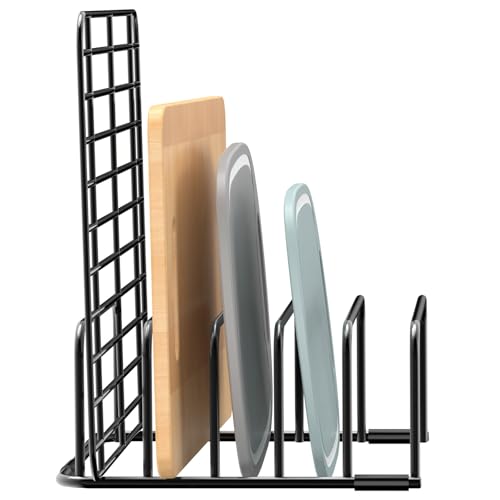

Pros
- Adhesive installation takes minutes and requires no tools, hardware, or wall anchors.
- Stainless steel holds up better than plastic clips in a steamy kitchen environment.
- Buying four in a set covers multiple boards, lids, or trays across different cabinets.
- Grey finish stays visually low-key when mounted under open shelving.
Cons
- Adhesive mounts need a smooth, clean, non-textured surface to bond properly and will not stick reliably to raw or heavily grained wood.
- Weight capacity is not published, so oversized butcher blocks and heavy wood boards are a risk.
A set of four stainless steel under-shelf racks that hold cutting boards and pot lids vertically, clearing the counter clutter that builds up in small kitchens.
The 3M adhesive backing installs without drilling, so you can mount racks under upper cabinets, inside a pantry, or on a closet shelf and reposition your layout later.
Stainless steel resists rust near the sink and stovetop, and each rack measures 2.95 by 1.97 by 1.18 inches, so it stays shallow enough not to block the shelf above.
No load rating is listed, and adhesive strength depends entirely on surface prep, so heavy hardwood boards may be too much for a single rack.
Best for renters and small-kitchen cooks storing lightweight plastic or bamboo boards and pot lids without altering cabinetry.
Sized for standard plastic, bamboo, and thin wood cutting boards plus pot and pan lids. The 1.18 inch depth sets the practical thickness limit for what slides in.
Use two racks spaced apart for wide boards and single racks for lids or baking sheets. Four pieces let you split them across multiple cabinets.
Mount only on smooth, degreased surfaces such as finished wood, glass, or tile. Textured, painted, or unfinished surfaces will weaken the adhesive bond.
Storing a Cutting Board: The Essentials
How you store a cutting board decides how long it lasts as much as how you use it. Good storage keeps edges and surfaces protected, prevents moisture damage, and keeps the tool easy to grab without hunting.
Step By Step
1. Make sure the cutting board is fully clean and bone-dry before it goes away. 2. Protect the working surface — a guard, sleeve, or dedicated slot beats loose in a drawer. 3. Keep it somewhere dry and ventilated to avoid measurements that drift out of true. 4. Store it where it is easy to reach, so care stays a habit.
Common Mistakes To Avoid
The usual failure is treating a durable baking tool as indestructible. Harsh shortcuts lead to uneven browning, and measurements that drift out of true. Do not assume pricier gear removes the need for care, either — technique matters more than the badge. Start your shortlist with best cutting board, best baking sheets, and best kitchen scale before narrowing by budget.
What You Will Need
Keep it simple: the baking tool itself, a clean workspace, and any basic supplies the material calls for. Set up before you start so you are not improvising mid-task.
Keeping It That Way
Maintenance beats repair. Fold storing flat to prevent bending, hand-washing to protect the finish, and lining with parchment into your routine and the baking tool will stay reliable for years. Neglect any one of them and you invite rust on bare steel back.
How To Know You Did It Right
The result should be practical and repeatable: the baking tool should work cleanly, feel controlled, and show no signs of warping in a hot oven. If the same issue returns quickly, the cause is usually a missed care step — not the tool itself.
Related Product Guides
If this topic is part of a buying decision, these are the HomeWhisk guides most closely tied to it:
- best cutting board
- best baking sheets
- best kitchen scale
- best dutch oven for bread baking
- best mixing bowls
- best food storage containers
Frequently Asked Questions
What is the right way to store a cutting board?
How you store a cutting board decides how long it lasts as much as how you use it. Do it consistently and you avoid warping in a hot oven.
What matters most for cutting board?
Focus on rim and edge design, nesting or storage shape, and material and gauge first. Those decide real performance; the rest is secondary. Compare best cutting board and best baking sheets for options that get the basics right.
What is the bottom line?
Match the baking tool to your real habits: buy for durability if it is daily, for value and storage if it is occasional.
Who is this most useful for?
Mainly weekend bakers, and high-volume holiday bakers. If that is you, treat heat conductivity as a requirement rather than a nice-to-have.
What gear pairs well with it?
Start with a reliable core piece, then add as needs appear. Compare best cutting board, best baking sheets, and best kitchen scale for related choices.
The Bottom Line
For most home cooks, the best choice is the one that removes friction without adding maintenance you will ignore. Start with your use case, then cross-check best cutting board, best baking sheets, and best kitchen scale.
{“@context”:”https://schema.org”,”@type”:”FAQPage”,”mainEntity”:[{“@type”:”Question”,”name”:”What is the right way to store a cutting board?”,”acceptedAnswer”:{“@type”:”Answer”,”text”:”How you store a cutting board decides how long it lasts as much as how you use it. Do it consistently and you avoid warping in a hot oven.”}},{“@type”:”Question”,”name”:”What matters most for cutting board?”,”acceptedAnswer”:{“@type”:”Answer”,”text”:”Focus on rim and edge design, nesting or storage shape, and material and gauge first. Those decide real performance; the rest is secondary. Compare best cutting board and best baking sheets for options that get the basics right.”}},{“@type”:”Question”,”name”:”What is the bottom line?”,”acceptedAnswer”:{“@type”:”Answer”,”text”:”Match the baking tool to your real habits: buy for durability if it is daily, for value and storage if it is occasional.”}},{“@type”:”Question”,”name”:”Who is this most useful for?”,”acceptedAnswer”:{“@type”:”Answer”,”text”:”Mainly weekend bakers, and high-volume holiday bakers. If that is you, treat heat conductivity as a requirement rather than a nice-to-have.”}},{“@type”:”Question”,”name”:”What gear pairs well with it?”,”acceptedAnswer”:{“@type”:”Answer”,”text”:”Start with a reliable core piece, then add as needs appear. Compare best cutting board, best baking sheets, and best kitchen scale for related choices.”}}]} {“@context”:”https://schema.org”,”@type”:”ItemList”,”numberOfItems”:5,”itemListElement”:[{“@type”:”ListItem”,”position”:1,”url”:”https://www.amazon.com/dp/B0C1SRLLKR?tag=homewhisk06-20″},{“@type”:”ListItem”,”position”:2,”url”:”https://www.amazon.com/dp/B0FC71C6CD?tag=homewhisk06-20″},{“@type”:”ListItem”,”position”:3,”url”:”https://www.amazon.com/dp/B07KKZ3D88?tag=homewhisk06-20″},{“@type”:”ListItem”,”position”:4,”url”:”https://www.amazon.com/dp/B0G8G3QS3R?tag=homewhisk06-20″},{“@type”:”ListItem”,”position”:5,”url”:”https://www.amazon.com/dp/B0DPFGVYZG?tag=homewhisk06-20″}]}




Write Your Review
No reviews yet. Be the first to share your experience!