

TL;DR — When people ask about how does a sous vide work, they are usually trying to make a buying or care decision without wasting money. This guide keeps the focus on what changes day-to-day use. If you are comparing products, start with best sous vide, best air fryer, and best blender; those guides give the model-level context behind this advice.
We looked at manufacturer details, material behavior, recurring owner-review patterns, and where this topic overlaps with related buying guides. For appliance topics, we pay close attention to capacity, controls, cleanup, storage, reliability complaints, and whether the machine saves enough effort to justify the space.

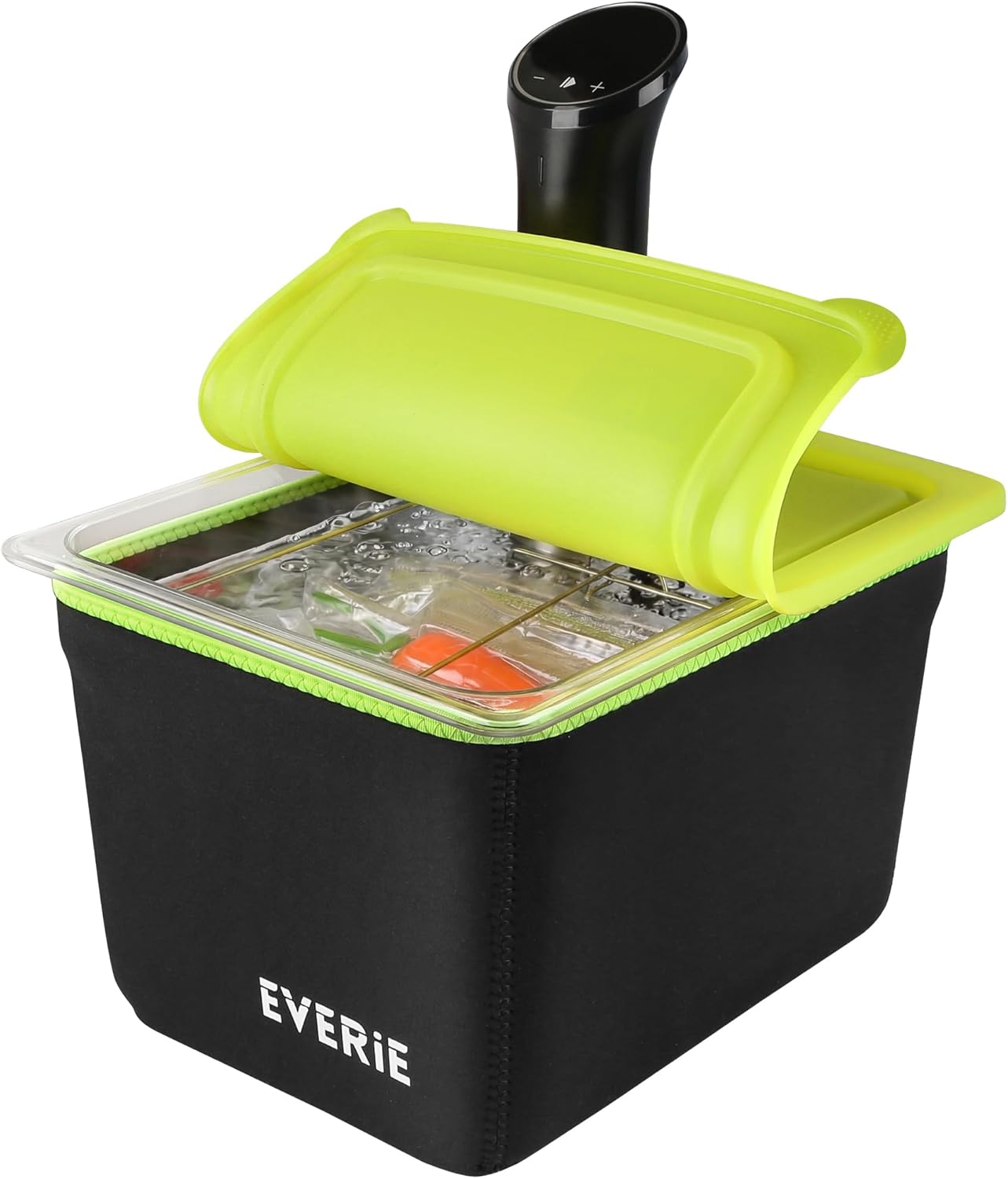
Pros & Cons
Pros
- Insulating sleeve noticeably reduces heat loss during long cooks, which saves energy and keeps water temperature stable without frequent monitoring.
- Lock-in divider system holds bags in separate zones during circulation, preventing them from clustering and improving cooking consistency across multiple items.
- Collapsible lid design allows fast access for mid-cook adjustments while keeping the circulator mounted and running.
Cons
- The sleeve must be hand-washed and air-dried, which adds a cleanup step compared to containers without insulation.
- Extra-wide clamps on some circulator models may not fit the corner cutout, so measure your clamp width before purchasing.
Details
This kit solves the heat loss and bag crowding issues that show up during long sous vide cooks. The neoprene sleeve wraps the 12-quart container to reduce temperature drift during overnight sessions, while the divider rack keeps bags separated so water circulates evenly.
The lock-in clip rail uses embedded nylon slots to hold dividers firmly during circulation, preventing bags from drifting together. The collapsible lid has a corner cutout that fits most clamp-style immersion circulators and folds open for quick access without unmounting the cooker.
The container is BPA-free polycarbonate, the rack is food-grade nylon, and the sleeve is neoprene. The 12-quart size handles batch cooking for multiple meals or family portions. The sleeve adds bulk for storage but air-dries quickly after hand-washing.
Extra-wide clamps on some circulator models may not clear the corner cutout, so check your clamp dimensions before buying. The sleeve is not dishwasher-safe.
Best for home cooks who run extended sous vide sessions or batch-prep multiple portions and want stable temperature control with organized bag spacing.
How to Use
Fill the container to the minimum water line for your circulator, then wrap the neoprene sleeve around the outside. Mount your clamp-style circulator in the corner cutout and set your target temperature.
Insert divider legs into the clip rail slots until they lock in place, spacing them to match your bag sizes. Load vacuum-sealed or ziplock bags into separate sections, then fold the lid closed to reduce evaporation.
For long cooks, check the water level after the first hour and top off if needed. The sleeve helps maintain temperature overnight, but refill if the level drops below the minimum line. After cooking, remove bags, rinse the rack and container, and hand-wash the sleeve before air-drying.

Pros & Cons
Pros
- Strong enough to hold larger vacuum bags and denser cuts below the surface without doubling up excessively.
- Works across container types and setups, from immersion circulators to water ovens, with no mounting hardware.
- Compact size stores in a drawer or utensil crock rather than taking up rack space.
- Two-color set in orange and green makes it easy to spot a stray magnet in a cloudy water bath.
Cons
- The magnets retain heat after a long cook and need a towel to remove safely, so they aren't grab-and-go at the end of a session.
- Very buoyant bags with trapped air may still need multiple magnets or a proper rack, since weight per piece is modest.
Details
A 12-piece set of magnetic weights that pin sous vide bags below the waterline, solving the floating-bag problem that leaves food undercooked on top.
The magnets pair across the bag or container edge and hold through long cooks, including heavier cuts and larger vacuum-sealed bags.
Food-safe silicone over a magnet core, rated to 413.6°F, in a compact plum blossom shape that grips easily and won’t scratch polycarbonate or stainless.
They hold heat after cooking, so plan on using a towel or tongs to fish them out rather than bare fingers.
Best for home sous vide cooks who batch several bags at once and want weights instead of clips or racks.
Best Uses
Place a magnet on each side of the bag near the bottom edge, then add a second pair on wide bags so the food sits flat and evenly submerged.
For air-trapping items like vegetables or fatty cuts, burp the bag first and use extra magnets rather than relying on weight alone.
Outside the kitchen they hold shower curtains against the tub, keep tablecloths down on a windy patio, and work as whiteboard or fridge magnets.
Common Misconceptions
The biggest myth is that the most expensive appliance is automatically the best for you. In reality, the right choice depends on preset controls, and motor or heating-element power — plus your own habits. Another trap is buying by brand alone — the same maker sells both excellent and forgettable lines.
Who Benefits Most
This matters most for busy weeknight cooks, and families cooking in volume. If that is you, treat build quality of seals, and digital versus dial controls as non-negotiable. Casual users can relax the requirements and prioritize price and storage instead.
What To Look For
Judge a appliance by how it feels in normal use, how easy it is to clean, and whether it solves the job you bought it for. Those are the variables that decide whether it earns a spot in your kitchen or ends up unused. Ignore cosmetic upgrades until the fundamentals check out.
When It Is Worth Paying More
Spending up pays off when you use the appliance often enough to notice better less frustration during prep every week. If it only comes out occasionally, a mid-range pick is the smarter call. Match the money to frequency of use, not marketing.
How To Get It Right
Think through the whole workflow: descaling water-based units, letting the motor rest between heavy loads, and wiping the interior after use. A appliance that fits your routine and cleanup habits beats a technically superior one you fight with. We cover specific models in best sous vide, best air fryer, and best blender.
Why It Matters
The variables that decide the outcome — speed under load, digital versus dial controls, and noise level — are the ones buyers most often overlook. That is why two appliances that look alike can feel completely different in use — one saves time, the other quietly adds friction to every task. If you are shopping, our best sous vide and best air fryer guides are the fastest way in.
Related Product Guides
If this topic is part of a buying decision, these are the HomeWhisk guides most closely tied to it:
Frequently Asked Questions
Is a premium appliance worth it?
Only if you use it enough to notice better control, durability, or cleanup regularly. Occasional users are well served by a mid-range pick like those in best blender.
What gear pairs well with it?
Start with a reliable core piece, then add as needs appear. Compare best sous vide, best air fryer, and best blender for related choices.
What is the bottom line?
Match the appliance to your real habits: buy for durability if it is daily, for value and storage if it is occasional.
Who is this most useful for?
Mainly gadget-minimalists who want one do-it-all unit, and meal-preppers batching food. If that is you, treat digital versus dial controls as a requirement rather than a nice-to-have.
What should I avoid?
Avoid buying by brand alone, ignoring not overfilling past the max line, and oversizing for your space. Each invites lingering odors down the line.
The Bottom Line
How does a sous vide work comes down to fit: how often you use the tool, how much care it needs, and whether it solves a real kitchen problem. If you are buying, compare best sous vide, best air fryer, and best blender before you spend.









Write Your Review
No reviews yet. Be the first to share your experience!