

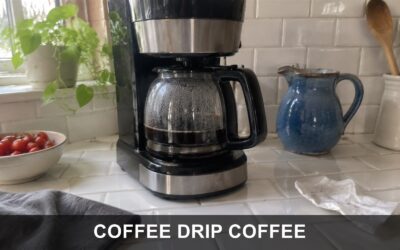
TL;DR — A drip coffee maker works by heating water in a hidden aluminum tube, pushing that hot water upward by steam pressure through a one-way valve, then raining it down over a bed of ground coffee held in a filter. Gravity pulls the brewed coffee through the filter into the carafe below, while a hot plate keeps it warm. The clever trick is that a single heating element both boils the brewing water and warms the finished pot. For picks, see our best coffee maker with grinder guide.
The HomeWhisk editorial team researches kitchen equipment by analyzing manufacturer specifications, mechanism design, and aggregated user reviews from major retailers and coffee communities like Reddit r/Coffee. What follows is how an automatic drip machine actually moves and heats water, not a marketing summary.

Most people use a drip coffee maker every morning without ever knowing what happens inside the plastic housing. It looks simple: pour water in the back, coffee comes out the front. But there is a genuinely elegant piece of engineering hiding in there, and understanding it explains why some machines brew better coffee than others, why the water sounds like it is boiling, and why grind size matters so much. For all-in-one machines that grind and brew in one step, see our best grind and brew coffee maker guide.
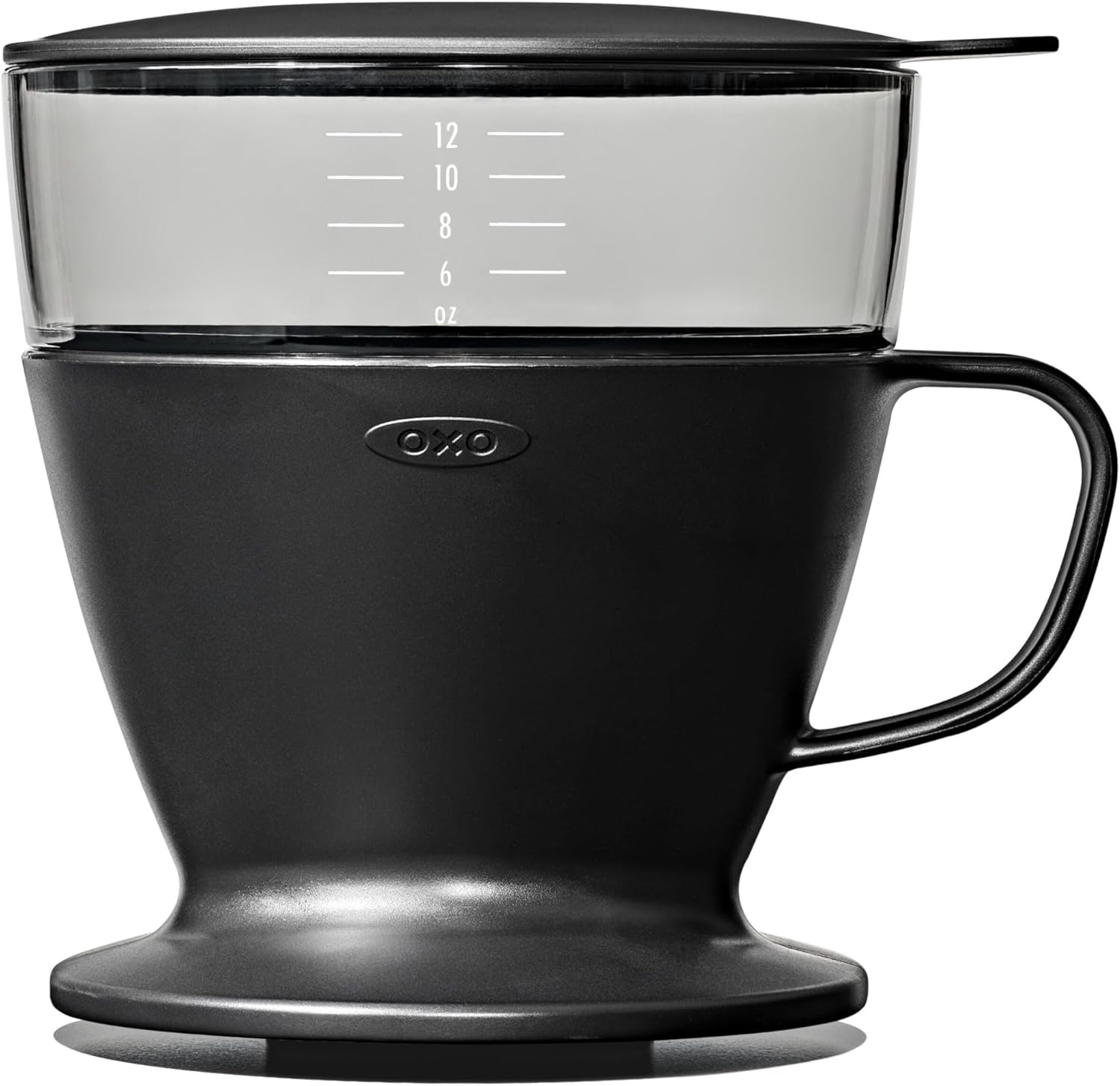
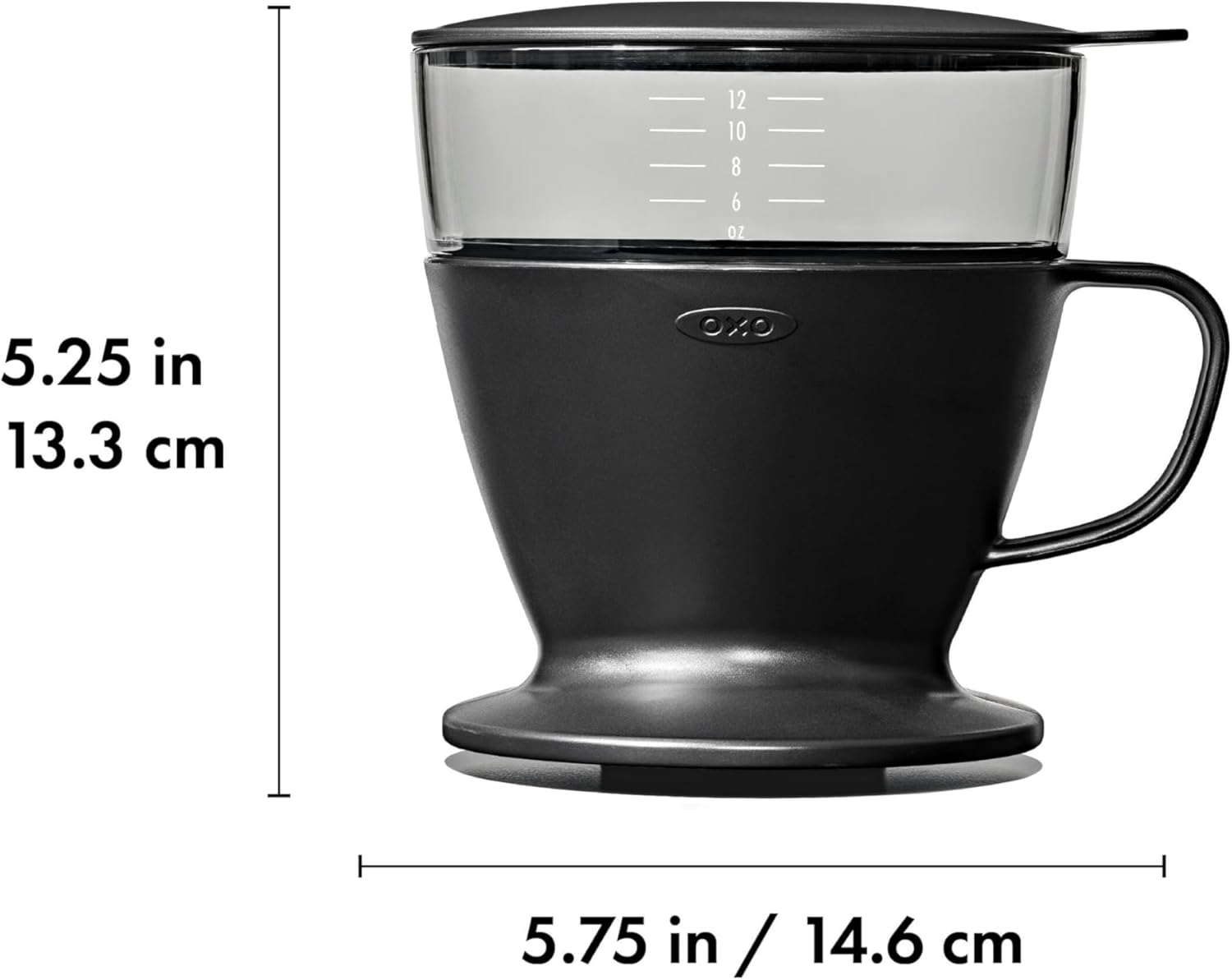
OXO Brew Pour Over Coffee Maker with Auto-Drip Water Tank for Hands-Free Brewing, Matte Black, 12oz
This pour-over brewer uses a perforated water tank to automatically distribute hot water over grounds at the optimal rate, eliminating the need to stand and pour in circles with a kettle. Best for home coffee drinkers who want richer flavor than drip machines without the manual effort of traditional pour-over methods.
Pros and Cons
Pros
- Produces noticeably better-tasting coffee than standard drip machines while requiring less attention than manual pour-over techniques.
- Complete cleanup takes under a minute since every component separates and rinses clean with no hidden parts to scrub.
- Lightweight plastic design makes it practical for travel or small kitchens where counter space is limited.
Cons
- Water reservoir fits loosely on the filter cone and can separate when moving the unit, causing occasional drops.
- 12-ounce official capacity requires adding about 14 ounces of water to account for absorption by grounds if filling a standard mug.

CoffeeGator
Pour Over Coffee Maker with Reusable Steel Filter - Coffee Gator 27oz Glass Carafe for Manual Brewing
This glass pour over brewer uses a laser-cut stainless steel filter to eliminate paper waste while delivering clean, full-flavored coffee in 3-4 minutes. Best for home coffee enthusiasts who want barista-quality control without pods or paper filters.
Pros and Cons
Pros
- Filter controls brew speed perfectly for smooth coffee with any grind from fine to coarse.
- Crystal-clear glass stays spotless with regular dish soap and shows when the mesh needs rinsing.
- Strong customer service replaces broken carafes quickly based on verified buyer experiences.
Cons
- Glass carafe chips or cracks if dropped and is not dishwasher safe despite initial assumptions.
- Pouring the last few ounces requires tilting the carafe at an awkward angle due to the wide base shape.

BeanEnvy
Bean Envy Pour Over Coffee Maker with Reusable Filter - 20 Oz Borosilicate Glass Carafe for Manual Brewing
This manual pour over system brews smooth, cafe-quality coffee using a reusable stainless steel filter that eliminates paper waste and preserves pure flavor. Best for coffee enthusiasts who want control over their brew and prefer eco-friendly kitchen tools that deliver consistent results.
Pros and Cons
Pros
- Produces noticeably smoother coffee than French press with minimal grounds in the cup.
- High-quality borosilicate glass and stainless steel construction withstand daily use for months without staining or rusting.
- Easy to clean with simple hand wash or dishwasher, and the filter does not clog with proper maintenance.
Cons
- Glass carafe can crack if bumped against ceramic or hard surfaces in the sink.
- No lid included, so coffee cools quickly if left in the carafe for more than an hour.
OXO Brew Pour Over Coffee Maker with Auto-Drip Water Tank for Hands-Free Brewing, Matte Black, 12oz
OXO Brew Pour Over Coffee Maker with Auto-Drip Water Tank for Hands-Free Brewing, Matte Black, 12oz
This pour-over brewer uses a perforated water tank to automatically distribute hot water over grounds at the optimal rate, eliminating the need to stand and pour in circles with a kettle. Best for home coffee drinkers who want richer flavor than drip machines without the manual effort of traditional pour-over methods.
Check price on AmazonThis is a hands-free pour-over system that automates the water distribution step. You add grounds to a paper filter, fill the top reservoir with hot water once, and the perforated base releases it at a controlled rate.
The hole pattern creates an even shower across the coffee bed, replicating the circular pouring motion that manual pour-over requires. Reviewers report flavor quality comparable to traditional pour-over with significantly less effort and attention.
Made from BPA-free plastic in matte black. The dripper sits 5.25 inches tall and weighs almost nothing, so it travels easily. All three pieces are dishwasher safe. Includes ten unbleached #2 cone filters to start.
The reservoir sits on top without a locking mechanism, so it can pop off during handling. Some users find the 12-ounce max capacity tight for larger mugs once you account for water absorbed by grounds.
Best for solo coffee drinkers who want better flavor than pod machines without standing over a kettle doing timed pours.
CoffeeGator Pour Over Coffee Maker with Reusable Steel Filter - Coffee Gator 27oz Glass Carafe for Manual Brewing
CoffeeGator
Pour Over Coffee Maker with Reusable Steel Filter - Coffee Gator 27oz Glass Carafe for Manual Brewing
This glass pour over brewer uses a laser-cut stainless steel filter to eliminate paper waste while delivering clean, full-flavored coffee in 3-4 minutes. Best for home coffee enthusiasts who want barista-quality control without pods or paper filters.
Check price on AmazonThis manual pour over system replaces electric drip machines and pod brewers with a simple two-piece design: a glass carafe and a stainless steel filter cone that sits on top.
The laser-cut mesh filter controls water flow to extract full flavor without bitterness, working with any coffee grind. The 800ml borosilicate glass withstands rapid temperature changes from boiling water without cracking under normal use.
The carafe measures 19 inches deep, weighs 1.3 pounds empty, and includes a silicone collar that stays cool during brewing. The filter cone lifts off for separate cleaning.
The glass breaks if dropped on hard surfaces and discolors in the dishwasher, requiring hand washing after each use.
Best for daily coffee drinkers who want to skip disposable filters and enjoy hands-on brewing without learning complex techniques.
BeanEnvy Bean Envy Pour Over Coffee Maker with Reusable Filter - 20 Oz Borosilicate Glass Carafe for Manual Brewing
BeanEnvy
Bean Envy Pour Over Coffee Maker with Reusable Filter - 20 Oz Borosilicate Glass Carafe for Manual Brewing
This manual pour over system brews smooth, cafe-quality coffee using a reusable stainless steel filter that eliminates paper waste and preserves pure flavor. Best for coffee enthusiasts who want control over their brew and prefer eco-friendly kitchen tools that deliver consistent results.
Check price on AmazonThis is a manual pour over coffee system that solves the problem of inconsistent drip coffee and paper filter waste.
The reusable stainless steel filter produces smooth coffee without the sediment common in French press brewing. The 20-ounce borosilicate glass carafe withstands thermal shock from near-boiling water.
Dimensions are 5.25 inches deep by 8.5 inches wide by 5.25 inches high, weighing 721 grams. The silicone base removes for dishwasher cleaning. Material quality is durable but the glass can crack if knocked against hard surfaces.
This brewer requires a separate kettle for heating water and takes 3 to 4 minutes per brewing cycle, slower than automatic drip machines.
Best for home coffee drinkers who want precise control over brewing and prefer reusable filters over disposable paper.
The Core Mechanism: Steam Pressure and Gravity
An automatic drip coffee maker has no pump. Instead it runs on a thermosiphon, a self-driving loop powered by heat.
When you pour water into the reservoir, it flows down through a hole in the bottom and into an aluminum heating tube that sits underneath the machine, directly beneath the warming plate. This tube is wrapped by a resistive heating element, a coiled wire that gets hot when electricity passes through it. The element does double duty: it heats the water for brewing and, once brewing is done, keeps the carafe warm.
Here is the clever part. As the heating element boils the water inside the aluminum tube, steam bubbles form and expand. That expansion creates pressure, which forces the hot water upward through a narrow riser tube toward the top of the machine. A one-way check valve, usually a small silicone flap or a ball bearing, sits between the reservoir and the heating tube. It lets water flow in only one direction: cold water enters from the reservoir, but the pressurized hot water cannot flow backward, so it has nowhere to go but up. This is why you hear that gurgling, percolating sound; it is bubbles pushing slugs of hot water up the tube in bursts.
At the top, the hot water arrives at the showerhead (also called a spray head or drip area), which distributes it over the coffee grounds. Then plain gravity takes over: water saturates the grounds, extracts flavor, and drips through the filter into the carafe.
The Journey of the Water, Step by Step
Following a single batch through the machine makes the design click:
1. Reservoir — Cold water sits in the back tank and feeds down by gravity to the base. 2. Check valve — Water passes the one-way valve into the heating tube. This valve is what prevents brewed-hot water from backwashing into your clean reservoir. 3. Heating tube — The element boils the water. Temperature is the biggest quality variable here; the Specialty Coffee Association considers 195 to 205 degrees Fahrenheit the ideal brewing range, and cheap machines often fall short of it. 4. Riser tube — Steam pressure pushes hot water up to the top of the unit. 5. Showerhead — Hot water is sprayed, well or poorly, over the grounds. A wide, even showerhead wets all the coffee; a single-hole spout wets only the center and leaves dry grounds, producing weak, uneven coffee. 6. Filter basket — Grounds steep briefly, then the brewed liquid drips through the filter. 7. Carafe and warming plate — Coffee collects below, and the plate (heated by the same element) holds it near serving temperature.
That warming plate is a trade-off. It keeps coffee hot but slowly stews it, turning the flavor bitter and flat after 20 to 30 minutes. Thermal-carafe machines skip the hot plate entirely and use an insulated stainless steel pot instead. If you would rather drink your coffee cold, our best iced coffee maker and best cold brew coffee maker guides cover machines built for that.
Water Temperature and Why Cheap Machines Taste Weak
The most common complaint about drip coffee, that it is weak, sour, or watery, usually traces back to brew temperature. Extraction is a chemistry reaction, and it needs heat to run properly.
Below roughly 195 degrees Fahrenheit, water under-extracts: it pulls the sour, acidic compounds from coffee but not the sweeter, fuller-bodied ones that develop later, so the cup tastes thin and sharp. Budget machines with underpowered heating elements often brew at 180 degrees or lower, which no amount of good coffee can fully overcome. Better machines hold the water in the correct 195-to-205-degree window and, crucially, keep it there for the whole brew rather than starting hot and fading. This is one of the clearest quality differences between a $20 machine and a $150 one. Machines that pair a burr grinder with a strong heating system tend to perform best; see our best coffee maker with grinder guide.
Filters and the Filter Basket
The filter shapes both flavor and body:
- Paper filters trap the finest particles and most of the coffee’s oils (the diterpenes), producing a clean, bright cup with little sediment. They are disposable and benefit from a quick rinse to remove any papery taste.
- Permanent metal filters (fine gold-tone or steel mesh) let oils and some micro-fines through, giving a heavier, richer body closer to a French press. They are reusable but need scrubbing.
Basket shape matters too. Cone-shaped baskets funnel water through a deeper bed of coffee for more even extraction, while flat-bottom baskets spread the grounds thin and are more forgiving of a mediocre showerhead. Neither is strictly better, but they perform best with slightly different grind sizes.
Grind Size: The Variable You Control
The machine handles temperature and flow, but you control the grind, and it is decisive. Drip coffee wants a medium grind, roughly the texture of coarse sand or table salt.
- Too fine and water struggles to pass through, over-extracting bitter compounds and sometimes overflowing the basket. Fine dust also slips through and muddies the cup.
- Too coarse and water rushes past the grounds before extracting enough, leaving the coffee weak and sour.
Pre-ground supermarket coffee is usually ground for drip, but it goes stale fast once the bag is open. Grinding whole beans just before brewing, with a burr grinder that produces a uniform particle size, is the single biggest upgrade to drip coffee flavor. Our best coffee grinder guide explains why burr consistency beats blade choppers, and our best grind and brew coffee maker guide covers machines with a grinder built in.
How to Make Better Drip Coffee (and Keep the Machine Working)
The mechanism only performs as well as your inputs. A reliable routine:
- Ratio: Start near 1 to 16 by weight, about 2 tablespoons (10 to 12 grams) of coffee per 6-ounce cup. Adjust stronger or weaker from there.
- Water: Use filtered water. Minerals matter for extraction, but hard water leaves scale inside the heating tube.
- Fresh grounds: Grind right before brewing when you can.
- Preheat: Running a cycle of plain hot water first warms the carafe and improves the first pot’s temperature.
Maintenance keeps the thermosiphon healthy. Hard-water scale builds up inside the aluminum heating tube and slowly chokes the flow, so the machine brews slower and cooler over time. Descaling every one to two months with a descaling solution or a 1-to-1 white vinegar and water mix (run it through, then two rinse cycles of plain water) dissolves that buildup. Left untreated, scale is the most common reason an older drip machine “stops working” or drips painfully slowly. If you want espresso as well as drip, our best coffee and espresso maker combo guide covers dual machines.
Frequently Asked Questions
How does a drip coffee maker work step by step?
Cold water flows from the reservoir through a one-way check valve into an aluminum tube under the machine. A heating element boils that water, and the resulting steam pressure pushes it up a riser tube to a showerhead at the top. The showerhead sprays hot water over ground coffee in a filter basket. The water extracts flavor as it passes through the grounds, then gravity pulls the brewed coffee through the filter into the carafe below. The same heating element powers a plate that keeps the finished pot warm.
How does a coffee maker heat water so fast?
It does not heat the entire reservoir at once. It heats only the small amount of water sitting in the narrow aluminum tube at any given moment. A resistive heating element wrapped around that thin tube brings a tiny slug of water to a boil almost instantly, pushes it up and out, and the next slug flows in behind it. Because the machine only ever heats a spoonful at a time inside a tight metal channel, it feels fast even though the total brew takes several minutes.
Who invented the drip coffee maker?
Paper drip filtration was invented in 1908 by Melitta Bentz, a German homemaker who lined a brass pot with blotting paper to make cleaner coffee, founding the Melitta company. The modern automatic electric drip machine came much later: Mr. Coffee, launched in 1972 in the United States, popularized the countertop automatic drip maker and made the format a household standard. The core thermosiphon-and-showerhead design has changed remarkably little since.
What grind size should I use in a drip coffee maker?
A medium grind, similar to coarse sand or table salt. Too fine and water cannot pass through easily, over-extracting bitterness and sometimes overflowing the basket; too coarse and water rushes past, leaving the coffee weak and sour. A burr grinder gives the uniform particles that brew evenly. Cone baskets often prefer a slightly finer grind than flat-bottom baskets. See our best coffee grinder guide for grinders that produce consistent drip-size grounds.
Why is my drip coffee maker brewing slowly or weak?
The usual culprit is mineral scale from hard water building up inside the aluminum heating tube, which restricts flow and lowers brew temperature. Descaling with a vinegar-water solution or a commercial descaler usually restores it. Other causes are a clogged showerhead, a worn check valve, or simply an underpowered machine that never reaches the 195-to-205-degree range. Weak coffee with normal flow usually means too coarse a grind or too little coffee, not a machine fault.
What ratio of coffee to water should I use?
A good starting point is about 1 gram of coffee to 16 grams of water, which is roughly 2 tablespoons of ground coffee per 6-ounce cup marked on most carafes. From there, adjust to taste: more coffee for a stronger, fuller cup, less for a milder one. Measuring by weight with a scale is far more consistent than scoops, since bean density and grind size change how much fits in a spoon.
The Bottom Line
A drip coffee maker is a small feat of engineering hiding behind a simple interface: a heating element boils water in a thin tube, steam pressure lifts it to a showerhead, and gravity carries it through the grounds into the pot. Once you understand that loop, the quality differences make sense. Brew temperature, showerhead coverage, and your grind size decide whether the cup is bright and full or thin and bitter. Keep the machine descaled, use fresh medium-ground coffee near a 1-to-16 ratio, and a basic drip maker can brew genuinely good coffee. For grinders and machines that make it easier, see our best coffee maker with grinder, best grind and brew coffee maker, and best coffee grinder guides.



Write Your Review
No reviews yet. Be the first to share your experience!