

TL;DR — Grill infrared burner is one of those kitchen questions where the useful answer is usually more practical than complicated. The right move depends on how you cook, what you already own, and how much maintenance you are willing to do. Use this as the practical background, then check best air fryer, best blender, and best instant pot for specific product options.
We treated this as an editor’s note for home cooks: what matters, what is optional, and which related product guides are worth checking before you buy. For appliance topics, we pay close attention to capacity, controls, cleanup, storage, reliability complaints, and whether the machine saves enough effort to justify the space.

Save $2.58
Pros & Cons
Pros
- Infrared ceramic design produces searing temperatures a conventional tube burner cannot reach.
- Dimensions are published in full, including 16.13" length, 5.5" width, and 3.35" height, so you can verify fitment before ordering.
- Mixed-material build pairs a 304 stainless top with aluminized steel below for heat resistance where it matters.
- At 2.9 lbs it is substantial enough to sit stable in the burner channel without feeling flimsy.
Cons
- Listing covers one burner only, so multi-burner grills need several units to convert the whole cooktop.
- Fitment depends on your grill's exact burner channel and orifice setup, so measuring and checking gas compatibility is on you before purchase.
Details
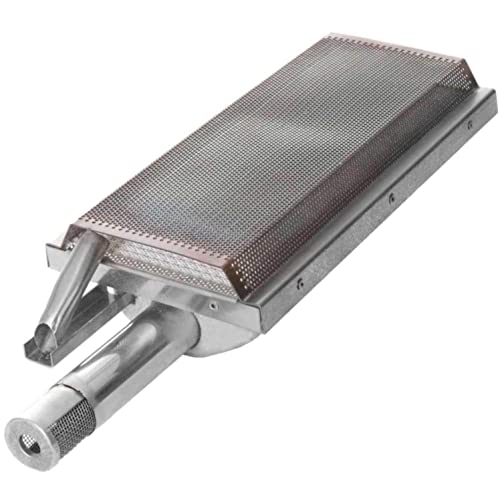
A ceramic infrared replacement burner for gas grills that use a 16″ to 16.25″ cast iron or cast stainless burner. It solves weak, uneven heat and burned-out original burners.
The 15,000 BTU ceramic surface radiates heat directly onto the meat instead of heating air, which is what produces a dark crust on steaks in a few minutes per side.
Top is Stainless Steel 304; bottom and venturi tube are aluminized steel. Overall 16.13″ long, 5.5″ wide, 3.35″ tall, 2.9 lbs, with a 10.83″ x 5.5″ burning area.
One unit ships per order, and fitment is by dimension rather than by confirmed model list, so measure your existing burner and confirm gas type first.
Best for grill owners with a Blaze, Lion Premium, or similar cabinet grill who want a dedicated sear station.
Best Uses
Searing is the point. Preheat until the ceramic glows, then run thick-cut ribeye, strip, pork chops, or lamb for a few minutes per side to build crust before moving to indirect heat.
Set it up as one zone rather than your whole cooktop. Keep conventional burners for chicken, fish, and anything that needs gentler cooking, and reserve this one for high-heat finishing.
It also handles charring vegetables like peppers, corn, and asparagus quickly, and works well for reverse-searing roasts that were brought to temperature elsewhere on the grill.
Pros & Cons
Pros
- Retains moisture better than a standard burner when searing thick cuts.
- Direct swap for the left-side burner rather than a full grill modification.
- Works across five Blaze grill families, including LTE PRO and BCM.
- Handles steaks, chops, and vegetables on one dedicated high-heat zone.
Cons
- Not compatible with Blaze Professional gas grills, so Professional owners need a different part.
- Occupies the left-side burner slot, reducing the number of standard burners available for low-heat cooking.
Details
The BLZ-IRN is a replacement infrared burner that solves the common gas grill problem of not getting hot enough to build a proper steakhouse crust.
Infrared heat sears the surface quickly, locking in juices and retaining moisture on thick steaks and pork chops that would dry out over standard burners.
It installs in the left-side burner position of a Blaze grill, so sizing is fixed to your existing burner bay with no cutting or fabrication.
It does not fit Blaze Professional gas grills, and it consumes one of your standard burner slots permanently.
Best for Blaze LTE, LTE+, LTE PRO, LBM, or BCM owners who grill steaks often and want a dedicated searing zone.
Best Uses
Steaks and pork chops benefit most. Preheat the infrared zone fully, sear both sides for the crust, then finish over the standard burners for controlled doneness.
Use it for vegetables that need char without collapsing, such as peppers, asparagus, and onion halves, where a quick pass gets color before they soften.
Keep it out of low and slow cooking. Reserve the remaining standard burners for indirect heat, roasts, and anything that needs gentle temperatures.

Pros & Cons
Pros
- Made from 304 stainless steel, which holds up better to heat and corrosion than coated or lower-grade steel burners.
- Covers four Napoleon models in one part number, simplifying sourcing for Prestige and LEX owners.
- Fast, even heat-up suits high-temperature searing of steak and thicker cuts.
- Smooth stainless surface cleans up with minimal effort after greasy cooks.
Cons
- Fitment is limited to the listed Napoleon Prestige and LEX models, so you must verify your grill's model and part number before ordering.
- This is an aftermarket part rather than a Napoleon OEM burner, and mounting hardware or gaskets are not indicated as included.
Details
A replacement infrared sear burner for the side burner position on Napoleon Prestige 450, 500, 665 and LEX 485 grills, fixing weak or uneven searing from a corroded original.
Infrared output concentrates high heat directly under the grate, so a ribeye or pork chop develops crust fast rather than steaming in its own juices.
Built from 304 stainless steel: heat-resistant, non-magnetic, rust-resistant and easy to wipe clean between cooks in an outdoor setting.
Fitment is model-specific and it is an aftermarket component, so confirm your grill model and check whether you need to reuse existing screws and gaskets.
Best for Napoleon Prestige or LEX owners repairing a failed side sear burner instead of buying a new grill.
Best Uses
Use it for high-heat searing: steaks, ribs, pork chops and thick chicken legs that need a fast crust before finishing on the main grates.
It also handles quick-cooking items well, including shrimp and other seafood, chicken wings and charred vegetables that benefit from direct radiant heat.
Before installing, match your grill’s model badge and existing burner dimensions, then let the new burner run empty once to burn off manufacturing residue.

Pros & Cons
Pros
- The four primary burners and side burner produce a combined 62,000 BTU for strong outdoor cooking performance.
- The U-shaped sear zone and redesigned flame tamer target high heat while helping reduce hot spots.
- Stainless steel burners and a rounded modern design support regular patio use.
- The included cover helps protect the grill between cooking sessions.
Cons
- The grill and cover ship in separate packages and may arrive at different times.
- The product data does not provide a total assembled weight, which may matter when planning patio placement.
Details
This propane grill solves the problem of limited outdoor cooking space with 630 total square inches across the main grates and warming rack.
Its 650°F sear capability and U-shaped fire holes support faster browning, while the flame tamer helps reduce bothersome hot spots.
Four stainless steel burners, a side burner, a Clearview lid, and illuminated knobs support practical daily grilling. The cooking area measures 630 square inches; weight is not provided.
Buyers should know that the grill and cover ship separately and may not arrive together.
Best for households that grill for groups and want high-heat searing plus outdoor side-dish preparation.
How to Use
Preheat the grill before cooking, using the temperature gauge to monitor heat through the Clearview lid. Use the sear zone for high-heat browning.
Keep finished foods on the warming rack while cooking additional items on the main grates. Use the side burner for sauces or other small preparations.
After cooking, wash grates and removable parts with warm, soapy water and a soft sponge, following the manual for part-specific instructions.
The Short Answer
Grill infrared burner usually comes down to one thing: matching the appliance to how you actually cook rather than to a spec sheet. The practical takeaway is that speed under load matters more day to day than headline features. For product picks, compare best air fryer, best blender, and best instant pot.
What To Look For
Hold a appliance to a short checklist: fit, control, cleanup, and durability. Those are the variables that decide whether it earns a spot in your kitchen or ends up unused. Ignore cosmetic upgrades until the fundamentals check out.
When It Is Worth Paying More
Spending up pays off when you use the appliance often enough to notice better less frustration during prep every week. If it only comes out occasionally, a mid-range pick is the smarter call. Match the money to frequency of use, not marketing.
Common Misconceptions
The biggest myth is that the most expensive appliance is automatically the best for you. In reality, the right choice depends on motor or heating-element power, and speed under load — plus your own habits. Another trap is buying by brand alone — the same maker sells both excellent and forgettable lines.
How To Get It Right
Think through the whole workflow: letting the motor rest between heavy loads, descaling water-based units, and cleaning removable parts by hand. A appliance that fits your routine and cleanup habits beats a technically superior one you fight with. We cover specific models in best air fryer, best blender, and best instant pot.
Related Product Guides
If this topic is part of a buying decision, these are the HomeWhisk guides most closely tied to it:
Frequently Asked Questions
How do I keep it in good shape?
Build wiping the interior after use, and letting the motor rest between heavy loads into normal cleanup. Light, consistent care prevents unresponsive controls far better than occasional deep effort.
Is a premium appliance worth it?
Only if you use it enough to notice better control, durability, or cleanup regularly. Occasional users are well served by a mid-range pick like those in best instant pot.
What gear pairs well with it?
Start with a reliable core piece, then add as needs appear. Compare best air fryer, best blender, and best instant pot for related choices.
What should I avoid?
Avoid buying by brand alone, ignoring cleaning removable parts by hand, and oversizing for your space. Each invites motors that bog down under load down the line.
What matters most for grill infrared burner?
Focus on cleaning access, digital versus dial controls, and storage bulk first. Those decide real performance; the rest is secondary. Compare best air fryer and best blender for options that get the basics right.
The Bottom Line
A good grill infrared burner decision should feel obvious after you line up size, material, cleaning, and durability. If it is still a purchase question, the next step is best air fryer, best blender, and best instant pot.









Write Your Review
No reviews yet. Be the first to share your experience!