

TL;DR — When people ask about glass lunch box containers, they are usually trying to make a buying or care decision without wasting money. This guide keeps the focus on what changes day-to-day use. If you are comparing products, start with best air fryer, best blender, and best instant pot; those guides give the model-level context behind this advice.
We looked at manufacturer details, material behavior, recurring owner-review patterns, and where this topic overlaps with related buying guides. For appliance topics, we pay close attention to capacity, controls, cleanup, storage, reliability complaints, and whether the machine saves enough effort to justify the space.

Pros & Cons
Pros
- Borosilicate glass is rated for oven, microwave, freezer, and dishwasher use.
- Silicone-gasket snap lids seal tight enough for travel with wet foods.
- BPA-free glass and lids avoid plastic contact with hot food.
- Straight-sided stackable design saves fridge and pantry space.
Cons
- Lids are not oven-safe and must be removed before baking or reheating in the oven.
- Glass containers weigh noticeably more than plastic, which adds up when carrying two in one bag.
Details
A two-pack of 35oz glass food storage containers for cooks who prep meals ahead and need one dish that stores, reheats, and serves.
The snap-lock lid uses a silicone gasket to hold soups and dressed salads without seepage, and the borosilicate body goes straight from freezer to microwave.
Each container holds 1040ml in a stackable straight-sided glass body that resists staining and odor and survives dishwasher cycles.
The lids cannot go in the oven, so any baking or oven reheating means storing the lid separately.
Best for weekly meal preppers and office lunch packers who want glass instead of plastic.
What Fits
At 35oz each, one container takes a full dinner portion: a protein, a grain, and a vegetable side without pressing against the lid.
Also sized for large salads, cut fruit for the week, overnight oats in batches, soups, chili, and pasta with sauce.
The two containers stack on one fridge shelf, so a pair of prepped meals occupies a single column rather than spreading out.

Pros & Cons
Pros
- Oven, microwave, freezer, and dishwasher safe, which covers the full cook-store-reheat cycle in one container.
- Glass construction resists staining and odor retention from tomato sauces and curries better than plastic.
- The variety pack means you are not stuck with a single compartment configuration for every meal.
- Removable silicone ring makes deep cleaning the lid possible instead of leaving grime in the channel.
Cons
- Lids are top-rack dishwasher only and cannot go in the oven, so you need to remove them before baking.
- Glass at this capacity is noticeably heavier than plastic, which adds weight to a commuter bag or backpack.
Details
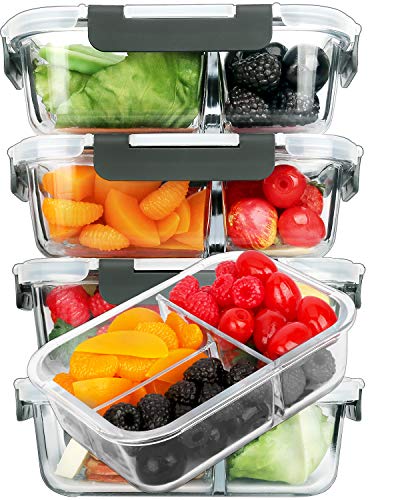
A three-container glass set built for portioned meal prep, solving the problem of sauces and sides bleeding together in a single open container.
Borosilicate glass takes the oven to 450°F lid-off, so a tray-baked portion goes straight from oven to fridge without a second dish. Snap-lock lids with silicone gaskets hold liquids upright in a bag.
Each container holds 35 oz, enough for a full adult dinner. Bodies stack for fridge storage, and the silicone seal lifts out of the lid for cleaning.
The weight is the tradeoff: glass at this size is heavier to carry than plastic, and lids are restricted to the dishwasher top rack.
Best for anyone batch-cooking weekday lunches who wants to bake, store, and reheat in one dish and keep components separate.
What Fits
The 1-compartment container takes a full 35 oz of a single dish: soup, chili, pasta bake, or a grain bowl you want mixed rather than separated.
The 2-compartment splits protein from a starch or salad. The 3-compartment adds a slot for vegetables, fruit, or a dressing you would rather keep dry until lunch.
Stack all three in the fridge for a three-day prep run. Freezer safe, so a batch cook can go straight to the freezer and reheat in the microwave later.

Pros & Cons
Pros
- Tempered glass stays clear and odor-free where plastic containers cloud and retain smells.
- Airtight snap lid keeps dressings and soups contained during a commute.
- Sleeve stays on through the dishwasher and microwave, so there is no disassembly step.
- BPA-free lid means no plastic contact concerns when reheating.
Cons
- At 1.75 cups it holds a side dish or single portion, not a full entree, so larger meals need a bigger size.
- Glass plus the silicone sleeve makes it noticeably heavier than a plastic container of the same volume.
Details
A single serving glass meal prep container for people tired of plastic tubs that stain orange and smell like last week’s lunch.
The tempered Duraglass body resists stains and odors, and the snap-on lid seals airtight so sauces and soups do not leak in transit.
Holds 1.75 cups. Oven, microwave, and freezer safe without the lid. The thick silicone sleeve guards against chips and stays on in the dishwasher and microwave.
The capacity suits sides, snacks, and portioned meals, not full dinners, and glass adds real weight to a lunch bag.
Best for portion-conscious meal preppers who reheat at work and want glass instead of plastic.
What Fits
At 1.75 cups, this fits a single serving: overnight oats, Greek yogurt with fruit, a cup of soup, or a portioned side of rice, pasta, or roasted vegetables.
Good for cut fruit, salad toppings, nuts, dressings, and dips you want kept separate from a main dish. The airtight lid means liquids travel upright or on their side.
Too small for a full entree, a large salad, or batch-prepped chicken and rice bowls. Pair it with a larger container when you need a complete meal.
Save $6.00
When It Is Worth Paying More
Spending up pays off when you use the appliance often enough to notice better less frustration during prep every week. If it only comes out occasionally, a mid-range pick is the smarter call. Match the money to frequency of use, not marketing.
The Short Answer
Glass lunch box containers usually comes down to one thing: matching the appliance to how you actually cook rather than to a spec sheet. The practical takeaway is that cleaning access matters more day to day than headline features. For product picks, compare best air fryer, best blender, and best instant pot.
What To Look For
Hold a appliance to a short checklist: fit, control, cleanup, and durability. Those are the variables that decide whether it earns a spot in your kitchen or ends up unused. Ignore cosmetic upgrades until the fundamentals check out.
How To Get It Right
Think through the whole workflow: letting the motor rest between heavy loads, wiping the interior after use, and checking the seals and gaskets. A appliance that fits your routine and cleanup habits beats a technically superior one you fight with. We cover specific models in best air fryer, best blender, and best instant pot.
Why It Matters
Small differences in digital versus dial controls, motor or heating-element power, and noise level change the result more than most buyers expect. That is why two appliances that look alike can feel completely different in use — one saves time, the other quietly adds friction to every task. If you are shopping, our best air fryer and best blender guides are the fastest way in.
Related Product Guides
If this topic is part of a buying decision, these are the HomeWhisk guides most closely tied to it:
Frequently Asked Questions
What matters most for glass lunch box containers?
Focus on motor or heating-element power, preset controls, and digital versus dial controls first. Those decide real performance; the rest is secondary. Compare best air fryer and best blender for options that get the basics right.
Is a premium appliance worth it?
Only if you use it enough to notice better control, durability, or cleanup regularly. Occasional users are well served by a mid-range pick like those in best instant pot.
What should I avoid?
Avoid buying by brand alone, ignoring checking the seals and gaskets, and oversizing for your space. Each invites trapped residue in seams down the line.
How do I keep it in good shape?
Build not overfilling past the max line, and descaling water-based units into normal cleanup. Light, consistent care prevents uneven cooking or heating far better than occasional deep effort.
What is the bottom line?
Match the appliance to your real habits: buy for durability if it is daily, for value and storage if it is occasional.
The Bottom Line
Glass lunch box containers comes down to fit: how often you use the tool, how much care it needs, and whether it solves a real kitchen problem. If you are buying, compare best air fryer, best blender, and best instant pot before you spend.









Write Your Review
No reviews yet. Be the first to share your experience!