

TL;DR — A good answer to dry blender starts with real kitchen habits, not a perfect spec sheet. Most readers need a clear way to avoid the wrong tool, not another list of features. When this turns into a purchase decision, compare best air fryer, best blender, and best instant pot before narrowing your shortlist.
The HomeWhisk approach is research-first: compare construction, usability, cleaning, and long-term complaints before recommending a direction. For appliance topics, we pay close attention to capacity, controls, cleanup, storage, reliability complaints, and whether the machine saves enough effort to justify the space.
Save $6.00
Pros & Cons
Pros
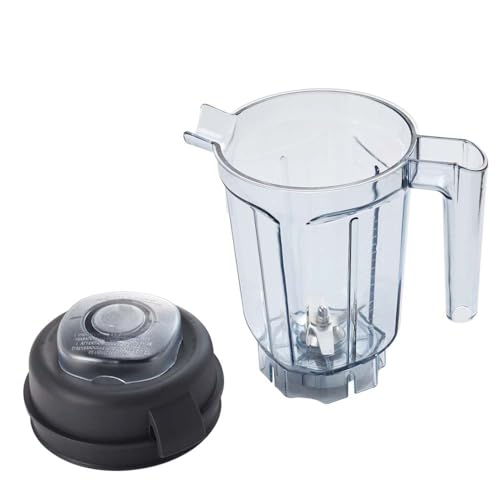
- Wide compatibility list covers C-Series 5200 and 6300, G-Series 7500, Professional 750, and Explorian E310 and E320, so one jar fits most household Vitamix bases.
- Food-grade BPA-free polycarbonate holds up to the heat generated during extended dry-grinding cycles.
- Dedicated dry container keeps abrasive grain out of the wet pitcher, which protects that jar's clarity and blade edge.
- Shorter 32oz profile fits under overhead cabinets that a 64oz pitcher will not clear.
Cons
- Not dishwasher safe: the bottom oil seal can degrade in a dishwasher cycle and cause leaks, so every wash is by hand.
- This is a non-OEM part, so the original blender manufacturer will not cover any issue traced back to using it.
Details
A 32oz dry-goods jar for Vitamix-style blenders, built to mill whole grains into flour and mix dough without wrecking the wet pitcher meant for smoothies and soups.
The dry blade profile spins a reverse vortex that throws ingredients outward rather than down, so flour does not cake under the blade and stall the grind mid-batch.
Body is BPA-free polycarbonate rated 5F to 233.6F, and the short 32oz footprint slides under standard upper cabinets where a 64oz jar will not stand.
Hand wash only. The bottom oil seal can be damaged by dishwasher heat and detergent, which leads to leaks around the blade base.
Best for home bakers who mill their own flour weekly and already own a C-Series, G-Series, Professional, or Explorian machine.
What Fits
Confirmed bases: C-Series 4500, 5000, 5200, 5300, 6000, 6300, 6500, TurboBlend Two and Three Speed, Creations II, G-Series 780 and 7500.
Also fits Professional Series 200, 300, 500, 750, Explorian E310, E320, E520, Propel 510 and 750, plus Vita-Prep, Vita-Prep 3, and VM0101 through VM0197 commercial units.
Contents-wise, the 32oz volume suits roughly two cups of dry grain per batch: wheat berries, rice, oats, coffee, spices, and bread or pizza dough mixes.
Pros & Cons
Pros
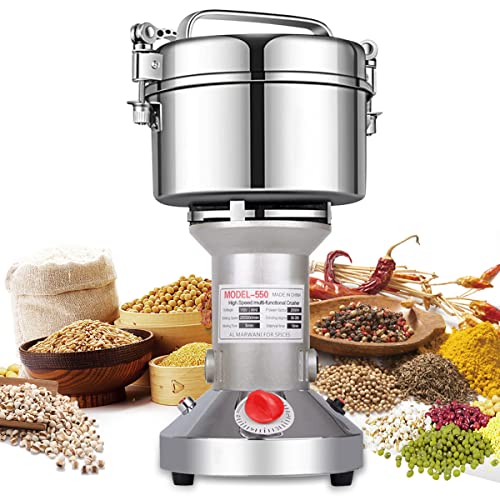
- Its high-speed 2,000W motor can process many dry ingredients in less than a minute.
- The 550g capacity is useful for preparing larger batches of flour, spice blends, or powdered herbs.
- Stainless steel construction and overload protection add practical durability and operating safety.
- The grinder supports grains, coffee beans, spices, herbs, nuts, and other dry foods.
Cons
- It cannot grind wet, moist, or oily ingredients, and the chamber should not be rinsed directly with water.
- The machine needs a five- to ten-minute rest after every three minutes of grinding.
Details
This countertop mill turns dry grains, spices, herbs, coffee beans, and similar foods into meal or powder, replacing slower manual grinding.
A 2,000W motor reaches 25,000 RPM, while the three-blade design supports fast processing and fineness from 50 to 300 mesh.
The food-grade stainless steel body and 550g capacity suit batch preparation, but the listed specifications do not provide overall dimensions or weight.
Only dry ingredients are suitable, and the motor requires a five- to ten-minute rest after each three-minute operating period.
Best for cooks and small food-processing users who need fast, high-volume dry grinding.
How to Use
Fill the chamber with dry ingredients no higher than two-thirds of its capacity, ensuring the material covers the long blade.
Secure the lid fully before starting, then grind for no more than three minutes at a time. Allow five to ten minutes for cooling between cycles.
After use, wipe the chamber with a moist cloth or brush rather than rinsing it, then store the grinder only after it is fully dry.

Pros & Cons
Pros
- Inner lid design contains fine particles during grinding, reducing mess on countertops and around the base.
- Single removable bowl simplifies cleanup compared to models with fixed internal chambers that trap residue.
- Compact footprint fits under kitchen cabinets and stores in small drawers when not in use.
Cons
- Push-control operation requires you to hold the button down for the entire grind cycle, which can tire your hand during longer grinds.
- Single bowl means you must wash between switching from coffee to spices to avoid flavor transfer.
Details
This is a single-bowl blade grinder that solves the problem of needing separate tools for coffee beans, whole spices, and seeds. One machine handles all dry grinding tasks in kitchens with limited counter space.
The press-and-hold button gives you manual control over grind duration, so you can pulse for coarse pepper or hold for fine espresso powder. The 60 dB motor runs quieter than typical blade grinders, which average 70-80 dB and can disturb sleeping family members.
The removable stainless steel bowl holds 70g of beans or spices, lifts out for pouring and cleaning, and goes in the dishwasher. The unit weighs under 2 pounds and measures small enough to store in a drawer.
The single bowl requires washing between uses if you grind both coffee and spices, since oils and flavors cling to stainless steel. Holding the button for long grinds can tire your hand.
Best for home cooks who grind coffee daily and occasionally process spices or seeds, and who value quieter operation over automatic timing features.
How to Use
Remove the lid and removable bowl, add beans or spices up to the 70g max line, replace the bowl and lid, then press and hold the top button. Release when the texture looks right through the clear lid.
For coarse grinds like French press coffee or cracked pepper, use 3-5 second pulses with pauses to check progress. For fine grinds like espresso or powdered spices, hold continuously for 15-30 seconds while shaking the unit gently to redistribute particles.
After grinding, lift out the stainless steel bowl to pour. Wipe the bowl with a dry cloth for quick cleanup between similar ingredients, or wash with soap and water when switching from coffee to spices to prevent flavor crossover.
What To Look For
Judge a appliance by how it feels in normal use, how easy it is to clean, and whether it solves the job you bought it for. Those are the variables that decide whether it earns a spot in your kitchen or ends up unused. Ignore cosmetic upgrades until the fundamentals check out.
Common Misconceptions
The biggest myth is that the most expensive appliance is automatically the best for you. In reality, the right choice depends on noise level, and digital versus dial controls — plus your own habits. Another trap is buying by brand alone — the same maker sells both excellent and forgettable lines.
Why It Matters
You feel motor or heating-element power, digital versus dial controls, and build quality of seals in the results far more than the price tag suggests. That is why two appliances that look alike can feel completely different in use — one saves time, the other quietly adds friction to every task. If you are shopping, our best air fryer and best blender guides are the fastest way in.
When It Is Worth Paying More
Spending up pays off when you use the appliance often enough to notice better more predictable performance every week. If it only comes out occasionally, a mid-range pick is the smarter call. Match the money to frequency of use, not marketing.
Who Benefits Most
This matters most for meal-preppers batching food, and busy weeknight cooks. If that is you, treat motor or heating-element power, and digital versus dial controls as non-negotiable. Casual users can relax the requirements and prioritize price and storage instead.
The Short Answer
The short version of dry blender: fit the appliance to your real cooking, not to a feature list. The practical takeaway is that speed under load matters more day to day than headline features. For product picks, compare best air fryer, best blender, and best instant pot.
Related Product Guides
If this topic is part of a buying decision, these are the HomeWhisk guides most closely tied to it:
Frequently Asked Questions
Is a premium appliance worth it?
Only if you use it enough to notice better control, durability, or cleanup regularly. Occasional users are well served by a mid-range pick like those in best instant pot.
What matters most for dry blender?
Focus on motor or heating-element power, noise level, and preset controls first. Those decide real performance; the rest is secondary. Compare best air fryer and best blender for options that get the basics right.
What is the bottom line?
Match the appliance to your real habits: buy for durability if it is daily, for value and storage if it is occasional.
What gear pairs well with it?
Start with a reliable core piece, then add as needs appear. Compare best air fryer, best blender, and best instant pot for related choices.
What should I avoid?
Avoid buying by brand alone, ignoring not overfilling past the max line, and oversizing for your space. Each invites lingering odors down the line.
The Bottom Line
For most home cooks, the best choice is the one that removes friction without adding maintenance you will ignore. Start with your use case, then cross-check best air fryer, best blender, and best instant pot.




Write Your Review
No reviews yet. Be the first to share your experience!