

TL;DR — When people ask about cupcake pan liners, they are usually trying to make a buying or care decision without wasting money. This guide keeps the focus on what changes day-to-day use. If you are comparing products, start with best baking sheets, best mixing bowls, and best kitchen scale; those guides give the model-level context behind this advice.
We looked at manufacturer details, material behavior, recurring owner-review patterns, and where this topic overlaps with related buying guides. For baking tools, sizing, material, accuracy, cleaning, and storage usually decide whether a tool stays useful or gets replaced.

Pros & Cons
Pros
- Fluorocarbon-free siliconized coating provides genuine non-stick release without chemical additives found in some competing liners.
- Dimensions are sized for standard pans, so there is no guesswork about fit when loading a full 12-cup tray.
- FSC certification confirms the parchment is sourced from responsibly managed forests, a meaningful distinction for eco-conscious buyers.
- The protective kraft box prevents the liner stack from arriving crushed, which is a common complaint with bagged alternatives.
Cons
- No reviews are currently available to confirm real-world non-stick performance across different oven types and recipes.
- The natural unbleached color means these liners will not suit presentations where a white or decorative cup is expected.
Details
Bake Choice liners solve the problem of baked goods sticking to paper cups, using food-grade parchment with a siliconized coating instead of chemical non-stick sprays.
The 220°C/428°F heat resistance covers standard cupcake and muffin baking temperatures, and the greaseproof construction means oil and butter stay in the bake, not absorbed into the paper.
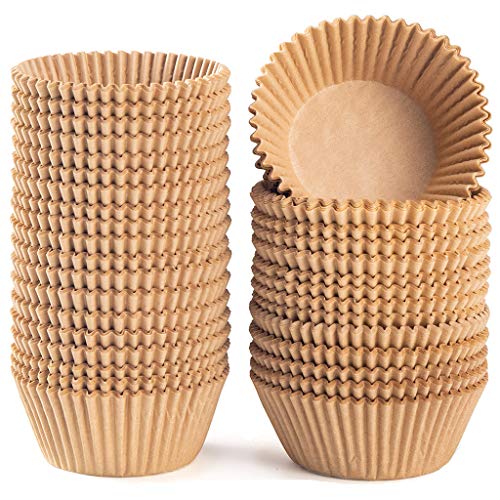
Each liner measures 1.97 inches across the base and 1.37 inches tall, the standard footprint for most North American muffin pans. The natural parchment is unbleached and FSC-certified.
With no existing customer reviews, buyers are relying on manufacturer claims for non-stick performance. This is worth noting before purchasing in large quantity.
Best for home bakers who bake in volume and want a reliable, chemical-free liner that works directly in a standard pan without preparation.
Cooking Tips
No pan greasing needed. The siliconized coating handles release on its own, so load your batter directly and skip the spray step to save time on cleanup.
These liners also work unfolded and flat as a base for biscuits, cookies, and brownies on a sheet pan, expanding their use beyond the muffin tin.
For tarts or items with a high butter content, the greaseproof parchment prevents the liner from becoming translucent or soggy, keeping the presentation clean when served.
Save $3.00
Pros & Cons
Pros
- Food-grade materials with no added dyes or scents mean the liner won't compete with or contaminate delicate flavors like vanilla or lemon.
- Oven, microwave, and refrigerator safe in a single liner type, so you can bake, store, and reheat without transferring to a different container.
- Standard sizing (7cm top, 5cm bottom, 3cm height) fits most 12-cup muffin tins sold in North America without adjustment.
- 500-count quantity lowers cost per liner and reduces reorder frequency for anyone who bakes in volume.
Cons
- Natural unbleached finish lacks the decorative color or pattern options that printed liners offer for themed parties or gift presentations.
- No reviews available to confirm real-world grease resistance across high-fat recipes like chocolate or banana nut muffins.
Details
These are unbleached paper baking cups designed to line standard muffin tins, preventing sticking and containing batter without transferring taste or color to the finished bake.
Grease-proof construction and 428°F heat tolerance are the two performance features that matter most — they keep liners intact through full baking cycles without soaking through or collapsing.
Made from food-grade paper with no added dyes or chemical scents. Each liner measures 2.75 inches across the top, 2.0 inches at the base, and 1.2 inches tall — sized for standard North American muffin pans.
The natural finish means these won’t add visual decoration on their own; buyers who want printed or colored liners for events will need a separate product.
Best for home bakers and small-batch caterers who prioritize clean ingredients and consistent fit over decorative presentation.
Cooking Tips
For high-fat muffin recipes like banana nut or double chocolate, place liners in the pan before filling rather than freestanding on a sheet — the pan walls support the liner and prevent spreading.
When baking dense batters, fill liners to two-thirds capacity. The 1.2-inch height gives enough room for rise without overflow, keeping edges clean and domed tops intact.
After baking, let muffins cool directly in the pan for five minutes before transferring. This lets the liner reabsorb surface condensation, making peeling cleaner with less crumbing on the paper.

Pros & Cons
Pros
- Sized specifically for jumbo tins, which most multipack liners do not cover.
- Forty count handles repeat baking without a mid recipe resupply.
- White paper works as is or as a blank base for printed wrappers and toppers.
- Single use paper means no liner washing and minimal pan cleanup.
Cons
- Plain paper with no foil or heavy grease barrier, so butter rich batters can darken and show through the outside.
- Jumbo only, so they slump and buckle if you try them in standard or mini muffin pans.
Details
Forty paper baking cups cut for jumbo muffin tins. They keep oversized batter off the pan walls, which is where big muffins usually tear when you lift them out.
The jumbo cut matters most with batters that rise high, like bakery style muffins and cornbread. Full height walls hold the crown shape instead of letting it spread over the rim.
Plain paper construction with no foil layer. They ship flat and nest tightly, so the pack stores in a drawer alongside your standard liners.
Oily or high butter recipes will show through the white paper and can darken it, so the exterior looks less crisp than a foil lined cup.
Best for home bakers who already own a jumbo tin and want an everyday consumable for regular batches rather than showpiece desserts.
Cooking Tips
Fill each liner about two thirds full. A jumbo cup holds roughly twice a standard cup, so halve your expected yield and add a few minutes of bake time.
Skip greasing the pan. Set liners straight into the wells and let baked muffins rest several minutes before lifting, or the paper pulls away from the crumb.
For oily batters, double up two liners or bake with a sheet pan underneath to catch spillover and keep the outer paper cleaner.
Why It Matters
You feel warp resistance, rim and edge design, and nonstick or bare finish in the results far more than the price tag suggests. That is why two baking tools that look alike can feel completely different in use — one saves time, the other quietly adds friction to every task. If you are shopping, our best baking sheets and best mixing bowls guides are the fastest way in.
When It Is Worth Paying More
Spending up pays off when you use the baking tool often enough to notice better less frustration during prep every week. If it only comes out occasionally, a mid-range pick is the smarter call. Match the money to frequency of use, not marketing.
The Short Answer
Cut through it and cupcake pan liners is a fit question — the baking tool has to match how you cook. The practical takeaway is that material and gauge matters more day to day than headline features. For product picks, compare best baking sheets, best mixing bowls, and best kitchen scale.
Who Benefits Most
This matters most for cooks short on cabinet space, and anyone scaling recipes by weight. If that is you, treat rim and edge design, and heat conductivity as non-negotiable. Casual users can relax the requirements and prioritize price and storage instead.
What To Look For
Hold a baking tool to a short checklist: fit, control, cleanup, and durability. Those are the variables that decide whether it earns a spot in your kitchen or ends up unused. Ignore cosmetic upgrades until the fundamentals check out.
How To Get It Right
Think through the whole workflow: avoiding thermal shock, lining with parchment, and drying fully before storage. A baking tool that fits your routine and cleanup habits beats a technically superior one you fight with. We cover specific models in best baking sheets, best mixing bowls, and best kitchen scale.
Related Product Guides
If this topic is part of a buying decision, these are the HomeWhisk guides most closely tied to it:
- best baking sheets
- best mixing bowls
- best kitchen scale
- best cutting board
- best food storage containers
Frequently Asked Questions
What gear pairs well with it?
Start with a reliable core piece, then add as needs appear. Compare best baking sheets, best mixing bowls, and best kitchen scale for related choices.
What is the bottom line?
Match the baking tool to your real habits: buy for durability if it is daily, for value and storage if it is occasional.
Is a premium baking tool worth it?
Only if you use it enough to notice better control, durability, or cleanup regularly. Occasional users are well served by a mid-range pick like those in best kitchen scale.
Who is this most useful for?
Mainly cooks short on cabinet space, and weekend bakers. If that is you, treat heat conductivity as a requirement rather than a nice-to-have.
How do I keep it in good shape?
Build lining with parchment, and hand-washing to protect the finish into normal cleanup. Light, consistent care prevents rust on bare steel far better than occasional deep effort.
The Bottom Line
Cupcake pan liners comes down to fit: how often you use the tool, how much care it needs, and whether it solves a real kitchen problem. If you are buying, compare best baking sheets, best mixing bowls, and best kitchen scale before you spend.





Write Your Review
No reviews yet. Be the first to share your experience!