

TL;DR — Can you freeze meal prep containers is one of those kitchen questions where the useful answer is usually more practical than complicated. The right move depends on how you cook, what you already own, and how much maintenance you are willing to do. Use this as the practical background, then check best air fryer, best blender, and best instant pot for specific product options.
We treated this as an editor’s note for home cooks: what matters, what is optional, and which related product guides are worth checking before you buy. For appliance topics, we pay close attention to capacity, controls, cleanup, storage, reliability complaints, and whether the machine saves enough effort to justify the space.

Pros & Cons
Pros
- The round plate shape mirrors a real dinner plate, so portioned meals look and eat like normal food rather than compartmentalized diet trays.
- BPA-free material is rated for microwave, freezer, and dishwasher, covering the full prep-to-cleanup cycle.
- The 1-cup, 1-cup, 2-cup layout follows standard balanced-plate guidance, removing guesswork from portion sizing.
Cons
- Fixed compartment sizes limit flexibility for meals that don't split into grain, protein, and produce, such as soups, pastas, or large salads.
- Round containers waste more shelf and fridge space than rectangular ones when stored side by side.
Details
A 10-piece set of round, three-compartment food storage containers built for weekly meal prep and portion control.
Each container has embossed markings for a 1-cup grain section, 1-cup protein section, and 2-cup fruit and vegetable section, so you portion while you plate.
Made from BPA-free plastic rated for microwave, freezer, and dishwasher use, with snap-shut lids that keep contents sealed in transit.
The compartment dividers are fixed, so one-pot meals like chili, curry, or pasta don’t fit the intended layout.
Best for anyone starting a portion-controlled eating plan who wants structure built into the container.
What Fits
The 1-cup grain section holds cooked rice, quinoa, pasta, or roasted potatoes. The 1-cup protein section fits a chicken breast, ground turkey, tofu, or a cup of beans.
The 2-cup produce section is the largest and takes roasted vegetables, raw salad greens, broccoli, or sliced fruit for breakfast prep.
Skip liquid-heavy dishes like soup and saucy stews, since the dividers don’t create a watertight seal between sections.

Pros & Cons
Pros
- Extra thick BPA free PP5 plastic holds its shape better than thin deli or takeout containers.
- All five pieces share one size, so any lid fits any base and matching is never an issue.
- One set covers dishwasher, refrigerator, freezer, and microwave duty without swapping dishes.
- Snap-lock closures give clear tactile feedback that the lid is fully seated before the container goes in a bag.
Cons
- Every container is the same 3-cup volume, so there is no smaller option for sauces, nuts, or dressings.
- Tomato-based and curry dishes can stain the plastic after repeated microwaving.
Details
A set of five identical 3-cup plastic boxes with snap-lock lids, sized for one meal each. They solve the batch cook problem: splitting a big pot into grab-and-go servings that stay sealed.
The snap-lock rim seals on all four sides, so soup or dressing rides upright in a backpack. The same body goes from freezer to microwave, letting you reheat without dirtying a bowl.
Bodies are extra thick BPA free PP5, heavier than takeout tubs and rated for dishwasher, fridge, and freezer use. Empty units nest inside each other and filled ones stack flat.
Every box is the same 3-cup volume, so there is no smaller size for sauces or snacks, and tomato-based food can stain the plastic over time.
Best for meal preppers and calorie counters who want one repeatable serving size across a five-day workweek.
What Fits
Three cups holds a chicken breast with rice and vegetables, a full salad, overnight oats, or a generous soup serving. Fill to just below the rim so the lid still snaps shut.
Five containers cover one workweek of lunches from a single cook session, or two days of breakfast, lunch, and dinner for one person.
For freezing, leave headspace for liquids to expand and stack in one column. Vent the lid before microwaving so steam escapes instead of popping the seal.

Pros & Cons
Pros
- Airtight seal keeps food fresh and contains sauces during transport to work or the gym.
- One container covers the full cycle from freezer to microwave to dishwasher with no transferring.
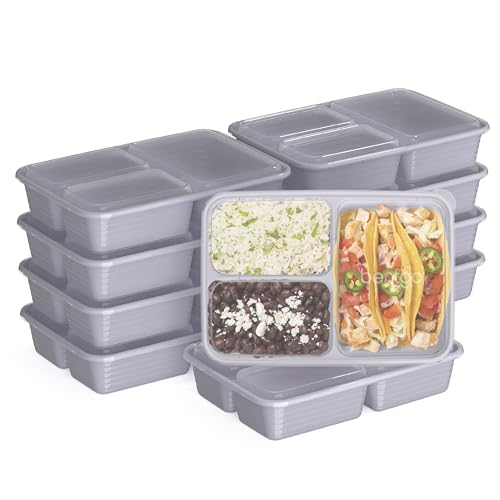
- Ten containers cover a full week of prepped lunches and dinners in one purchase.
- Uniform stackable shape saves noticeable shelf space compared to mismatched containers.
Cons
- The single compartment means wet and dry foods sit together, so crisp items like salad toppings soften by day two.
- At 5.5cm deep these are shallow, which limits them for soups, stews, or tall portions.
Details
A ten pack of 28oz reusable food containers built for batch cooking, solving the weekly problem of storing measured meals that survive the fridge and reheat cleanly.
The airtight lids are the main draw: prepped chicken and rice stay fresh for days, and sauces do not leak into a gym bag or backpack.
Each tub is BPA free plastic measuring 22cm by 15cm by 5.5cm and holds 828ml. Lightweight enough to carry daily, rated for microwave, freezer, and dishwasher.
The single compartment keeps everything in contact, so foods that need to stay separate or crisp are not a good fit here.
Best for anyone doing Sunday meal prep who wants portion control and one container from freezer to lunch break.
What Fits
At 828ml, one container holds a standard prepped meal: roughly 6oz of protein plus a cup of rice or pasta and a serving of roasted vegetables.
The 22cm by 15cm footprint suits chicken breasts, salmon fillets, burrito bowls, pasta bakes, and stir fries. The 5.5cm depth handles thick chili but not brothy soups filled to the rim.
Ten stacked containers fit on a single fridge shelf or freezer drawer, making a full week of prepped lunches practical in a shared kitchen.
When It Is Worth Paying More
Spending up pays off when you use the appliance often enough to notice better cleaner results every week. If it only comes out occasionally, a mid-range pick is the smarter call. Match the money to frequency of use, not marketing.
How To Get It Right
Think through the whole workflow: checking the seals and gaskets, cleaning removable parts by hand, and descaling water-based units. A appliance that fits your routine and cleanup habits beats a technically superior one you fight with. We cover specific models in best air fryer, best blender, and best instant pot.
Common Misconceptions
The biggest myth is that the most expensive appliance is automatically the best for you. In reality, the right choice depends on digital versus dial controls, and noise level — plus your own habits. Another trap is buying by brand alone — the same maker sells both excellent and forgettable lines.
Who Benefits Most
This matters most for busy weeknight cooks, and meal-preppers batching food. If that is you, treat motor or heating-element power, and speed under load as non-negotiable. Casual users can relax the requirements and prioritize price and storage instead.
What To Look For
The keeper is the one you reach for without thinking; the drawer occupant is the one that asks too much for too little payoff. Those are the variables that decide whether it earns a spot in your kitchen or ends up unused. Ignore cosmetic upgrades until the fundamentals check out.
Why It Matters
The variables that decide the outcome — build quality of seals, digital versus dial controls, and speed under load — are the ones buyers most often overlook. That is why two appliances that look alike can feel completely different in use — one saves time, the other quietly adds friction to every task. If you are shopping, our best air fryer and best blender guides are the fastest way in.
Related Product Guides
If this topic is part of a buying decision, these are the HomeWhisk guides most closely tied to it:
Frequently Asked Questions
How do I keep it in good shape?
Build descaling water-based units, and letting the motor rest between heavy loads into normal cleanup. Light, consistent care prevents trapped residue in seams far better than occasional deep effort.
What is the bottom line?
Match the appliance to your real habits: buy for durability if it is daily, for value and storage if it is occasional.
Is a premium appliance worth it?
Only if you use it enough to notice better control, durability, or cleanup regularly. Occasional users are well served by a mid-range pick like those in best instant pot.
What gear pairs well with it?
Start with a reliable core piece, then add as needs appear. Compare best air fryer, best blender, and best instant pot for related choices.
What should I avoid?
Avoid buying by brand alone, ignoring descaling water-based units, and oversizing for your space. Each invites uneven cooking or heating down the line.
The Bottom Line
A good freeze meal prep containers decision should feel obvious after you line up size, material, cleaning, and durability. If it is still a purchase question, the next step is best air fryer, best blender, and best instant pot.









Write Your Review
No reviews yet. Be the first to share your experience!