

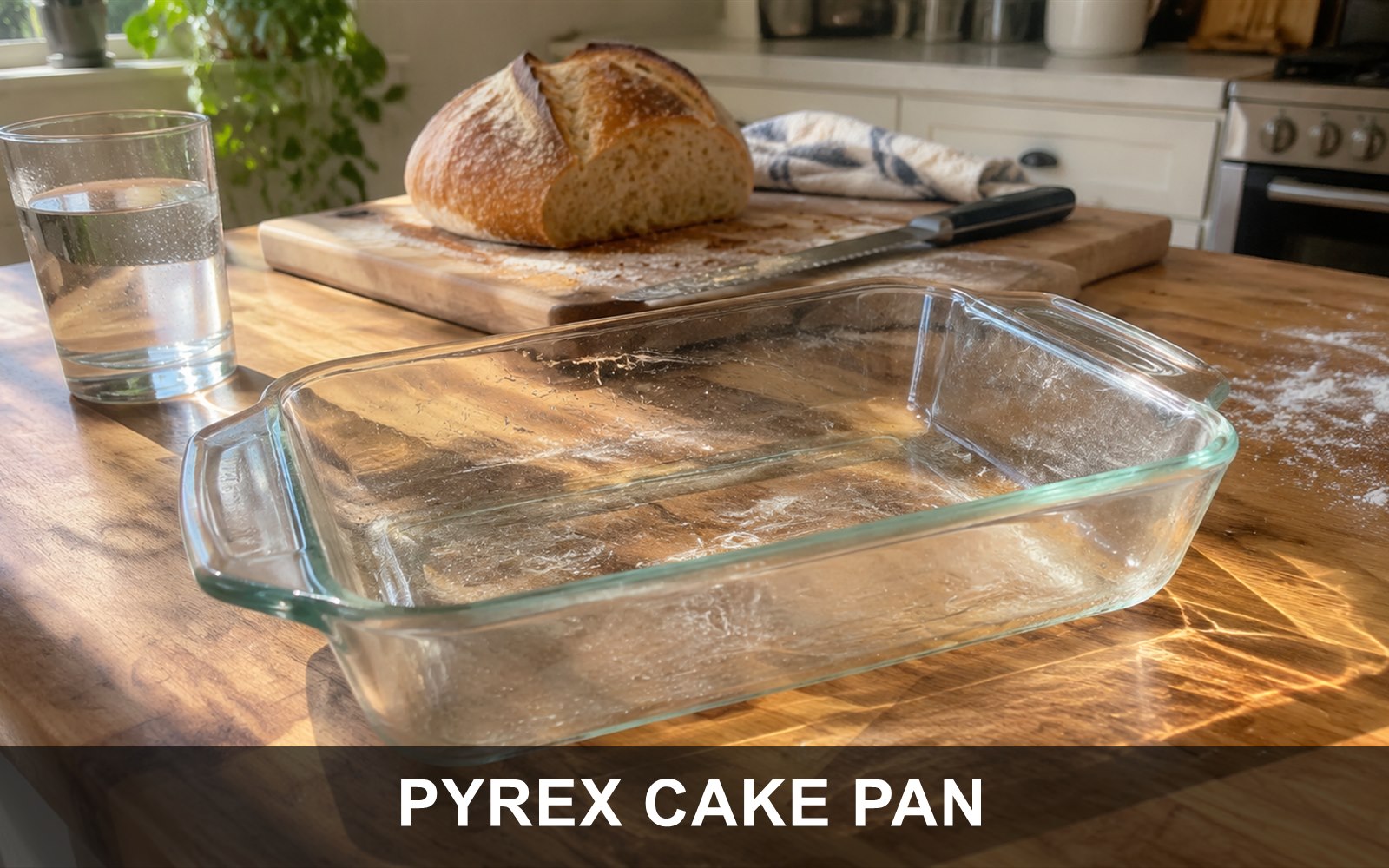
TL;DR — The best pyrex cake pan should match how you actually cook, how often you will use it, and how much maintenance you want. Prioritize proven construction, practical usability, easy cleaning, and long-term owner feedback over flashy feature lists. For adjacent picks, compare best bundt cake pan, best baking sheets, best mixing bowls.
The HomeWhisk editorial team researches kitchen equipment by analyzing manufacturer specifications, construction details, and aggregated user reviews from major retailers and enthusiast communities. Our recommendations are based on what products actually deliver, not what brands promise.
For this guide, we reviewed pyrex cake pan options through the lens of material, sizing, durability, cleaning, storage, accuracy, and home-baker feedback. If you are still comparing categories, see best bundt cake pan, best baking sheets, best mixing bowls, best kitchen scale, best cutting board, best food storage containers for related commercial guides.
Editor’s Picks
| Category | Pick | Why |
|---|---|---|
| Best Overall | Top researched option from the list below | Strongest balance of performance, durability, and owner satisfaction |
| Best Value | Value-focused pick | Good daily usability without overpaying for cosmetic extras |
| Best for Beginners | Easiest-maintenance option | Simple to use, clean, store, and maintain |

Pros & Cons
Pros
- Tempered glass construction withstands temperature changes from freezer to microwave without cracking.
- Three graduated sizes handle everything from whisking two eggs to mixing large batches of dough.
- Nonporous glass surface does not absorb food odors or stains like plastic bowls.
Cons
- Glass is heavier than plastic or stainless steel, which may be awkward when handling large batches.
- Bowls lack lids, so you will need plastic wrap or separate storage covers for leftovers.
Details
This is a three-piece nesting bowl set made from tempered glass that solves the problem of needing separate containers for mixing, heating, and serving.
The tempered glass tolerates rapid temperature shifts and resists staining, so you can move from freezer to microwave without worrying about cracks or discoloration from acidic or pigmented foods.
The set includes 1-quart, 1.5-quart, and 2.5-quart bowls that nest together for compact storage. Each bowl is dishwasher-safe and weighs more than plastic alternatives due to the glass construction.
The bowls do not include lids, which means you will need to use plastic wrap, foil, or purchase compatible covers separately if you want airtight storage.
Best for home cooks and bakers who prioritize durability and versatility over lightweight portability.
Cooking Tips
Use the 1-quart bowl for whisking eggs or dressings, the 1.5-quart for mixing dry ingredients or marinating proteins, and the 2.5-quart for large batches of batter or tossing salads.
When microwaving, leave the bowl uncovered or use a microwave-safe plate on top to prevent splatters while allowing steam to escape.
Allow bowls to cool slightly before placing them on cold or wet surfaces to avoid thermal shock, even though tempered glass is more resistant than standard glass.

Pros & Cons
Pros
- Twelve containers plus matching lids handle a full week of meal prep without running out of vessels.
- Glass goes from freezer to oven, letting you bake or reheat in the same dish you stored food in.
- Stain and odor resistance keeps the glass clear after repeated rounds of curry, chili, and pasta sauce.
- Bright colored lids make it easy to spot the right size at a glance in a crowded fridge.
Cons
- Plastic lids are top-rack dishwasher only and not oven-safe, so they need to come off before baking.
- Glass containers add real weight and can chip or crack if dropped on a hard kitchen floor.
Details
A 12-piece glass storage system built for meal prep, leftovers, and pantry organization in one matched set.
Pure Pyrex tempered glass handles microwave reheating and oven baking, so one container stores, cooks, and serves.
The set includes three each of 1-cup, 2-cup, 3-cup rectangular, and 4-cup round vessels with snug BPA-free lids.
Lids are top-rack dishwasher safe only and must be removed before any oven use.
Best for home cooks who batch-cook weekly meals and want glass that moves through every kitchen appliance.
What Fits
The 1-cup rounds hold dressings, dips, cut fruit, or single servings of nuts and snacks for lunchboxes.
The 2-cup and 3-cup pieces fit soup portions, chopped vegetables, grains, or rectangular leftovers like lasagna squares and sandwich halves.
The 4-cup rounds handle full salads, marinating proteins, family-size sides, or a batch of overnight oats for the week.

Pros & Cons
Pros
- Glass bowls handle hot and cold without cracking, so you can melt butter in the microwave and chill dough in the freezer using the same bowl.
- Lids fit securely without warping, and reviewers confirm they stay sealed even when stacked in a crowded fridge.
- Clear glass lets you see ingredient levels and mixing progress without lifting the bowl.
Cons
- Glass is heavier than plastic or stainless steel, which can be awkward when whisking thick batters one-handed.
- Lids are top-rack dishwasher safe only, so bottom-rack heat can warp them over time.
Details
This is a three-bowl glass mixing set with plastic lids, designed to replace separate prep bowls, storage containers, and serving dishes in your kitchen workflow.
Tempered glass tolerates temperature swings from freezer to microwave without cracking. Lids seal tightly enough to prevent spills and keep cut vegetables or marinating meat fresh for up to three days in the fridge.
Bowls measure 1.3 quarts, 2.3 quarts, and 4.5 quarts. Glass is heavier than metal but resists scratches and stains better. All three bowls nest together to occupy roughly the footprint of the largest bowl alone.
Lids require top-rack dishwasher placement to avoid warping, and the smallest bowl may feel too large for single-serving tasks like whisking one egg.
Best for home cooks who prep multiple recipes each week and want durable, multipurpose bowls that reduce container clutter.
What Fits
The 1.3-quart bowl holds two cups of flour, one can of beans, or a single batch of salad dressing. The 2.3-quart bowl fits four cups of chopped vegetables or a full box of pasta. The 4.5-quart bowl accommodates a double batch of cookie dough, a whole head of shredded cabbage, or marinated chicken for four.
Lids add about half an inch to the height of each bowl, so plan for that clearance when stacking them in the refrigerator. The widest bowl measures roughly nine inches across.
All three sizes fit inside most standard refrigerator shelves without blocking airflow, and the nesting design lets you store the set in a single cabinet slot when not in use.

Pros & Cons
Pros
- The hidden stainless steel reinforcement helps prevent wobbling, warping, and spills during handling.
- The silicone cups release baked foods cleanly when pressed from the bottom.
- The two-pan set provides 24 standard cups across both trays for larger baking sessions.
- The foldable design works well in compact kitchens and RV storage areas.
Cons
- The flexible silicone body still requires careful handling around hot food despite the reinforced frame.
- The product data does not specify an oven temperature range or pan weight.
Details
Hybemmy’s two-pack replaces rigid muffin trays with foldable silicone pans that hold 12 standard cups each, solving storage and transfer problems in compact kitchens.
A hidden stainless steel frame keeps each filled pan rigid, reducing wobbling and spills when moving batter from the counter to the oven.
Food-grade silicone provides a nonstick surface, while the 8.8 by 11.7 inch size and foldable body support everyday storage.
The product data does not list its weight or maximum oven temperature, so buyers should confirm those details before use.
Best for small-kitchen bakers and meal-prep cooks who value compact storage and easy food release.
Cooking Tips
Set the silicone pan on a stable surface before filling it, then use the reinforced rim to transfer it to the oven with less wobbling.
After baking, let the food cool enough to handle, then press each cup bottom to release muffins, cupcakes, or egg bites without liners.
Place the pan in the dishwasher after use, or rinse the nonstick surface under the tap for quick cleanup.

Pros & Cons
Pros
- The metal frame adds stability that flexible silicone pans typically lack.
- Silicone cups make muffins, cupcakes, and egg bites easier to remove intact.
- The pan supports multiple uses, including mini pies and cheese puffs.
- Its dishwasher-safe design simplifies cleanup between batches.
Cons
- The 446°F maximum temperature limits use for recipes requiring higher heat.
- The regular-size 12-cup layout is not suited to mini-muffin recipes.
Details
This 12-cup BRONYPRO pan solves the common problem of stuck muffins, cupcakes, and egg bites by combining flexible silicone cups with push-up release.
The silicone surface releases baked food without greasing, while the metal frame keeps the pan steady when filling and moving it.
Food-grade silicone and a carbon steel frame provide regular-size capacity, stable handling, and compatibility with standard recipes.
Its 446°F maximum temperature means it should not be used for recipes requiring higher heat.
Best for new bakers and everyday cooks making standard-size baked goods with easier release and cleanup.
Cooking Tips
Fill the supported silicone cups while the pan is on a level surface, then use the metal frame to move it safely to the oven.
After baking, let items cool briefly before pushing up from the silicone bottoms for cleaner release.
Use the pan for muffins, cupcakes, egg bites, mini pies, and cheese puffs, then clean it with soapy water or place it in the dishwasher.
At a Glance: Comparison Table
| Factor | Why It Matters | What to Look For |
|---|---|---|
| Build quality | Determines lifespan and reliability | Solid materials, good fit-and-finish, few recurring owner complaints |
| Daily workflow | Determines whether you actually use it | Easy setup, cleanup, storage, and repeatable results |
| Maintenance | Prevents premature replacement | Clear care requirements that match your habits |
| Size and fit | Prevents overbuying | Capacity or dimensions that fit your household and kitchen |
| Value | Keeps the purchase practical | Pay for performance, not just brand name or appearance |
How We Evaluated These Products
This guide is research-based. The HomeWhisk team reviewed product specifications, owner-review patterns, retailer listings, and community feedback to identify which pyrex cake pan options show the strongest combination of usable performance and long-term satisfaction. We do not claim direct product testing; instead, we synthesize repeated signals across many sources.
We paid special attention to recurring complaints because they reveal what matters after the first week: warping, dulling, weak motors, awkward cleaning, unreliable controls, poor handles, storage problems, and whether a product feels worth the price after repeated use.

What Actually Matters:
Material and durability
Material and gauge drive how evenly a pyrex cake pan bakes and how long it lasts. Heavier aluminum and steel resist the hot spots and warping that plague thin, flimsy sheets, but they take longer to come up to temperature. Match the gauge to your oven and patience: thick pans reward slow, even bakes, while lighter ones heat fast at the cost of uniformity.
Sizing and capacity
Rim design and flatness decide whether the pan stays true through hundreds of hot-to-cold cycles. A rolled or encapsulated rim adds rigidity that fights the twist and buckle you hear as a bang in a hot oven. Set the pan on a flat surface and look for a dead-flat base — a rocking or bowed pan browns unevenly and never quite recovers.
Cleaning and storage
Surface finish and release govern the daily annoyance of sticking and scrubbing. Weigh bare aluminum and steel, which brown beautifully but need greasing or liners, against nonstick and ceramic coatings that release easily but wear and dislike metal tools and high heat. The right finish depends on what you bake most and how gentle you are willing to be with it.
Accuracy and consistency
Size, storage, and oven fit are easy to overlook until the pan does not fit. Measure your oven’s usable width with room for air to circulate, and think about how the pan nests or hangs in your cabinets. For most home kitchens, a slightly smaller pan that fits comfortably and stores without a fight beats an oversized one that bakes poorly against the walls.
Price and practical value
Care routine and long-term value depend on how the pyrex cake pan ages under real use. Coated pans simplify cleanup but have a finite lifespan; bare metal is nearly immortal but wants drying and the occasional scrub to stay rust-free and non-sticky. Choose the maintenance story you will actually follow, because the pan you care for correctly is the one that lasts.
Frequently Asked Questions
What is the best pyrex cake pan for most people?
The best choice is the one that fits your actual use case, maintenance habits, and budget. Start with the options in this guide, then compare related categories like best bundt cake pan and best baking sheets.
Is it worth paying more?
It is worth paying more when the upgrade improves durability, usability, or performance you will notice often. It is not worth it for cosmetic features you rarely benefit from.
What should beginners prioritize?
Beginners should prioritize easy cleaning, forgiving materials, simple controls or maintenance, and a size that fits their kitchen.
What should I avoid?
Avoid vague materials, poor owner feedback, oversized products, hard-to-clean designs, and bundles that add pieces you will not use.
How long should it last?
A well-chosen product should last years with normal care, though lifespan depends on material, maintenance, and frequency of use.
What is the buying takeaway?
Choose the product that solves the daily job cleanly and reliably. If you need broader context, compare best bundt cake pan, best baking sheets, best mixing bowls, best kitchen scale before deciding.
Our Top Pick
The best pyrex cake pan is the one that balances performance, maintenance, and value for your kitchen. Buy for real workflow first: how you cook, how often you use it, how easily it cleans, and whether it fits your storage. For most readers, comparing best bundt cake pan, best baking sheets, best mixing bowls is the smartest next step.



Write Your Review
No reviews yet. Be the first to share your experience!