

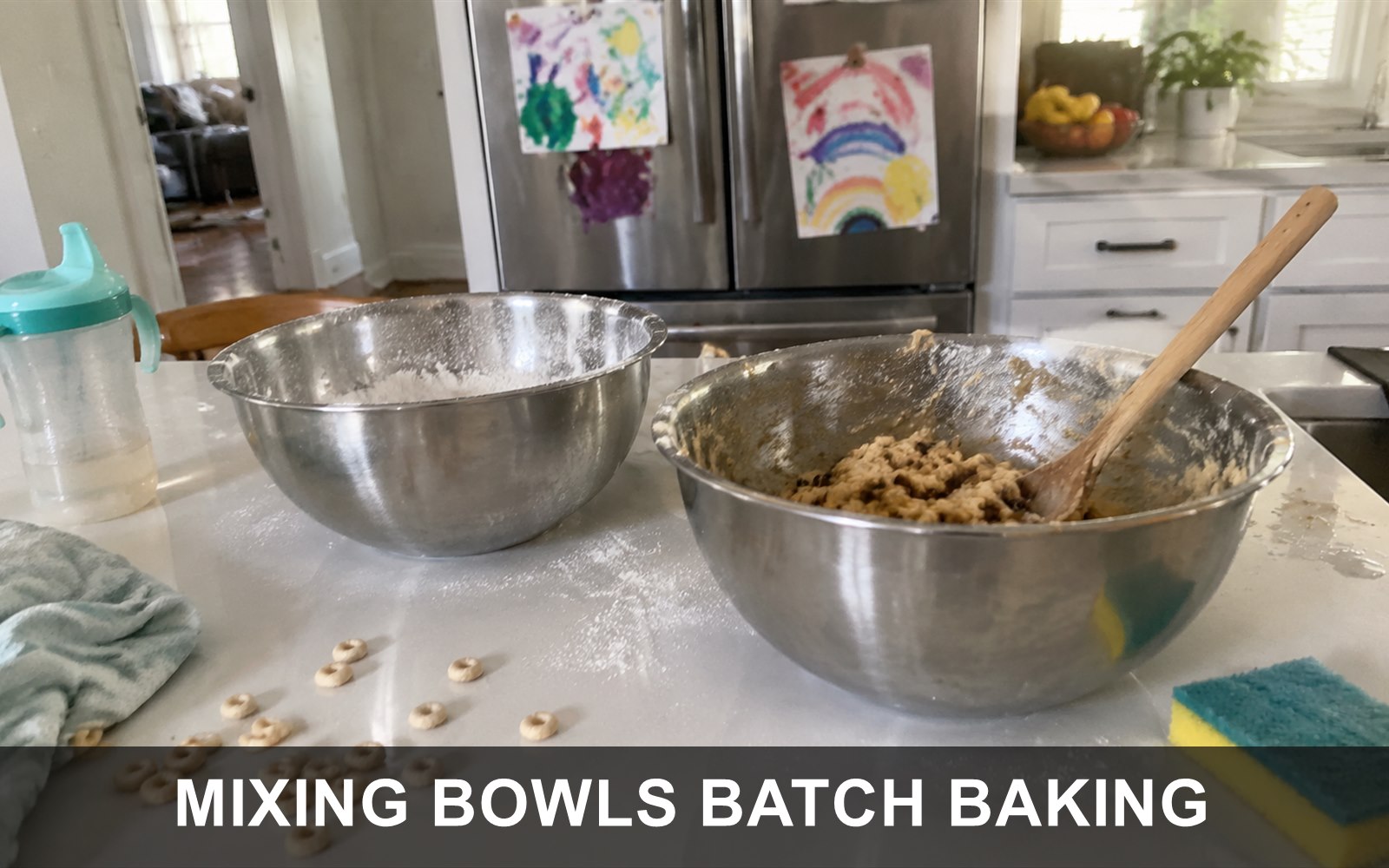
TL;DR — The best mixing bowls for batch baking should match how you actually cook, how often you will use it, and how much maintenance you want. Prioritize proven construction, practical usability, easy cleaning, and long-term owner feedback over flashy feature lists. For adjacent picks, compare best baking sheet for batch baking, best baking sheets, best mixing bowls.
The HomeWhisk editorial team researches kitchen equipment by analyzing manufacturer specifications, construction details, and aggregated user reviews from major retailers and enthusiast communities. Our recommendations are based on what products actually deliver, not what brands promise.
For this guide, we reviewed mixing bowls options through the lens of material, sizing, durability, cleaning, storage, accuracy, and home-baker feedback. If you are still comparing categories, see best baking sheet for batch baking, best baking sheets, best mixing bowls, best kitchen scale, best cutting board, best food storage containers for related commercial guides.

Editor’s Picks
| Category | Pick | Why |
|---|---|---|
| Best Overall | Top researched option from the list below | Strongest balance of performance, durability, and owner satisfaction |
| Best Value | Value-focused pick | Good daily usability without overpaying for cosmetic extras |
| Best for Beginners | Easiest-maintenance option | Simple to use, clean, store, and maintain |
Pros & Cons
Pros
- The flat base adds stability while mixing dough and folding batters.
- Dishwasher-safe stainless steel makes cleanup straightforward.
- The scratch- and smudge-resistant finish supports everyday use and serving.
- Its 9-inch dimensions and 6.4-ounce weight make it relatively easy to handle and store.
Cons
- The 2.75-quart capacity may be limiting for large-batch baking or family-size preparations.
- The lightweight 6.4-ounce design may provide less heft than cooks seeking a very substantial mixing bowl.
Details
This 2.75-quart Fox Run bowl handles dough mixing and batter folding while addressing the need for a stable, reusable prep bowl.
Its flat base reduces movement on the counter, and stainless steel helps retain the temperature of hot or cold foods.
Stainless steel construction measures 9 x 9 x 3.8 inches and weighs 6.4 ounces, making it easy to handle for daily prep.
The capacity may be too small for large-batch recipes, and the lightweight build may not satisfy buyers who prefer heavier bowls.
Best for everyday cooks who need a compact, dishwasher-safe bowl for moderate mixing tasks.
Cooking Tips
Use the flat base on a dry counter when whisking batters or combining dough ingredients to improve stability.
Use the bowl for moderate portions, since its 2.75-quart capacity can limit large-batch mixing.
Place it in the dishwasher after preparation for easier cleanup.
At a Glance: Comparison Table
| Factor | Why It Matters | What to Look For |
|---|---|---|
| Build quality | Determines lifespan and reliability | Solid materials, good fit-and-finish, few recurring owner complaints |
| Daily workflow | Determines whether you actually use it | Easy setup, cleanup, storage, and repeatable results |
| Maintenance | Prevents premature replacement | Clear care requirements that match your habits |
| Size and fit | Prevents overbuying | Capacity or dimensions that fit your household and kitchen |
| Value | Keeps the purchase practical | Pay for performance, not just brand name or appearance |
How We Evaluated These Products
This guide is research-based. The HomeWhisk team reviewed product specifications, owner-review patterns, retailer listings, and community feedback to identify which mixing bowls options show the strongest combination of usable performance and long-term satisfaction. We do not claim direct product testing; instead, we synthesize repeated signals across many sources.
We paid special attention to recurring complaints because they reveal what matters after the first week: warping, dulling, weak motors, awkward cleaning, unreliable controls, poor handles, storage problems, and whether a product feels worth the price after repeated use.
What Actually Matters:
Material and durability
Material and construction quality set the ceiling for how a mixing bowls performs and survives. Look at the core material, thickness, and how parts are joined — riveted or welded handles, encapsulated bases, and solid seams outlast glued or thin-gauge builds. A heavier, well-bonded piece usually earns its price through years of stable, predictable use.
Sizing and capacity
Heat behavior and cooking control tell you how forgiving the piece is day to day. Even heating and quick recovery matter more than a flashy finish, because hot spots burn food and slow recovery drags out cooking. Check how the material responds to changes on the burner — responsive control is what lets you actually cook rather than react.
Cleaning and storage
Compatibility with your stove and oven is a spec people skip and regret. Confirm induction support if you need it, the oven-safe temperature, and whether the handles and lids share that limit. A great mixing bowls that cannot go under the broiler or sit on your cooktop is the wrong one, no matter how well it is made.
Accuracy and consistency
Cleaning, maintenance, and storage decide how often the piece actually gets used. Weigh dishwasher tolerance against hand-washing, whether the surface traps residue, and how the piece stacks or hangs without damage. Something that is a struggle to clean or store tends to migrate to the back of the cabinet regardless of how well it cooks.
Price and practical value
Price, warranty, and long-term value come down to cost per year of real use, not the tag. Weigh the warranty, the availability of replacement parts, and whether the upgrade over a cheaper model changes anything you do weekly. For batch baking, spend on the fundamentals that show up every time you cook and skip cosmetic extras that fade fast.
Frequently Asked Questions
What is the best mixing bowls for most people?
The best choice is the one that fits your actual use case, maintenance habits, and budget. Start with the options in this guide, then compare related categories like best baking sheet for batch baking and best baking sheets.
Is it worth paying more?
It is worth paying more when the upgrade improves durability, usability, or performance you will notice often. It is not worth it for cosmetic features you rarely benefit from.
What should beginners prioritize?
Beginners should prioritize easy cleaning, forgiving materials, simple controls or maintenance, and a size that fits their kitchen.
What should I avoid?
Avoid vague materials, poor owner feedback, oversized products, hard-to-clean designs, and bundles that add pieces you will not use.
How long should it last?
A well-chosen product should last years with normal care, though lifespan depends on material, maintenance, and frequency of use.
What is the buying takeaway?
Choose the product that solves the daily job cleanly and reliably. If you need broader context, compare best baking sheet for batch baking, best baking sheets, best mixing bowls, best kitchen scale before deciding.
Our Top Pick
The best mixing bowls is the one that balances performance, maintenance, and value for your kitchen. Buy for real workflow first: how you cook, how often you use it, how easily it cleans, and whether it fits your storage. For most readers, comparing best baking sheet for batch baking, best baking sheets, best mixing bowls is the smartest next step.




Write Your Review
No reviews yet. Be the first to share your experience!