

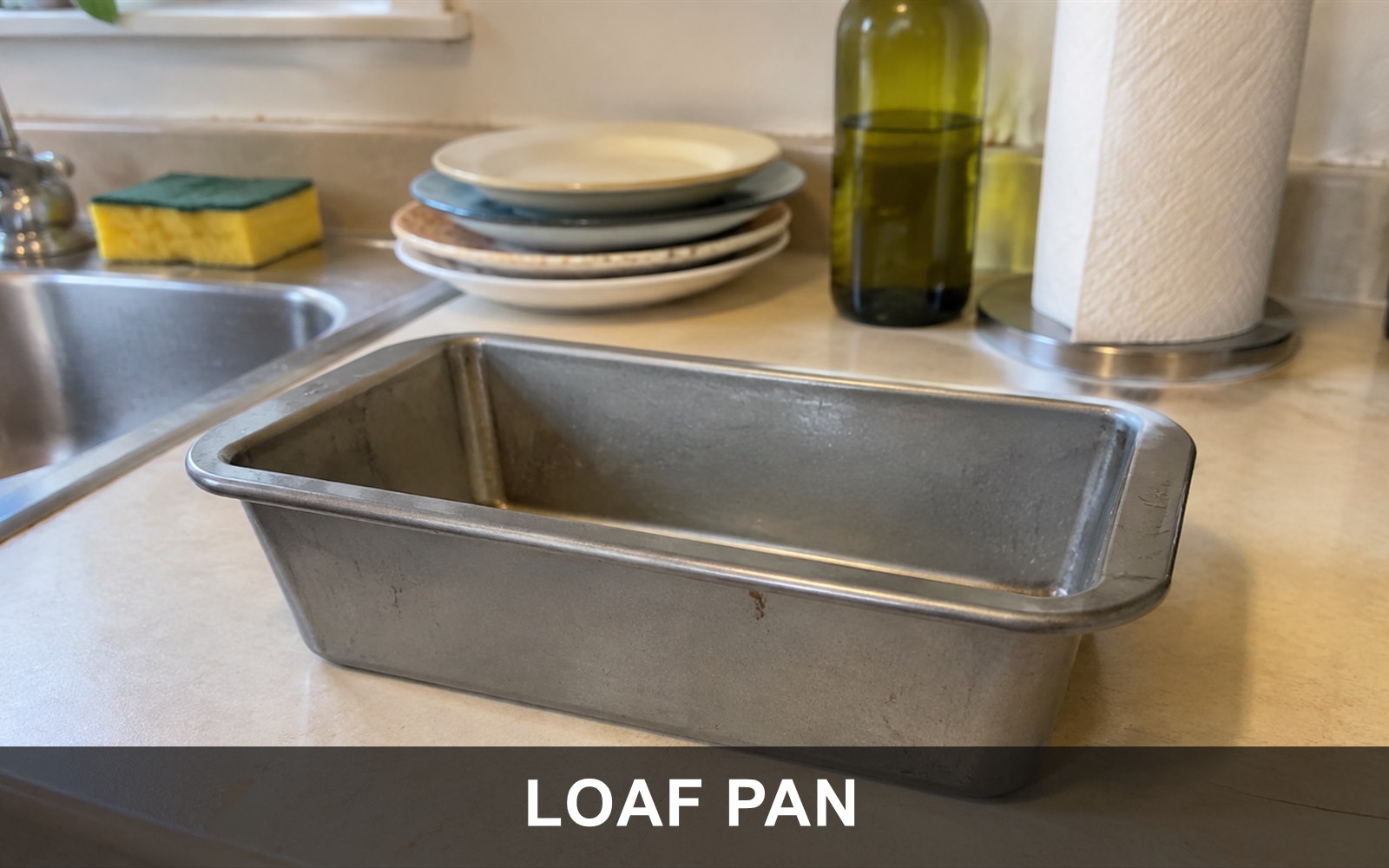
TL;DR — The best loaf pan value should match how you actually cook, how often you will use it, and how much maintenance you want. Prioritize proven construction, practical usability, easy cleaning, and long-term owner feedback over flashy feature lists. For adjacent picks, compare best bread loaf pan, best baking sheets, best mixing bowls.
The HomeWhisk editorial team researches kitchen equipment by analyzing manufacturer specifications, construction details, and aggregated user reviews from major retailers and enthusiast communities. Our recommendations are based on what products actually deliver, not what brands promise.
For this guide, we reviewed loaf pan value options through the lens of material, sizing, durability, cleaning, storage, accuracy, and home-baker feedback. If you are still comparing categories, see best bread loaf pan, best baking sheets, best mixing bowls, best kitchen scale, best cutting board, best food storage containers for related commercial guides.
Editor’s Picks
| Category | Pick | Why |
|---|---|---|
| Best Overall | Top researched option from the list below | Strongest balance of performance, durability, and owner satisfaction |
| Best Value | Value-focused pick | Good daily usability without overpaying for cosmetic extras |
| Best for Beginners | Easiest-maintenance option | Simple to use, clean, store, and maintain |
Save $0.57

Pros & Cons
Pros
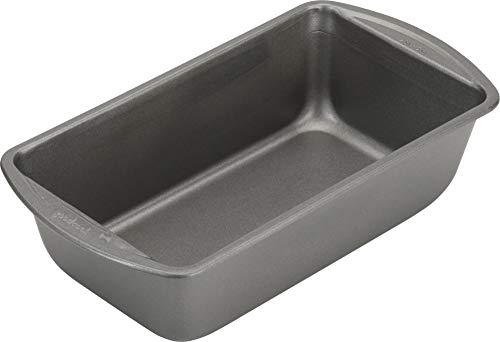
- The non-stick surface supports easier loaf removal and cleanup.
- The pan is oven safe to 450°F and designed to resist warping.
- Extended handles improve control when handling a hot pan.
- Its 9.25 x 5.25 x 2.75-inch size works for large loaves and pound cakes.
Cons
- Wilton recommends washing it in warm, soapy water before first use and after each use for best results.
- The larger dimensions may require more storage space than a standard compact loaf pan.
Details
The Wilton Gold Non-Stick Loaf Pan is designed for baking bread and pound cakes, solving the common problem of loaves sticking during removal.
Even-heat distribution supports consistent browning, while the non-stick surface helps baked goods release smoothly.
It measures 9.25 x 5.25 x 2.75 inches and includes extended handles; the product data does not specify its weight.
Although dishwasher safe, Wilton recommends warm, soapy hand washing before first use and after each use for best results.
Best for home bakers who want dependable loaf baking and easier release without PFAS.
Cooking Tips
Wash the pan in warm, soapy water before first use and after each use to help maintain its smooth-release performance.
Use the extended handles to move the filled pan carefully in and out of an oven set no higher than 450°F.
Rely on the pan’s even-heat distribution for consistent browning when baking bread or pound cakes.
Save $1.59
Pros & Cons
Pros
- The pan accommodates yeast bread, quick bread, pound cake, and meatloaf recipes.
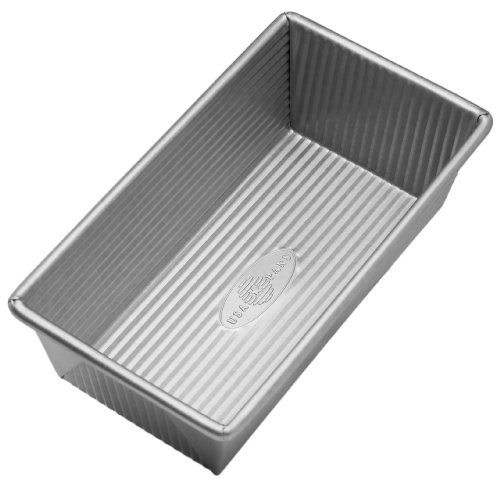
- Corrugation supports airflow while adding strength to the baking surface.
- The silicone nonstick finish promotes clean release without requiring difficult scrubbing.
- USA manufacturing comes from a family-owned company with more than 60 years of bakeware production.
Cons
- The recommended cleaning method uses hot water, mild soap, and a gentle brush or sponge, so buyers seeking dishwasher convenience may find upkeep less convenient.
- Its 1-pound capacity may be too small for recipes designed for larger loaf pans.
Details
This standard loaf pan handles 1-pound yeast breads, quick breads, pound cakes, and meatloaf while addressing uneven baking and difficult release.
The corrugated surface circulates air around the bake, while the silicone nonstick coating helps finished loaves release cleanly.
Commercial-gauge aluminized steel and folded construction add durability. Its interior baking dimensions are 8.5 by 4.5 by 2.75 inches; product weight is not specified.
The pan requires gentle cleaning with hot water, mild soap, and a soft brush or sponge to protect its finish.
Best for frequent home bakers who make standard 1-pound loaves and prioritize even results, clean release, and durable construction.
Cooking Tips
Use recipes sized for an 8.5 by 4.5-inch pan to avoid underfilled loaves or batter rising beyond the rim.
Allow baked bread or cake to settle briefly before release so the structure firms up and the nonstick coating can work effectively.
After cooling, wash with hot water, mild soap, and a gentle sponge or brush to preserve the silicone nonstick surface.
Save $2.00

Pros & Cons
Pros
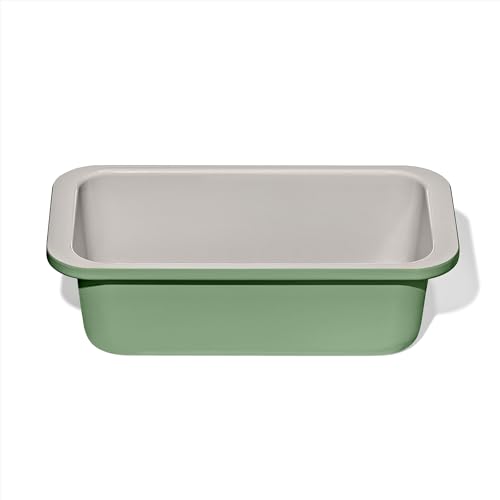
- The set of two supports batch baking or preparing separate recipes at the same time.
- Heavy-weight steel provides fast, even heating and uniform browning.
- The nonstick coating helps food release with less sticking.
- The pans handle bread, pound cake, meatloaf, and other loaf-shaped recipes.
Cons
- Hand washing is recommended, which adds cleanup time compared with dishwasher-friendly bakeware.
- The pans should not be used under a grill.
Details
This set solves the need for dependable loaf-shaped baking by providing two pans for bread, pound cake, meatloaf, and similar recipes.
Heavy-weight steel heats quickly and evenly, helping loaves and meatloaf brown more uniformly across the pan.
The 9.5 x 5 inch inner dimensions provide a practical loaf size, while the nonstick coating supports easier release.
Hand washing is recommended, and the pans should never be used under a grill.
Best for home bakers who want two durable nonstick loaf pans for everyday recipes.
Cooking Tips
Use the pans for bread, pound cake, meatloaf, and other loaf-shaped recipes that benefit from even heating.
Keep oven temperatures at or below 428 degrees F, and avoid placing the pans under a grill.
Hand wash after baking to follow the care recommendation and preserve the nonstick coating.
At a Glance: Comparison Table
| Factor | Why It Matters | What to Look For |
|---|---|---|
| Build quality | Determines lifespan and reliability | Solid materials, good fit-and-finish, few recurring owner complaints |
| Daily workflow | Determines whether you actually use it | Easy setup, cleanup, storage, and repeatable results |
| Maintenance | Prevents premature replacement | Clear care requirements that match your habits |
| Size and fit | Prevents overbuying | Capacity or dimensions that fit your household and kitchen |
| Value | Keeps the purchase practical | Pay for performance, not just brand name or appearance |
How We Evaluated These Products
This guide is research-based. The HomeWhisk team reviewed product specifications, owner-review patterns, retailer listings, and community feedback to identify which loaf pan value options show the strongest combination of usable performance and long-term satisfaction. We do not claim direct product testing; instead, we synthesize repeated signals across many sources.
We paid special attention to recurring complaints because they reveal what matters after the first week: warping, dulling, weak motors, awkward cleaning, unreliable controls, poor handles, storage problems, and whether a product feels worth the price after repeated use.
What Actually Matters:
Material and durability
Material and gauge drive how evenly a loaf pan bakes and how long it lasts. Heavier aluminum and steel resist the hot spots and warping that plague thin, flimsy sheets, but they take longer to come up to temperature. Match the gauge to your oven and patience: thick pans reward slow, even bakes, while lighter ones heat fast at the cost of uniformity.
Sizing and capacity
Rim design and flatness decide whether the pan stays true through hundreds of hot-to-cold cycles. A rolled or encapsulated rim adds rigidity that fights the twist and buckle you hear as a bang in a hot oven. Set the pan on a flat surface and look for a dead-flat base — a rocking or bowed pan browns unevenly and never quite recovers.
Cleaning and storage
Surface finish and release govern the daily annoyance of sticking and scrubbing. Weigh bare aluminum and steel, which brown beautifully but need greasing or liners, against nonstick and ceramic coatings that release easily but wear and dislike metal tools and high heat. The right finish depends on what you bake most and how gentle you are willing to be with it.
Accuracy and consistency
Size, storage, and oven fit are easy to overlook until the pan does not fit. Measure your oven’s usable width with room for air to circulate, and think about how the pan nests or hangs in your cabinets. For value-focused buyers, a slightly smaller pan that fits comfortably and stores without a fight beats an oversized one that bakes poorly against the walls.
Price and practical value
Care routine and long-term value depend on how the loaf pan ages under real use. Coated pans simplify cleanup but have a finite lifespan; bare metal is nearly immortal but wants drying and the occasional scrub to stay rust-free and non-sticky. Choose the maintenance story you will actually follow, because the pan you care for correctly is the one that lasts.
Frequently Asked Questions
What is the best loaf pan value for most people?
The best choice is the one that fits your actual use case, maintenance habits, and budget. Start with the options in this guide, then compare related categories like best bread loaf pan and best baking sheets.
Is it worth paying more?
It is worth paying more when the upgrade improves durability, usability, or performance you will notice often. It is not worth it for cosmetic features you rarely benefit from.
What should beginners prioritize?
Beginners should prioritize easy cleaning, forgiving materials, simple controls or maintenance, and a size that fits their kitchen.
What should I avoid?
Avoid vague materials, poor owner feedback, oversized products, hard-to-clean designs, and bundles that add pieces you will not use.
How long should it last?
A well-chosen product should last years with normal care, though lifespan depends on material, maintenance, and frequency of use.
What is the buying takeaway?
Choose the product that solves the daily job cleanly and reliably. If you need broader context, compare best bread loaf pan, best baking sheets, best mixing bowls, best kitchen scale before deciding.
Our Top Pick
The best loaf pan value is the one that balances performance, maintenance, and value for your kitchen. Buy for real workflow first: how you cook, how often you use it, how easily it cleans, and whether it fits your storage. For most readers, comparing best bread loaf pan, best baking sheets, best mixing bowls is the smartest next step.




Write Your Review
No reviews yet. Be the first to share your experience!