

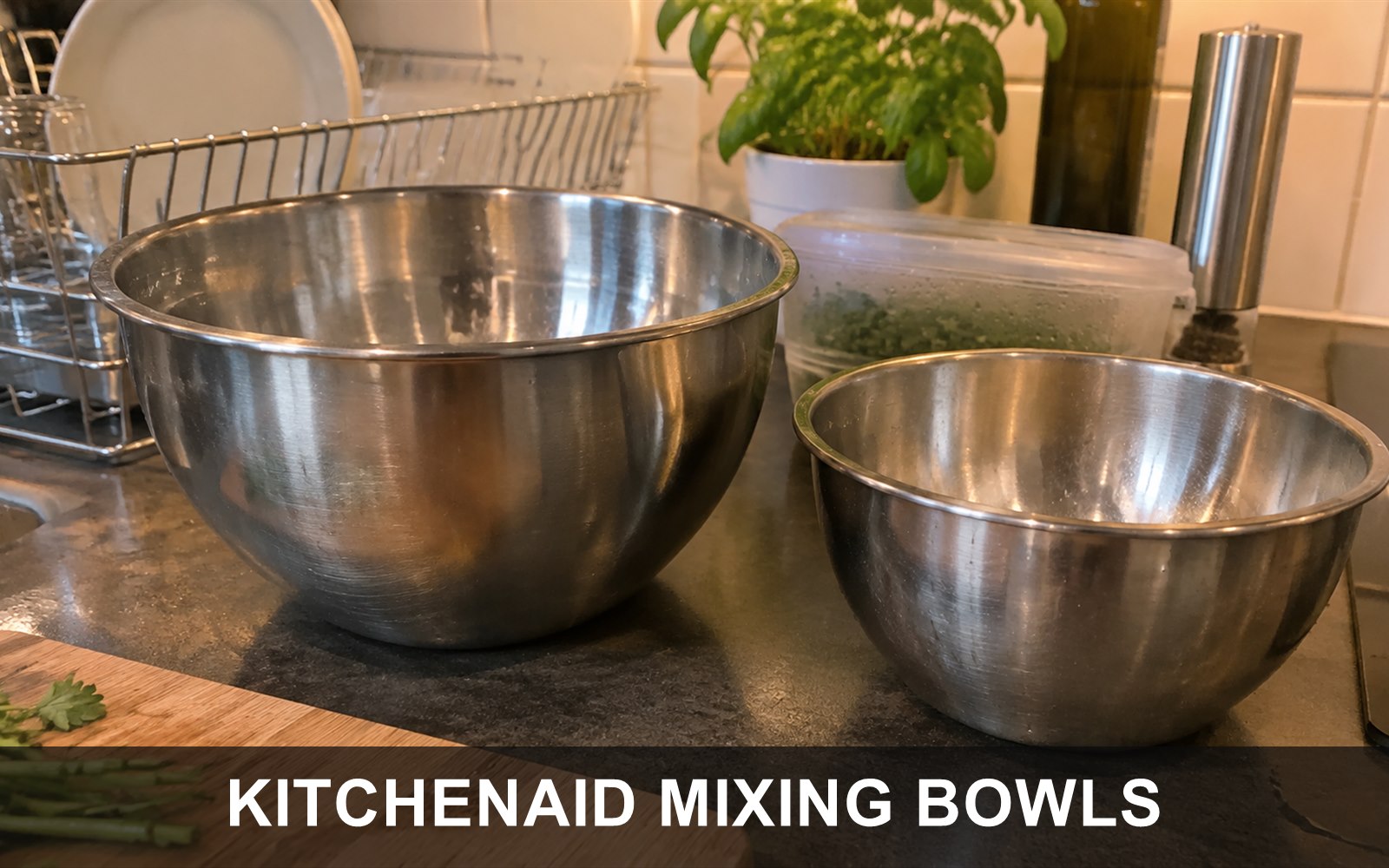
TL;DR — The best kitchenaid mixing bowls should match how you actually cook, how often you will use it, and how much maintenance you want. Prioritize proven construction, practical usability, easy cleaning, and long-term owner feedback over flashy feature lists. For adjacent picks, compare best mixing bowls, best baking sheets, best kitchen scale.
The HomeWhisk editorial team researches kitchen equipment by analyzing manufacturer specifications, construction details, and aggregated user reviews from major retailers and enthusiast communities. Our recommendations are based on what products actually deliver, not what brands promise.
For this guide, we reviewed kitchenaid mixing bowls options through the lens of material, sizing, durability, cleaning, storage, accuracy, and home-baker feedback. If you are still comparing categories, see best mixing bowls, best baking sheets, best kitchen scale, best cutting board, best food storage containers for related commercial guides.
Editor’s Picks
| Category | Pick | Why |
|---|---|---|
| Best Overall | Top researched option from the list below | Strongest balance of performance, durability, and owner satisfaction |
| Best Value | Value-focused pick | Good daily usability without overpaying for cosmetic extras |
| Best for Beginners | Easiest-maintenance option | Simple to use, clean, store, and maintain |

Pros & Cons
Pros
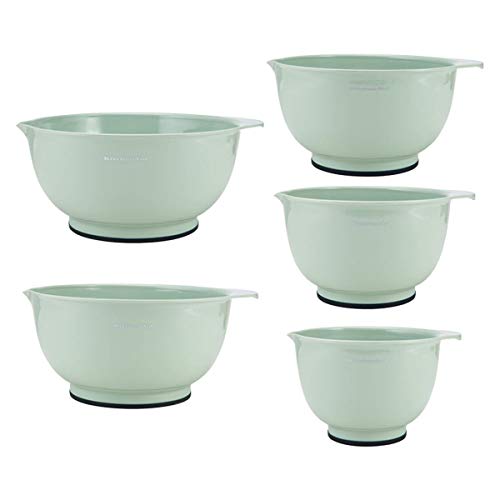
- Stable non-slip bases prevent bowls from spinning or sliding during vigorous hand-mixing and whisking.
- Pour spouts reduce spills when transferring wet batters and liquids into pans or storage containers.
- Nesting design saves cabinet space compared to storing five separate bowls side by side.
Cons
- All five bowls share the same 5-quart capacity according to the product description, which limits size variety for different kitchen tasks.
- Pistachio color may not match existing kitchen decor if you prefer neutral tones or different brand colors.
Details
This is a five-piece mixing bowl set designed to solve the problem of bowls sliding during manual mixing and making messes when pouring.
The non-slip base on each bowl grips smooth countertops so the bowl stays stable when you beat eggs, fold dough, or whisk batters without holding it. The pour spout on every bowl channels liquids cleanly into pans or measuring cups without drips.
Lightweight construction makes these easy to handle when full. The bowls nest inside each other for storage. Dishwasher-safe finish handles daily use and cleanup.
The product description lists all five bowls as 5-quart capacity, which appears to be an error but limits the size range you actually get.
Best for home cooks and bakers who prep multiple components at once and want stable bowls that stack neatly when done.
Best Uses
Use the bowls to prep ingredients before cooking: chop vegetables into one, crack eggs into another, and measure liquids into a third so everything is ready when you start.
Mix cookie dough, pancake batter, or muffin mix by hand without chasing the bowl across the counter thanks to the non-slip base that grips while you stir.
Pour spouts make it easy to transfer wet batters into loaf pans or muffin tins, and to drizzle marinades over proteins without coating the outside of the bowl.
Pros & Cons
Pros
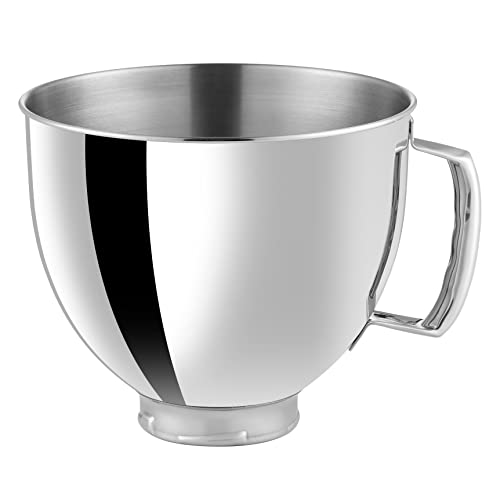
- Food-grade 304 stainless steel provides a durable, non-toxic mixing surface.
- The handle improves control when moving a filled bowl.
- The bowl is dishwasher safe for easier cleanup.
- It supports many listed KitchenAid tilt-head mixer models, including Artisan variants.
Cons
- It is designed for compatible 4.5-quart and 5-quart tilt-head mixers, so buyers must verify their model before ordering.
- The product is not affiliated with the KitchenAid brand.
Details
This 5-quart replacement bowl is made for compatible KitchenAid tilt-head mixers and solves the need for a larger or replacement mixing vessel.
Its larger capacity helps contain big dough batches, while the sturdy handle makes the filled bowl easier to move and use.
Premium 304 stainless steel is food-grade, non-toxic, rust-resistant, odor-resistant, and stain-resistant. The polished finish is built for varied kitchen temperatures.
The bowl’s weight is not provided, and compatibility is limited to listed 4.5-quart and 5-quart tilt-head models.
Best for owners of compatible tilt-head mixers who need a durable bowl for larger batches.
Best Uses
Use the bowl for mixing larger dough batches when your standard bowl feels too small or ingredients tend to spill during preparation.
The handle is useful when transferring batter or dough, while the stainless steel construction supports everyday mixing and temperature variety.
Place it in the dishwasher after use, or wash it by hand with warm water and soap.

Pros & Cons
Pros
- The 5QT capacity suits many KitchenAid Artisan and Classic tilt-head mixers.
- Stainless steel is lighter and more break-resistant than glass for everyday handling.
- The bowl works with flat beaters, dough hooks, and wire whisks on compatible mixers.
- The polished interior helps reduce sticky batter buildup during mixing.
Cons
- It is not compatible with bowl-lift, Professional 600, or 6QT mixers.
- The product data does not provide a specific bowl weight.
Details
The FOKIEE 5QT bowl adds a second mixing vessel for KitchenAid tilt-head mixers, so you can prepare dough and frosting without stopping to wash the original bowl.
Its deep shape helps contain splashes during high-speed mixing, while the wide opening makes ingredient additions easier.
Food-grade stainless steel resists rust, stains, and cracking. The bowl is lighter than glass, has a sturdy handle, and is dishwasher safe.
Fit is limited to most 4.5QT and 5QT KitchenAid tilt-head models, not bowl-lift, Professional 600, or 6QT mixers.
Best for KitchenAid tilt-head owners who need a durable extra bowl for batch baking and multi-step recipes.
Cooking Tips
Use one bowl for dough and another for frosting, batter, or whipped cream to keep multi-step baking moving.
Chill the stainless steel bowl before whipping cream or buttercream to support improved texture and aeration.
Confirm your mixer is a compatible 4.5QT or 5QT tilt-head model before ordering.
At a Glance: Comparison Table
| Factor | Why It Matters | What to Look For |
|---|---|---|
| Build quality | Determines lifespan and reliability | Solid materials, good fit-and-finish, few recurring owner complaints |
| Daily workflow | Determines whether you actually use it | Easy setup, cleanup, storage, and repeatable results |
| Maintenance | Prevents premature replacement | Clear care requirements that match your habits |
| Size and fit | Prevents overbuying | Capacity or dimensions that fit your household and kitchen |
| Value | Keeps the purchase practical | Pay for performance, not just brand name or appearance |
How We Evaluated These Products
This guide is research-based. The HomeWhisk team reviewed product specifications, owner-review patterns, retailer listings, and community feedback to identify which kitchenaid mixing bowls options show the strongest combination of usable performance and long-term satisfaction. We do not claim direct product testing; instead, we synthesize repeated signals across many sources.
We paid special attention to recurring complaints because they reveal what matters after the first week: warping, dulling, weak motors, awkward cleaning, unreliable controls, poor handles, storage problems, and whether a product feels worth the price after repeated use.
What Actually Matters:
Material and durability
Material and construction quality set the ceiling for how a kitchenaid mixing bowls performs and survives. Look at the core material, thickness, and how parts are joined — riveted or welded handles, encapsulated bases, and solid seams outlast glued or thin-gauge builds. A heavier, well-bonded piece usually earns its price through years of stable, predictable use.
Sizing and capacity
Heat behavior and cooking control tell you how forgiving the piece is day to day. Even heating and quick recovery matter more than a flashy finish, because hot spots burn food and slow recovery drags out cooking. Check how the material responds to changes on the burner — responsive control is what lets you actually cook rather than react.
Cleaning and storage
Compatibility with your stove and oven is a spec people skip and regret. Confirm induction support if you need it, the oven-safe temperature, and whether the handles and lids share that limit. A great kitchenaid mixing bowls that cannot go under the broiler or sit on your cooktop is the wrong one, no matter how well it is made.
Accuracy and consistency
Cleaning, maintenance, and storage decide how often the piece actually gets used. Weigh dishwasher tolerance against hand-washing, whether the surface traps residue, and how the piece stacks or hangs without damage. Something that is a struggle to clean or store tends to migrate to the back of the cabinet regardless of how well it cooks.
Price and practical value
Price, warranty, and long-term value come down to cost per year of real use, not the tag. Weigh the warranty, the availability of replacement parts, and whether the upgrade over a cheaper model changes anything you do weekly. For most home kitchens, spend on the fundamentals that show up every time you cook and skip cosmetic extras that fade fast.
Frequently Asked Questions
What is the best kitchenaid mixing bowls for most people?
The best choice is the one that fits your actual use case, maintenance habits, and budget. Start with the options in this guide, then compare related categories like best mixing bowls and best baking sheets.
Is it worth paying more?
It is worth paying more when the upgrade improves durability, usability, or performance you will notice often. It is not worth it for cosmetic features you rarely benefit from.
What should beginners prioritize?
Beginners should prioritize easy cleaning, forgiving materials, simple controls or maintenance, and a size that fits their kitchen.
What should I avoid?
Avoid vague materials, poor owner feedback, oversized products, hard-to-clean designs, and bundles that add pieces you will not use.
How long should it last?
A well-chosen product should last years with normal care, though lifespan depends on material, maintenance, and frequency of use.
What is the buying takeaway?
Choose the product that solves the daily job cleanly and reliably. If you need broader context, compare best mixing bowls, best baking sheets, best kitchen scale, best cutting board before deciding.
Our Top Pick
The best kitchenaid mixing bowls is the one that balances performance, maintenance, and value for your kitchen. Buy for real workflow first: how you cook, how often you use it, how easily it cleans, and whether it fits your storage. For most readers, comparing best mixing bowls, best baking sheets, best kitchen scale is the smartest next step.






Write Your Review
No reviews yet. Be the first to share your experience!